Dali is a county-level city in Yunnan set between the Cangshan range and Erhai Lake. Its special character is the way an inhabited old town, Bai courtyard settlements, a lake-edge landscape and mountain access all sit within one city visit—but not at one walkable stop.
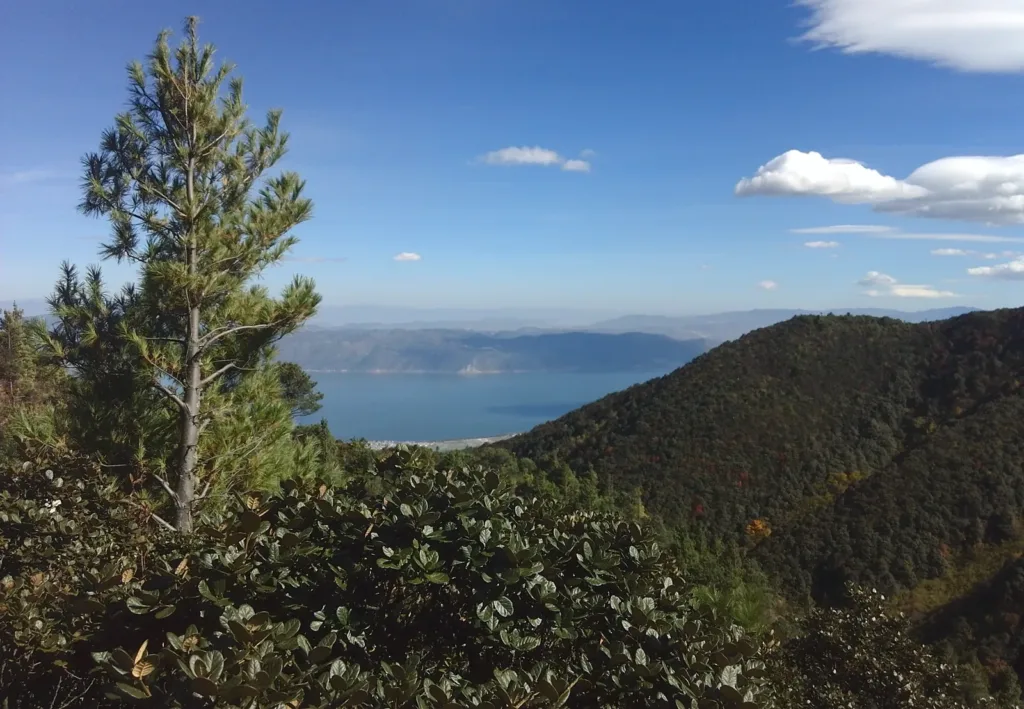
Erhai Lake from the slopes of Cangshan · DaliPhoto credit
Dali at a glance
Population
795,500Year-end resident population, entire city · 2025Published as 79.55万; urbanisation rate 74.76%.Source ↗
Income per person
51,005Mean annual disposable income per person, urban residents · 2025 · CNYUrban (51,005) and rural (27,046) figures only, with no all-resident figure.Source ↗
Languages & dialects
Mandarin, with Bai widely spoken in villages around Erhai.Source ↗
Geography
In the Erhai basin of western Yunnan, between the Cangshan range and Erhai Lake, at about 2,000 m.Source ↗
Elevation
Not available on a comparable basis
Province / region
YunnanCounty-level city (seat of Dali Bai Autonomous Prefecture)
Map & places
Explore Dali
Browse places and sight guides by category, or choose a area below the map to see its location and boundary.
DALI
Showing 9 places9 mapped
No matching places. Try a shorter name or another category.
Cangshan is the long mountain wall above Dali: nineteen peaks, deep streams, glacial landforms and metamorphic rock known locally as Dali marble. It is worth visiting not as one single summit attraction, but as a choice between high-altitude views from Ximatan, a forest-and-stream walk from Gantong, or a gentler approach to the Jade Belt Road from Zhonghe.
Three historic brick pagodas north of Dali Old Town, best understood by comparing their different forms at the forecourt and Juying Pond before deciding whether to continue into the reconstructed Chongsheng Temple.
Erhai stretches along the foot of Cangshan, with Bai settlements and farmland shaping much of its shore. Caicun, east of Dali Old Town, gives a practical introduction to the western bank; Shuanglang presents a different lakeside…
Dali Old Town is a walkable historic street district below Cangshan, where a rebuilt Ming-era grid, water channels, Bai courtyards, and later museum and café streets make the town more than a gate photo. Its best visit is a slow south-to-north walk, with paid or scheduled sub-sites treated separately.
Shuanglang is a Bai lakeside town on the northeast shore of Erhai in Dali City, where a slow walk through living lanes and lakefront spaces opens toward Cangshan. Its interest lies in the meeting of an older fishing settlement, Bai religious life and a later art-and-hospitality economy—not in treating every nearby island, residence or museum as part of the public village walk.
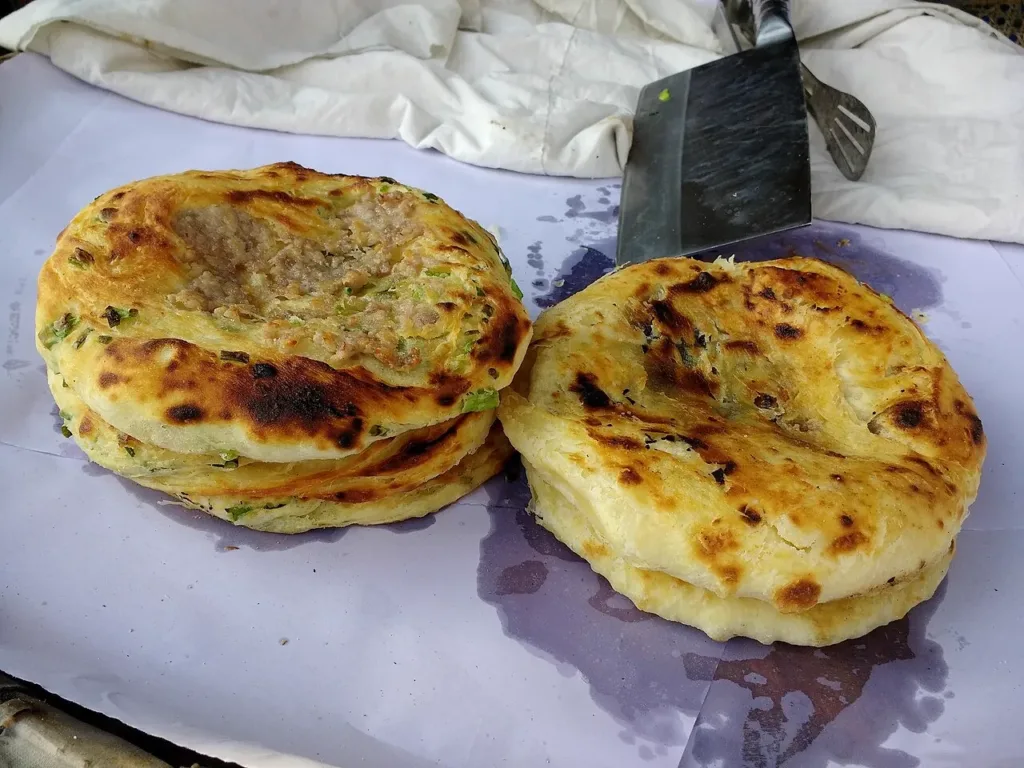
Xizhou Baba is a baked wheat pastry associated with Xizhou Ancient Town in Dali City. Its appeal is the contrast between an oil-layered, flaky crust and a softer centre, with sweet rose-and-sugar fillings and savoury pork-and-scallion versions offering two very different snacks.
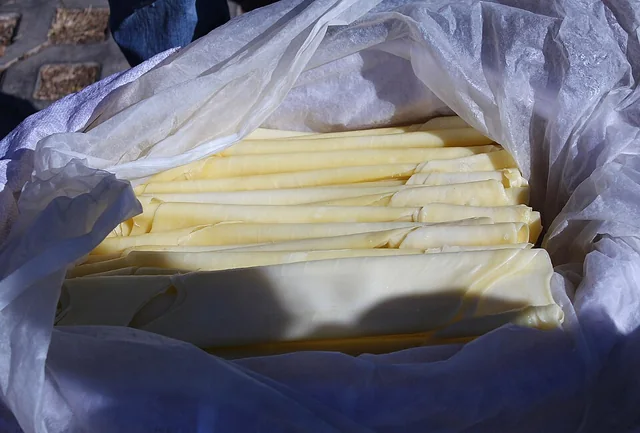
Heating makes the sheet softer or crisp at the edges, with a concentrated dairy aroma. Sweet toppings create a very different result from plain fried pieces.
Dali Hot and Sour Fish (大理酸辣鱼) is fish cooked in a sour, chilli-hot broth in Dali Bai Autonomous Prefecture (大理白族自治州). In Eryuan County (洱源县), at the source of Erhai Lake (洱海), cooks make it with local white papaya (白木瓜).
Erhai Water Flower Greens and Taro Soup (洱海海菜芋头汤) is a home-style soup from Dali (大理) combining an aquatic plant with taro, beans and a little cured pork.
Bai Three-Course Tea (白族三道茶) is the tea ritual of the Bai (白族) people of Dali (大理), Yunnan, in which a guest is served three cups in turn: a bitter tea, a sweet tea and an 'aftertaste' tea.
Check the precise airport or station name on the ticket before arranging the final transfer to your hotel.
Your arrival gateway
Dali 大理
Transport gateways for Dali. The airport, Dali Railway Station and the bus passenger station are all in or near Xiaguan, about 13 km south of the Old Town; the airport bus and city buses 4 and 8 link them with the Old Town.
Airports
Dali Fengyi Airport
大理凤仪机场
DLU
Dali's airport, in Fengyi Town east of Xiaguan, with domestic flights. An airport bus runs from the arrivals hall via Dali Railway Station to the Old Town east-gate terminal; check the current timetable and fare at the counter.
The city's railway station at 261 Weishan Road, Xiaguan, rebuilt in 2024, with trains to Kunming, Lijiang, Baoshan and Lincang. City buses 4 and 8 run to the Old Town. Tickets are real-name; on 12306 the station is listed as 大理.
The coach station next to Dali Railway Station on Weishan Road (372 Weishan Road), also signed as the new or east station, with services to nearby counties and stop buses to sights. Check the Chinese station name on your ticket.
Dali Fengyi Airport is east of Xiaguan; an airport bus runs via Dali Railway Station to the Old Town. Dali Railway Station in Xiaguan has trains to Kunming, Lijiang, Baoshan and Lincang, and the bus passenger station is next to it on Weishan Road. City buses 4 and 8 link the station area with the Old Town; for Xizhou, Shuanglang and the lakeshore use buses, the sightseeing bus or a taxi with the exact Chinese name.
Transport reference review: 2026-10-24. Consult the operator for current services and timetables.
Accommodation
Stay in Dali
Stay in or just outside Dali Old Town for walking, food and the Three Pagodas; in Xizhou for a quieter Bai village base; by the lake in Shuanglang or along the west shore for water views; or in Xiaguan near the railway station for early trains.
Change your destination, dates and guests on Trip.com.
Weather
Dali weather
Current-hour forecast
Loading the current-hour forecast…
Mild and sunny for much of the year at about 2,000 m. Winters are dry and bright with cold nights; the rainy season runs from about June to September. Strong winds come down from Cangshan, especially in winter and spring, and the sun is fierce at this altitude, so bring sun protection and a warm layer.
Written by China Revealed · Editorially updated 2026-10-24
Maps & transport note
Transport suggestions on this site may be inaccurate or out of date. Confirm your exact destination, visitor entrance, current route and return connection before setting off.
For travel in mainland China, we recommend Amap (高德地图) or Apple Maps (苹果地图) for checking local directions. Both support English. Keep the Chinese place name and full address handy, and compare the result with the venue or transport operator’s latest information.
Do not rely on Google Maps or another overseas map as your only route check for mainland China. Map coverage and features vary, and no app can guarantee an error-free route.
Amap’s English interface depends on the app version and store region. Apple Maps follows your device or app language settings; some place labels may remain in Chinese. Apple states that its map service in China uses AutoNavi (Amap). Features differ in Hong Kong, Macao and Taiwan.