


Get to know Tunxi District
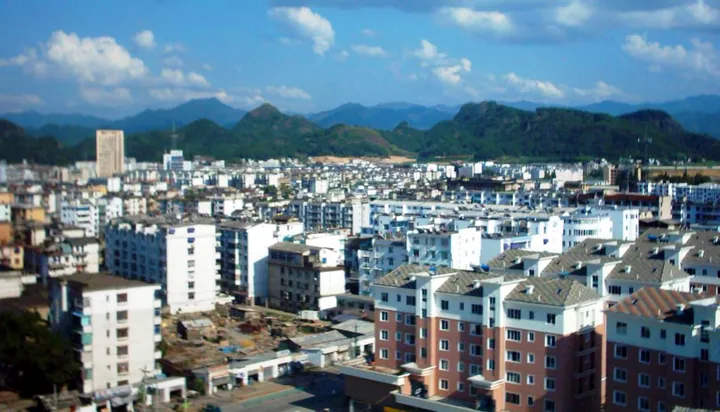
- Administrative area
- District · 市辖区
- Part of
- Huangshan
- Chinese name
- 屯溪区
- Local areas
- District guide
Area & population
- Area
- 191.00 km²
- Population · 2020
- 291,188
- Administrative seat
- Yanghu
Source: English Wikipedia, as of the dates shown.
Tunxi District is the central urban district of Huangshan City and the seat of its municipal government — the part of Huangshan that locals simply call Tunxi, and where most visitors sleep, eat and change transport before or after the mountain. Three rivers meet inside it: the Xin'an (新安江), the Heng (横江) and the Shuai (率水), with Huashan (华山) and Yangmei Mountain (杨梅山) rising behind the streets.
The district covers 191.04 sq km and had 291,188 residents at the 2020 census, divided into four subdistrict offices — Yudong, Yuzhong, Yuxi and Laojie (昱东、昱中、昱西、老街街道) — and five towns: Tuguang, Yanghu, Liyang, Xintan and Yiqi (屯光、阳湖、黎阳、新潭、奕棋镇). The district government sits in Yanghu.
Two things Tunxi is not. It is not the mountain: the south gate of Huangshan Scenic Area at Tangkou is a separate trip reached by shuttle or coach, not by walking out of the old town. And it is not a single walled "old town" that you pay once to enter — it is a working city of nearly 300,000 people, with the historic streets sitting inside it.
The riverside core: three streets, one river
Almost everything a short visit needs lies within walking distance of Sanjiangkou (三江口), the confluence point at the district's heart.
屯溪老街 Tunxi Old Street
A pedestrian street of roughly a kilometre, with origins in the Song dynasty and rows of Ming and Qing Huizhou shop buildings — two storeys of brick and timber with carved decoration — on both sides. In 2009 it was named one of the Historic and Cultural Famous Streets of China (中国历史文化名街), in the first group that also included Guozijian Street in Beijing and Pingjiang Road in Suzhou. The shops sell antiques, jade, painting and calligraphy, and the "four treasures of the study"; a memorial hall to the Qing philosopher Dai Zhen (戴震) is on the street, and the Tongderen pharmacy (同德仁药店), a provincial protected site, still stands on it.
Look past the souvenir counters at the crafts that are still made here. The Hu Kaiwen ink workshop (胡开文墨厂) on and around the street makes ink sticks and lets visitors try the gilding stage (描金), and inkstone and brush shops such as 三味砚斋 and 杨文笔庄 work in the same trade. An English-language guide describes the Hu Kaiwen ink factory as a place where the whole sequence — soot, glue, mixing, shaping, drying, polishing, decorating — can be watched.
屯溪河街 Tunxi Riverside Street (河街)
Between the old street and the water, 河街 is the district's newest piece of old town. It occupies the historic river frontage once known as 溪滩下, the wharf area remembered as 屯浦归帆, and was rebuilt under an old-street improvement programme begun in 2016: construction started in July 2020 and the street opened in October 2022. It holds about 48,000 sq m of floor space and mixes rebuilt wharf architecture with shops, bars and small stages; the 屯浦码头 and the reconstructed landings 鱼埠头, 阳湖渡 and 盐埠头 serve the "新安月夜·徽州传奇" night boats and water sports. Expect New-An medicine shops and clinics, Huizhou restaurants, 文房四宝 and 新安书画 sellers, and a riverside concert programme through the warmer months.
黎阳in巷 Liyang in Lane (黎阳老街)
Across the Heng river, Liyang is the older settlement of the two banks — "Tang–Song Liyang, Ming–Qing Tunxi", as the local saying goes — and was redeveloped into a quarter of about 60,000 sq m of site area and 70,000 sq m of building, laid out as three main streets with dozens of lanes. It is rated 4A and is free to enter. Around ten Huizhou houses were kept: the Shi family compound (石家大院) now holds 占川书局, a bookshop-library-café; the Jia compound (贾家大院) holds the Huizhou Worthies Hall (徽州乡贤馆); the old opera stage (黎阳古戏台) carries Huizhou music and drama, and the lacquer master Gan Erke has a studio on the old street. A 2,000 sq m food hall of Tang–Song-style snack stalls, an 8,000 sq m riverside platform and a waterside landing fill the evenings.
镇海桥 Zhenhai Bridge
The stone arch bridge that ties the two banks together — six piers, seven arches, about 130 m — was built in 1536 and is known locally as 老大桥. Floodwater destroyed it on 7 July 2020. It was rebuilt with a high proportion of the original stone (roughly 60% to 96%, depending on the part), and passed completion inspection on 21 December 2021, restoring the crossing. It is one of the district's three nationally protected heritage sites, with the Cheng family houses (程氏三宅) and the former home of the Ming mathematician Cheng Dawei (程大位故居).
Away from the river
徽州文化博物馆 China Huizhou Culture Museum. The district's main museum of Huizhou culture is on 迎宾大道50号 (Yingbin Avenue). It has been free since 2008, closes on Mondays, and in its 2026 notice set hours of 08:30–17:30 (last entry 17:00) from 31 March to 15 November; individual visitors do not need to book, groups do.
花山谜窟 / 花山世界 Huashan Mysterious Grottoes. About 5 km east of the centre in 屯光镇, this 4A park of some 1,200 mu is built around a group of man-made rock chambers roughly 1,700 years old whose date and purpose are still argued about. It is laid out in four sections and runs both daytime visits and a night programme with light and sound. The 花山石窟群 is separately listed as a provincial protected site. A dedicated shuttle (花山谜窟专线) runs from stops at 昱中花园 and 老六中, and night shuttles leave from near the old street. Hours and ticket combinations change with the season and with the day/night programme, so check the operator's platform before setting out.
篁墩 Huangdun. A village in 屯光镇 about ten minutes' drive east of the centre, nearly 2,000 years old and known as 程朱阙里 because the Cheng brothers (程颢、程颐) and Zhu Xi's line traced their ancestry here. Some 32 surnames settled in Huangdun before the Yuan dynasty, and more than 39 moved out again to other places. The rebuilt 程朱阙里坊 carries the Qianlong-era inscription 洛闽溯本. Be aware that the village's old fabric has suffered badly and local reporting is candid about it: this is a place for genealogy and Neo-Confucian history, not a polished attraction.
Lanes and hills. The district is also reworking its back lanes — 老虎山巷 and 枫树巷 among them — as smaller-scale alternatives to the riverside streets, and the wooded 稽灵山 area has guesthouses (民宿). 戴震公园, next to the district people's hospital, has a statue of Dai Zhen at its main gate; Dai Zhen was born at 隆阜, now inside the district.
Eating and buying in the district
Huizhou cooking is the reason to eat here, and the riverside streets are where it concentrates. Named dishes on district tables include fermented mandarin fish (臭鳜鱼), hairy tofu (毛豆腐) and braised chicken; the long-standing old-street restaurant 老街第一楼 is known for them. A 2026 provincial report on Tunxi's night economy places Huizhou restaurants, "medicine-and-food" (药食同源) tea drinks such as 壹葫茶, and Huizhou tea snacks on the same evening circuit. Street food is simpler: 蟹壳黄烧饼, the "crab-shell" baked roll, is sold along the old street.
Two practical notes. Huizhou cooking leans on cured pork, fermented fish and soy, and is often salty and oily — ask for 少油少盐 if you want it lighter, and expect the fermented fish to smell fermented before it tastes good. No kitchen can be judged from its appearance to be vegetarian, halal or free of a given allergen, so state your restrictions directly and confirm ingredients.
For buying: ink sticks and inkstones (徽墨、歙砚), brushes and tea. Tunxi was a tea town — 茶务都会 in the old phrase — and the riverside streets still sell local tea alongside the workshops that cut and carve ink and inkstones.
Getting to the district
There is no metro in Huangshan. The district is reached and crossed by bus, taxi or ride-hailing, coach and train.
High-speed rail. 黄山北站 (Huangshan North Railway Station) is the city's rail gateway, and it stands inside the district, in 新潭镇 (迎客松大道北2号). It opened on 28 June 2015 with the Hefei–Fuzhou high-speed line and now also serves the Hangzhou–Nanchang (杭昌) and Chizhou–Huangshan lines. From the station forecourt, Bus 21 (21路) runs to the 老街二马路 and 黄山眼科医院 stops, both a short walk from the old street; a 2025 local transport guide lists departures from the North Station from about 06:50 to 23:00 at intervals of 8–40 minutes, and the 高铁快线1路 express also stops near 黄山眼科医院. For a taxi or ride-hailing car, give the destination as 屯溪老街, 屯溪河街 or 黎阳in巷. Buses from the 黄山旅游客运中心 beside the North Station run to Tangkou, the mountain's south gate, and to Hongcun and Xidi.
Conventional rail. 黄山站 (Huangshan Railway Station), in the district on the Anhui–Jiangxi line (皖赣铁路), was built in 1981, opened in 1984 as Tunxi station and was renamed in 1987; its passenger numbers fell sharply once high-speed services moved to Huangshan North. Some conventional services still run, but check 12306 before planning around the station.
Coach. 黄山市汽车客运总站, also called 屯溪汽车站, at 屯溪区齐云大道32号 (tel 0559-2566666), is the long-distance bus station in the district.
Air. 黄山屯溪国际机场 (Huangshan Tunxi International Airport) is inside the district, so air arrivals are a road transfer into town rather than a cross-city journey. The airport has been open since 1959 and took its current name in 2014, but its route list is short and changes seasonally — check schedules before building a trip around it.
Boats. Night cruises on the Xin'an river leave from the riverside landings — 屯浦码头 and the 河街 area — under the "新安月夜·徽州传奇" brand, with more than one type of craft and a separate daytime programme. Confirm departure point, time and price at the pier or on the operator's platform; the local transport guide lists night shuttle connections to 花山谜窟 as well.
Getting around, and where to stay
The riverside core is walkable: the old street, 河街 and 黎阳in巷 are linked on foot, with Zhenhai Bridge crossing the Heng river. Everything else needs wheels — the museum is west of the centre on Yingbin Avenue, 花山谜窟 is about 5 km east, and 篁墩 is a further drive east.
For a first visit, staying in the riverside core puts dinner, tea and the evening river walk within walking distance and keeps rides to the museum and the grottoes short. The district runs a mix of high-end hotels, boutique guesthouses and river-view rooms, with clusters in the 河街 area (for example 岸香观澜居, 夜泊未来) and in the hills at 稽灵山 (溪水云涧). Staying out by 黄山北站 makes sense mainly if your next move is an early train, since the station area is a new district rather than the old town.
Treat riverside plans as weather-dependent. This is the point where three rivers meet, and the July 2020 flood was strong enough to take the old bridge down; heavy rain can close riverside paths and suspend cruises.
Guide sources
- 屯溪区 — 维基百科(中文)
- 安徽中国徽州文化博物馆 2026 年延时开放公告(搜狐转载馆方公告)
- 屯溪河街:一江畫境煙火徽州 — 香港商报
- 街区带你游安徽|黎阳in巷:千年古镇时尚新生 — 中安在线文旅频道
- 从黄山北站出发,畅达黄山市各景点的公交/班车全攻略 — 澎湃新闻·澎湃号
- 黄山北站 — 维基百科(中文)
- 黄山站 (安徽) — 维基百科(中文)
- 安徽黄山:重“见”镇海桥 — 新华社
- 黄山市屯溪区推进夜间经济高质量发展 — 安徽日报(中安在线旅游转载)
- 【文化中国行】从“程朱阙里”解码千年徽州 — 安徽日报/安徽新闻网
- 花山世界・花山谜窟主题园区 — Klook 活动页
- 城市交通(黄山) — 中国南方航空官网城市指南
- 屯溪老街 — 维基百科(中文)
- How to Get from Huangshan North Railway Station to Tunxi — China Discovery(英文旅行指南)
- 黄山屯溪国际机场 — 维基百科(中文)
Explore Tunxi District
Core places to explore, with English and Chinese names.
Places to explore around Tunxi District
 The stone-paved main street of 屯溪老街: two-storey Huizhou shopfronts, timber upper galleries, hanging lanterns and shop signboards (photographed 19 October 2010). Photo: 江上清风1961 · CC BY 3.0
Tunxi Old Street屯溪老街
A 1.27 km pedestrian street of Huizhou shop buildings in the centre of Tunxi, grown from a river landing where three rivers meet: two-storey timber shopfronts under horse-head gable walls, ink, inkstone and tea shops, four small museums and memorial halls, and Huizhou street food. Free, with no gate or ticket, and open at any hour.
Read the place guide →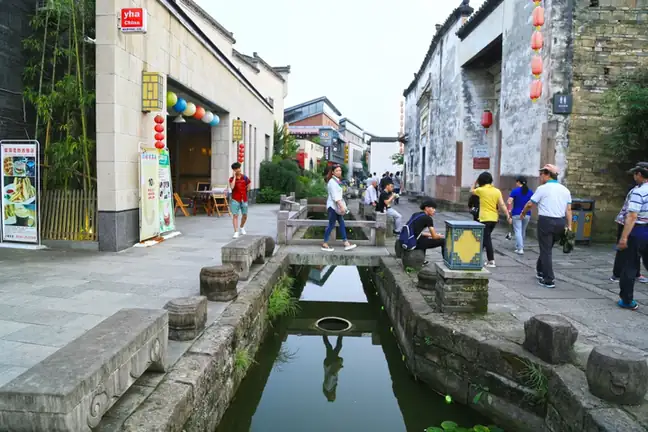 Liyang Old Street · 黎阳老街
Liyang Old Street黎阳老街
Liyang Old Street (黎阳in巷, "Liyang in Lane") is the west-bank counterpart to Tunxi Old Street in Huangshan's Tunxi District: about ten surviving Huizhou courtyard houses, including the Shi and Jia residences, set inside a 2013 leisure district with a landscaped water channel, a Huizhou food street and a riverside bar strip. Free and ungated; the lit riverside and food lanes work best in the evening, and the two old streets are linked by the pedestrian Zhenhai Bridge.
Read the place guide → Tunxi Old Street: two-storey Huizhou shopfronts, red lanterns and granite paving on the main street. Photo: Emitchan (Wikimedia Commons) · Public domain
Tunxi Town黄山市屯溪区
Tunxi is Huangshan City's historic urban core, where the Hengjiang and Lüshui rivers join to form the Xin'an. Its walkable heart is a pair of old quarters — Tunxi Old Street (屯溪老街) and Liyang in Lane (黎阳in巷) — linked by the rebuilt Ming-dynasty Zhenhai Bridge, with the newer Tunxi River Street (屯溪河街) along the water. Arrivals by plane, conventional train and long-distance coach happen here, not at the mountain.
Read the place guide →Plan your visit
Getting there
Tunxi District is about 3 km (straight-line distance) from central Huangshan. Search for 屯溪区 in a map app to find stations and your accommodation.
Where to stay →Build your route
Tunxi Old Street and Liyang Old Street are both listed here. The linked place guides have entrance and visit details.
Continue with Huangshan →More in Huangshan
Sources & geographic information
Administrative names and parent areas: Official geographic directory (dmfw.mca.gov.cn) · Reference date 2026-09-06.
Background text adapted from Tunxi District — Wikipedia contributors, under CC BY-SA 4.0. Text has been shortened and reorganized; source revision 1331082533.
Photo: Liyang Old Street · sohu.com. Resized for the web; the photo itself has not been edited.
Map data © OpenStreetMap contributors. Pins mark approximate centres, not entrances or boundaries.
Image credits & notes (1)
- Elevated view over Tunxi District, Huangshan, Anhui, with hills in the background · 安徽省黄山市屯溪区俯瞰街景 Source-recorded photograph date: Taken on 1 January 2001.Photo: luchangjiang~鲁昌江 · CC BY-SA 3.0Resized for the web; the photo itself has not been edited. Thumbnails may show a cropped view.
