

Lanzhou local food
Local dishes, ingredients and the stories behind them.
← Lanzhou travel guideAll Gansu food →Food from all of China →
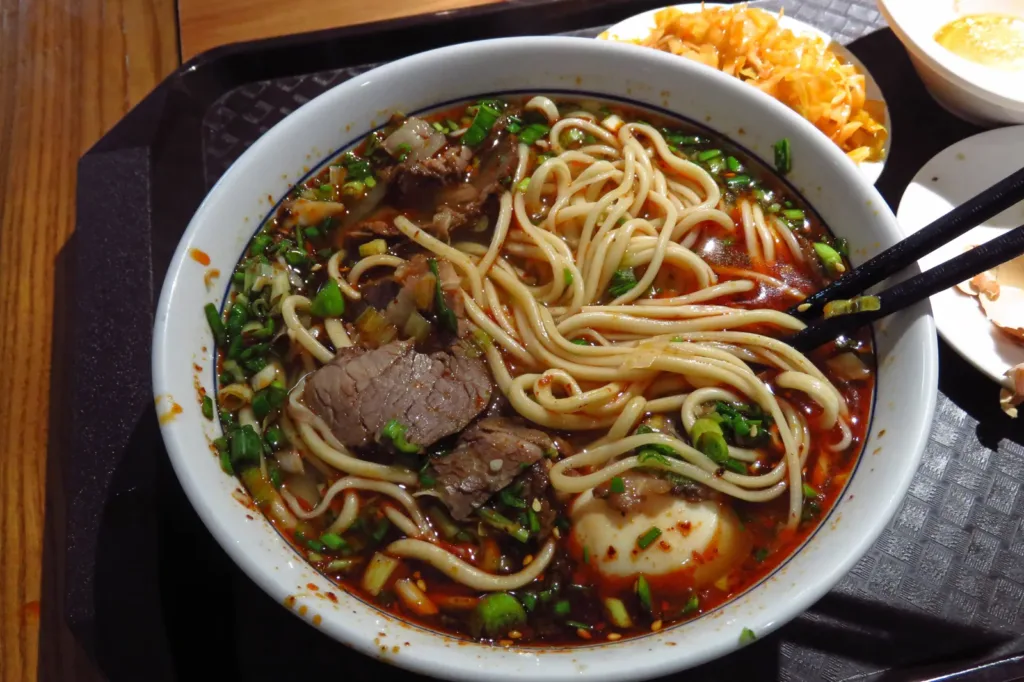
Lanzhou beef noodles 兰州牛肉面
Lanzhou beef noodles are a hand-pulled wheat-noodle soup rooted in Lanzhou’s food culture: clear beef broth, radish, sliced beef, green herbs and optional chilli, with noodle width chosen at order. The local technique is listed in China’s national intangible cultural heritage register, and the official description connects its ingredient geography to wheat from the Loess Plateau and beef from Gannan and Qinghai.
Read dish guide →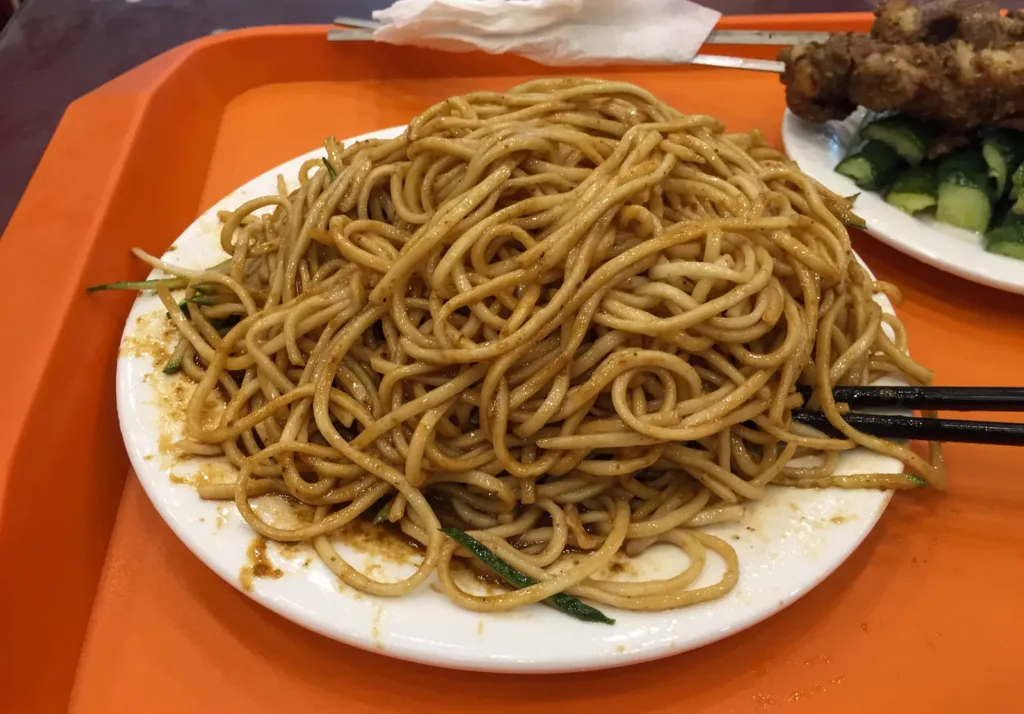
Lanzhou cool noodles 兰州凉面
Lanzhou liangmian (兰州凉面) is a seasonal noodle dish built from wheat noodles cooled after cooking, tossed with oil, and served with a cooked vegetable gravy. In Lanzhou it is also described as “liangmian tiaor, re luzhi” (凉面条、热卤子); the topping’s temperature and vegetables can vary by kitchen.
Read dish guide →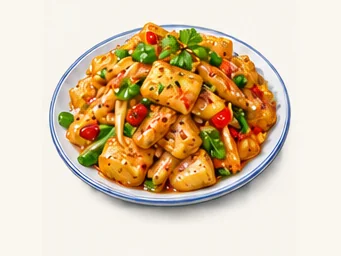
Lanzhou oil-fried bean jelly 兰州油炒粉
Lanzhou oil-fried bean jelly (兰州油炒粉) is a hot local snack made by stir-frying set liangfen pieces with lard, sugar, scallion, garlic shoots, salt and soy sauce, then serving them with optional chili oil, sesame paste, vinegar and garlic juice. Expect a hot, seasoned piece of jelly rather than a noodle dish; recipes and toppings vary by stall.
AI illustration · AI 示意图
Read dish guide →
Louyuzi starch drops 漏鱼子
Louyuzi is a Lanzhou summer snack made by cooking a flour or starch batter, dropping it through a holed utensil into cool water, and serving the small fish-shaped pieces with jiangshui, vegetables, and chili.
AI illustration · AI 示意图
Read dish guide →
Sweet fermented barley 甜醅子
In Lanzhou, 甜醅子 (tianpeizi; also written 甜胚子) is a cool, lightly fermented grain snack made from hulless oats (莜麦, youmai) or highland barley (青稞, qingke). The grains stay pleasantly chewy while the liquid becomes sweet, lightly tangy and wine-scented; Lanzhou descriptions commonly add cool boiled water and sugar to the bowl.
AI illustration · AI 示意图
Read dish guide →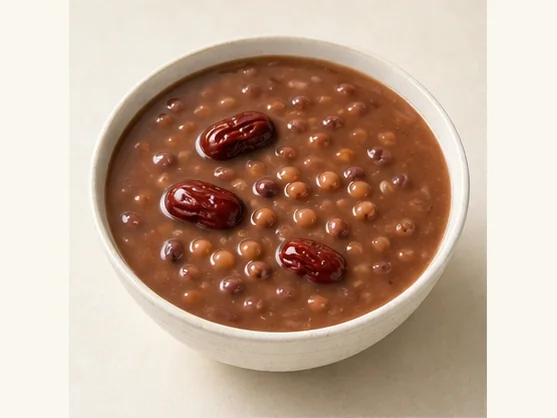
Lanzhou sweet grey-pea soup 兰州灰豆子
Lanzhou huidouzi is a spoonable sweet pea-and-date porridge made from speckled peas simmered until soft, with sugar added to taste. Its dark, thick texture and gentle bean-and-date aroma offer a small, everyday window into Lanzhou’s local sweet-snack tradition.
AI dish illustration / AI 菜品示意图
Read dish guide →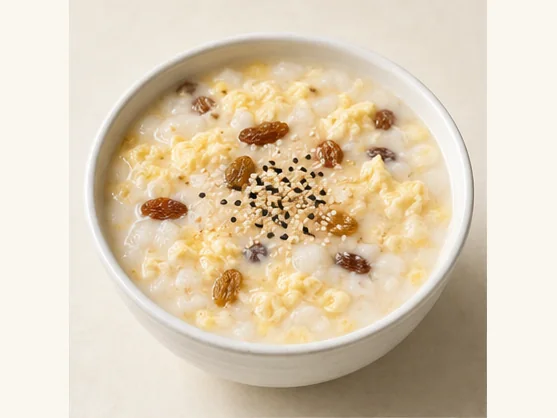
Milk, egg & fermented-rice sweet soup 鸡蛋牛奶醪糟
In Lanzhou, 牛奶鸡蛋醪糟 is a hot, sweet soup of milk, fermented glutinous rice and egg, often finished with sesame, dried fruit or nuts. Its place in Lanzhou’s night-market food culture makes it a practical way to taste a local sweet without treating one stall as the definition of the dish.
AI dish illustration / AI 菜品示意图
Read dish guide →
Hand-Grabbed Mutton 手抓羊肉
Hand-grabbed mutton (手抓羊肉) is a bone-in lamb dish associated with Hui and Tibetan food traditions in Gansu. In Lanzhou’s wider region, Yongdeng—especially Wushengyi—is the clearest local reference: the meat is valued for a clean, lingering flavour and is usually served in large pieces for eating by hand, with seasonings and dips varying by kitchen.
Dish photograph · see caption for context
Read dish guide →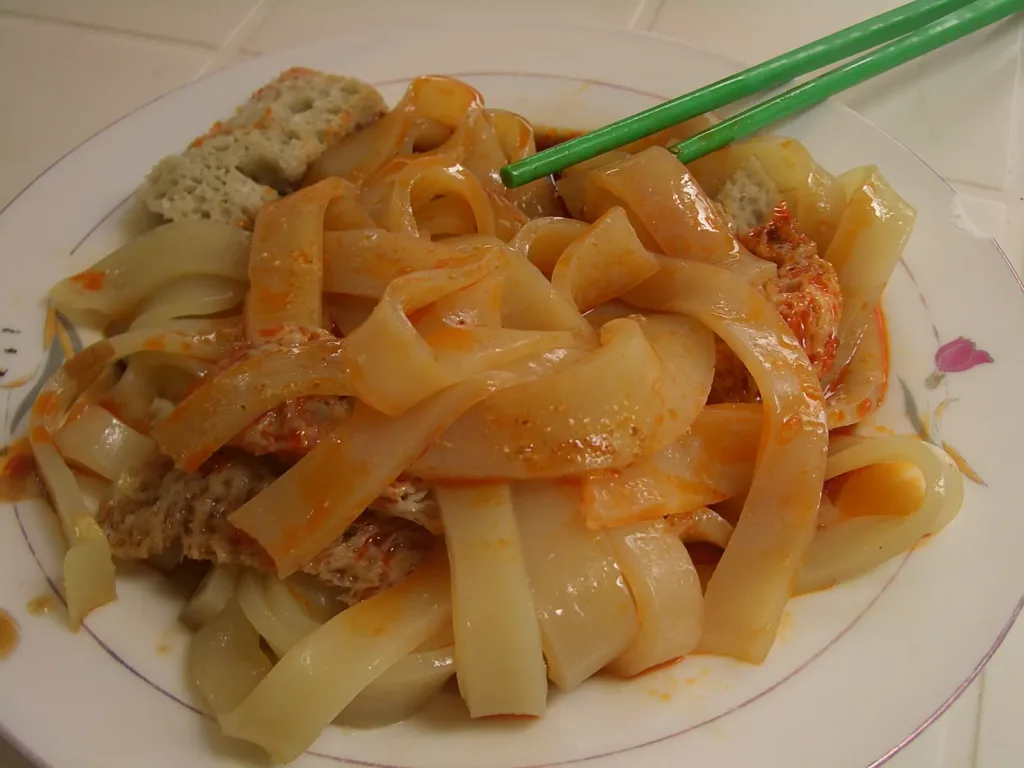
Cold Steamed Noodle Sheets 酿皮子
> Short summary: Niangpizi is a cold Gansu wheat-flour snack closely associated with Lanzhou: steamed sheets are cut into thick strips and dressed with vinegar, garlic, chilli oil and other seasonings, often with sliced gluten for a cool, springy bite.
Read dish guide →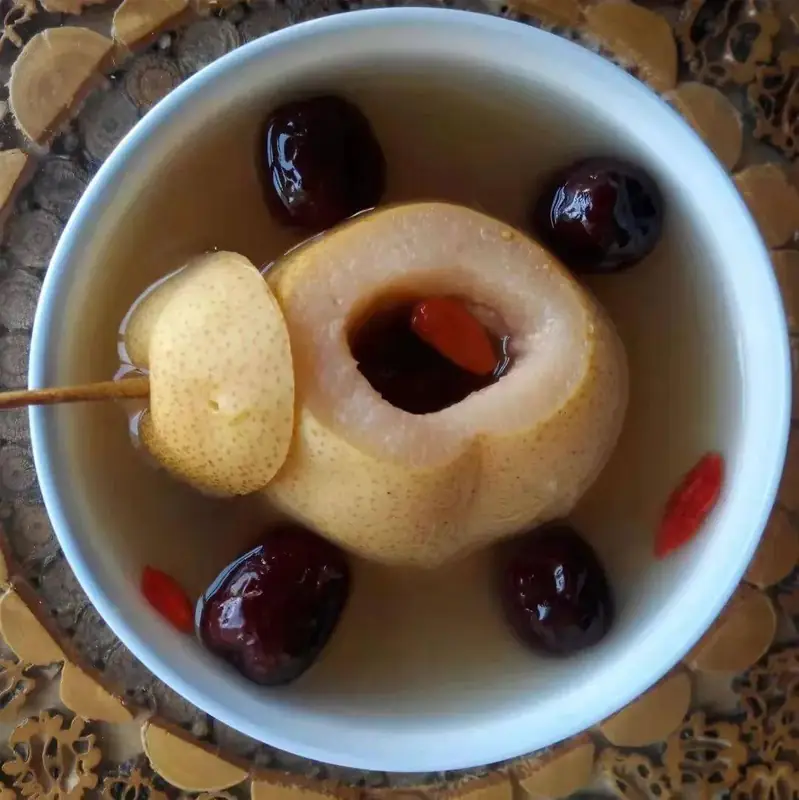
Hot Winter Pear Drink 热冬果
Hot Winter Pear Drink (热冬果, rè dōng guǒ) is a Lanzhou winter sweet made by slowly cooking Dongguo pears until the fruit softens and the pear broth becomes fragrant. It links the city’s cold-weather street-food tradition with the pear-growing landscapes along the Yellow River in nearby Shichuan.
Read dish guide →
Jiangshui sour-broth noodles 浆水面
In Lanzhou, 浆水面 pairs wheat noodles with a pale, naturally fermented vegetable broth: sour, herbal and refreshing, but part of a wider Gansu tradition rather than a dish unique to one city.
Read dish guide →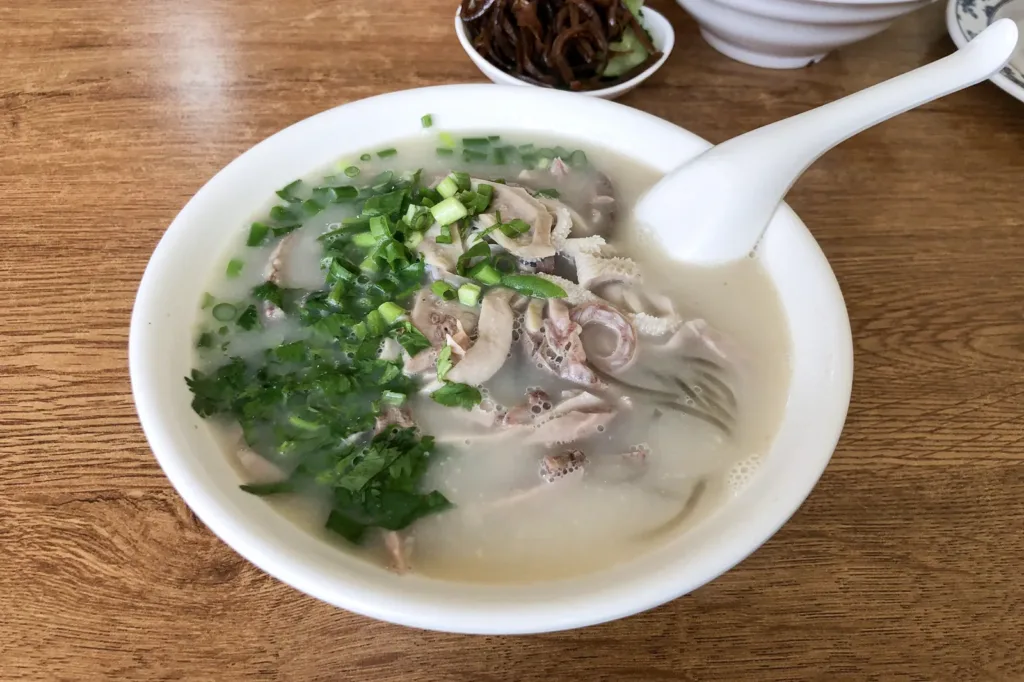
Sheep Offal Soup 羊杂碎
Yang zasui (羊杂碎) is Lanzhou’s bowl of mixed sheep head meat and offal in clear broth, finished with garlic sprouts and chilli and often eaten with Lanzhou flatbread. The recipe is not fixed from kitchen to kitchen, so the interest is in the changing mix of textures rather than a single canonical formula.
Read dish guide →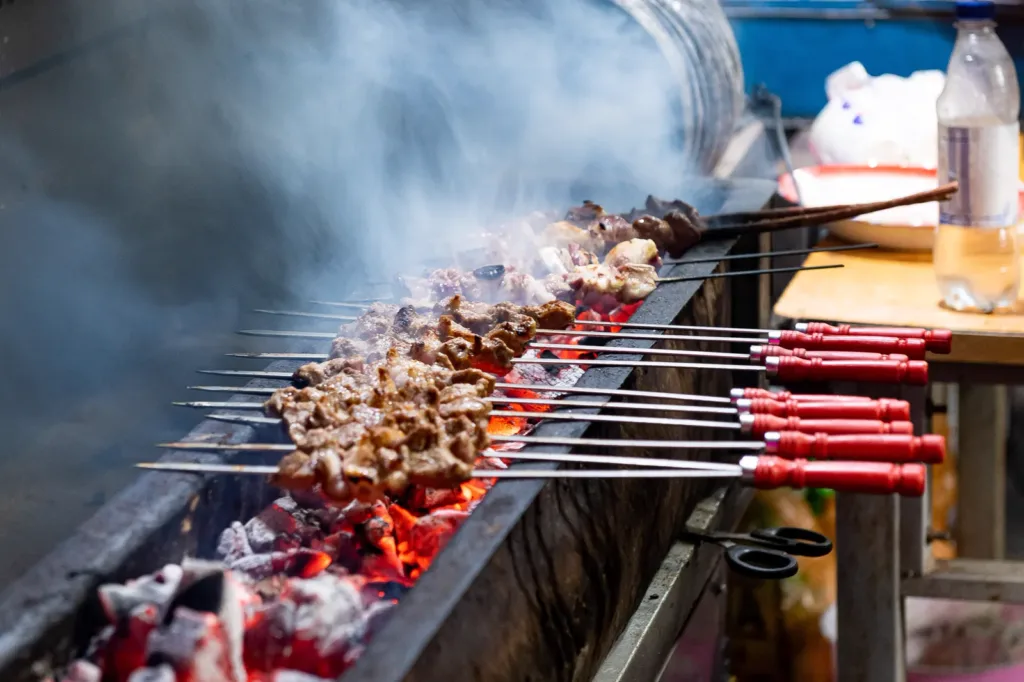
Lanzhou Grilled Lamb Skewers 兰州烤羊肉
Lanzhou Grilled Lamb Skewers (兰州烤羊肉) are charcoal-grilled lamb skewers associated with Lanzhou’s night-market food culture: alternating lean and fatty pieces, a generous chilli coating, and smoke from melting fat. The appeal is the contrast between crisp edges and juicy centres, with recipes and adjacent grilled items varying by stall.
Read dish guide →
Lily Bulb Peaches 百合桃
Lily Bulb Peaches (百合桃) is a Lanzhou banquet sweet built from fresh Lanzhou lily bulbs shaped like a peach around bean paste, then finished with green plum, hawthorn and a light sugar glaze. Its appeal is the contrast between soft lily layers, a dense sweet filling and tart fruit accents; recipes vary, so treat it as a dish to identify by name rather than a guaranteed everyday menu item.
Read dish guide →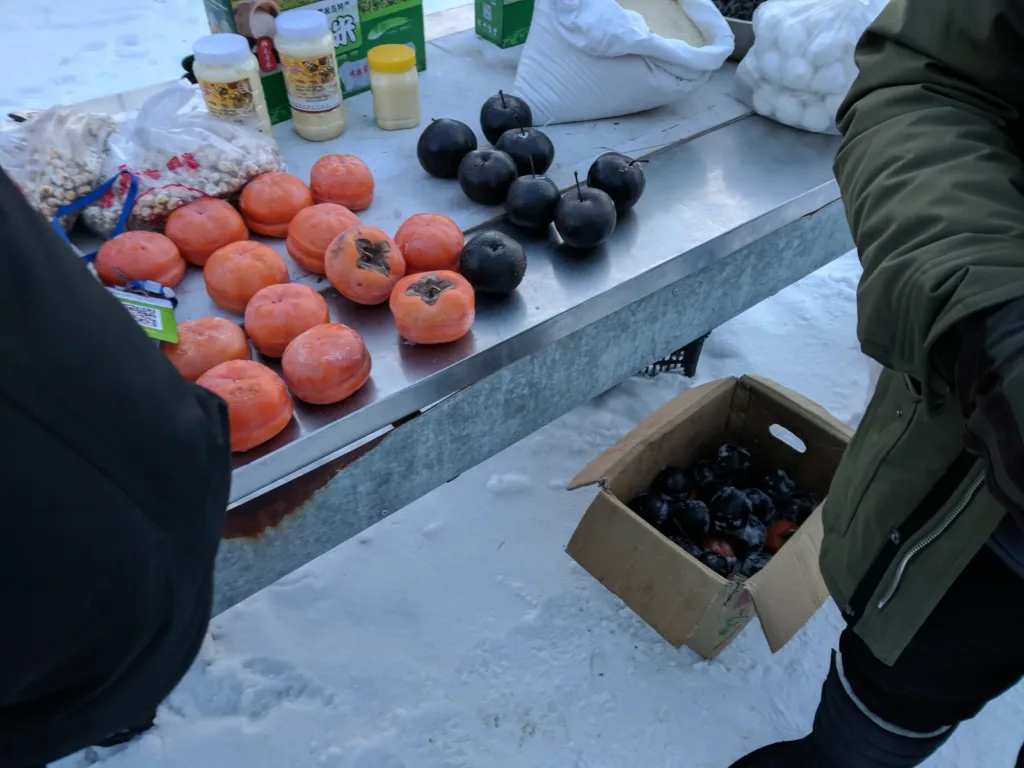
Frozen Soft Pear Dessert 软儿梨甜品
In Lanzhou, 软儿梨 (also called 冻梨 or 香水梨) is a local pear from Gaolan County, especially Shichuan, that changes from a firm, tart autumn fruit into a dark, soft, juice-filled winter treat through storage, cold and thawing. Its appeal is the contrast between a tough-looking frozen skin and honeyed, wine-scented juice—not a single restaurant recipe.
Read dish guide →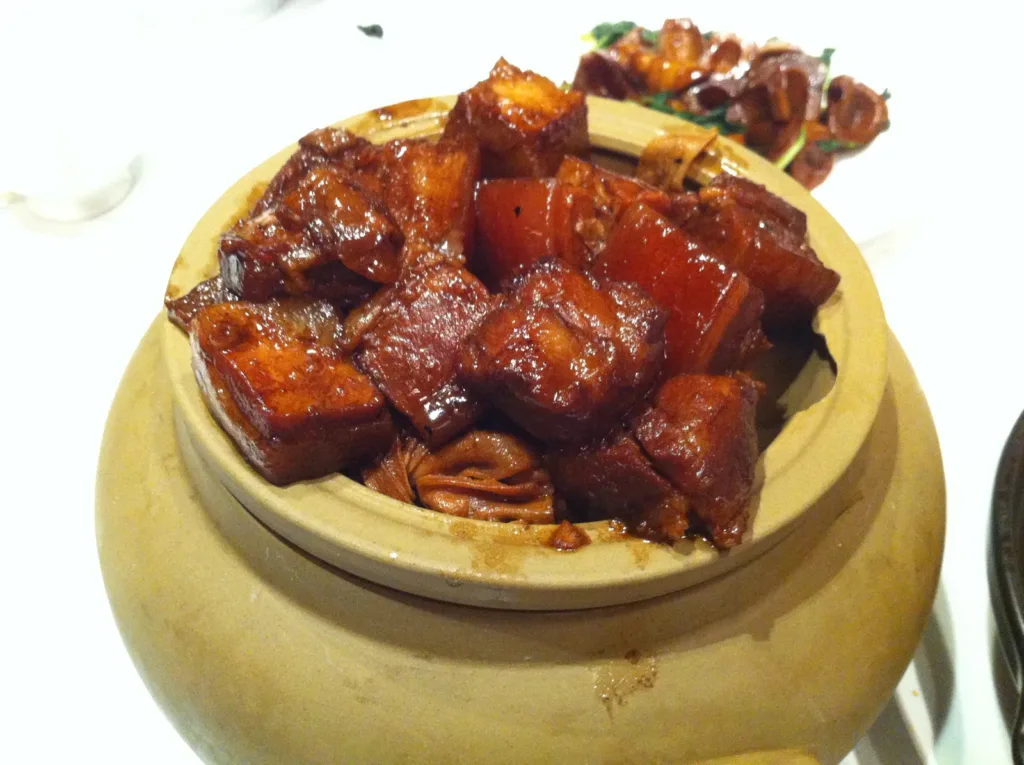
Gaosan Soy-Braised Pork 高三酱肉
Gaosan Soy-Braised Pork (高三酱肉) is a Lanzhou-associated Gansu braised-pork specialty. Pork with a balanced lean-to-fat ratio is browned, tied into long pieces and cooked first over high heat and then gently; spices, rock sugar, Shaoxing wine, salt and a bean-paste base give the finished meat a glossy surface, a firm-tender texture and a deep aroma.
Read dish guide →Gansu · Food stories

Food articles are in progress
Long-form food stories for this topic are being written. Until then, browse the dish guides above or see all Chinese food guides.