

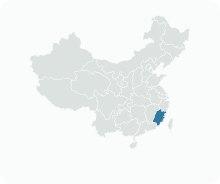
Get to know Jianyang District
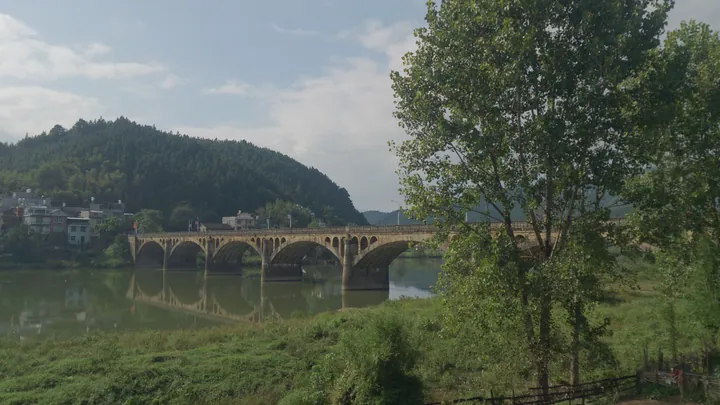
- Administrative area
- District · 市辖区
- Part of
- Nanping
- Chinese name
- 建阳区
- Local areas
- District guide
Jianyang feels less like a single attraction than a set of connected landscapes. The Chongyang and Mayang streams meet in the urban area, while the Nanpu stream runs north to south through the district. The administrative area covers 3,383 square kilometres and includes eight towns, three townships and five subdistricts, so a visit needs a little more planning than a walk between central-city sights.
The urban centre is the best place to get your bearings: water, bridges, newer civic districts and older local neighbourhoods make up the everyday setting. From there, the district opens into separate directions. Kaoting lies by the Mayang River and carries Zhu Xi’s late-life teaching legacy. Masha and Shufang are associated with Jianben woodblock printing. Huangkeng reaches into the Wuyi mountain landscape, including the Dazhulan area identified by the district government as part of the nature reserve’s core. These are different kinds of visits, not a single walking circuit.
Why Jianyang is worth the detour
Jianyang’s strongest thread is the way learning, making and landscape sit together. The area was one of the Song period’s major printing centres: books produced in Masha and Shufang, known as Jianben or Masha editions, travelled well beyond northern Fujian. At the same time, the Jian kiln produced the black-glazed bowls now known as Jian ware or jianzhan, including the rabbit-fur effects prized in Song tea culture. The firing technique is listed as national intangible cultural heritage.
Look for the difference between a kiln story and a workshop demonstration. The Jian kiln ruins are an archaeological heritage site, while contemporary exhibitions and makers explain how Jian ware is shaped, glazed and fired today; do not assume that every showroom is the ruin itself. Kaoting Academy is another distinct stop: it recalls Zhu Xi’s teaching and the formation of the Kaoting school, rather than presenting itself as a generic old building. The Tomb of Zhu Xi and the Jian kiln ruins are both listed by the district government among national key protected cultural sites.
A useful way to explore is to pair one central or Kaoting stop with one outlying place, then leave time for the return journey. For the mountain side around Huangkeng and Dazhulan, treat reserve status as a real boundary: check the current managed area and access conditions before setting out, and do not collect specimens or enter an unmarked trail simply because a map shows a forest road.
A local taste to look for
The most distinctive food name to carry with you is 水吉扁肉 (Shuiji bianrou, Fujian-style wonton soup). It belongs to Shuiji Town and differs from a chopped-meat wonton because fresh lean pork is pounded vertically with a wooden mallet until it becomes smooth and cohesive. The filling stays springy and tender; thin wrappers are folded into small butterfly shapes, then the dumplings are cooked and finished with clear pork-bone broth, soy sauce, pork fat, seasoning and scallions. It is traditionally an everyday breakfast, not a restaurant ranking or a single branded dish.
Search for “水吉扁肉” on Meituan (美团) or Amap / Gaode Maps (高德地图) to find nearby places serving this dish. Check menus, recent reviews, opening information and today’s availability before choosing.
The district government also identifies Jianyang jieyou citrus, Jianyang white tea and Xiaohu bayberries as products with geographical-indication protection. These are better understood as seasonal local produce than as a promise that every shop will carry them at every time of year.
Getting there and moving around
For high-speed rail, search for 南平市站 (Nanpingshi Station). The station is in Jiangkou Town (将口镇), within Jianyang District. It was formerly called 武夷山东站 Wǔyíshān Dōng Zhàn; a railway report records the change to 南平市站 from 15 December 2019. A static China Railway 12306 station directory still displays the older 武夷山东 entry as well as the conventional-passenger 建阳站 Jiànyáng Zhàn entry, so check the current booking result and train service before paying.
A 16 March 2024 Jianyang traffic notice records K2 buses running from the high-speed 南平市站 to several urban stops, including 和顺景园, 二院, 市立医院, 汽车站 and 西区公交站, and K3 services to destinations including 行政服务中心 and 云谷校区. Those details were published for an event and are not a timetable: verify the route, stop name and return service on the day. The district’s public-transport operator says its network covers Wuyi New Area and Jianyang’s urban area, but that network does not turn the outlying towns into a single urban bus loop.
There is no universal visitor entrance for Jianyang District. Do not give a driver only “建阳区” and expect to arrive at a sight. Use the exact Chinese destination for the place you have chosen—such as 考亭书院 (Kaoting Academy), 建窑遗址 (Jian Kiln Site), 水吉镇 (Shuiji Town) or 黄坑镇 (Huangkeng Town)—and confirm the venue’s current visitor entrance and the return connection before leaving the station or town centre. For a rural or reserve-edge visit, a taxi or ride-hailing car is a practical last leg, but fares, journey times and access roads should be checked for the specific destination rather than guessed for the whole district.
Explore Jianyang District
Core places to explore, with English and Chinese names.
Places to explore around Jianyang District
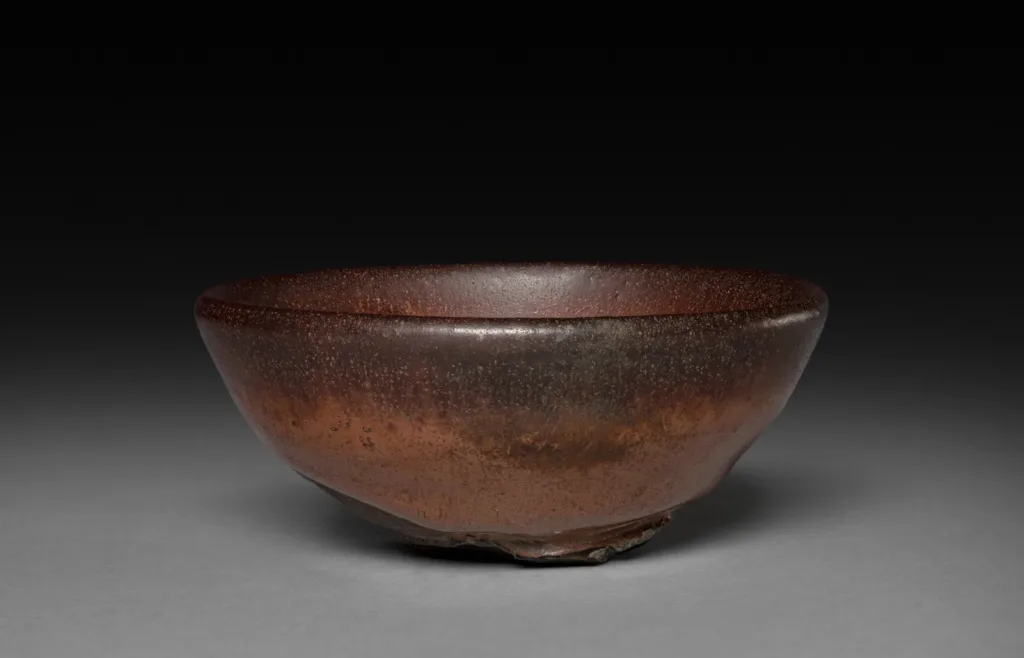 A Song-dynasty Jian ware tea bowl from Fujian in the Cleveland Museum of Art collection; a representative object image for the exhibition layer, not a photograph of the Jianyang kiln ruins. Photo: Gary Kirchenbauer; Cleveland Museum of Art open-access record · CC0 1.0
Jian Ware Culture Exhibits and Kiln Sites建盏文化展示与窑址开放点
A dispersed Jian ware heritage visit in Jianyang: see the protected Song-period kiln grounds around Shuiji, then use museums and workshops in the district to read the glazes, tea culture and revived firing craft. It is not one gated attraction, so confirm which site is open before travelling.
Read the place guide → Kaoting Academy · 考亭书院
Kaoting Academy考亭书院
Kaoting Academy is Zhu Xi’s final academy in Jianyang, where he spent his later years teaching and writing. Its present halls are mostly a 2019 reconstruction, but a Ming stone memorial archway still marks the entrance and helps visitors read the site as both a historical place and a modern cultural complex.
Read the place guide →Plan your visit
Getting there
Jianyang District is about 75 km (straight-line distance) from central Nanping. Search for 建阳区 in a map app to find stations and your accommodation.
Where to stay →Build your route
Jian Ware Culture Exhibits and Kiln Sites and Kaoting Academy are about 25 km apart (straight-line distance). The linked place guides have entrance and visit details.
Continue with Nanping →More in Nanping
Sources & geographic information
Administrative names and parent areas: Official geographic directory (dmfw.mca.gov.cn) · Reference date 2026-09-06.
Background text adapted from Jianyang, Nanping — Wikipedia contributors, under CC BY-SA 4.0. Text has been shortened and reorganized; source revision 1359434986.
Photo: Kaoting Academy · 古海岸遗址 · CC BY-SA 4.0. Resized for the web; the photo itself has not been edited.

Map data © OpenStreetMap contributors. Pins mark approximate centres, not entrances or boundaries.
Image credits & notes (1)
- A river bridge at Jianyang, Nanping, in Jianyang District · 福建南平市建阳区建阳河桥 Source-recorded photograph date: Taken on 3 October 2015.Photo: stone wu · CC BY-SA 3.0Resized for the web; the photo itself has not been edited. Thumbnails may show a cropped view.
