

Get to know Manzhouli
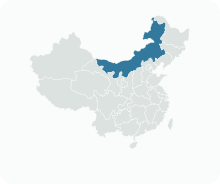
- Administrative area
- County-level city · 县级市
- Part of
- Hulunbuir
- Chinese name
- 满洲里市
- Local areas
- County-level city guide
Area & population
- Population · 2020
- 150,508
- Administrative seat
- Dongshan Subdistrict
Source: English Wikipedia, as of the dates shown.
Why Manzhouli feels different
Manzhouli is easiest to understand as a working border city first and a themed tourism destination second. The railway and port give the city its outward-looking history; the visitor-facing side turns that border story into a group of museums, squares, landmark structures and Russian-inspired architecture. The result is not one compact old town but a set of urban and outer-city experiences that need to be joined deliberately.
The clearest place to read the border story is the Guomen visitor area. The Manzhouli government describes it as part of the China–Russia Border Tourist Area, a national 5A-rated scenic area since October 2016. Its listed sights include the National Gate, Boundary Marker No. 41, the former site of the Red Secret Communication Line, Peace Gate Square, an aircraft square, a locomotive square, the Exhibition Hall of the Sixth National Congress of the Communist Party of China, and the Manzhouli Red History Exhibition Hall. This is a place for looking at border history and infrastructure through designated visitor facilities, not for approaching restricted working areas.
Read the city as two linked visitor zones
Start with the built-up city and use it as your practical base: this is where accommodation, food, the railway arrival point and everyday streets are concentrated. Then set aside a separate half-day or more for the outer visitor zone. The city government’s route guide places Manzhouli on regional rail and air itineraries and describes the city as a stop on a wider Hulunbuir border route; it also identifies Manzhouli Xijiao Airport as one of the region’s main arrival airports.
The Matryoshka visitor area is the more theatrical side of the city. The government describes it as a large Russian-style leisure complex built around the shared history, culture, architecture and folk customs of Manzhouli and Russia. Its themed park includes a Matryoshka World, a Matryoshka experience hall, entertainment areas, a Matryoshka theatre, a Russian folk-custom museum, a Russian–Mongolian performance theatre, an ice rink and an amusement area. The complex also lists four performance venues and a 72-metre Matryoshka-themed hotel. Check the current programme and which indoor or outdoor areas are operating before you commit to a show-focused visit; the attraction’s component list is more stable than any particular performance schedule.
These zones are related but not interchangeable. The Guomen area gives you border markers, railway-port history and red-history exhibitions. The Matryoshka area gives you staged entertainment, themed architecture and family-oriented indoor or outdoor activities. Seeing both explains why Manzhouli can feel at once like a port town and a deliberately theatrical gateway city.
Getting around and returning
For local public transport, a Manzhouli government route guide says that bus 6 runs from the urban area to 国门站 (Guomen stop) and passes 套娃广场 (Matryoshka Square) on the way. Use the Chinese names in Amap or Gaode Maps, and confirm the current direction and return service on the day. A route that reaches the border attraction is not automatically a late return service after a performance or evening visit.
For rail or air arrivals, confirm the current train or flight before booking around a fixed sequence. From the arrival point, give a driver or map app the exact Chinese name of the accommodation or visitor site. For a border-zone taxi trip, say 国门景区 Guómén Jǐngqū for the sightseeing destination, not simply “the port”; the two are not the same access point. Do not infer a fixed fare, travel time or a single citywide entrance from the district name.
The border is not an ordinary sightseeing shortcut
The city government’s current notice defines separate controlled areas for the road, railway and aviation ports, including inspection sites, waiting areas and parts of the China–Russia Manzhouli–Zabaikalsk mutual-trade zone. It states that people and vehicles entering a port restricted area must accept border-inspection management, and that unauthorised entry can be penalised. A visit to the Guomen scenic facilities therefore does not grant access to a working port or permission to cross the border. If your plan is actual international travel rather than sightseeing, arrange the formal entry, exit and document requirements separately through the relevant current authorities.
The same distinction matters when using photographs or online map pins: a landmark image may show the visitor attraction without showing the controlled entrance used by a port operation. Stay within signed visitor routes, follow staff instructions and check current access notices before setting out. Outdoor border sites can also be exposed to wind and rapidly changing conditions, so the season and the day’s operating notice should shape your plan.
A local grain to look for
炒米 (chaomi) is a useful small food experience because it connects Manzhouli to broader Mongolian food traditions rather than pretending to be a single restaurant’s invention. The city government describes it as a traditional Mongolian staple: millet is sorted and washed, cooked slowly until half done, roasted in a pan and then dehulled. The finished grain is crisp, fragrant and filling.
To find it in the city, search for 炒米 Chǎomǐ on Meituan (美团) or Amap/Gaode Maps (高德地图). Check the menu, recent reviews, opening information and whether it is available that day before choosing; do not treat search ranking as proof of authenticity, and do not assume a particular shop or recipe is permanent.
Plan with a current check
Manzhouli rewards a staged visit: use the city centre for orientation and ordinary street life, join the Matryoshka zone when its current attractions suit your group, and reserve a separate outing for the Guomen area. The government pages confirm the main components and the city guide identifies the useful bus link, but current tickets, performance times, bus frequency, rail and flight schedules, airport transfers and foreign-visitor admission arrangements still need a same-day check. The controlled port areas are not a substitute for formal border-crossing procedures.
Guide sources
Explore Manzhouli
Core places to explore, with English and Chinese names.
Places to explore around Manzhouli
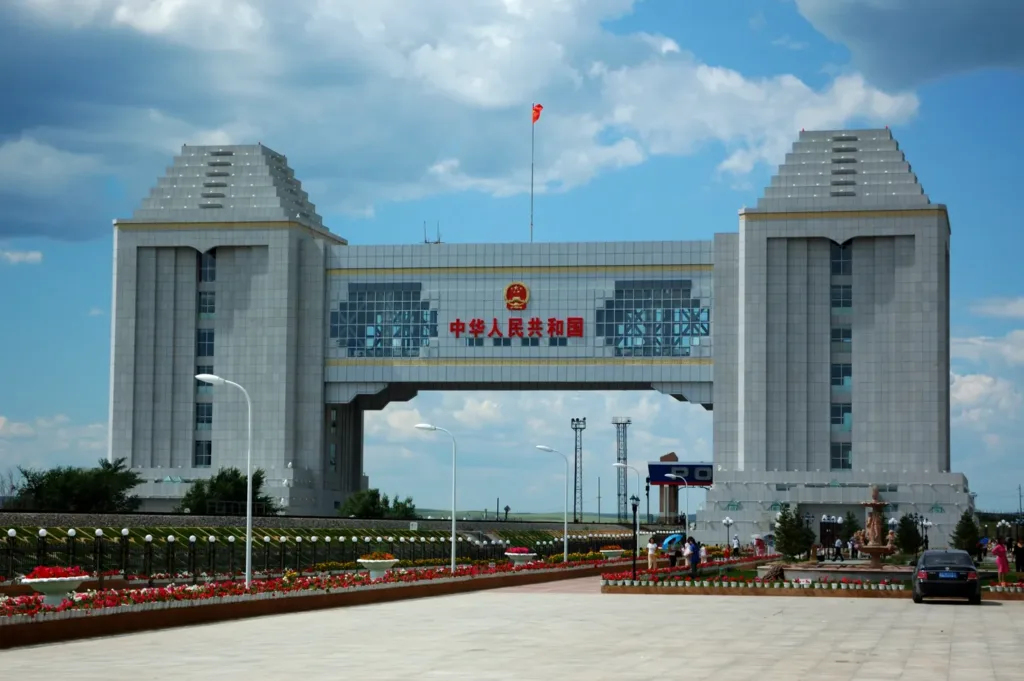 Manzhouli National Gate in the China–Russia border area, Manzhouli, Inner Mongolia, China (photographed 30 July 2008). Photo: leon li · CC BY-SA 2.0
Manzhouli China-Russia Border Tourism Area满洲里中俄边境旅游区
Manzhouli’s China-Russia Border Tourism Area is a group of distinct visitor zones: the National Gate area presents the railway frontier through the gate, boundary marker and exhibitions, while the Matryoshka Touring Area turns Russian craft imagery into themed architecture, performances and entertainment. The two experiences should be planned as separate stops rather than treated as one border crossing.
Read the place guide →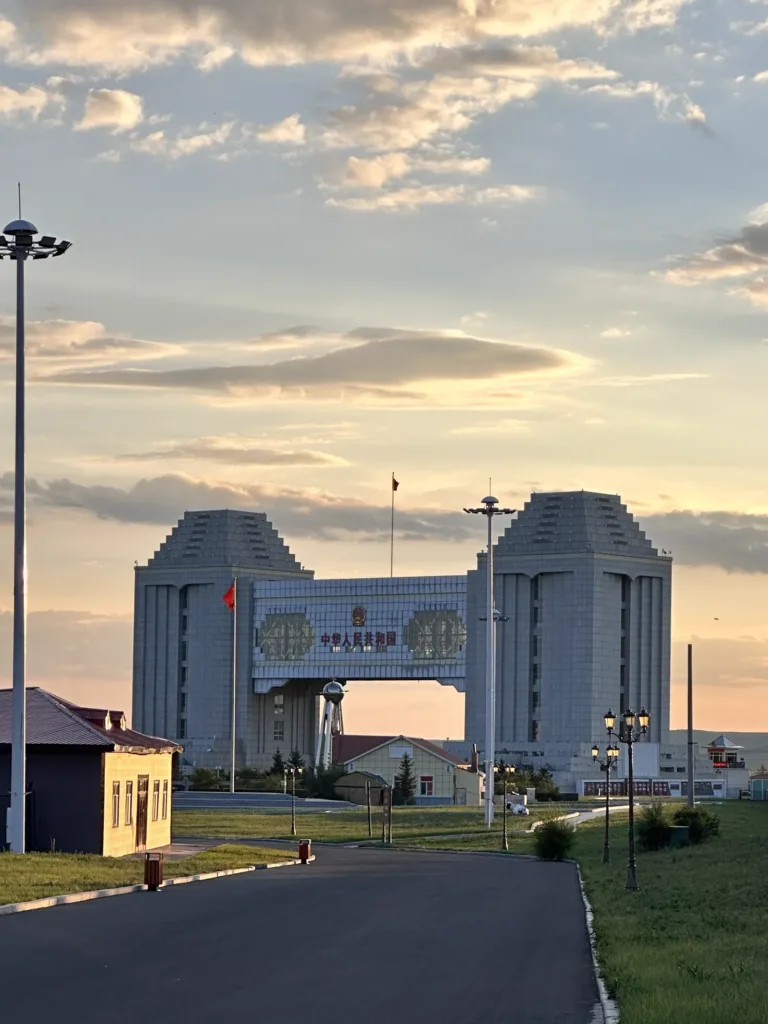 Manzhouli National Gate Scenic Area, photographed on 13 December 2025. Photo: SUN JIAYI's · CC BY-SA 4.0
Manzhouli满洲里
Manzhouli is a compact China–Russia border city shaped by railway trade, where a working frontier, Russian-influenced streets, the Matryoshka complex and a quieter lakeside city can be experienced in one visit.
Read the place guide →Plan your visit
Getting there
Manzhouli is about 180 km (straight-line distance) from central Hulunbuir. Search for 满洲里市 in a map app to find stations and your accommodation.
Where to stay →Build your route
Manzhouli China-Russia Border Tourism Area and Manzhouli are both listed here. The linked place guides have entrance and visit details.
Continue with Hulunbuir →More in Hulunbuir
Sources & geographic information
Administrative names and parent areas: Official geographic directory (dmfw.mca.gov.cn) · Reference date 2026-09-06.
Background text adapted from Manzhouli — Wikipedia contributors, under CC BY-SA 4.0. Text has been shortened and reorganized; source revision 1366363886.
Map data © OpenStreetMap contributors. Pins mark approximate centres, not entrances or boundaries.
Image credits & notes (1)
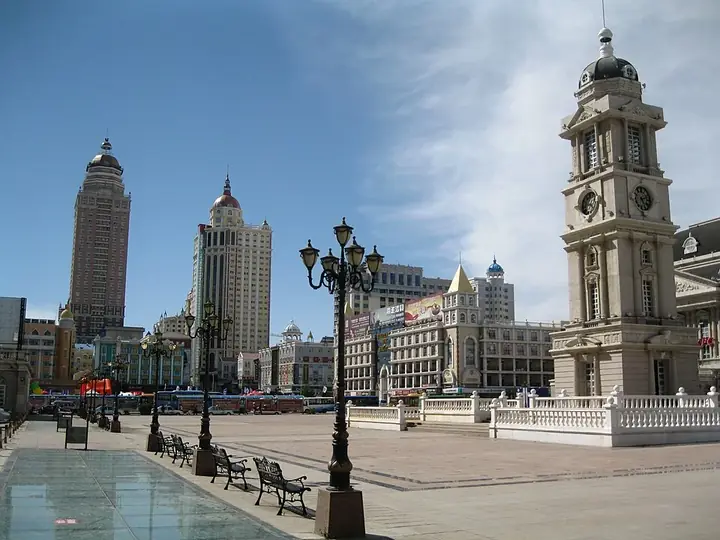
- Century Square and the surrounding city buildings in Manzhouli, Inner Mongolia. Photo: 2012.Photo: Alexander V. Solomin · CC BY-SA 3.0Resized for the web; the photo itself has not been edited. Thumbnails may show a cropped view.
