


Get to know Xinjin District
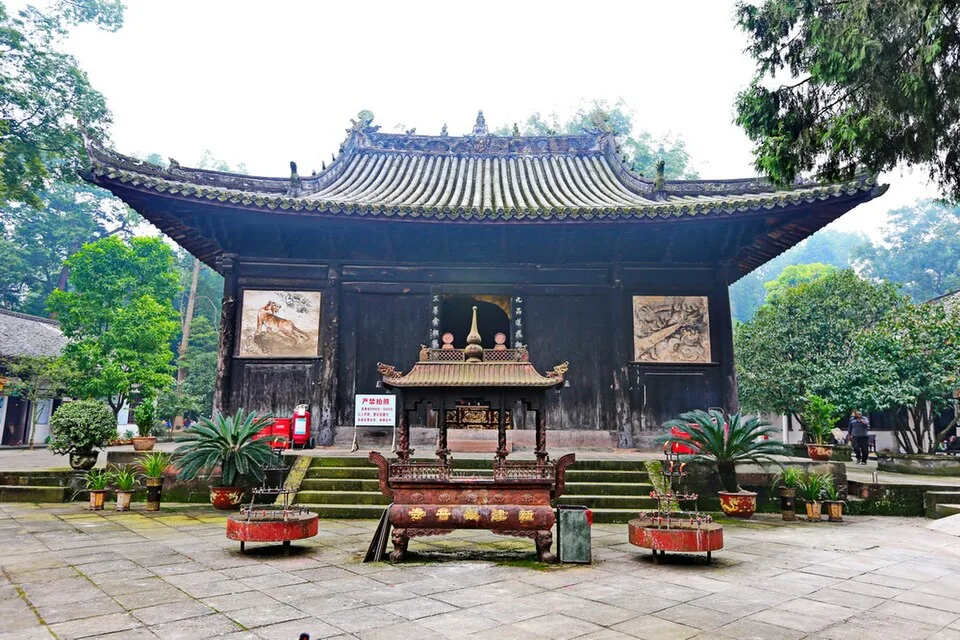
Photo adjustments
Converted to WebP and resized without changing the subject or cropping the source frame.
- Administrative area
- District · 市辖区
- Part of
- Chengdu
- Chinese name
- 新津区
- Local areas
- District guide
Area & population
- Area in the source
- 330.00 km²
- Population · 2020 census
- 363,591
Source: cited geographic source, as of the dates shown.
Setting and landscape
Xinjin borders Shuangliu (双流区) to the east, Qionglai (邛崃市) and Dayi (大邑县) to the west, Chongzhou (崇州市) to the northwest and Pengshan (彭山区) in Meishan to the south. About three quarters of the land is flat, the rest hills and water, at 442 to 673 m above sea level. Its rivers are the Jinma (金马河), the main stream of the Min, and the West (西河) and South (南河) branches. Irrigated by the Dujiangyan system, the flatland grows rice in summer and rapeseed and wheat in winter.
History
The Baodun site (宝墩遗址), a late Neolithic walled town, is one of the main sites of the Baodun culture (宝墩文化), dated about 2500 to 1750 BC and regarded as the earliest known archaeological culture of the Chengdu Plain. The name Xinjin, "new ford", dates from AD 216, when Li Yan (李严), governor of Qianwei (犍为郡), opened a new ferry crossing between the Chengdu Plain and the Meishan area after floods at Jiangkou (江口). Xinjin County was created in 557 and became a district in June 2020.
What to see
Guanyin Temple (观音寺), in Baoqiao village (宝桥村) of Yongshang town (永商镇), was founded in 1181 and became a national key heritage site in 2001. Its Vairocana Hall (毗卢殿), built in 1462, holds seven fine-brush murals painted in 1468; China Radio International reports 653 surviving statues and the nickname "little Dunhuang of Shu" (蜀中小敦煌).
Laojun Mountain (老君山) rises to only 617 m but stands alone above the flat plain; China Radio International calls it the birthplace of the Taoist "twenty-four parishes" (二十四治). Chunyang Temple (纯阳观), begun in the Xianfeng reign of the Qing, has 48 statues of loyal officials and filial sons, and the Xinjin Yellow Crane Tower (黄鹤楼), a provincial heritage site since 1991, houses a digital display on Baodun and Guanyin Temple. The Zhi Art Museum (知美术馆), a 2,353 sq m building designed by Kengo Kuma (隈研吾), lies on the way down from Laojun Mountain.
Food and local products
Local fruit includes Jiangwan (姜湾) pears from Yongshang, plums from Shizishan (狮子山) in Dengshuang, pomelos from Caiwan (蔡湾) and red tangerines from Mumashan (牧马山). The Xinjin white goose (新津白鹅) is a local breed.
Getting oriented
The Chengdu–Guiyang high-speed railway serves Xinjin and Xinjin South stations.
Highlights
- Guanyin Temple 观音寺: National key heritage site with seven murals painted in 1468 in its Vairocana Hall.
- Baodun site 宝墩遗址: Late Neolithic walled town, one of the main sites of the Baodun culture of about 2500–1750 BC.
- Laojun Mountain 老君山: 617 m peak standing alone on the plain, linked with the Taoist twenty-four parishes.
- Chunyang Temple 纯阳观: Qing temple with 48 statues of loyal officials and filial sons.
- Zhi Art Museum 知美术馆: 2,353 sq m building by Kengo Kuma.
Sources for this guide
新津区 - 维基百科,自由的百科全书 · Wikipedia (Chinese) · CC BY-SA 4.0
跟着赛事游新津|成都新津推出“一日游”文旅路线-国际在线 · China Radio International (CRI Online)
观音寺 (新津区) - 维基百科,自由的百科全书 · Wikipedia (Chinese) · CC BY-SA 4.0
宝墩文化 - 维基百科,自由的百科全书 · Wikipedia (Chinese) · CC BY-SA 4.0
Original English written from the listed sources and checked sentence by sentence against quoted extracts by a separate reviewer. Updated 2026-09-25.
Explore Xinjin District
Core places to explore, with English and Chinese names.
Places to explore around Xinjin District
Guanyin Temple in Xinjin, Chengdu. Photo: 2015-10-16 10:38:16.Guanyin Temple, Xinjin新津观音寺
Guanyin Temple in Xinjin preserves important Ming-period Buddhist art within a hillside temple complex. Pilu Hall’s murals use rich mineral colours and detailed figures, while Guanyin Hall is known for its sculptural programme…
Read the place guide → Laojun Mountain, Xinjin · 新津老君山
Laojun Mountain, Xinjin新津老君山
Xinjin’s Laojun Mountain is a wooded Taoist temple hill, with steep stairways linking a series of halls. Hunyuan Hall is devoted to Laozi, while the higher Sanqing Hall introduces the Three Pure Ones. The sequence of buildings…
Read the place guide → Baodun Archaeological Site · 宝墩遗址
Baodun Archaeological Site宝墩遗址
Baodun introduces the prehistoric settlement history of the Chengdu Plain. Its exhibition explains the ancient walled town, rice agriculture and the roots of Shu culture through archaeological finds and interpretation. The…
Read the place guide →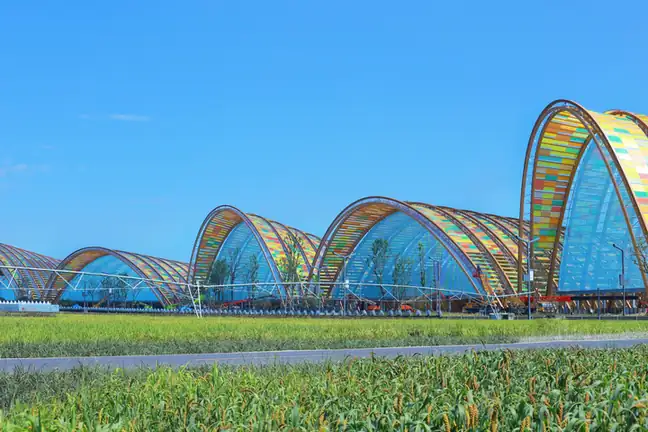 Tianfu Agricultural Expo Park · 中国天府农业博览园
Tianfu Agricultural Expo Park中国天府农业博览园
Tianfu Agricultural Expo Park places large exhibition structures within the farming landscape of Xinjin. The main halls use sweeping timber-and-steel roof forms with a lightweight membrane enclosure, making the architecture a…
Read the place guide →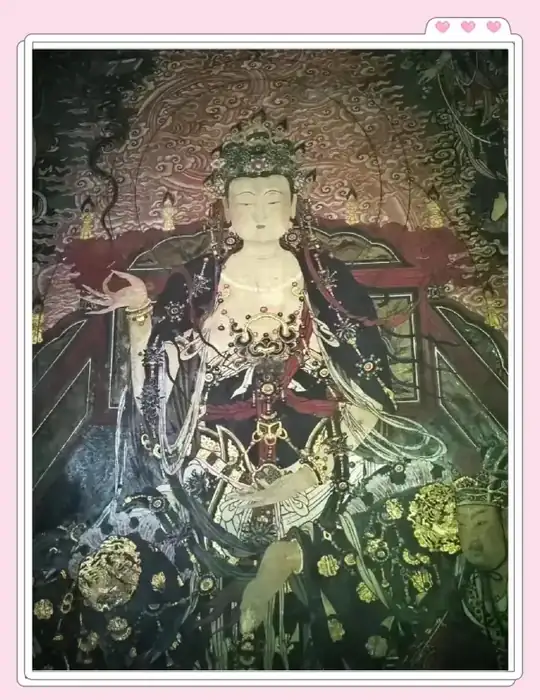 Guanyin Temple Murals · 观音寺壁画
Guanyin Temple Murals观音寺壁画
Guanyin Temple at Baoqiao village in Xinjin District, Chengdu, was founded in 1181 under the Southern Song and has been a national key cultural relics protection unit since 2001, valued for its surviving halls, its wall paintings and its sculpture.
Read the place guide →Plan your visit
Getting there
Xinjin District is about 35 km in a straight line from central Chengdu. Search for 新津区 in a map app to find stations and your accommodation.
Where to stay →Build your route
Guanyin Temple, Xinjin and Laojun Mountain, Xinjin are about 5 km apart in a straight line. The linked place guides have entrance and visit details.
Continue with Chengdu →More in Chengdu
Sources & geographic information
Administrative names and parent areas: Official geographic directory · Reference date 2026-09-06.
Some facts checked against 新津区 — Wikipedia contributors, CC BY-SA 4.0.
Some facts checked against 观音寺 (新津区) — Wikipedia contributors, CC BY-SA 4.0.
Some facts checked against 宝墩文化 — Wikipedia contributors, CC BY-SA 4.0.
Photo: Guanyin Temple, Xinjin · Nekitarc · CC BY-SA 4.0. Converted to WebP and resized without changing the subject or cropping the source frame.

Photo: Laojun Mountain, Xinjin · Source photographer · License not provided. EXIF orientation normalized; resized without changing aspect ratio; converted to WebP. No subject edits.
Photo: Baodun Archaeological Site · Nekitarc · CC BY-SA 3.0. EXIF orientation normalized; resized without changing aspect ratio; converted to WebP. No subject edits.

Photo: Tianfu Agricultural Expo Park · Source photographer · License not provided. EXIF orientation normalized; resized without changing aspect ratio; converted to WebP. No subject edits.
Photo: Guanyin Temple Murals · Source photographer · License not provided. EXIF orientation normalized; resized without changing aspect ratio; converted to WebP. No subject edits.
Map data © OpenStreetMap contributors. Pins mark approximate centres, not entrances or boundaries.