


Get to know Lizhou District
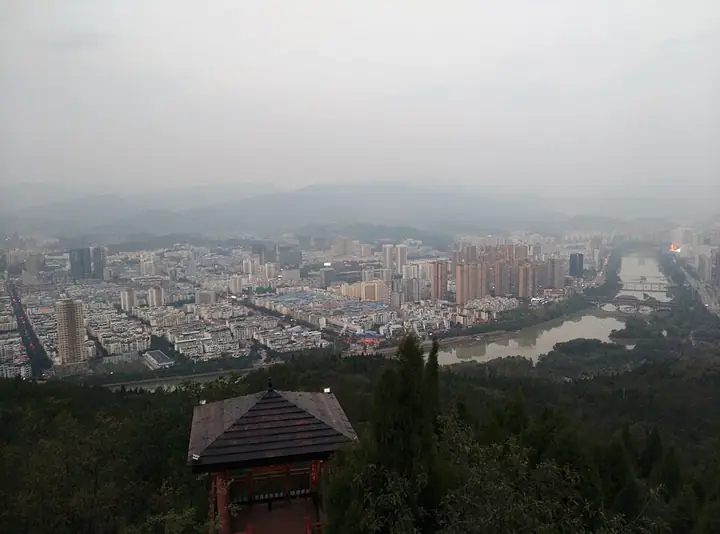
Photo adjustments
Full-frame source proportionally resized and converted to WebP for display. No subject alteration. Source-supplied marks and edits remain; cards may crop the view.
- Administrative area
- District · 市辖区
- Part of
- Guangyuan
- Chinese name
- 利州区
- Local areas
- District guide
Area & population
- Area in the source
- 1,492.00 km²
- Population · 2020
- 621,978
- Administrative seat
- Dongba Subdistrict
Source: cited geographic source, as of the dates shown.
History
Lizhou goes back to 554, when the Western Wei (西魏) created a prefecture of that name with its seat at Xing'an, today's Guangyuan. The Northern Song set up Lizhou circuit (利州路) in 1001, though it was run from Xingyuan (兴元府) in present-day Hanzhong. In 1277 the Yuan renamed Lizhou as Guangyuan circuit (广元路).
China News Service, quoting a deputy head of the district's culture, tourism and sports bureau, gives Guangyuan as the birthplace of the Tang empress Wu Zetian (武则天) and reports that the city has held the China (Guangyuan) Daughters' Festival (女儿节) every 1 September since 1985.
What to see
The Thousand Buddha Cliff (千佛崖) lines the east bank of the Jialing north of the city for 388.8 metres. Carving began in the late Northern Wei and continued through the Sui, Tang, Song, Yuan and Ming, most of it in the Tang. About 17,000 figures once covered the cliff, but more than half were lost when the Sichuan–Shaanxi highway was built in 1936; 848 niches and over 7,000 figures remain, among them the Great Buddha Cave (大佛洞) and the Hall of the Three Sages (三圣堂).
Huangze Temple (皇泽寺) stands on the west bank at the foot of Wulong Shan (乌龙山). As at the Mogao Caves, the grottoes came first and the temple later; carving started in the Northern Zhou and peaked in the Tang, and 50 niches with more than a thousand figures survive. China News Service describes the temple, founded in the Kaiyuan era of the Tang, as the only temple in China dedicated to Wu Zetian, holding the only surviving image of her true likeness. Both cliff sites were in the first group of national key cultural relic protection units in 1961.
Local products
Lizhou shiitake mushrooms (利州香菇) and Lizhou red chestnuts (利州红栗) are both Chinese geographical-indication products.
Highlights
- Thousand Buddha Cliff 千佛崖: 848 niches and over 7,000 figures, carved from the late Northern Wei to the Ming.
- Huangze Temple 皇泽寺: Cliff carvings from the Northern Zhou and Tang; described as China's only temple to Wu Zetian.
- Lizhou red chestnuts 利州红栗: Chinese geographical-indication product.
Sources for this guide
利州区 - 维基百科,自由的百科全书 · Wikipedia (Chinese) · CC BY-SA 4.0
皇泽寺摩崖造像 - 维基百科,自由的百科全书 · Wikipedia (Chinese) · CC BY-SA 4.0
广元千佛崖摩崖造像 - 维基百科,自由的百科全书 · Wikipedia (Chinese) · CC BY-SA 4.0
广元一文旅体局副局长扮“武则天” 走红 受邀做客央视—中国新闻网·四川新闻 · China News Service (Sichuan)
千佛崖摩崖造像 - 维基百科,自由的百科全书 · Wikipedia (Chinese) · CC BY-SA 4.0
广元市 - 维基百科,自由的百科全书 · Wikipedia (Chinese) · CC BY-SA 4.0
Original English written from the listed sources and checked sentence by sentence against quoted extracts by a separate reviewer. Updated 2026-09-25.
Explore Lizhou District
Core places to explore, with English and Chinese names.
Places to explore around Lizhou District
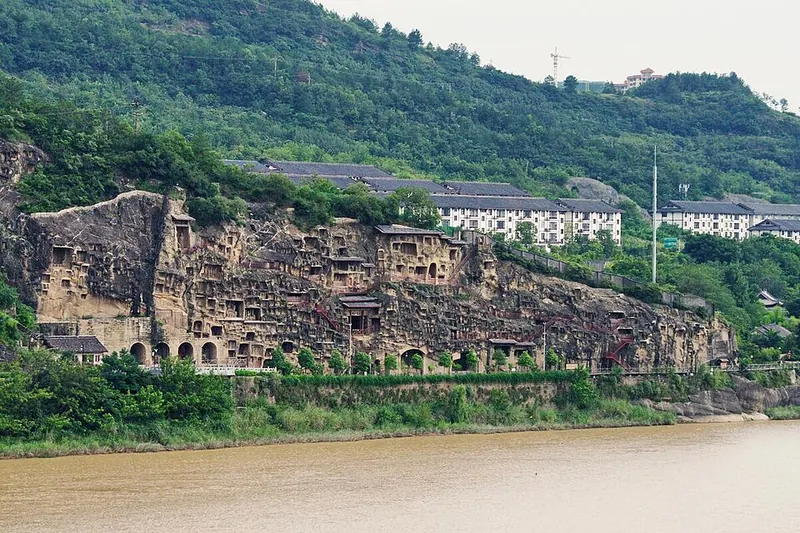 The rock-cut Thousand Buddha Cliff grottoes above the river at Guangyuan · 四川广元千佛崖摩崖造像,临江崖壁 Source-recorded photograph date: 2017-09-02.
Guangyuan Thousand-Buddha Cliff千佛崖
Qianfoya is a cliff of Buddhist rock carvings on the east bank of the Jialing river, five kilometres north of Guangyuan city, Sichuan, beside the old Jinniu Shu road. It was listed in 1961 as a first-batch national key cultural relic protection unit and became a national AAAA-grade tourist area in 2012.
Read the place guide → Stone figure of Wu Zetian at Huangze Temple · 皇泽寺 Photograph date recorded by the source: Taken on 26 April 2014.
Huangze Temple皇泽寺
Huangze Temple sits between Wulong Mountain and the west bank of the Jialing River in Guangyuan. Its cliff niches preserve Buddhist sculptures from several periods, while the temple’s dedication connects the place with Wu…
Read the place guide →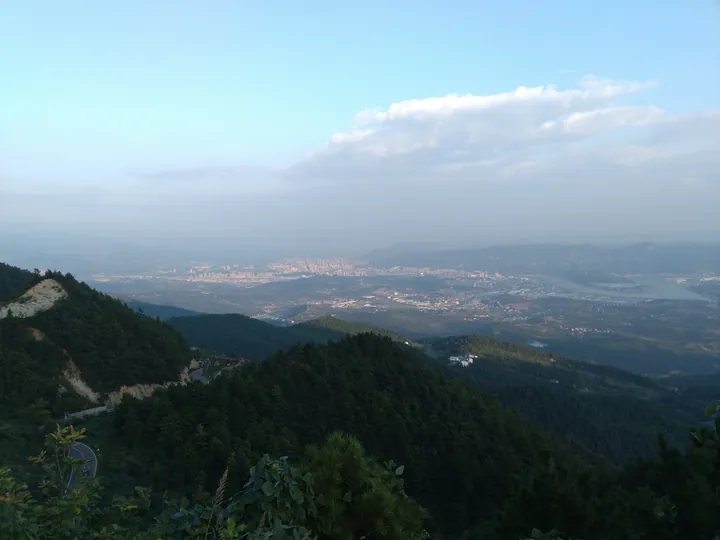 View over Guangyuan city from Tianzhao Mountain, Lizhou District, Guangyuan · 四川省广元市利州区天曌山俯瞰广元市区 Source-recorded photograph date: Taken on 15 September 2016.
Tianzhao Mountain天曌山
Tianzhao Shan is a national forest park in the north-west of Lizhou district, Guangyuan, Sichuan, at the southern foot of the Micang mountains. Originally called Tiantai Shan, it has long been a noted Daoist mountain of the Sichuan-Shaanxi-Gansu region and is a national AAAA-grade tourist area.
Read the place guide →Plan your visit
Getting there
Lizhou District covers the centre of Guangyuan. Search for 利州区 in a map app to find stations and your accommodation.
Where to stay →Build your route
Guangyuan Thousand-Buddha Cliff and Huangze Temple are both listed here. The linked place guides have entrance and visit details.
Continue with Guangyuan →More in Guangyuan
Sources & geographic information
Administrative names and parent areas: Official geographic directory · Reference date 2026-09-06.
Some facts checked against 利州区 — Wikipedia contributors, CC BY-SA 4.0.
Some facts checked against 皇泽寺摩崖造像 — Wikipedia contributors, CC BY-SA 4.0.
Some facts checked against 广元千佛崖摩崖造像 — Wikipedia contributors, CC BY-SA 4.0.
Some facts checked against 千佛崖摩崖造像 — Wikipedia contributors, CC BY-SA 4.0.
Some facts checked against 广元市 — Wikipedia contributors, CC BY-SA 4.0.
Photo: Guangyuan Thousand-Buddha Cliff · Nekitarc · CC BY-SA 4.0. Full frame retained; proportionally resized and converted to WebP. No retouching or changes to the photographed subject. Card displays may crop the view.

Photo: Huangze Temple · wanghongliu · CC BY-SA 3.0. Full frame retained; proportionally resized and converted to WebP. No retouching or changes to the photographed subject. Card displays may crop the view.

Photo: Tianzhao Mountain · Leeshan Chung · CC BY 3.0. Full frame retained; proportionally resized and converted to WebP. No retouching or changes to the photographed subject. Card displays may crop the view.
.jpg)
Map data © OpenStreetMap contributors. Pins mark approximate centres, not entrances or boundaries.