


Get to know Guangyuan

Photo adjustments
Full-frame source proportionally resized and converted to WebP for display. No subject alteration. Source-supplied marks and edits remain; cards may crop the view.
- Administrative area
- Prefecture-level city · 地级市
- Part of
- Sichuan
- Chinese name
- 广元市
- Local areas
- 7 local areas
Area & population
- Area in the source
- 16,313.78 km²
- Population · 2020
- 2,305,657
- Administrative seat
- Lizhou District
Source: cited geographic source, as of the dates shown.
Located roughly between the provincial capitals Chengdu, Lanzhou, Xi'an and Chongqing municipality, it is considered the northern gateway to Sichuan. It is an ancient city, notable for its relics and tombs.
Transport
Located roughly between the provincial capitals Chengdu, Chongqing, Lanzhou, Xi'an, Guangyuan is an important traffic hub in northern Sichuan. The city has a port on the Jialing River, which is the closest inland port to Northwest China, and navigable all the way the east coast.
China National Highway 212 G5 Beijing–Kunming Expressway G5012 Enguang Expressway G75 Lanzhou–Haikou Expressway Baoji–Chengdu railway (part of the main route from Chengdu to Xi'an and Beijing) Xi'an–Chengdu high-speed railway (completed in December 2017) Lanzhou–Chongqing high-speed railway It is a north–south railway trunk line starting from Lanzhou in the north and ending in Chongqing in the south, passing through cities such as Lanzhou, Dingxi, Longnan, Tongnan, Tongliang, and Chongqing. The total length of the line is about 800 kilometers. Guangyuan Panlong Airport Its geographical coordinates are 32°23'28"N 105°42'07"E.
Tourist attractions
Guangyuan has a history of over 2,300 years. Since ancient times, it has been an important gateway to Sichuan, the former territory of the State of Ju, a strategic pass into Shu, a key town during the Three Kingdoms period, the hometown of Empress Wu Zetian, and an important part of the Sichuan–Shaanxi revolutionary base. Today, it is a popular tourist city in Sichuan Province. Guangyuan has received numerous honors, including being recognized as a Demonstration Zone for the Integration of Agriculture, Science, and Education, a National Garden City, a National Hygienic City, an Outstanding Chinese Tourist City, a New-Type Industrialization Base, and the "Hometown of Hot Springs in China." The city is home to 9 national nature reserves, 18 provincial nature reserves, 8 national cultural heritage sites, and 17 provincial cultural heritage sites, making its tourism resources highly concentrated. Its famous tourist attractions include:
Jianmen Pass Scenic Area, located on the northern edge of the Sichuan Basin, is a famous natural mountain pass in China, named for its cliffs resembling swords and walls facing each other like a gate. During the Three Kingdoms period, Zhuge Liang, chancellor of Shu, built plank roads and set up guards here, calling it "Jian'ge." The Tang poet Li Bai praised it in Shu Dao Nan with the line, "One man guards the pass, ten thousand cannot open it," which made Jianmen Pass widely renowned. It was listed as one of the first national key scenic spots in 1982, designated a National AAAA-level scenic area in 2010, and included in the national 5A-level tourist attractions in 2015.
Explore Guangyuan
Core places to explore, with English and Chinese names.
Jianmen Pass 剑门关
Huangze Temple 皇泽寺
Qianfo Cliff, Guangyuan 广元千佛崖
Zhaohua Ancient Town 昭化古城
Guangyuan Thousand-Buddha Cliff 千佛崖
Tianzhao Mountain 天曌山
Lanmaqiang Ancient Shu Road 拦马墙古蜀道
Cuiyun Corridor 翠云廊
Micangshan Grand Canyon 米仓山大峡谷
Tangjiahe Nature Reserve Visitor Area 唐家河自然保护区开放游览区
Qingxi Ancient City 青溪古城
Lizhou District 利州区
Zhaohua District 昭化区
Chaotian District 朝天区
Wangcang County 旺苍县
Qingchuan County 青川县
Jiange County 剑阁县
Cangxi County 苍溪县
Places to explore around Guangyuan
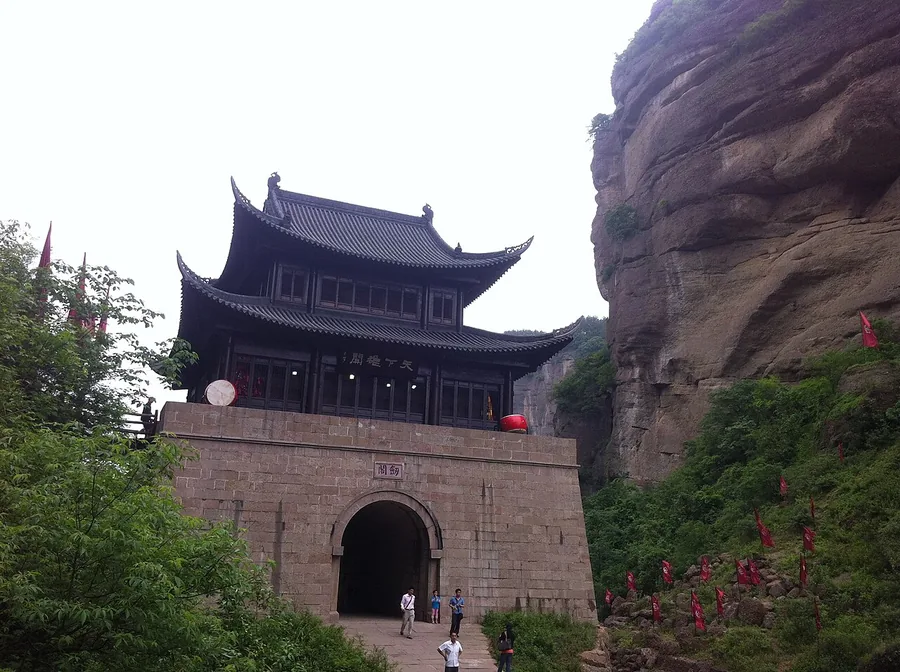 The reconstructed gate tower at Jianmen Pass beneath the surrounding cliffs. Photographed on 13 May 2012.
Jianmen Pass剑门关
Jianmen Pass occupies a narrow break in the steep cliffs of Dajian Mountain. The landscape explains its defensive role on the old Shu Roads more clearly than a timeline alone: the rock walls form the gateway, with the built gate…
Read the place guide → Stone figure of Wu Zetian at Huangze Temple · 皇泽寺 Photograph date recorded by the source: Taken on 26 April 2014.
Huangze Temple皇泽寺
Huangze Temple sits between Wulong Mountain and the west bank of the Jialing River in Guangyuan. Its cliff niches preserve Buddhist sculptures from several periods, while the temple’s dedication connects the place with Wu…
Read the place guide →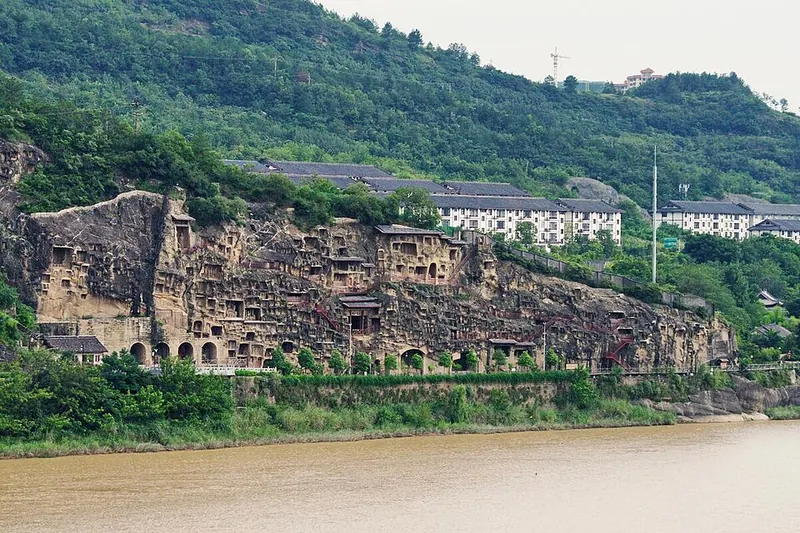 Thousand-Buddha Cliff beside the river in Guangyuan · 广元千佛崖 Photograph date recorded by the source: 2017-09-02.
Qianfo Cliff, Guangyuan广元千佛崖
Guangyuan’s Thousand-Buddha Cliff stretches along the east bank of the Jialing River north of the city. Buddhist niches rise in layers up the rock face, ranging from small figures to larger sculptural groups. The cliff stood…
Read the place guide → The Bagua Well gate pavilion in Zhaohua Ancient Town, Guangyuan · 广元昭化古城八卦井门楼 Source-recorded photograph date: Taken on 12 May 2012.
Zhaohua Ancient Town昭化古城
Zhaohua’s compact lanes link the institutions of an old county town: government offices, a Confucian temple and an examination compound. The county-office display recreates the magistrate’s setting, while the examination area…
Read the place guide →The rock-cut Thousand Buddha Cliff grottoes above the river at Guangyuan · 四川广元千佛崖摩崖造像,临江崖壁 Source-recorded photograph date: 2017-09-02.Guangyuan Thousand-Buddha Cliff千佛崖
Qianfoya is a cliff of Buddhist rock carvings on the east bank of the Jialing river, five kilometres north of Guangyuan city, Sichuan, beside the old Jinniu Shu road. It was listed in 1961 as a first-batch national key cultural relic protection unit and became a national AAAA-grade tourist area in 2012.
Read the place guide → View over Guangyuan city from Tianzhao Mountain, Lizhou District, Guangyuan · 四川省广元市利州区天曌山俯瞰广元市区 Source-recorded photograph date: Taken on 15 September 2016.
Tianzhao Mountain天曌山
Tianzhao Shan is a national forest park in the north-west of Lizhou district, Guangyuan, Sichuan, at the southern foot of the Micang mountains. Originally called Tiantai Shan, it has long been a noted Daoist mountain of the Sichuan-Shaanxi-Gansu region and is a national AAAA-grade tourist area.
Read the place guide →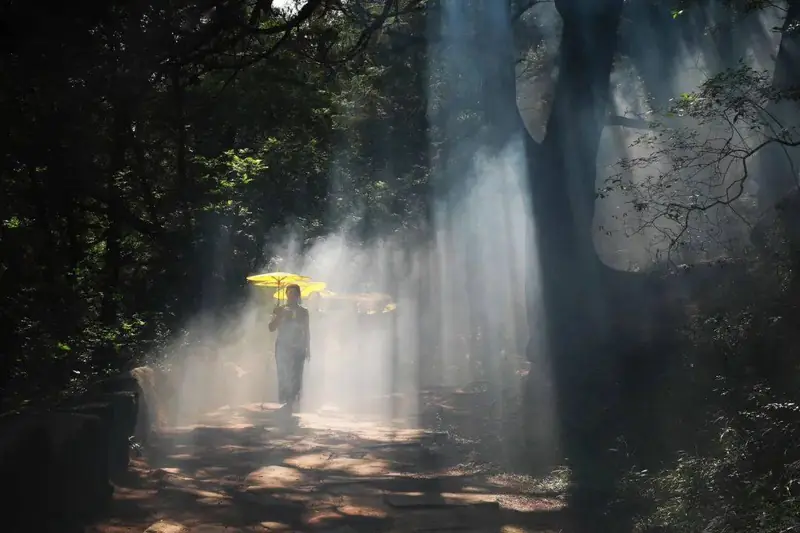 Lanmaqiang Ancient Shu Road · 拦马墙古蜀道
Lanmaqiang Ancient Shu Road拦马墙古蜀道
Lanmaqiang is a roughly six-kilometre stretch of the ancient Shu road in Liangshan township, Jiange county, Guangyuan, Sichuan, named for a wall which a Sichuan Daily essay glosses literally as one used in old times to hold horses back. The same essay says it is the only such surviving wall section on the whole ancient Shu road.
Read the place guide → Cuiyun Corridor · 翠云廊
Cuiyun Corridor翠云廊
Cuiyunlang is the cypress-lined stretch of the ancient Shu road centred on the old town of Jianzhou in Jiange county, Guangyuan, Sichuan, running north to the old town of Zhaohua, south to Langzhong in Nanchong, and west to Zitong in Mianyang. It stands on the Jinniu Road, whose core section is the Jianmen Shu road, designated by the State Council in 2006 as a sixth-batch national key cultural relic protection unit.
Read the place guide → AI illustration · AI 示意图(仅供参考,非该地点实拍)
Micangshan Grand Canyon米仓山大峡谷
Micangshan Grand Canyon is a scenic area on the southern foot of the Micang mountains at the Sichuan-Shaanxi border, within Wanjia and Yanhe towns, Wangcang county, Guangyuan, Sichuan. Formerly called the Cangwang Gorge geological-ecological scenic area, it is a national-level scenic area and became a national AAAA-grade tourist area when it opened in September 2020.
Read the place guide →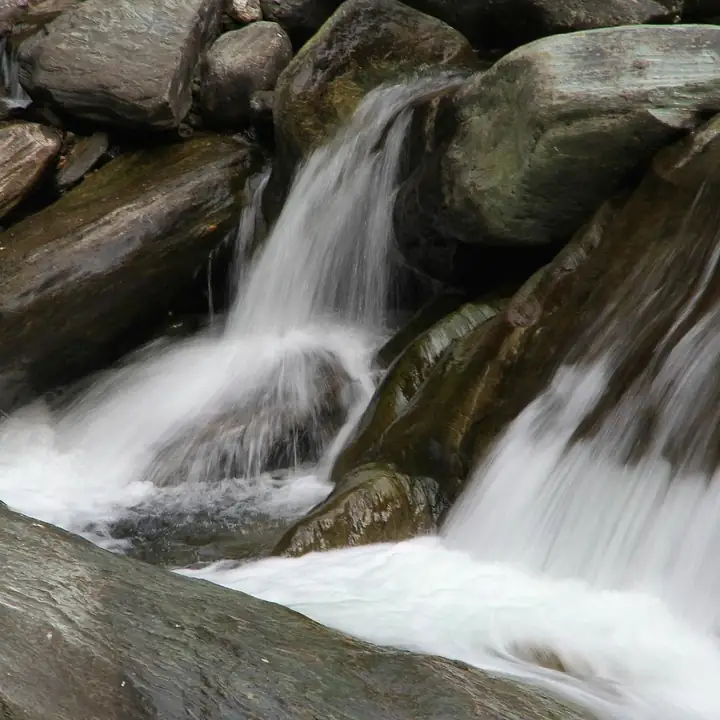 Tangjiahe Nature Reserve Visitor Area · 唐家河自然保护区开放游览区
Tangjiahe Nature Reserve Visitor Area唐家河自然保护区开放游览区
Tangjiahe is a national nature reserve in Qingxi town, Qingchuan county, Guangyuan, Sichuan, on the north-west side of the Longmen mountain range, protecting the giant panda and its habitat together with other rare wildlife. Established in 1978, it was upgraded by the State Council to national level in 1986, and its territory now forms the Tangjiahe area of the Giant Panda National Park, established in 2021.
Read the place guide →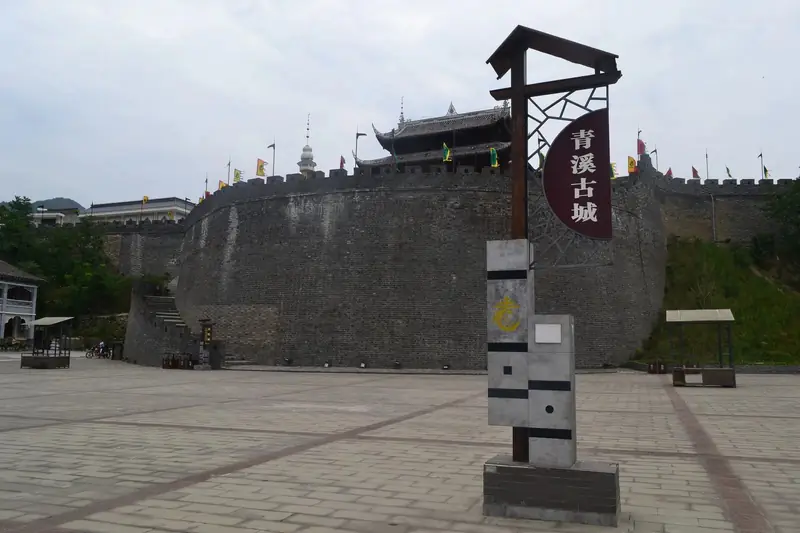 Qingxi Ancient City · 青溪古城
Qingxi Ancient City青溪古城
Qingxi ancient city stands in Qingchuan county, Guangyuan, Sichuan, on the ancient Yinping road, its founding traced to the Shu Han period when the military officer Liao Hua garrisoned the site. A 2023 Sichuan Online report calls it, under the name Qingxi ancient town, the county's other 4A-grade tourist area alongside the Tangjiahe reserve, and a place that was once an important pass on the old Yinping road, with more than 1,700 years of history.
Read the place guide →Local life & food
Guangyuan local specialties
广元市特色美食 · 11 specialties to discover
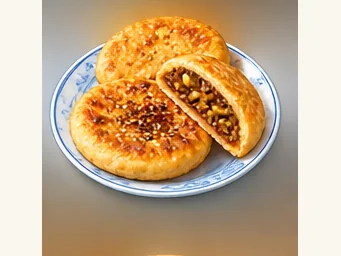 Chaotian walnut flatbread 朝天核桃饼AI illustration · AI 示意图
The bread combines a toasted crust with walnut richness and a compact, satisfying crumb. It may be savory rather than a sweet bakery cookie.
Source ↗Read the dish guide → Guangyuan steamed cold rice noodles 广元女皇蒸凉面AI illustration · AI 示意图
The noodles are soft, smooth and gently elastic, with chili seasoning and other additions providing the stronger aroma.
Source ↗Read the dish guide → Qingchuan copper hotpot 青川铜火锅AI illustration · AI 示意图
The result is a savory broth with a mixture of soft vegetables, tender meat and any chewy starch additions.
Source ↗Read the dish guide → Guangyuan Steamed Cold Noodles 广元蒸凉面Reference photo of a similar dish · 同类菜品参考照片
Guangyuan Steamed Cold Noodles (广元蒸凉面) are strips cut from sheets of steamed rice batter, a traditional snack of Guangyuan (广元) in Sichuan.
Read the dish guide →
Photo adjustments
Full frame retained; EXIF orientation normalized, proportionally resized to at most 800 pixels and converted to WebP. No generated pixels or subject changes. Cards may crop the display.
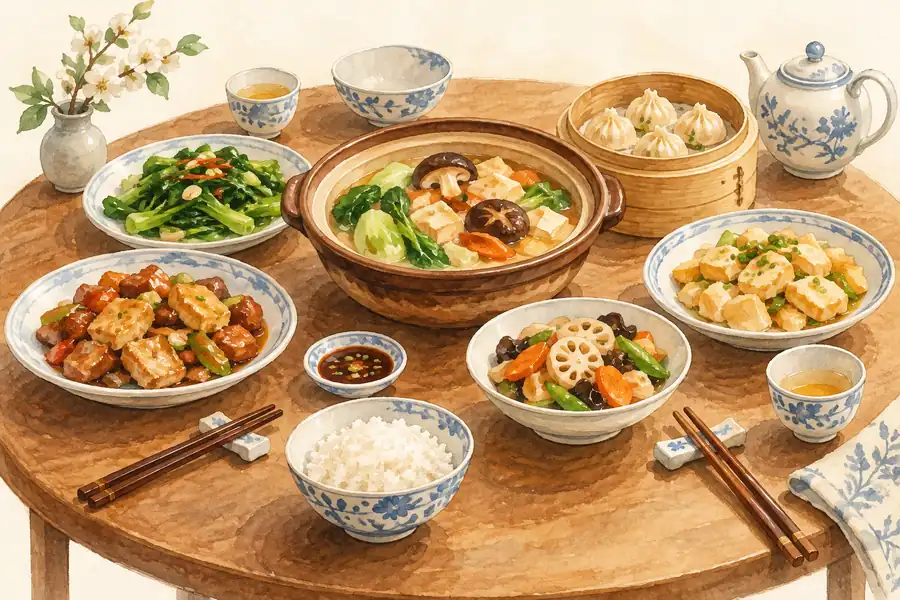 Jianmen Pass Tofu Banquet 剑门关豆腐宴AI illustration · AI 示意图(仅供参考,非实拍)
Jianmen Pass Tofu Banquet (剑门关豆腐宴) is a meal built around Jianmen tofu (剑门豆腐), the bean curd of Jiange County (剑阁县) in Guangyuan (广元), northern Sichuan. Jiange is an important stop on the Jianmen stretch of the old Shu Road (蜀道).
Read the dish guide →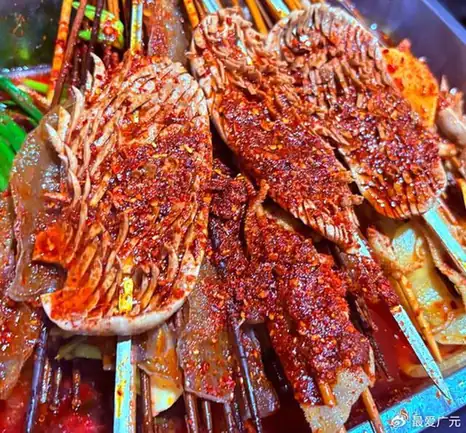 Jiange Numbing-Spicy Skewers 剑阁麻辣串
Jiange Numbing-Spicy Skewers (剑阁麻辣串) is listed among the local specialties of Guangyuan, Sichuan. It is grouped here with regional dishes & banquets; retain the complete Chinese name when comparing local menus.
Read the dish guide →Photo adjustments
EXIF orientation normalized; resized without changing aspect ratio; converted to WebP. No subject edits.
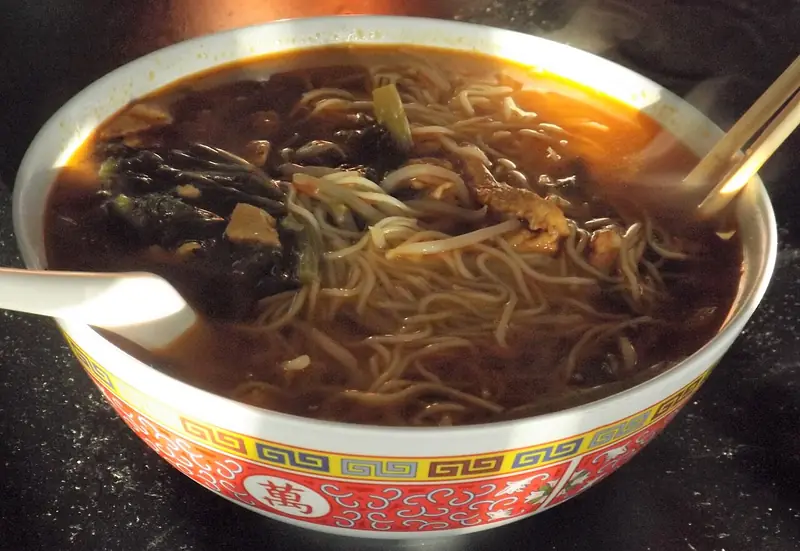 Wangcang Hot and Sour Noodles 旺苍酸辣粉Reference photo of a similar dish · 同类菜品参考照片
Wangcang Hot and Sour Noodles (旺苍酸辣粉) is a traditional snack from Wangcang (旺苍), made with dried sweet-potato starch noodles.
Read the dish guide →
Photo adjustments
Full frame retained; EXIF orientation normalized, proportionally resized to at most 800 pixels and converted to WebP. No generated pixels or subject changes. Cards may crop the display.
 Jianmen Tofu 剑门豆腐Reference photo of a similar dish · 同类菜品参考照片
Jianmen Tofu (剑门豆腐) is the bean curd of the Jianmen (剑门) area of Jiange County (剑阁县), Guangyuan (广元), in northern Sichuan, and the local tofu dishes built on it.
Read the dish guide →
Photo adjustments
Full frame retained; EXIF orientation normalized, proportionally resized to at most 800 pixels and converted to WebP. No generated pixels or subject changes. Cards may crop the display.
All dish names · 全部菜名 (11)
- Chaotian walnut flatbread · 朝天核桃饼
- Guangyuan steamed cold rice noodles · 广元女皇蒸凉面
- Qingchuan copper hotpot · 青川铜火锅
- Guangyuan Steamed Cold Noodles · 广元蒸凉面
- Jianmen Pass Tofu Banquet · 剑门关豆腐宴
- Jiange Numbing-Spicy Skewers · 剑阁麻辣串
- Wangcang Hot and Sour Noodles · 旺苍酸辣粉
- Jianmen Tofu · 剑门豆腐
- Qingchuan Cured Pork · 青川腊肉
- Zengjiashan Smoked Cured Pork · 曾家山腊肉
- Pickle-Water Soft Tofu · 酸菜豆花
More dishes from across Sichuan are in the Sichuan food guide.
Counties & districts in Guangyuan
7 areas belong directly to Guangyuan.
7 areas
Lizhou District 利州区
Lizhou District, known until 2007 as Shizhong District (市中区; Shìzhōng Qū), is a district of Guangyuan city, Sichuan Province, China.
Explore the area →DistrictZhaohua District 昭化区
Zhaohua District is a district of the city of Guangyuan, Sichuan Province, China. It was formerly called Yuanba District until 12 March 2013.
Explore the area →DistrictChaotian District 朝天区
Chaotian is a northern, mostly rural, county-level district of Guangyuan, Sichuan Province, China. The region was part of Shizhong District prior to its establishment as a district in 1989.
Explore the area →CountyWangcang County 旺苍县
Wangcang County (simplified Chinese: 旺苍县; traditional Chinese: 旺蒼縣; pinyin: Wàngcāng Xiàn) is a county in the northeast of Sichuan Province, China, bordering Shaanxi province to the north.
Explore the area →Show fewer areas
Qingchuan County 青川县
Qingchuan County is a county in the northeast of Sichuan province, China, bordering the provinces of Gansu to the north and Shaanxi to the northeast.
Explore the area →CountyJiange County 剑阁县
Jiange County (simplified Chinese: 剑阁县; traditional Chinese: 劍閣縣; pinyin: Jiàngé Xiàn) is a county of Sichuan Province, China. It is under the administration of Guangyuan city.
Explore the area →CountyCangxi County 苍溪县
Cangxi County (simplified Chinese: 苍溪县; traditional Chinese: 蒼溪縣; pinyin: Cāngxī Xiàn) is a county of northeastern Sichuan Province, China, located along the upper reaches of the Jialing River.
Explore the area →No areas match this name.
Plan your visit
Getting there
Search for 广元市 in a map app to find stations and your accommodation.
Where to stay →Build your route
Jianmen Pass and Huangze Temple are about 35 km apart in a straight line. The linked place guides have entrance and visit details.
Continue with Sichuan →More in Sichuan
Sources & geographic information
Administrative names and parent areas: Official geographic directory · Reference date 2026-09-06.
Background text adapted from Guangyuan — Wikipedia contributors, under CC BY-SA 4.0. Text has been shortened and reorganized; source revision 1365150212.
Photo: Jianmen Pass · ping lin · CC BY-SA 3.0. Proportionally resized and converted to WebP without cropping, retouching or changing the photographed subject.

Photo: Huangze Temple · wanghongliu · CC BY-SA 3.0. Full frame retained; proportionally resized and converted to WebP. No retouching or changes to the photographed subject. Card displays may crop the view.

Photo: Qianfo Cliff, Guangyuan · Nekitarc · CC BY-SA 4.0. Full frame retained; proportionally resized and converted to WebP. No retouching or changes to the photographed subject. Card displays may crop the view.

Photo: Zhaohua Ancient Town · ping lin · CC BY-SA 3.0. Full frame retained; proportionally resized and converted to WebP. No retouching or changes to the photographed subject. Card displays may crop the view.

Photo: Guangyuan Thousand-Buddha Cliff · Nekitarc · CC BY-SA 4.0. Full frame retained; proportionally resized and converted to WebP. No retouching or changes to the photographed subject. Card displays may crop the view.
Photo: Tianzhao Mountain · Leeshan Chung · CC BY 3.0. Full frame retained; proportionally resized and converted to WebP. No retouching or changes to the photographed subject. Card displays may crop the view.
.jpg)
Photo: Lanmaqiang Ancient Shu Road · Source photographer · License not provided. EXIF orientation normalized; resized without changing aspect ratio; converted to WebP. No subject edits.
Photo: Cuiyun Corridor · Source photographer · License not provided. EXIF orientation normalized; resized without changing aspect ratio; converted to WebP. No subject edits.
Photo: Tangjiahe Nature Reserve Visitor Area · Source photographer · License not provided. EXIF orientation normalized; resized without changing aspect ratio; converted to WebP. No subject edits.
Photo: Qingxi Ancient City · Source photographer · License not provided. EXIF orientation normalized; resized without changing aspect ratio; converted to WebP. No subject edits.
Map data © OpenStreetMap contributors. Pins mark approximate centres, not entrances or boundaries.