


Get to know Nankai District
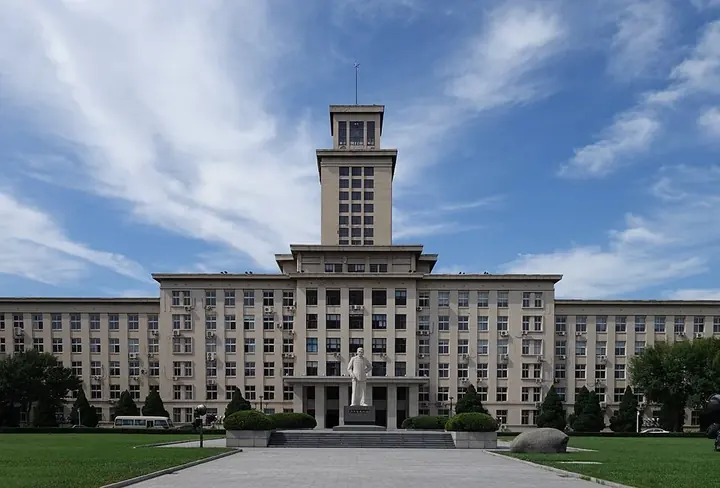
Photo adjustments
Full frame retained; proportionally resized and converted to WebP. No retouching or changes to the photographed subject. Card displays may crop the view.
- Administrative area
- District · 市辖区
- Part of
- Tianjin
- Chinese name
- 南开区
- Local areas
- District guide
Area & population
- Area in the source
- 40.64 km²
- Population · 2020 census
- 917,106
Source: cited geographic source, as of the dates shown.
Setting and landscape
The district government gives an area of 41.43 square kilometres, flat, about 3 metres above sea level on average and higher in the north than the south. The Hai River (海河) on the east separates it from Hebei District (河北区); the Weijin (卫津河) and South Canal (南运河) rivers wrap around its east and north, and the south has many ponds. Lakes include the east and west lakes of the Water Park and Nankai University's Xinkai Lake (新开湖), dug in 1954.
History
Under the Yuan, grain shipped north to the capital was transferred at the Sancha River mouth (三岔河口), and in 1326 the Tianfei Palace (天妃宫) was built in what is now the north-east of the district. A garrison town was walled from 1404, and from the Ming to the Qing this area became Tianjin's political, economic and cultural centre, with settlers from Anhui, Shanxi, Jiangsu, Zhejiang, Fujian and Guangdong. The Eleventh District created in 1947 is the origin of the present district, which took the name Nankai in January 1956.
What to see
The Tianhou Temple (天后宫), the former Tianfei Palace, is described by the district government as the oldest building in urban Tianjin and one of China's earliest surviving temples to the sea goddess Mazu (妈祖). The Drum Tower (鼓楼), first built in 1494, was rebuilt in 2001 in Ming and Qing style. The Guangdong Guild Hall (广东会馆), completed in 1907, mixes northern and Lingnan building styles. The Nankai School (南开学校) site, founded in 1904 by Yan Xiu (严修) and Zhang Boling (张伯苓), was Tianjin's first private middle school, and Zhou Enlai studied there from 1913 to 1917. Siyuan Hall (思源堂) at Nankai University, built in 1923 and bombed in 1937, was the only university building to survive the Japanese bombing. The Li Chun Ancestral Hall (李纯祠堂) was built in 1914–1924, partly from buildings of the Prince Zhuang's mansion moved here and rebuilt. The district also has the Confucian Temple (文庙) and the Yuhuang Pavilion (玉皇阁).
Ancient Culture Street (古文化街) is a 5A scenic area; the Water Park (水上公园) and the Zhou Enlai and Deng Yingchao Memorial Hall (周恩来邓颖超纪念馆) are 4A.
Crafts and traditions
The district holds four national intangible heritage items: the Tianjin Imperial Fair (天津皇会), the Clay Figure Zhang (泥人张) figurines, the Kite Wei (风筝魏) kites and Jingu visceral massage (津沽脏腑推拿). City-listed items include the Yuansheng teahouse (元升茶楼) and Liu Hai diabolo-making (刘海空竹).
Highlights
- Tianhou Temple 天后宫: Built in 1326; oldest building in urban Tianjin by the district's account.
- Ancient Culture Street 古文化街: 5A scenic area.
- Guangdong Guild Hall 广东会馆: Completed in 1907 in mixed northern and Lingnan style.
- Drum Tower 鼓楼: First built in 1494; rebuilt in 2001.
- Zhou Enlai and Deng Yingchao Memorial Hall 周恩来邓颖超纪念馆: 4A scenic area and national first-grade museum.
- Nankai School site 南开学校旧址: Founded 1904; Zhou Enlai studied here 1913–1917.
Sources for this guide
南开区概况_ 南开区概况_ 天津市南开区人民政府 · Nankai District People's Government, Tianjin
南开区 - 维基百科,自由的百科全书 · Chinese Wikipedia · CC BY-SA 4.0
Original English written from the listed sources and checked sentence by sentence against quoted extracts by a separate reviewer. Updated 2026-09-25.
Explore Nankai District
Core places to explore, with English and Chinese names.
Ancient Culture Street 古文化街
Tianjin Water Park 天津水上公园
Tianjin Confucian Temple 天津文庙
Guangdong Guild Hall (Tianjin) 广东会馆
Drum Tower of Tianjin 天津鼓楼
Tianhou Temple (Tianjin) 天津天后宫
Zhou Enlai and Deng Yingchao Memorial Hall 周恩来邓颖超纪念馆
Joy City Shopping Mall (South Gate Street) 南开大悦城
Tianjin Zoo 天津动物园
Nancuiping Park 南翠屏公园
Places to explore around Nankai District
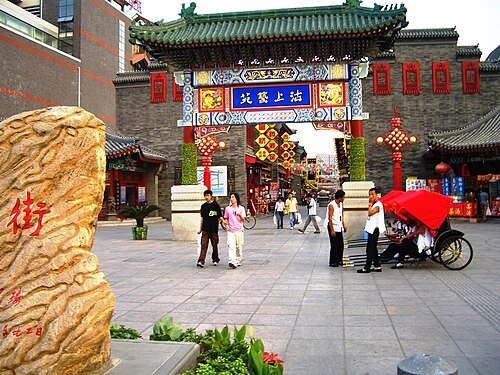 Ancient Culture Street · 古文化街
Ancient Culture Street古文化街
Ancient Culture Street is a modern pedestrian precinct built around Tianjin's older Tianhou Temple, with Qing-style storefronts and a strong emphasis on local crafts. Its best-known traditions include Yangliuqing New Year prints…
Read the place guide →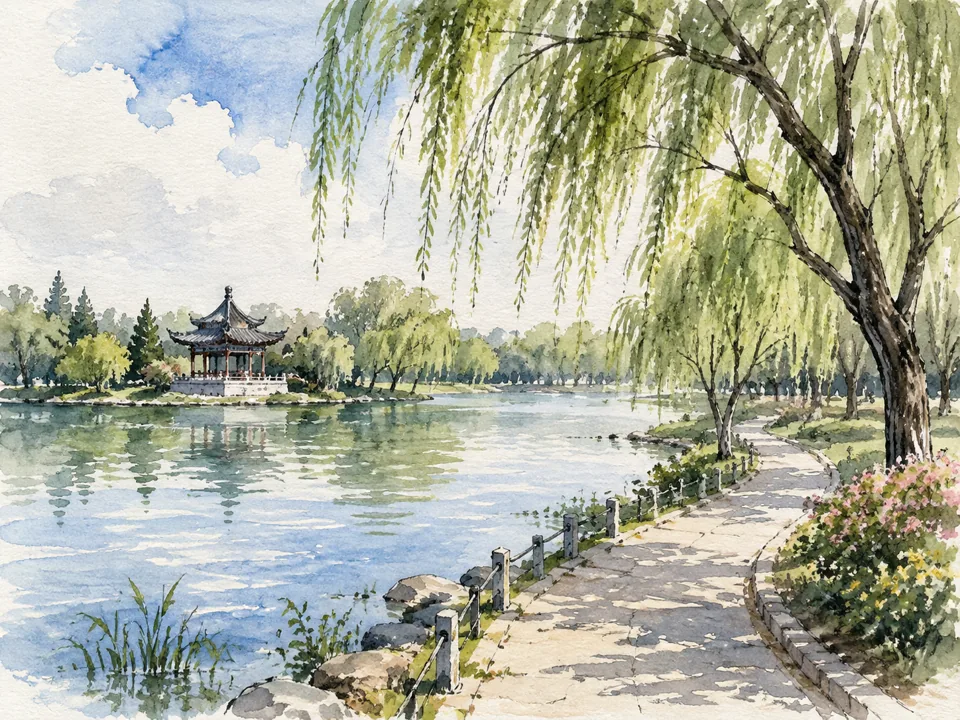 AI illustration; an interpretive view, not a photograph. AI 示意图,非景点实拍。
Tianjin Water Park天津水上公园
Tianjin Water Park is organized around East, West and South lakes, with islands, connecting paths and garden buildings spreading through the water. Established as a public park in 1951, it combines a large urban lake landscape…
Read the place guide →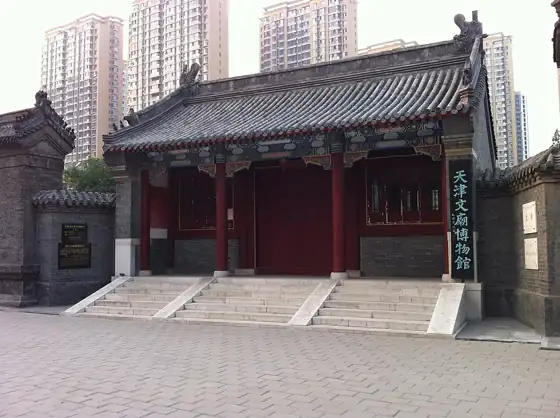 Confucian Temple in Nankai District, Tianjin
Tianjin Confucian Temple天津文庙
Tianjin Confucian Temple preserves the unusual arrangement of prefectural and county Confucian temples standing side by side. The complex belonged to the city's system of official education and ritual, rather than functioning as…
Read the place guide → The exterior of Tianjin's Guangdong Guild Hall, home to the theatre museum.
Guangdong Guild Hall (Tianjin)广东会馆
The Guangdong Guild Hall began as a meeting place for merchants from Guangdong and now houses Tianjin's Opera Museum. The late-Qing building links trade, regional identity and performance through its historic theater. It also…
Read the place guide →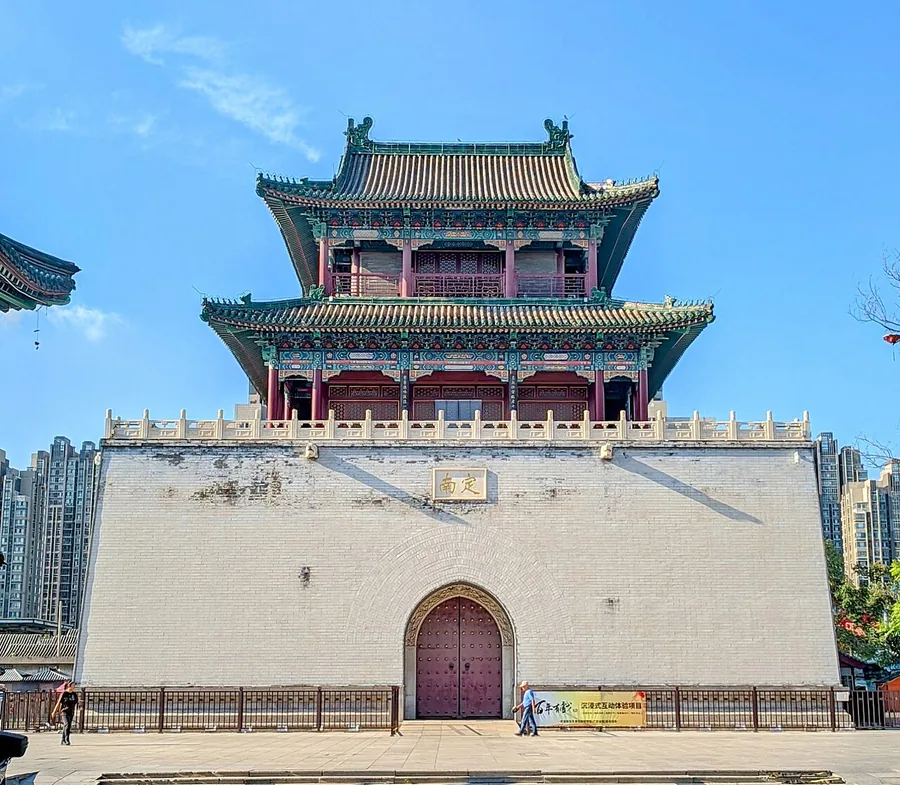 The south-facing side of Tianjin Drum Tower.
Drum Tower of Tianjin天津鼓楼
Tianjin's Drum Tower marks the center of the former walled city, where streets extend outward through an area now devoted to shops, food and heritage visits. The visible tower is a reconstruction completed in 2001, and it houses…
Read the place guide → The gateway of Tianhou Temple in Tianjin's Nankai District; 1 March 2006.
Tianhou Temple (Tianjin)天津天后宫
Tianhou Temple is the Mazu shrine at the heart of Ancient Culture Street. Its origins in the Yuan period reflect Tianjin's long relationship with sailors, navigation and river trade. Unlike the surrounding modern shopping…
Read the place guide → Memorial to Zhou Enlai and Deng Yingchao
Zhou Enlai and Deng Yingchao Memorial Hall周恩来邓颖超纪念馆
This memorial follows the lives of Zhou Enlai and Deng Yingchao through photographs, personal objects and material associated with their public work. Tianjin's student activism forms an especially local thread: a printing press…
Read the place guide → AI illustration; an interpretive view, not a photograph. AI 示意图,非景点实拍。
Joy City Shopping Mall (South Gate Street)南开大悦城
Nankai Joy City is the South Gate Street shopping complex, distinct from Tianjin's other malls using the Joy City name. Its best-known feature is a themed indoor shopping street: the former Qi'e Commune was relaunched as Qi'e…
Read the place guide →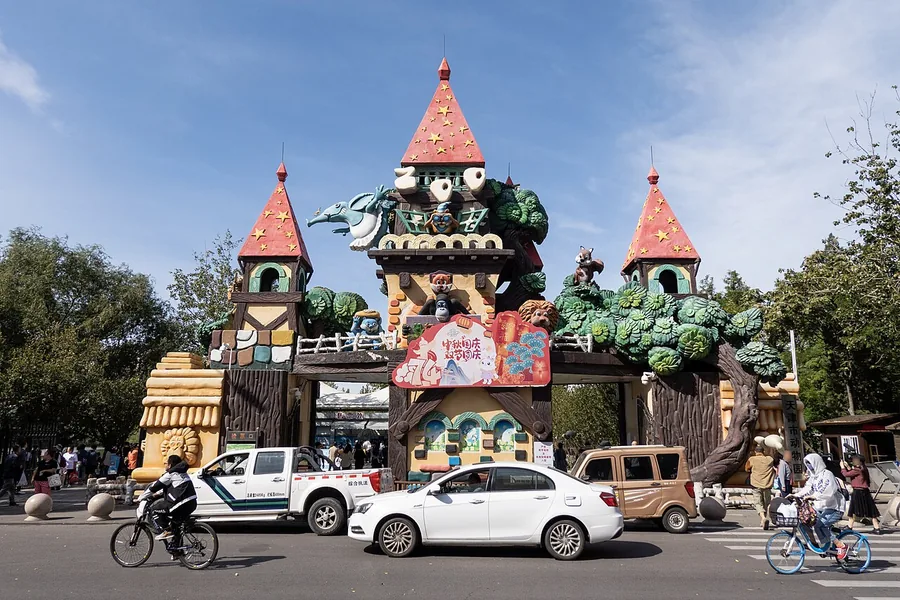 The themed east entrance of Tianjin Zoo. Photographed on 4 October 2023.
Tianjin Zoo天津动物园
Tianjin Zoo occupies the southern end of the Water Park complex, combining animal enclosures with a landscape that includes lakes. It opened in 1980 and separates major groups such as primates, bears, large cats, pandas, birds…
Read the place guide →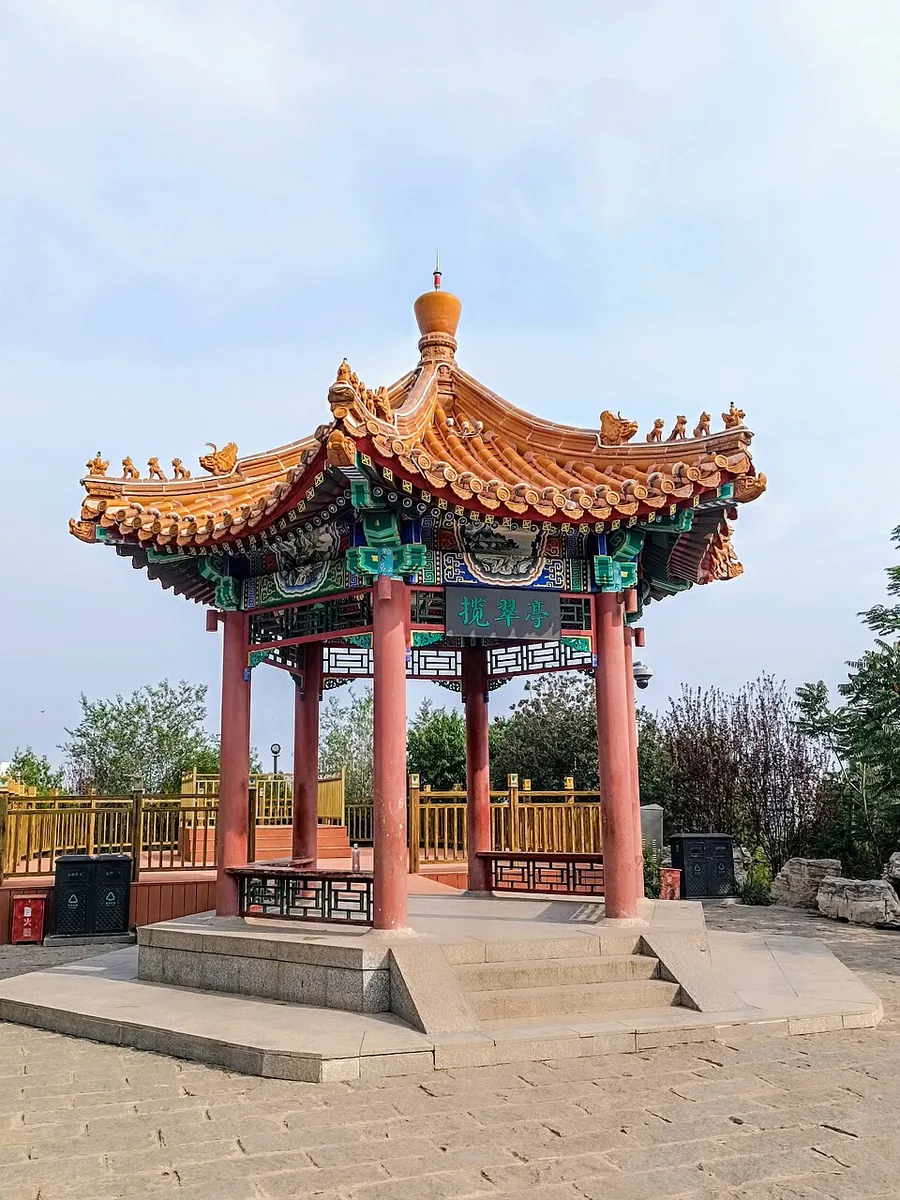 Lancui Pavilion on the summit of Nancuiping Park in Tianjin. Photographed on 8 July 2024.
Nancuiping Park南翠屏公园
Nancuiping Park turns an artificial hill built with construction spoil into a planted urban landscape. Water surrounds and softens the raised ground, creating a choice between a slope walk and a gentler lakeside circuit. Named…
Read the place guide →Plan your visit
Getting there
Nankai District is about 5 km in a straight line from central Tianjin. Search for 南开区 in a map app to find stations and your accommodation.
Where to stay →Build your route
Ancient Culture Street and Tianjin Water Park are about 7 km apart in a straight line. The linked place guides have entrance and visit details.
Continue with Tianjin →More in Tianjin
Sources & geographic information
Administrative names and parent areas: Official geographic directory · Reference date 2026-09-06.
Some facts checked against 南开区 — Wikipedia contributors, CC BY-SA 4.0.
Photo: Ancient Culture Street · William M Benson · Public domain. Wikimedia thumbnail; fitted to the ranking-card frame.

Photo: Tianjin Confucian Temple · Xrdtj · CC BY-SA 3.0. Resized and WebP compressed; subject not altered.

Photo: Guangdong Guild Hall (Tianjin) · Xrdtj · CC BY-SA 3.0. Proportionally resized and converted to WebP without cropping, retouching or changing the photographed subject.

Photo: Drum Tower of Tianjin · KangTyngrwey · CC BY 4.0. Proportionally resized and converted to WebP without cropping, retouching or changing the photographed subject.

Photo: Tianhou Temple (Tianjin) · Photo taken by Fanghong · CC BY-SA 3.0. Proportionally resized and converted to WebP without cropping, retouching or changing the photographed subject.

Photo: Zhou Enlai and Deng Yingchao Memorial Hall · Augusthaiho · CC BY-SA 4.0. Resized and WebP compressed; subject not altered.

Photo: Tianjin Zoo · Tim Wu · CC BY-SA 4.0. Proportionally resized and converted to WebP without cropping, retouching or changing the photographed subject.

Photo: Nancuiping Park · KangTyngrwey · CC BY 4.0. Proportionally resized and converted to WebP without cropping, retouching or changing the photographed subject.

Map data © OpenStreetMap contributors. Pins mark approximate centres, not entrances or boundaries.