

Living in China: Bank Accounts and Renting a Home

Living in China for work or study is easier with a local personal bank account and a checked rental contract. Start with your school’s or employer’s partner branch, arrange a real-name mainland phone number, and use a documented temporary address while you look for a home.
This guide takes you from the first bank visit and rental search to salary or scholarship payments, moving in, accommodation registration and getting your deposit back. Banking and signing a lease do not replace the visa and residence process.
By China Revealed · Checked October 20, 2026 · Mainland China
Quick takeaways
- Start with the institution that will pay you. Before choosing a bank brand, ask HR or your international-student office which specific branch already handles payroll or student payments and what account details it needs.
- Use a temporary address as a bridge, not a dead end. A hotel, university dormitory or employer-arranged short stay can give you room to complete the first steps while you inspect homes and test the commute.
- A passport is the national identity basis for applying; extra bank documents are a separate question. A branch may ask for status, address, work/study or tax-residency information, but do not assume that a residence permit or signed long lease is a nationwide prerequisite for every account application.
- Search for a commute before a flat. Inspect in person, check who has the legal right to rent the property, and make the payee, deposit and exit terms explicit before money moves.
- Treat address registration as its own clock. A non-hotel address normally needs accommodation registration within 24 hours of move-in; a lease, work permit and residence permit are different records.
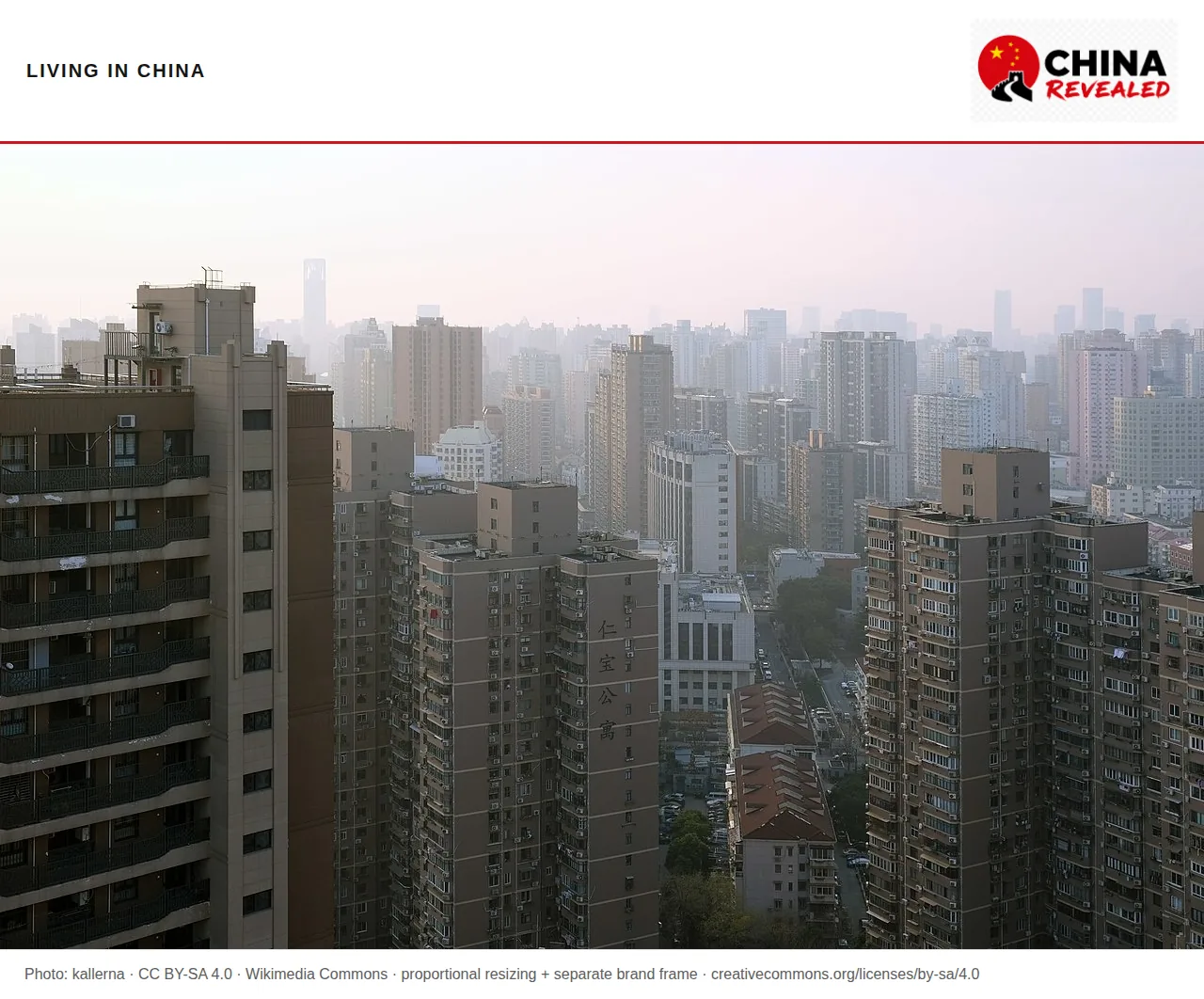
In this guide
- Before departure: make your school or employer your local bridge
- Your first 48 hours: a registrable address and a working phone
- Keep visa, work-permit and residence-permit tasks on a separate track
- Choose the branch your payer can use
- At the bank: open, activate and verify the account
- Salary, scholarships, everyday payment and foreign exchange are different jobs
- Choose a commute, then find a home
- View, verify, contract and pay without skipping the checks
- Beijing and Shanghai asking-rent snapshots
- Move in: register the non-hotel address within 24 hours
- Keep the system working: bills, repairs, a move and departure
- A first-month action plan
- References
Before departure: make your school or employer your local bridge
Start with the HR, relocation or payroll contact at the employer, or the international-student office at the school. Ask where you can stay first, who can help with non-hotel address registration, which specific branch handles payroll or scholarships, which account details the payer needs, and whether it can confirm current passport, phone, document and appointment practice. It is a practical bridge, not a guarantee of approval.
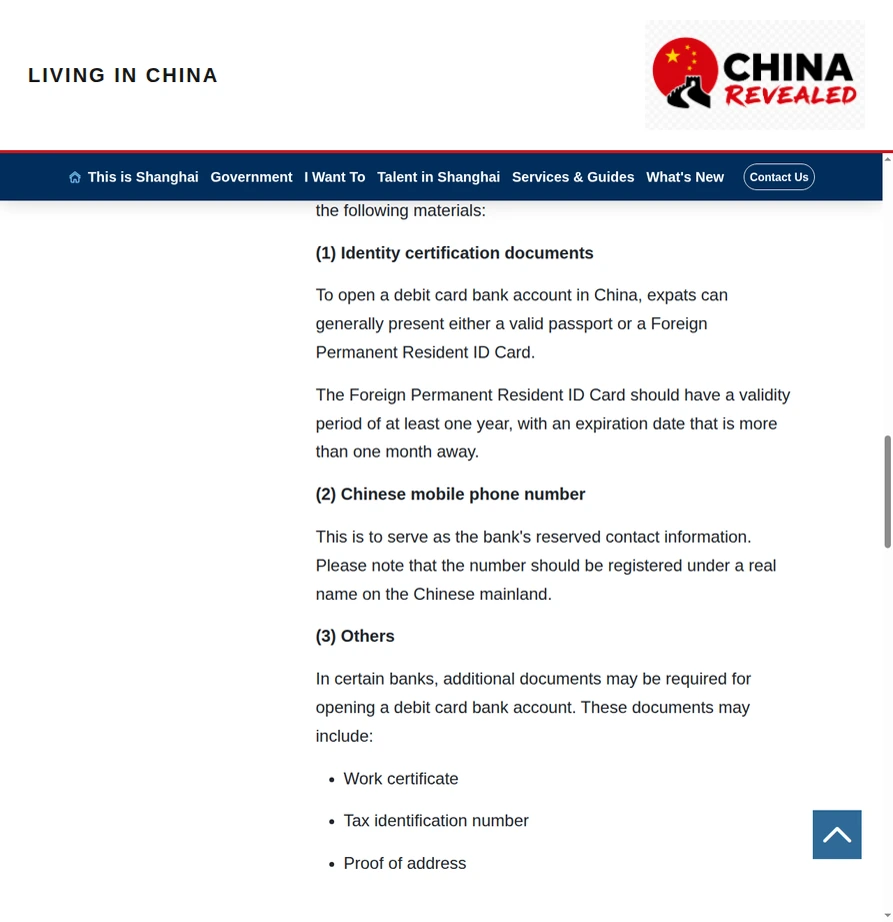
Carry your passport, visa page, admission or employment record, and any status documents already issued. A work-permit-related document or employer letter may help a worker; an admission or enrolment record may help a student. These are candidate documents, not a national compulsory list: a passport supports an application at a branch, while Shanghai’s guide illustrates that some banks may also ask for work, tax-identification or address evidence. Call the target branch—not only a national hotline—to confirm its originals, temporary/dormitory address evidence, phone and appointment requirements.
For the entry side of your arrival, use China Revealed’s visa and entry guide for foreigners to orient yourself to work and study pathways. Then follow the annotation in your own passport and the instructions from your sponsoring employer or school. Your bank account may be helpful for life administration, but it does not determine an immigration deadline.
Book a hotel for your first nights in China, plus flights and train tickets, on Trip.com.
Your first 48 hours: a registrable address and a working phone
The best first address is one you can document and where the host understands the next step. At a hotel, the hotel is responsible for reporting accommodation information. If you stay outside a hotel—in a private rented home, with a friend, or in another host arrangement—you or the host must handle the accommodation registration within 24 hours after lodging. A short, legitimate stay therefore gives you a base from which to collect a phone number, see a branch, learn the route to work or campus and view homes without rushing a payment.
A personally controlled mainland mobile number is a highly practical early priority. You will use it for messages with landlords and agents, one-time codes, bank contact details and mobile-payment registration. Shanghai’s official guide explicitly asks foreign bank applicants for a mainland real-name-registered mobile number; that is a clear local operational example, not a nationwide legal condition for every bank or every city. Elsewhere, ask the actual branch whether it needs a mainland number, whether it must be registered in your own name, and how you will update it if you change numbers. For a comparison of connectivity choices, see China Revealed’s China SIM vs eSIM guide.
Do not wait for a domestic bank account before buying food, taking a taxi or viewing a flat. Where the merchant displays the relevant acceptance logo, an overseas-issued card may work. You may also be able to link an overseas card to Alipay or WeChat Pay, depending on the platform and card support. Both are useful bridge options for merchant spending, and both should be tested transaction by transaction rather than assumed to work everywhere. They are not substitutes for the domestic account details an employer or school may require to pay a salary or scholarship. They also do not guarantee that you can pay rent to an individual, make a domestic person-to-person transfer, or receive regular institutional payments.
This is particularly important for students. Do not solve a slow account opening by having a scholarship paid into a classmate’s account. The payer needs a reliable, documented link between the student and the payee account. Ask the school for its procedure and use your own account once it is open.
Keep visa, work-permit and residence-permit tasks on a separate track
A Z visa relates to work, X1 to long-term study and X2 to short-term study of no more than 180 days; none automatically means you already hold a residence permit. If your visa annotation requires a residence-permit application, the general legal deadline is 30 days from your entry date, not the visa-issuance date. For workers, a work permit and a work-type residence permit are separate requirements.
You may be able to apply for an account before a residence permit is issued and view homes before signing a long lease. Those practical dependencies do not pause an individual immigration deadline. Keep the visa page, entry date, employer/school contact, permit appointment evidence and address-registration confirmation together. If another application will hold your original passport, coordinate the timing with the bank and ask what it will accept in the meantime; do not assume a receipt replaces the passport, or delay immigration formalities to finish banking.
Choose the branch your payer can use
Begin with the partner branch, not “the best bank”
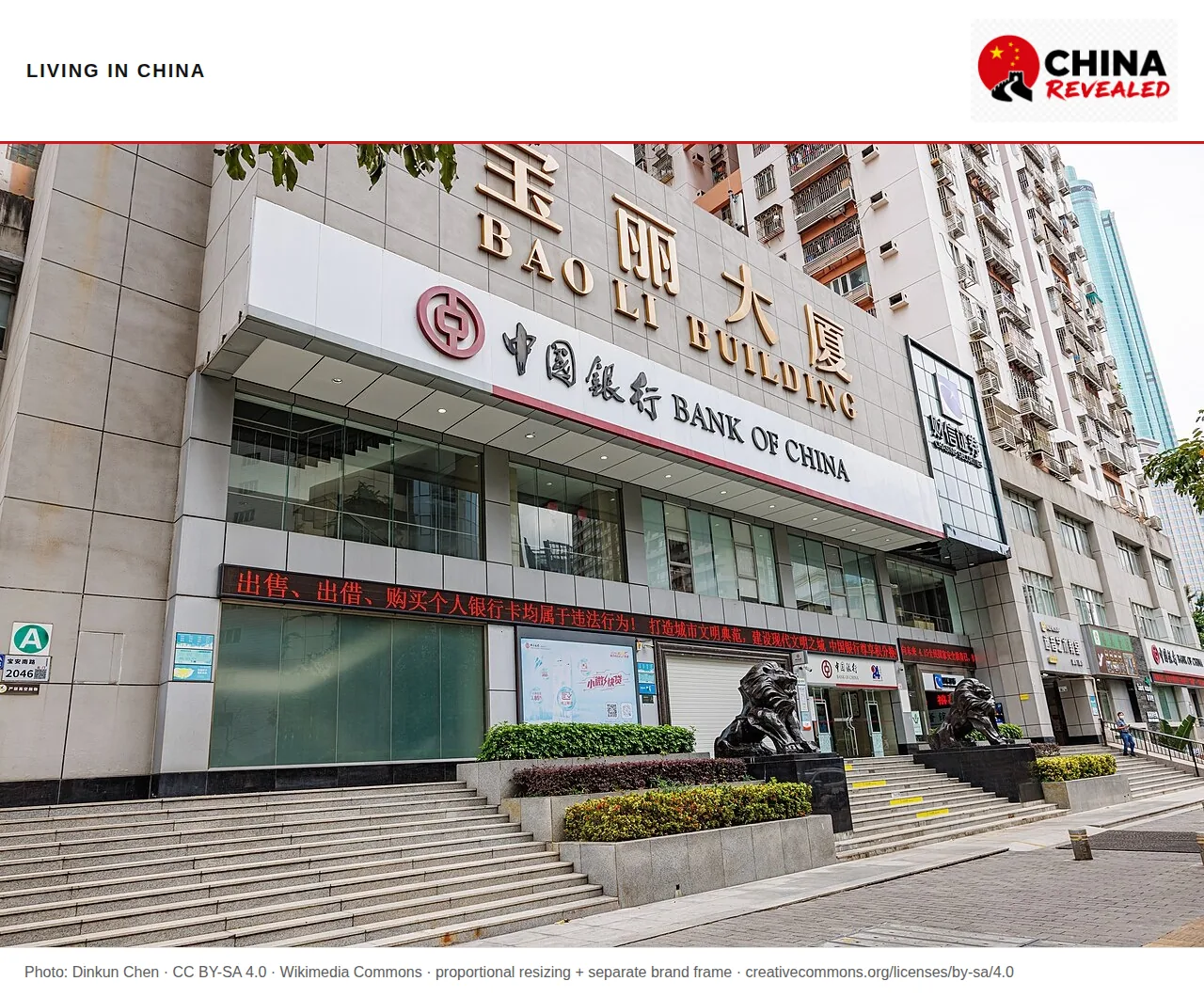
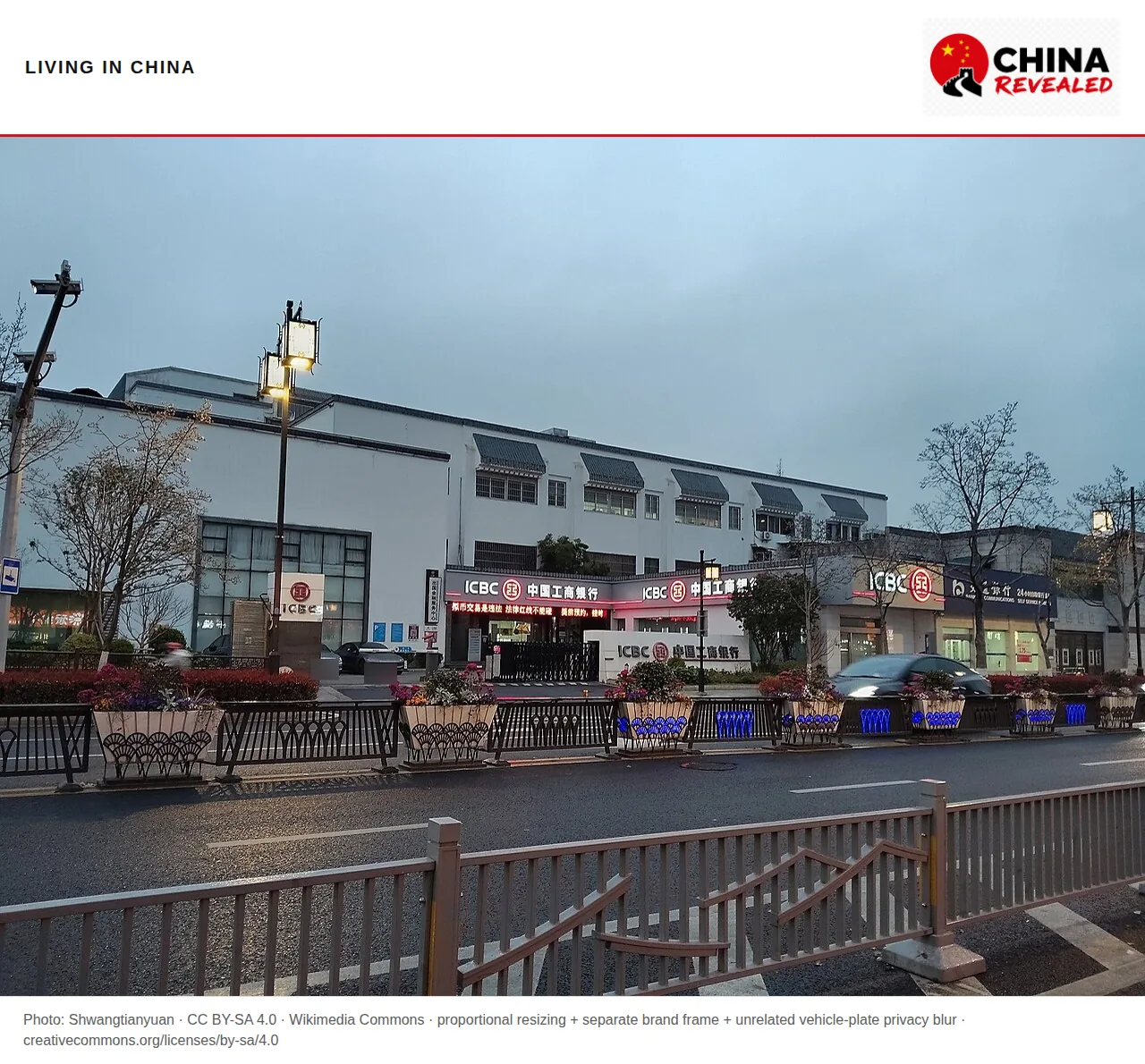
If HR or the school identifies a branch that already handles its payroll or student payments, start there. A familiar branch may already understand the payer’s account-detail format and be accustomed to helping international staff or students. If no such branch is available, Bank of China (BOC) is a sensible first bank to ask because its public guidance says foreign customers can apply for a domestic debit card at a China branch with a passport or other valid identification, and BOC publishes English mobile-banking information. ICBC is another mainstream option with official current-account guidance that recognises a foreign citizen’s passport or foreign permanent-residence ID, while stating that local branch standards can differ.
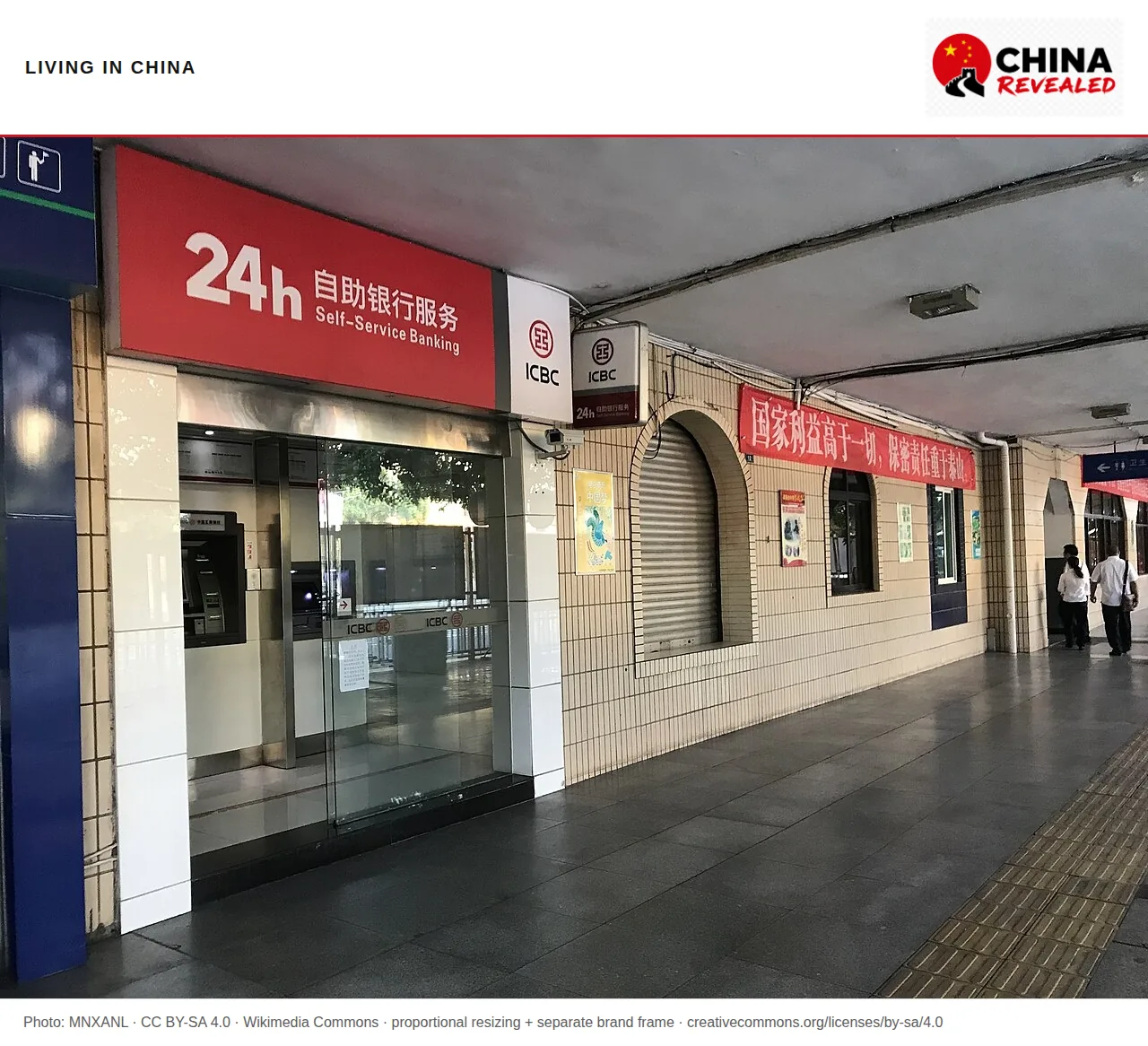
Neither brand name promises that every outlet opens accounts for foreign passport holders, has an English-speaking teller, has an appointment available, issues a physical card the same day, or gives the same non-counter permissions. A self-service entrance, ATM or banking app is not evidence that a first account can be opened remotely from start to finish with a passport. Plan for an in-person identity check and an honest branch-level answer.
The questions to use at the counter
Ask for a personal debit card linked to a personal settlement/current account, not a credit card. A debit card uses money in the linked account and does not provide the overdraft-style credit associated with a credit card. The terms are not interchangeable, and a credit-card application may involve a different eligibility and credit review.
Use a clear, written question card on your phone or paper if language is a concern:
| Ask the branch | Why it matters now |
|---|---|
| “I need a personal debit card and a personal settlement account for salary/a scholarship. Which account can you open for me today?” | The payer needs an account, not a generic card discussion. |
| “What original documents, phone number and address or status evidence does this branch require today?” | Passport identity and supplementary review are distinct; requirements can vary. |
| “Does the account have the non-counter functions I need, and what activation or verification is still pending?” | Account class, card status and online/non-counter permissions are separate issues. |
| “What exact English account-holder name and account details should I give my employer or school?” | It prevents avoidable name-format mismatches on the first payment. |
| “What are the current charges for this card, transfers, replacement and other services?” | Fees should come from the current branch tariff, not an old web page. |
| “If I renew my passport or change my mobile number or address, how do I update your records?” | There is no verified one-size-fits-all national foreign-customer update process. |
Do not request a particular account class as if it were a guaranteed product name. In the personal-account framework, Class I, II and III are account categories rather than debit-, credit- or prepaid-card labels. The specific non-counter function, risk review and any transfer limit need to be explained by the bank for the account it actually offers you; do not rely on old regulatory figures or online anecdotes. For salary or a scholarship, ask whether an appropriate Class I account (Ⅰ类账户) is available and what must happen before you can receive, transfer and use the funds. Confirm the actual account category and permissions rather than relying on the card alone.
BOC and ICBC: useful checks, not a league table
BOC publishes English mobile-banking information, but says access follows account opening and card activation; ask the branch to enable it rather than assuming remote, all-English opening. Its 2022 notice waived personal debit-card annual and RMB small-current-account management fees, not every possible charge, so ask about transfers, replacement and other current fees.
ICBC recognises a foreign passport but may seek extra proof and lets local standards vary. Its charter says a new card with no transaction record for six consecutive months may have non-counter services suspended until identity is verified. Ask what “active” means for your account; do not invent universal ICBC fees, limits or English-app coverage.
At the bank: open, activate and verify the account
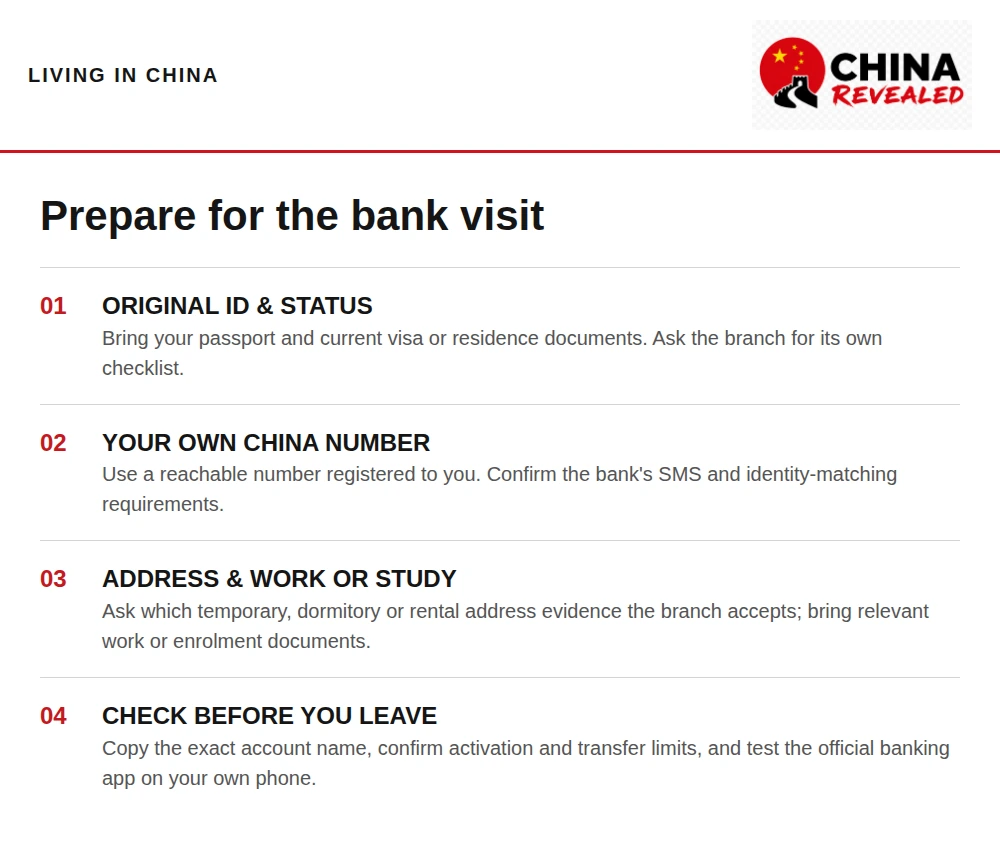
At the visit, verify identity, make the card/account usable, then check the exact record you will give the payer. State the purpose honestly. If the branch asks for a visa page, temporary-address evidence, a dormitory record, enrolment/work evidence, tax identification or a mainland phone number, ask whether it is required now or can be supplied later. A hotel, dormitory or accommodation-registration record may help explain your address, but cannot be promised as bank-accepted address evidence; ask what that branch accepts.
Use your passport name exactly as it appears on the account record. For foreign-exchange savings accounts, the account-holder name must match the valid identity document; as a practical matter, the same discipline is sensible when giving the payer your bank details. Before leaving, look at the printed receipt or official account record and copy the account-holder name, account number and any other fields HR or the school asks for. Do not improvise the order of multiple names, add a nickname or remove spaces and hyphens. Have the payer confirm it can use the bank’s exact output before the first salary or scholarship run.
A tax-residency self-certification is another moment for accuracy. Tax residency is not a simple synonym for nationality, so do not select an answer merely because of the passport you carry. Banks undertake tax-related due diligence, and a Shanghai official guide tells applicants to complete the self-certification. Give the bank the information it requests, ask it what the form means if a field is unclear, and obtain qualified tax advice separately if your tax residency or tax number is uncertain. This is not a tax-planning article.
Finally, make the account operational before you leave the branch whenever possible. Set the card password if applicable; ask whether the card/account is already active; register for the official mobile-banking service if you want it; and ask what authentication, device binding or follow-up verification remains. Check whether the account can receive the incoming payment and whether the card can be linked to the payment services you intend to use. The answer may be “not yet,” and that is useful information. Install the official mainland app linked from your bank’s own website, rather than a similarly named overseas affiliate app. For BOC, ask staff to show the English mode; for ICBC, ask about the language options in the app you actually receive. Test login and an SMS on your own phone while staff can still help. Keep your card PIN, login password and verification codes private.
Salary, scholarships, everyday payment and foreign exchange are different jobs
Once the account is active enough for the payer, send HR or the school the account-holder name exactly as the bank prints it, plus the account details it specifically requests. Ask the payer to confirm receipt and name formatting before its next run. A personal account can support personal settlement and, depending on the payer’s process, salary disbursement; it does not mean the bank arranges the employer’s payroll for you. A scholarship should similarly be paid to the student’s own confirmed account, not routed through a friend’s account for convenience.
For everyday payment, add one layer at a time. Register the payment service with the number you control, link the card if the app and issuing bank allow it, and try a small ordinary merchant purchase before relying on it for rent or a major bill. The available cards and supported functions differ among payment providers. Keep an alternative method while you learn: your physical domestic card, some appropriately obtained cash, and an overseas card where the merchant accepts it. Do not describe a linked overseas card as a domestic settlement account merely because it works at a shop.
For a future transfer abroad, keep salary, scholarship, transaction and tax documentation in an orderly folder. Do not repeat the claim that every foreign national has a universal US$50,000 annual remittance entitlement. The State Administration of Foreign Exchange distinguishes an annual facilitation amount for certain individual settlement/purchase situations from a foreign individual’s purchase of foreign currency with lawful current-account RMB income in China, such as wages. The latter route may require valid identification, transaction/income evidence and tax documentation; outward remittance from a foreign-exchange savings account has another route. Ask the bank which route applies to your proposed transaction and what documents it needs. Never treat a payment-app cap, a card cap, a non-counter limit and a foreign-exchange rule as the same number, and do not try to work around a review by splitting transactions.
Choose a commute, then find a home
Housing and banking can progress in parallel. Map the office entrance or campus gate, search outward by transport stations, walk from the compound gate to the station and test a real commute. China Revealed’s Amap guide for foreigners can help. Do not sign the first convenient flat before testing the route.
Lianjia/Beike, Ziroom, SmartShanghai and Wellcee, plus direct landlords and qualified agents, are discovery routes—not proof of automatic foreign-passport verification, English contracts or registration eligibility. Beijing’s municipal service can help check listings and agencies; Shanghai’s official guide lists direct landlords, qualified agents, Shanghai Lianjia and Ziroom, and advises checking ownership and identity. For a share, establish the main lease, sublet authority, bill split and whether every resident can register the address.
| Your current position | Productive next move | Do not assume |
|---|---|---|
| Temporary hotel, dormitory or employer stay; no mainland bank account yet | Map office/campus journeys, shortlist neighbourhoods, book viewings and ask how rent would be paid. | A foreign card or an app will necessarily pay an individual landlord. |
| Mainland phone ready; account application pending | View properties, verify rights and documents, test the commute, and ask about registration cooperation. | A pending account justifies paying before a written contract. |
| Account works; ready to sign | Make the contract, payee, deposit and all fees clear; use traceable payment and retain receipts. | The agent may collect your rent or deposit on behalf of everyone. |
| Considering a shared home | Establish the contract structure, sublet authority and registration path for each resident. | A single tenant’s record automatically covers every housemate. |

View, verify, contract and pay without skipping the checks
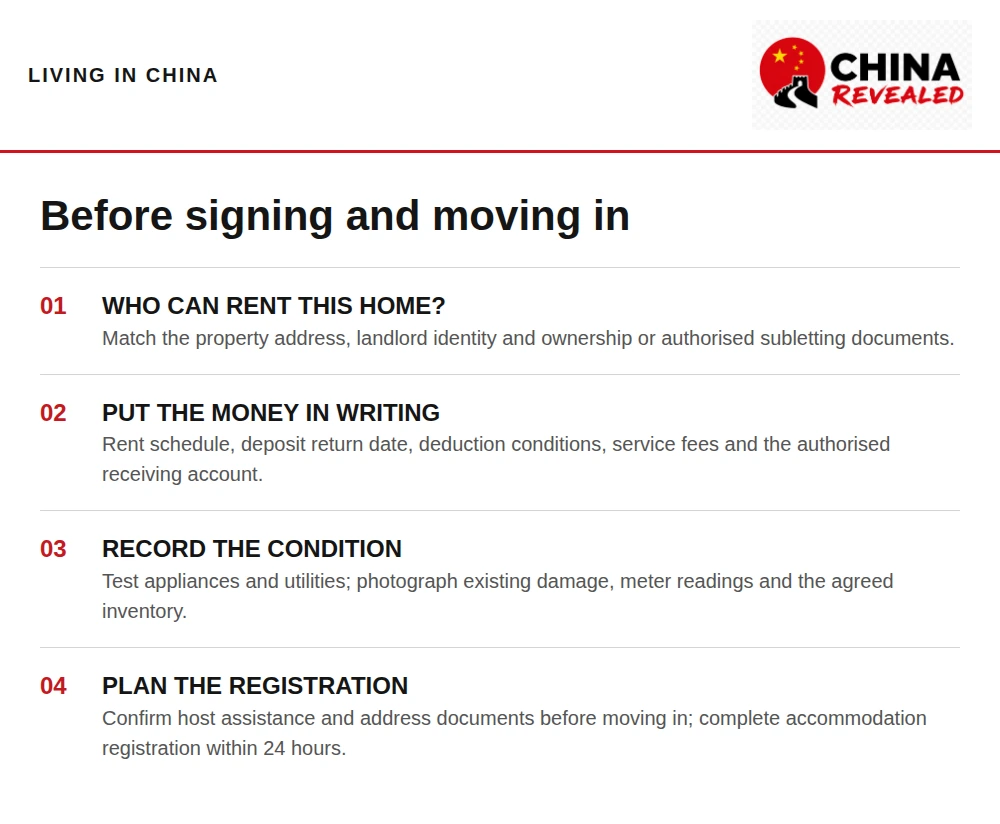
A good rental decision has four checks: the person, the property, the authority to rent, and the money trail. Visit the actual unit before paying. Check the address against the listing and the contract, then ask the landlord to show identification and the property-ownership certificate or another document that establishes a lawful right to rent. China’s Housing Leasing Regulations, effective 15 September 2025, require a lessor to show identity documentation and a property-ownership certificate or other proof of a lawful right to lease. Do not treat a key, a chat account, a photo album or a persuasive agent as a replacement for that verification.
If the signer is an agent, ask for the authority to represent the landlord and examine its scope. If the home is a sublet, inspect the main lease, note its end date and request the original landlord’s written consent to the sublet. Under the Civil Code, a tenant needs the original lessor’s consent to sublet; an agreement that extends beyond the sublessor’s remaining lease generally does not bind the original lessor. Attach or preserve the relevant consent rather than accepting an oral assurance. Pause the transaction when names, addresses and documents do not align.
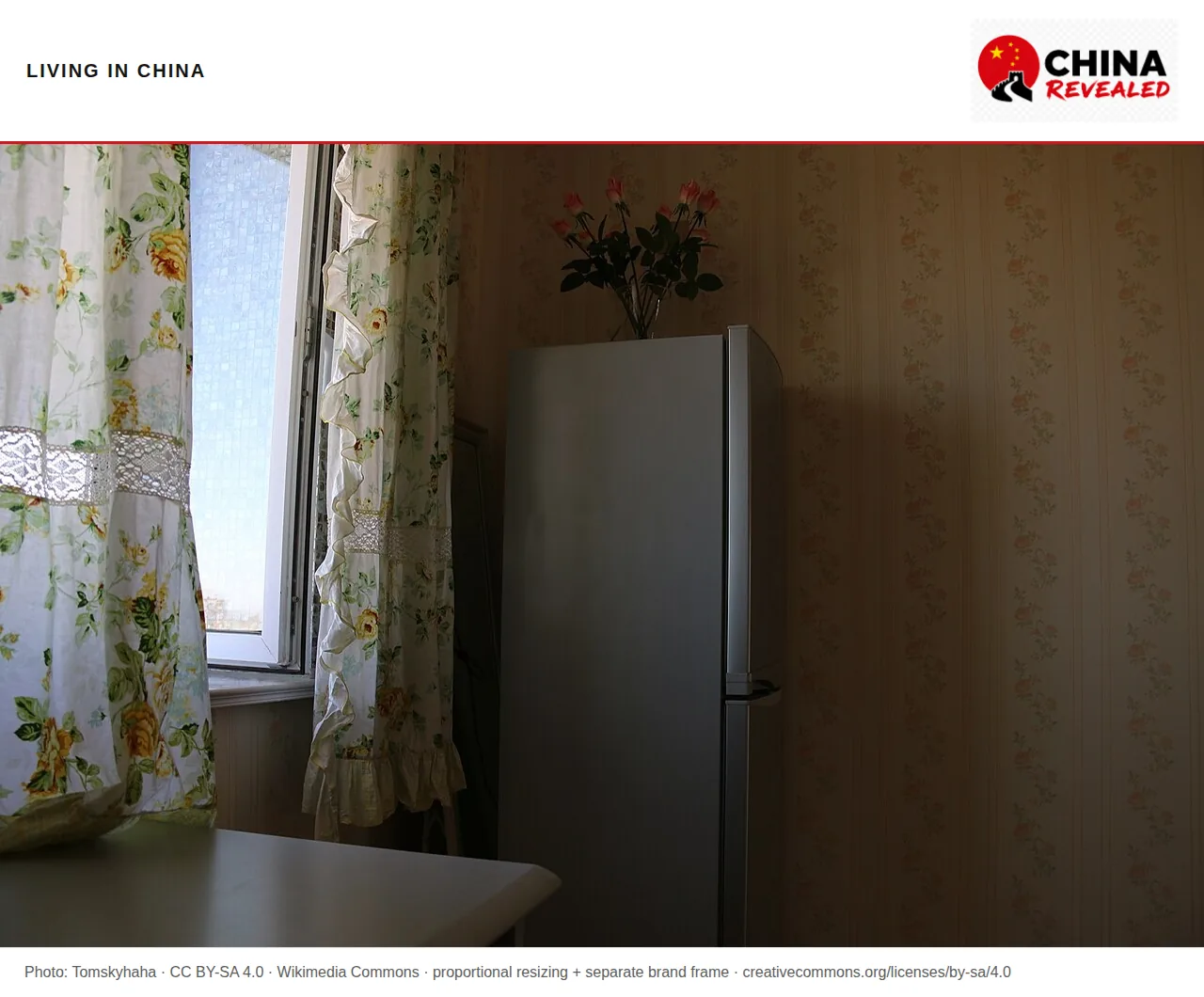
Then inspect the living conditions as carefully as the paperwork. Run the taps, lights and appliances; open windows and doors; look at the condition of plumbing, locks and furnishings; ask how heating, air conditioning, internet, property fees and utilities are billed; and listen for noise. Record defects, meter readings and included items in a signed move-in inventory, backed by date-stamped photos or video. Shanghai’s official international-student guidance similarly recommends an in-person inspection, checks on transport and facilities, a formal contract and a record of the move-in condition.
Make the bilingual contract do real work
A bilingual contract needs a signed clause saying which language prevails if texts differ. National rules set no universal priority language, so have a trusted Chinese reader or professional translator check each Chinese clause; do not sign on a verbal summary.
State the property, authorised parties, term, rent and due dates, payment method, deposit, deposit-return deadline, deductions, repairs, utilities, property management, internet, heating, renewal and exit terms. The 2025 model contract also provides fields for the payee, fees, handover and meter readings. The 2025 regulations require deposit amount, return timing and deductible circumstances; absent an agreed circumstance, a lessor may not withhold it without proper reason. “One month deposit, three months’ rent up front” is not national law, nor is there a universal deposit cap or a fixed-term 30-day penalty-free exit.
Pay only along the documented route
The payment recipient needs as much checking as the apartment. Match the bank-account name to the contract’s landlord or payee. If a third party will receive rent, record why and attach written authorisation in the contract or an addendum. For each transfer, use an auditable payment route and enter a useful note: property address, rental month or term, and whether it is rent, deposit or a fee. Request a receipt and preserve the contract, transfer record and chat confirmation together.
The regulations prohibit housing-rental brokers and information platforms from collecting or paying rent and deposits on the parties’ behalf. Do not casually hand rent or a deposit to an intermediary because an agent says it is normal. Distinguish a broker from a genuine contractual landlord or a property-management company that is clearly named as the authorised payee in your contract; in the latter case, still obtain the contractual basis and receipt. Agency service fees also require a written, itemised quote. National rules do not set one percentage or assign every fee to landlord or tenant, so never accept a claimed “standard” without the amount and service being written down.
A clear illustration of initial cash flow
Do the arithmetic before you agree to a payment schedule. For example only, if a landlord quotes ¥4,000 per month and the signed contract specifies one month of deposit plus three months of rent in advance, the initial rent-and-deposit amount is:
| Component | Calculation | Illustrative amount |
|---|---|---|
| Deposit | ¥4,000 × 1 month | ¥4,000 |
| Rent paid in advance | ¥4,000 × 3 months | ¥12,000 |
| Subtotal before separately quoted fees | ¥4,000 × (1 + 3) | ¥16,000 |
This ¥16,000 is a calculation example, not a market quote, legal requirement or evidence that a particular listing takes that schedule. Add only separately quoted, documented costs—such as an agreed agency service—after you know who charges it and what it covers.
Beijing and Shanghai asking-rent snapshots
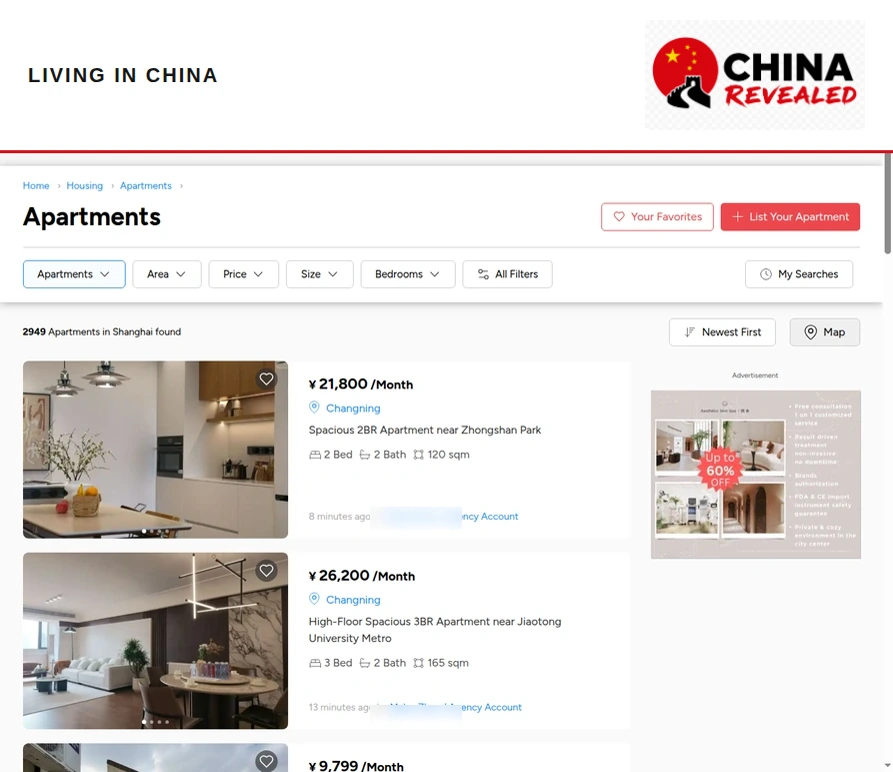
These are whole-apartment asking rents checked on 20 October 2026, not transaction prices or city averages. The Beijing examples come from Lianjia’s Daxing listings; the Shanghai examples are central-city SmartShanghai listings. They are different homes and locations, not a like-for-like city comparison. Filter separately for shared rooms, other districts and your current travel dates.
| City and location | Whole-apartment layout | Area | Asking rent per month |
|---|---|---|---|
| Beijing, Daxing: Zaoyuan (枣园小区), about 915 m from Zaoyuan (枣园) station | 2 bedrooms, 1 living room | 74.00 m² | ¥3,900 |
| Beijing, Daxing: Qingyuan Xili (清源西里), about 190 m from Qingyuan Road (清源路) station | 1 bedroom, 1 living room | 44.86 m² | ¥3,200 |
| Beijing, Daxing: Longhu Shidai Tianjie East (龙湖时代天街东区), about 334 m from Biomedical Base (生物医药基地) station | 2 bedrooms, 1 living room | 85.62 m² | ¥4,000 |
| Shanghai, Old Xuhui | 1 bedroom, 1 bathroom, lane house | 60 m² | ¥8,400 |
| Shanghai, Changning: Zhongshan Park | 1 bedroom, 1 bathroom, apartment | 60 m² | ¥8,800 |
| Shanghai, Huangpu: South Shaanxi Road | 1 bedroom, 1 bathroom, lane house | 80 m² | ¥9,800 |
| Shanghai, Old Xuhui | 2 bedrooms, 1 bathroom, lane house with terrace | 70 m² | ¥9,799 |
Start each real search with the right discovery route. In Beijing, Lianjia and Beike can help narrow areas and arrange viewings; the municipal rental service can be used to investigate listing-code and agency information. In Shanghai, SmartShanghai, local agents, direct landlords, Shanghai Lianjia, Ziroom and Wellcee can be entry points. In either city, ask the actual landlord, agent or platform representative: Can you verify a foreign passport for this specific listing? Who signs the contract? Is a bilingual contract possible? Will the host cooperate with accommodation registration? What is the complete initial payment and who receives it?
Move in: register the non-hotel address within 24 hours
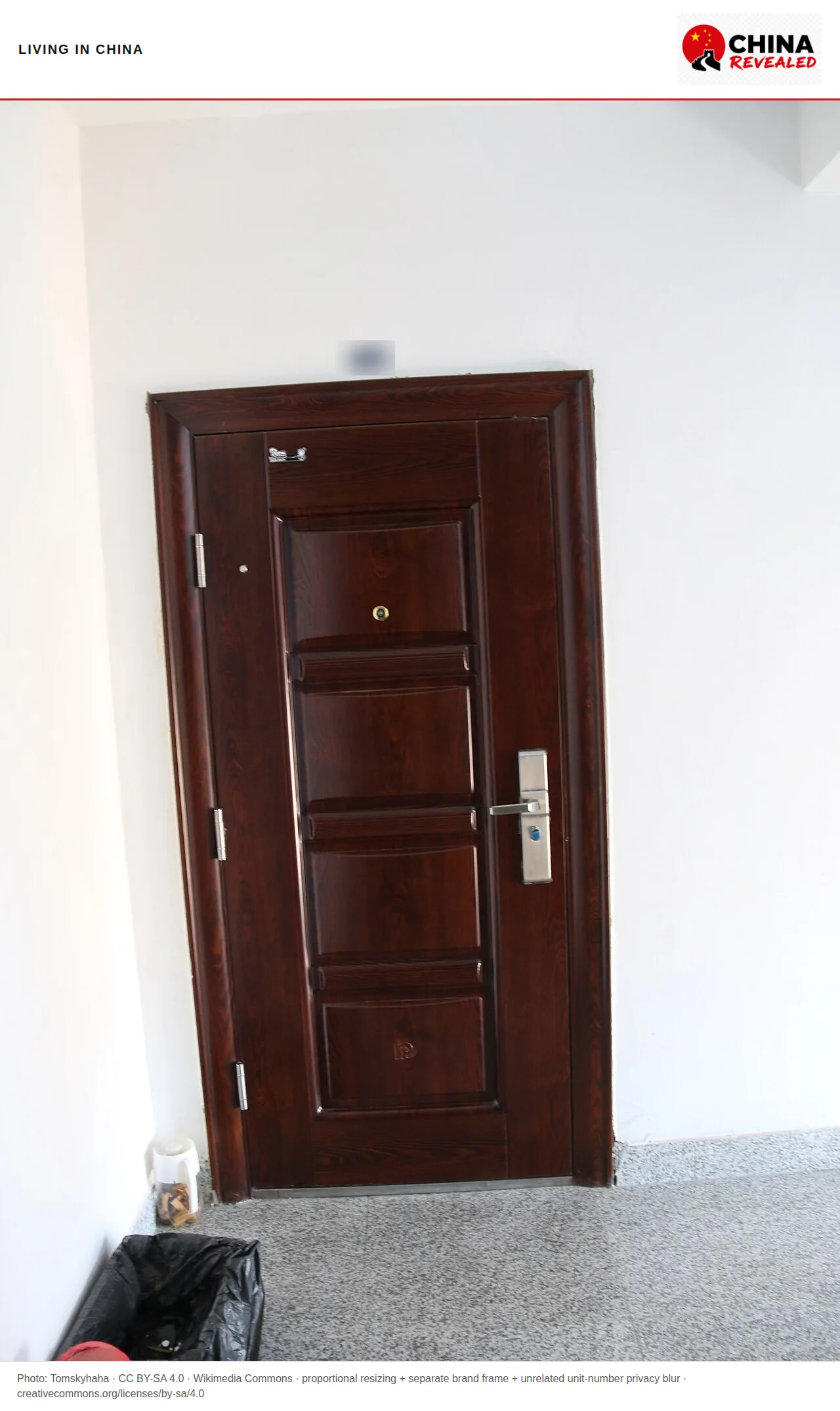
Outside a hotel, you or the host must register the accommodation address within 24 hours of moving in. Since 21 September 2026, online registration has been rolled out nationwide through the NIA service website, 12367 app and WeChat/Alipay channels; in-person public-security channels remain and have equal effect. The NIA’s national guidance says a host should assist with a first online registration; the host may be Chinese or foreign, and does not need to be the landlord personally.
The sequence is straightforward:
- At a hotel, confirm that the front desk has registered your stay. In a private home or rented apartment, agree with the host before move-in who will help with the non-hotel registration.
- On move-in day, register and verify your identity, then choose Accommodation Registration under Foreigners Services (the website’s English labels) (Chinese: 外国人服务 → 住宿登记) on the official NIA service website, NIA12367 app or its WeChat/Alipay mini-programme. Once registration is complete, open Registration Record Inquiry (Chinese: 登记记录查询) and check the recorded passport and address. Saving a draft or opening the module is not a completed registration. If the online route is unavailable or does not fit the case, use the local in-person public-security channel or ask 12367 for help.
- Save the electronic record or receipt. It proves the accommodation-registration step, but it does not approve a residence permit, replace a work permit, extend visa status, or guarantee that a bank will accept it as address evidence.
- When you move to another non-hotel address, treat the new place as a fresh 24-hour registration task. A rental-contract filing or online housing record is not the same thing as accommodation registration, even though both may involve the same address.
A guest may independently register online if they have previously registered through the NIA platform and are registering the same address again, or if they live in their own home. The NIA also says a holder of a residence or permanent-residence permit returning from domestic or international travel to the same habitual residence during the same permit-validity period does not need to register again. A habitual residence is a home where you live or plan to live for more than 180 days. The national guidance also exempts an already-registered resident returning to the same self-owned home after travel; self-owned includes a home owned by the resident or their spouse. These circumstances do not exempt a move to a new address: register the new address within 24 hours. A same-city move is not automatically a 10-day residence-permit change; that rule covers listed permit details, including a passport number, not an ordinary home address. After a new passport, ask exit-and-entry authorities about the 10-day permit update and ask 12367 whether the same-address accommodation record also needs updating. Update the bank, employer and school separately.

Keep the system working: bills, repairs, a move and departure
Once salary or scholarship payments begin, keep three records aligned: the bank, the home, and the address/identity file. The bank record means your exact account-holder name, controlled phone number, usable authentication method and saved statements. The home record means the lease, receipts, repair requests, inventory, meter readings and payment notes. The address/identity file means the current accommodation-registration receipt plus any separate visa, work-permit or residence-permit evidence. Keeping them together will make a move or deposit discussion much less chaotic.
For monthly housing payments, follow the contract’s date and recipient. For repairs, begin with the agreed contact and make the request in writing. The Civil Code’s default position is that the lessor has repair obligations unless the parties agree otherwise, so your lease should state who handles structural and appliance problems, what counts as tenant damage, and how urgent repairs are reported. Utility, gas, heating, property-management and internet costs should be allocated item by item, rather than reduced to an ambiguous “bills included” promise. At move-in and move-out, record meters and save proof of agreed settlement.
A move-out needs as much documentation as move-in. Follow your lease’s notice and early-termination terms; do not invent a universal 30-day penalty-free exit. Arrange a handover, photograph the condition, record meter readings, return keys against a written record and request an itemised explanation for every proposed deposit deduction. The deposit return date and permissible deductions should already be in the contract, but the handover evidence is what allows you to test the claim against those terms.
Tell your bank early if you renew a passport, change a mobile number or plan to close an account. Update and account-closure procedures depend on the bank and the account. Ask the account-opening branch what it needs while the old passport/number is still available, and do not close an account until final salary or scholarship payments, rent, deposit return, subscriptions and linked payment services are settled. Before leaving China or changing city, retain statements and records of income, rent and foreign-exchange transactions long enough to close those loops.
A first-month action plan
The following plan is deliberately sequential, but banking and home search can overlap. Use it to keep the hard deadlines and the variable branch/landlord questions from blocking one another.
| When | Priority | Practical result |
|---|---|---|
| Before departure | Ask HR or the school about temporary accommodation, registration support, payer requirements and a partner branch. Save documents and the branch’s answers. | A local bridge and a targeted first bank visit. |
| Days 0–2 | Stay at a traceable address; arrange a mobile number you control; keep an overseas card/payment backup for merchant spending. | A reachable contact route without pretending it is a salary account. |
| First week | Check the visa annotation and entry date; progress any work-permit/residence-permit steps separately; visit the confirmed bank branch. | Immigration clocks remain visible while the account request starts. |
| While account is pending | Search from office/campus commute; inspect homes; verify property rights, authority and registration cooperation. | You avoid delaying every housing decision for the account. |
| Before paying | Sign a checked bilingual contract, name the payee, deposit-return terms, fees and handover conditions; preserve payment evidence. | A defensible money trail. |
| Within 24 hours of private move-in | Complete non-hotel accommodation registration online through the current NIA/12367 route or in person; save the confirmation. | The address-registration task is completed separately from the lease and residence permit. |
| First payment and thereafter | Confirm payer name/account format, test account functions, save records, and update bank/school/employer records when your contact facts change. | A stable payment and housing record for the months ahead. |
The smooth version of a long stay is not “finish every form at once.” It is to keep a legal temporary address, a local human contact and a working phone while you open the account your payer can use; then choose the home around the journey you will make every day. Confirm the facts that genuinely vary—the branch, its requested documents, the property’s authority, the payee, the contract language and the registration route—before you pay. The resulting paper trail will help with the first salary or scholarship, the deposit return and the next address update.
References
- Regulations of the People’s Republic of China on the Administration of the Entry and Exit of Foreigners (revised text)
- Exit and Entry Administration Law of the People’s Republic of China
- National Immigration Administration Notice on Nationwide Online Registration for Foreigners Staying Outside Hotels
- People’s Bank of China Payment Guide for Foreign Visitors to China
- Shanghai Guide to Opening a Bank Account
- Bank of China Guide to Cross-Border Personal Financial Services
- Bank of China Mobile Banking
- ICBC Current Deposit Account Opening Guidance
- ICBC Debit Card Charter
- People’s Bank of China Questions and Answers on Personal Bank Account Classification
- Bank of China Notice on Waiving Personal Debit Card Annual and Small-Account Fees
- State Administration of Foreign Exchange Rules for Implementing Individual Foreign Exchange Administration Measures
- Agricultural Bank of China Customer Notice on Tax Due Diligence for Non-Resident Financial Accounts
- Bank of China Current All-In-One Account
- Beijing Housing Rental Service Platform
- How to Find an Apartment in Shanghai
- Housing Leasing Regulations of the People’s Republic of China, State Council Order No. 812
- Civil Code of the People’s Republic of China
- Top 10 Rental Tips for International Students in China
- Urban Housing Lease Contract Model, April 2025 Version
- Lianjia Beijing Daxing Whole-Apartment Rental Listings
- SmartShanghai Apartments for Rent
- Wellcee Foreigners and Expats Renting in China FAQ
- National Immigration Administration Policy Explanation on Nationwide Online Accommodation Registration for Foreigners
About China Revealed
China Revealed is an independent English-language travel guide dedicated to China.
We bring together China travel guides, destination information, local insights and practical travel resources in one place.
Our travel database covers China's provinces, cities, famous attractions, hidden gems, local cuisine, transportation, accommodation, visa requirements, digital payments, mobile connectivity and the other practical details travelers need to explore China.
We focus on depth, careful research and accuracy. Our guides combine official sources, detailed destination data, local knowledge and regularly updated information to give reliable, practical travel advice.
Whether you're visiting China for the first time or exploring beyond the popular destinations, China Revealed is an all-in-one resource for discovering the real China.
China Revealed — Your practical guide to China.
Some links on China Revealed, such as Trip.com booking links, are affiliate links. If you book through them, we may earn a commission at no extra cost to you. This does not change what we recommend.