

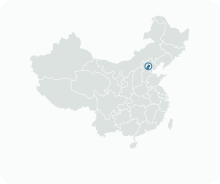
Get to know Haidian District
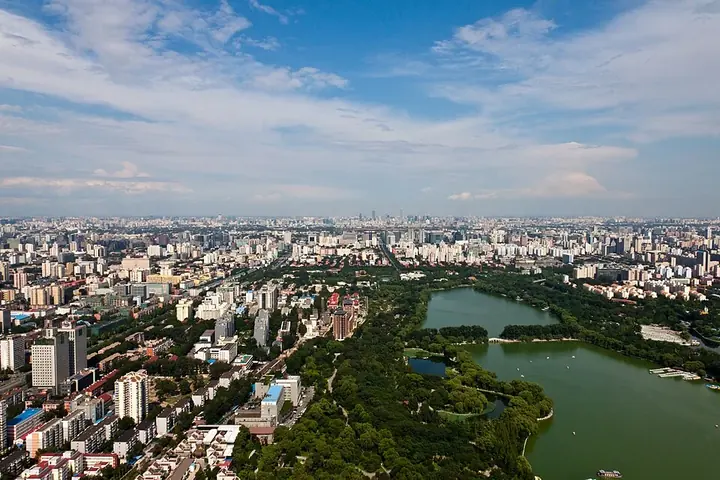
Photo adjustments
Full frame retained; proportionally resized and converted to WebP. No retouching or changes to the photographed subject. Card displays may crop the view.
- Administrative area
- District · 市辖区
- Part of
- Beijing
- Chinese name
- 海淀区
- Local areas
- District guide
Area & population
- Area in the source
- 431.00 km²
- Population · 2020
- 3,133,469
Source: cited geographic source, as of the dates shown.
Setting and landscape
The district covers about 430 square kilometres, with Changping (昌平区) to the north, Chaoyang (朝阳区) and Xicheng (西城区) to the east, Fengtai (丰台区) to the south, and Shijingshan (石景山区) and Mentougou (门头沟区) to the west. Mountains take up about 16 percent of the land in the west and centre; the highest point is Yangtai Mountain (阳台山) at 1,278 metres. Hills south and east of Xiangshan (香山) run east to west across the middle and divide the district into a southern part locals call "in front of the hills" and a northern part "behind the hills". The rest is plain tilting gently east: in front of the hills it is the alluvial fan of the Yongding River (永定河), behind them the fans of the Nansha River (南沙河) and Nankou (南口).
History
Archaeology shows people living here 7,000 to 4,000 years ago. The name comes from a shallow lake around Haidian town (海淀镇) that locals called the Haidian, and it appears in writing in the early Yuan. From the Kangxi reign (1662–1722), Qing emperors spent long periods each year in their western suburban gardens and ran the government from there, making the area a second seat of power outside the Forbidden City. On the eve of the founding of the People's Republic, the Communist Party Central Committee and the army headquarters moved from Xibaipo (西柏坡) in Hebei to Xiangshan to prepare the new state. The district took the Haidian name on 1 September 1952.
What to see
The district's best-known heritage is the "Three Hills and Five Gardens" (三山五园): Xiangshan, Jade Spring Hill (玉泉山) and Longevity Hill (万寿山), with the gardens of Changchunyuan (畅春园), Yuanmingyuan (圆明园), Jingyiyuan (静宜园), Jingmingyuan (静明园) and Yiheyuan (颐和园), the Summer Palace. Haidian has 329 immovable cultural relics, 22 national key protected sites and one World Heritage Site, and 36 museums. Memorial sites include the Shuangqing Villa (双清别墅), the Sun Yat-sen Memorial Hall (孙中山纪念堂) and the Li Dazhao Martyrs' Cemetery (李大钊烈士陵园). The writers Cao Xueqin (曹雪芹) and Nalan Xingde (纳兰性德) are among the literary figures the district claims. For open country there are the Cuihu National Urban Wetland Park (翠湖国家城市湿地公园) and the Fenghuangling scenic area (凤凰岭自然风景区).
Getting oriented
Haidian is the birthplace of Zhongguancun (中关村), and the core of China's first national innovation demonstration zone. The district counts 37 universities, 92 national key laboratories and 96 national research institutes.
Highlights
- Summer Palace 颐和园: One of the Five Gardens of the Qing imperial garden group.
- Old Summer Palace 圆明园: Yuanmingyuan, another of the Five Gardens.
- Fragrant Hills 香山: One of the Three Hills; the Communist leadership moved here from Xibaipo on the eve of the People's Republic.
- Fenghuangling 凤凰岭: Natural scenic area named by the district government as a key green space.
- Zhongguancun 中关村: China's first national innovation demonstration zone began here.
Sources for this guide
海淀概况 - 北京市海淀区人民政府 · Haidian District People's Government, Beijing
自然地理 - 北京市海淀区人民政府 · Haidian District People's Government, Beijing
历史人文 - 北京市海淀区人民政府 · Haidian District People's Government, Beijing
Original English written from the listed sources and checked sentence by sentence against quoted extracts by a separate reviewer. Updated 2026-09-25.
Explore Haidian District
Core places to explore, with English and Chinese names.
Summer Palace 颐和园
Fragrant Hills 香山
Old Summer Palace 圆明园
Beijing Botanical Garden 国家植物园北园
Purple Bamboo Park 紫竹院公园
Yuyuantan Park 玉渊潭公园
Dajue Temple 大觉寺
Military Museum of the Chinese People's Revolution 中国人民革命军事博物馆
Five Pagoda Temple 五塔寺
Wanshou Temple 万寿寺
Fenghuangling Nature Park in Haidian 凤凰岭
Beijing Art Museum at Wanshou Temple 北京艺术博物馆(万寿寺)
China National Botanical Garden 国家植物园
Places to explore around Haidian District
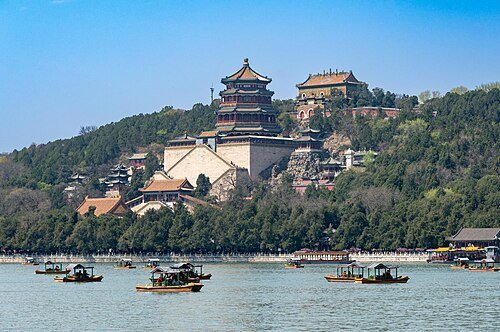 Summer Palace · 颐和园
Summer Palace颐和园
The Summer Palace is organized around Kunming Lake and Longevity Hill, combining imperial buildings with an extensive garden landscape. Along the hill’s southern foot, the painted Long Corridor links views across the water with…
Read the place guide →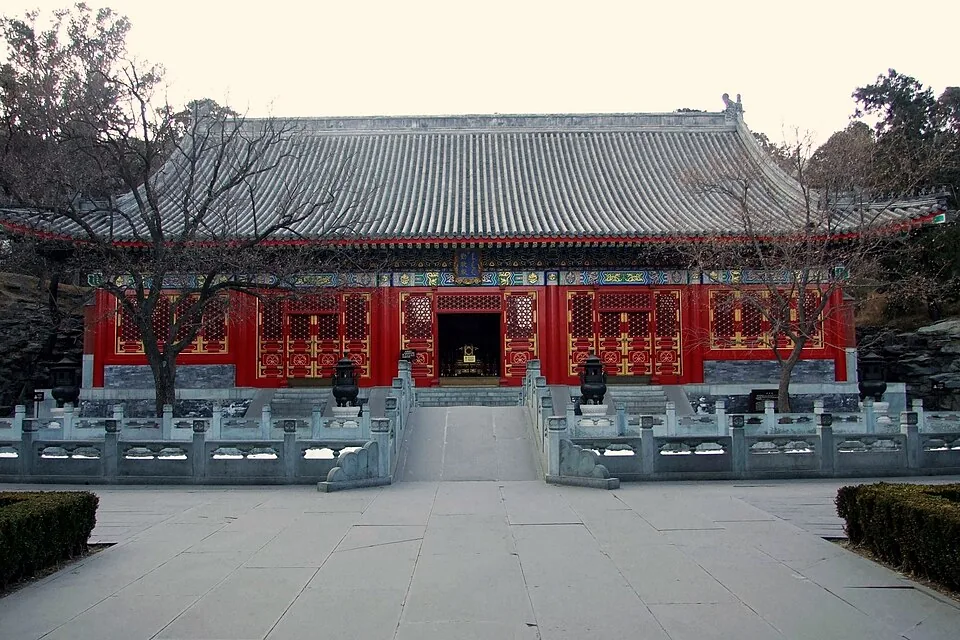 Qinzheng Hall in Fragrant Hills Park. Photo: 2009-01.
Fragrant Hills香山
Fragrant Hills, or Xiangshan, rises at the edge of Beijing’s Western Hills with wooded slopes and the remains of an imperial garden. The park offers two different emphases: the northern area links Spectacles Lake, Jianxin Zhai…
Read the place guide → Old Summer Palace · 大水法残迹
Old Summer Palace圆明园
The Old Summer Palace, or Yuanmingyuan, preserves the landscape and ruins of a vast Qing imperial garden complex in Haidian. Its best-known stone remains belong to the Western Mansions, where European-influenced palaces and…
Read the place guide →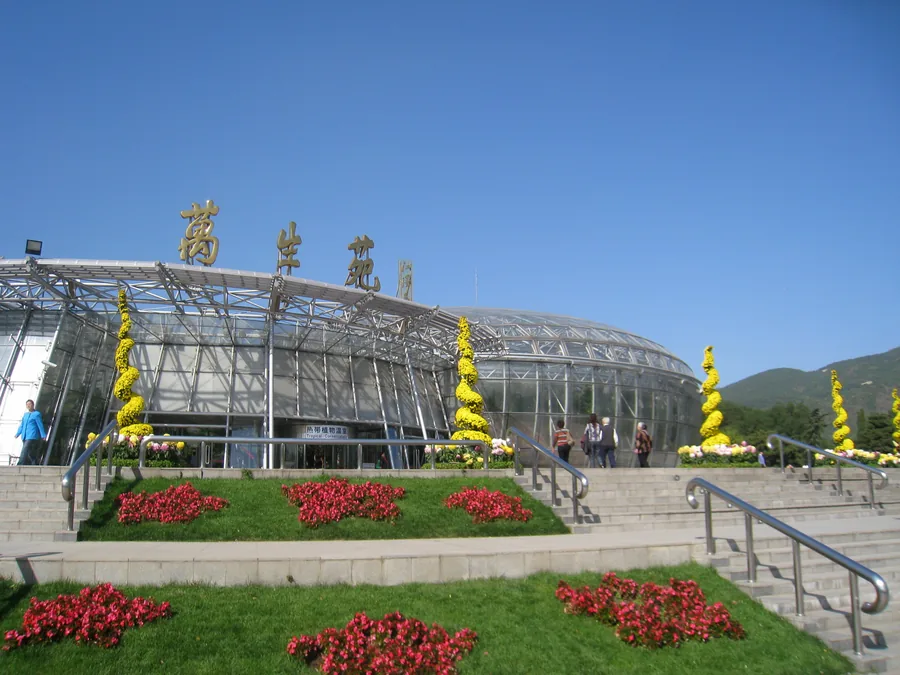 The conservatory entrance at the former Beijing Botanical Garden, now the North Garden of the China National Botanical Garden; 16 October 2009.
Beijing Botanical Garden国家植物园北园
The former Beijing Botanical Garden is now the North Garden of the China National Botanical Garden, below the Western Hills. Its appeal extends beyond flower beds: the conservatory brings tropical vegetation and succulents…
Read the place guide →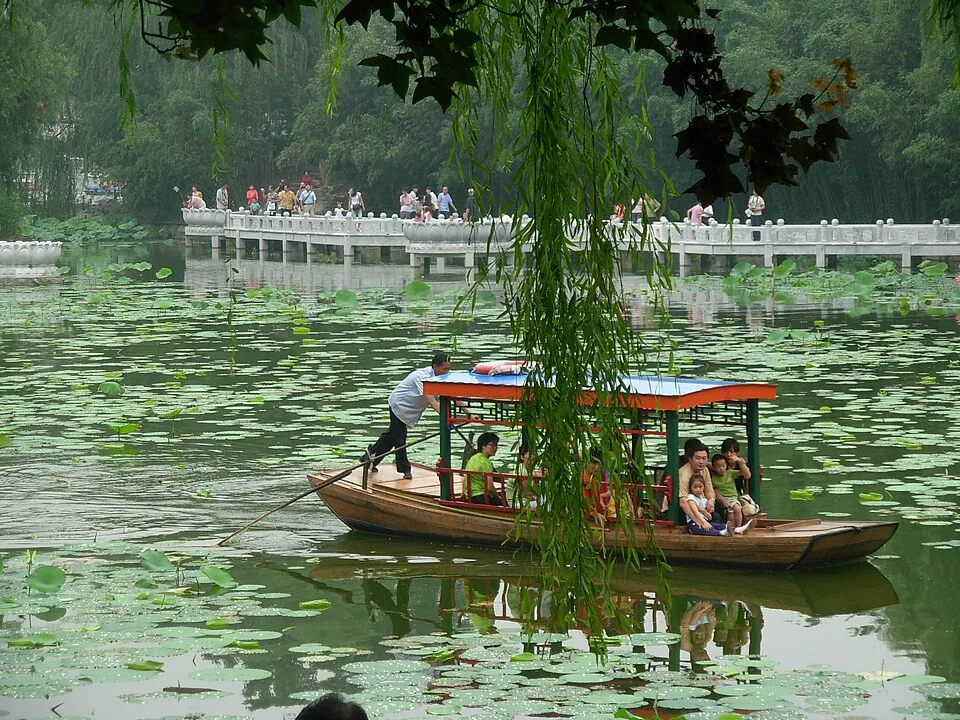 Purple Bamboo Park · 紫竹院公园. Photo: 2008-06-28.
Purple Bamboo Park紫竹院公园
Purple Bamboo Park, also known as Zizhuyuan, is a water-and-bamboo garden in Haidian. Three connected lakes, islands, small hills, and bridges create changing viewpoints through extensive bamboo planting. The park’s design uses…
Read the place guide →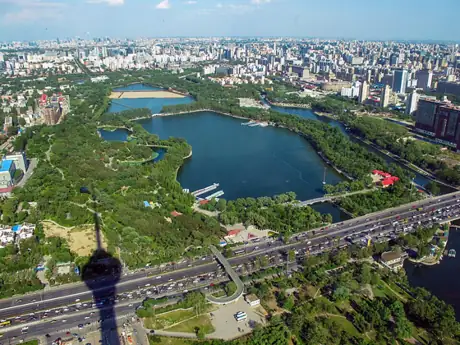 Yuyuantan Park
Yuyuantan Park玉渊潭公园
Yuyuantan Park is a large lake-centered garden beside Beijing’s western Third Ring Road. The water is its organizing feature, with paths and planted banks allowing broad views toward the Central Radio and TV Tower. Cherry trees…
Read the place guide → Dajue Temple · 大觉寺. Photo: 2026-05-21 16:47:59.
Dajue Temple大觉寺
Dajue Temple in western Haidian follows an east–west axis, a useful distinction from the north–south layout of many Beijing temples. From its eastern gate, the sequence leads through the Mahavira and Amitabha halls toward the…
Read the place guide →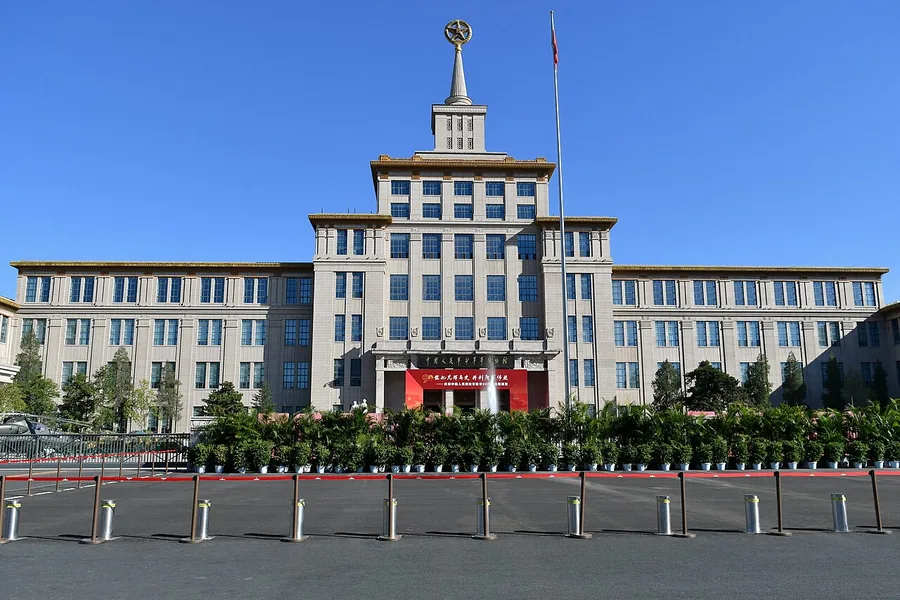 The facade of the Military Museum of the Chinese People's Revolution in Beijing after its 2017 reopening.
Military Museum of the Chinese People's Revolution中国人民革命军事博物馆
The Military Museum of the Chinese People’s Revolution combines large equipment displays with galleries interpreting Chinese military history. Aircraft and missiles occupy the expanded central hall, while the wider weapons…
Read the place guide →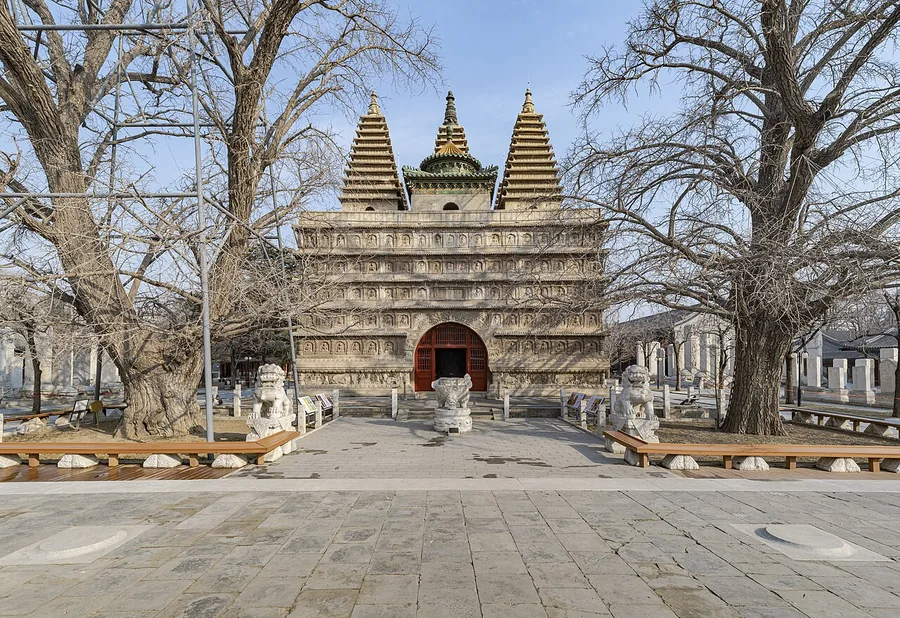 The Diamond Throne Stupa at Beijing's Zhenjue Temple, commonly called Five Pagoda Temple.
Five Pagoda Temple五塔寺
Beijing’s Five Pagoda Temple is Zhenjue Temple, whose surviving Diamond-Throne Tower combines a substantial stone-and-brick base with five smaller pagodas. Much of the former wooden temple has disappeared, making this compact…
Read the place guide → Wanshou Temple in Beijing seen above a busy road at dusk.
Wanshou Temple万寿寺
Wanshou Temple combines a historic Buddhist compound with the Beijing Art Museum in Haidian. Founded to house Buddhist scriptures, it later acquired imperial ceremonial associations, and its present museum collections extend…
Read the place guide →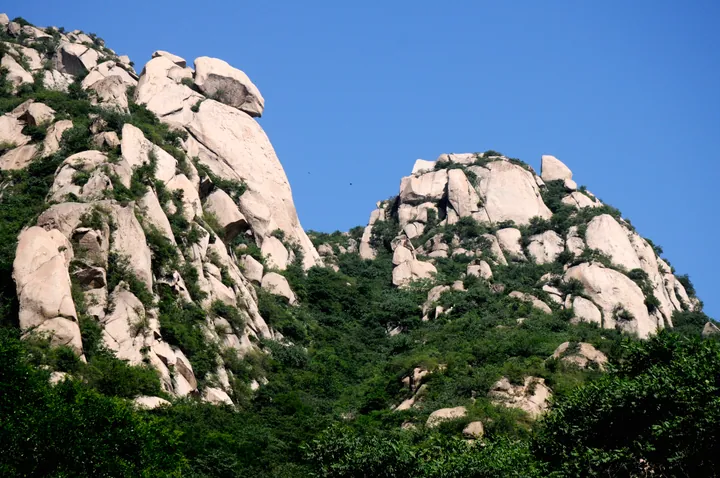 Rocky granite peaks and ridgelines at Fenghuangling Nature Park, Haidian District · 海淀区凤凰岭自然风景区的花岗岩峰峦 Source-recorded photograph date: Taken on 30 May 2013.
Fenghuangling Nature Park in Haidian凤凰岭
Fenghuangling is a mountain park in Sujiatuo, northwestern Haidian District, where rocky peaks, wooded slopes and religious remains meet.
Read the place guide →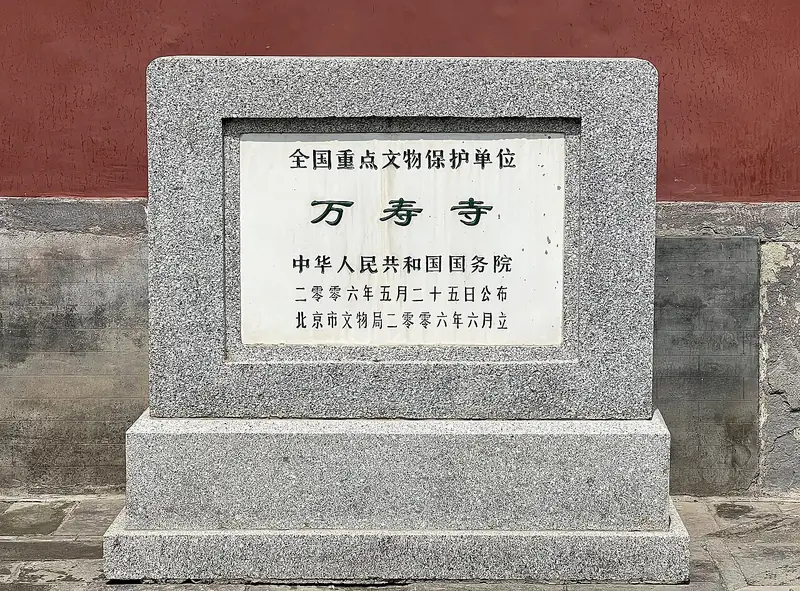 Beijing Art Museum at Wanshou Temple (北京艺术博物馆(万寿寺)), Haidian District. Photograph: "National cultural heritage stele at Wanshou Temple (20250516131831)".
Beijing Art Museum at Wanshou Temple北京艺术博物馆(万寿寺)
Beijing Art Museum at Wanshou Temple (北京艺术博物馆(万寿寺)) combines an art collection with a historic temple complex in Haidian District.
Read the place guide →Conservatory entrance in the former Beijing Botanical Garden, now the North Garden of the China National Botanical Garden · 国家植物园北园温室入口. Source-recorded photograph date: 2009-10-16.China National Botanical Garden国家植物园
China National Botanical Garden (国家植物园) lies at the foot of Beijing's Western Hills in Haidian District.
Read the place guide →Plan your visit
Getting there
Haidian District is about 10 km in a straight line from central Beijing. Search for 海淀区 in a map app to find stations and your accommodation.
Where to stay →Build your route
Summer Palace and Fragrant Hills are about 8 km apart in a straight line. The linked place guides have entrance and visit details.
Continue with Beijing →More in Beijing
Sources & geographic information
Administrative names and parent areas: Official geographic directory · Reference date 2026-09-06.
Photo: Summer Palace · xiquinhosilva · CC BY 2.0. Wikimedia thumbnail; fitted to the ranking-card frame.

Photo: Fragrant Hills · Charlie fong 冯成 · Public domain. Converted to WebP and resized without changing the subject or cropping the source frame.

Photo: Old Summer Palace · 颐园新居 · CC BY-SA 3.0. Resized and WebP compressed; subject not altered.

Photo: Beijing Botanical Garden · Daderot · Public domain. Proportionally resized and converted to WebP without cropping, retouching or changing the photographed subject.


Photo: Purple Bamboo Park · Berling Family · CC BY 2.0. Converted to WebP and resized without changing the subject or cropping the source frame.

Photo: Yuyuantan Park · Wpcpey · CC BY-SA 4.0. Resized and WebP compressed; subject not altered.

Photo: Dajue Temple · N509FZ · CC BY-SA 4.0. Converted to WebP and resized without changing the subject or cropping the source frame.
.jpg)
Photo: Military Museum of the Chinese People's Revolution · Tyg728 · CC BY-SA 4.0. Proportionally resized and converted to WebP without cropping, retouching or changing the photographed subject.

Photo: Five Pagoda Temple · ScareCriterion12 · CC0. Proportionally resized and converted to WebP without cropping, retouching or changing the photographed subject.

Photo: Wanshou Temple · 姚辰伟 · CC BY-SA 3.0. Proportionally resized and converted to WebP without cropping, retouching or changing the photographed subject.

Photo: Fenghuangling Nature Park in Haidian · mayanming · CC BY-SA 3.0. Full frame retained; proportionally resized and converted to WebP. No retouching or changes to the photographed subject. Card displays may crop the view.

Photo: Beijing Art Museum at Wanshou Temple · N509FZ · CC BY-SA 4.0. Full frame retained; EXIF orientation normalized, proportionally resized to at most 800 pixels and converted to WebP. No generated pixels or subject changes. Cards may crop the display.

Photo: China National Botanical Garden · Daderot · Public domain. Full source framing retained; proportionally resized and converted to WebP. No retouching or subject alteration. Card displays may crop the view.
Map data © OpenStreetMap contributors. Pins mark approximate centres, not entrances or boundaries.