


Get to know Meizhou
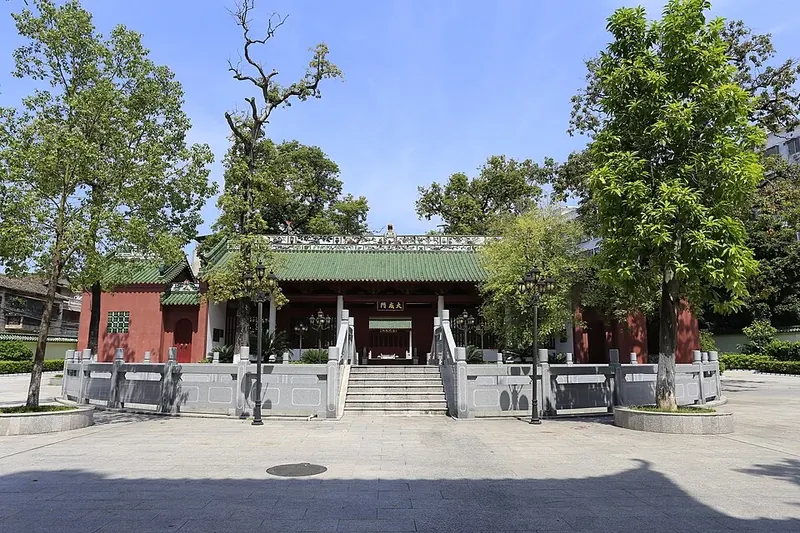
Photo adjustments
Full frame retained; proportionally resized and converted to WebP. No retouching or changes to the photographed subject. Card displays may crop the view.
- Administrative area
- Prefecture-level city · 地级市
- Part of
- Guangdong
- Chinese name
- 梅州市
- Local areas
- 8 local areas
Area & population
- Area in the source
- 15,864.51 km²
- Population · 2020 census
- 3,873,239
- Administrative seat
- Meijiang District
Source: cited geographic source, as of the dates shown.
Setting and landscape
Plains make up only about 13.7 percent of the land. The Mei River (梅江), called the Qin River (琴江) upstream, flows northeast across the city and joins the Ting River (汀江) at Sanheba (三河坝) in Dabu County (大埔县) to become the Han.
History
In 971 the Northern Song renamed Jingzhou (敬州), whose name broke an imperial taboo, first as Gongzhou (恭州) and soon after as Meizhou, a name traced to local plum trees or to a Mei peak and stream. In 1733 the area became Jiaying Department (嘉应州), governing Chengxiang (程乡) and four other counties. The prefecture-level city dates from 1988, and Meizhou is a national historical and cultural city.
The Meixian dialect (梅县话) is regarded by linguists as the standard or representative form of Hakka. Meizhou Hakka folk songs (梅州客家山歌), sung to nearly a hundred tunes, entered the first national intangible heritage list in 2006. The mat lion dance (席狮舞) of the Meijiang District (梅江区) outskirts, in which performers draped in straw mats mimic a lion during Buddhist funeral rites, followed in 2008.
What to see
Meijiang, the city seat, has the Hakka Museum of China (中国客家博物馆). Meixian District (梅县区) has the Yannanfei Tea Garden (雁南飞茶田), a national 5A scenic area since 2011, and the former home and memorial hall of Marshal Ye Jianying (叶剑英), a Meizhou native. Pingyuan (平远县) has Wuzhishi (五指石), a scenic area of Danxia landforms; Fengshun County (丰顺县) has the Longguizhai Waterfall (龙归寨瀑布); Jiaoling (蕉岭县) has the Changtan (长潭) resort and the former homes of Qiu Fengjia (丘逢甲) and Xie Jinyuan (谢晋元), both national key heritage sites. Dabu has Tai'an Lou (泰安楼) and the Hakka earthen enclosure of Hua'e Lou (花萼楼), and nearly half of Meizhou's weilongwu (围龙屋) Hakka houses stand in Xingning (兴宁市).
Food and local products
Hakka cooking here favours chicken, duck and goose and is salty, fragrant and rich. Salt-baked chicken (盐焗鸡) is marinated, wrapped in paper and baked for about an hour in a clay pot of heated salt, giving springy skin and silky meat. Yan mian (腌面), the usual breakfast and late-night bowl, is fresh, mostly flat noodles tossed with garlic fried golden in lard, salt and spring onion, often with sanjidi soup (三及第汤). Pork belly with preserved mustard greens (梅菜扣肉) and stuffed tofu (酿豆腐) are other specialities, and the Guangdong Cuisine Association has named Dabu a "Guangdong Hakka food county" (广东客家美食名县).
Highlights
- Hakka Museum of China 中国客家博物馆: In Meijiang District, the city seat.
- Yannanfei Tea Garden 雁南飞茶田: A national 5A scenic area in Meixian District since 2011.
- Wuzhishi 五指石: Scenic area in Pingyuan County known for its Danxia landforms.
- Meizhou Hakka folk songs 梅州客家山歌: On the first national intangible heritage list (2006), which records nearly a hundred tunes, love songs the most numerous.
- Salt-baked chicken 盐焗鸡: Marinated chicken wrapped in paper and baked about an hour in hot salt in a clay pot.
Sources for this guide
梅州市 广东省人民政府门户网站 · People's Government of Guangdong Province (text from the Guangdong Provincial Tourism Administration)
梅州市 - 维基百科,自由的百科全书 · Wikipedia (Chinese) · CC BY-SA 4.0
盐焗鸡 广东省人民政府门户网站 · People's Government of Guangdong Province (text from the Guangdong Provincial Tourism Administration)
腌面 广东省人民政府门户网站 · People's Government of Guangdong Province (text from the Guangdong Provincial Tourism Administration)
梅州客家山歌 - 中国非物质文化遗产网·中国非物质文化遗产数字博物馆 - 中国非物质文化遗产网非遗 · China Intangible Cultural Heritage Network (China National Center for the Safeguarding of Intangible Cultural Heritage)
狮舞(席狮舞) - 中国非物质文化遗产网·中国非物质文化遗产数字博物馆 - 中国非物质文化遗产网非遗 · China Intangible Cultural Heritage Network (China National Center for the Safeguarding of Intangible Cultural Heritage)
国家5A级旅游景区 - 维基百科,自由的百科全书 · Wikipedia (Chinese) · CC BY-SA 4.0
Original English written from the listed sources and checked sentence by sentence against quoted extracts by a separate reviewer. Updated 2026-09-30.
Explore Meizhou
Core places to explore, with English and Chinese names.
Meizhou 梅州
Ye Jianying Memorial Park 叶剑英纪念园
Hakka Museum of China 中国客家博物馆
Lingguang Temple 梅州灵光寺
Yannanfei Tea Garden 雁南飞茶田
Longguizhai Waterfall 龙归寨瀑布
Tai'an Lou Fortified House 泰安楼
Baihou Ancient Town 百侯古镇
Five Finger Rock 五指石
Qiaoxi Heritage Village 桥溪古韵
Changtan Scenic Area 长潭
Meijiang District 梅江区
Meixian District 梅县区
Dabu County 大埔县
Fengshun County 丰顺县
Wuhua County 五华县
Pingyuan County 平远县
Jiaoling County 蕉岭县
Xingning 兴宁市
Places to explore around Meizhou
The courtyard and buildings of Meizhou Xuegong (梅州学宫), photographed in October 2013. Photograph date recorded by the source: 2013-10-02 12:06:13.Meizhou梅州
Meizhou is a useful base for comparing Hakka domestic culture with the rural landscape around Yanyang. In town, the Hakka Museum uses genealogies and house models to explain settlement and family life. Beyond the urban area…
Read the place guide →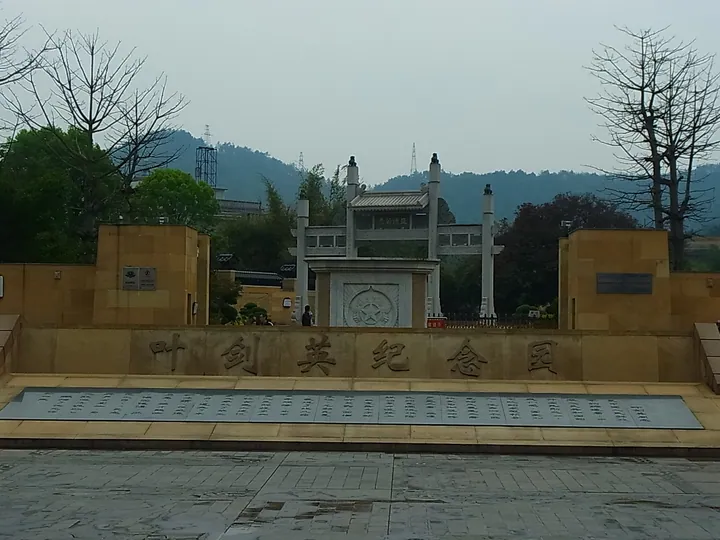 The entrance gate and inscribed stone wall of Ye Jianying Memorial Park in Meizhou, Guangdong · 广东梅州叶剑英纪念园入口牌坊及刻字墙 Source-recorded photograph date: 2011-03-27.
Ye Jianying Memorial Park叶剑英纪念园
Ye Jianying Memorial Park combines a modest Hakka family house with a much larger modern memorial. The late-Qing dwelling uses earth and lime construction and a single entrance; only part of its rooms belonged to Ye’s immediate…
Read the place guide → Hakka Museum of China (中国客家博物馆), Meizhou. Photograph: "Meizhou Huang Zunxian Jinianguan 2013.10.02 08-51-07".
Hakka Museum of China中国客家博物馆
The Hakka Museum of China connects migration history with the design of the family home. Its main Hakka People exhibition uses genealogies and housing models to explain identity, kinship and settlement. Comparing a circular…
Read the place guide →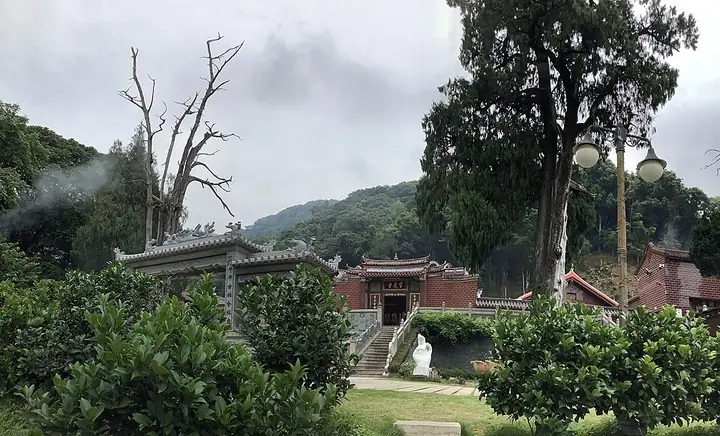 Lingguang Temple entrance and cypress trees, Meizhou · 梅州灵光寺入口与生死树 Photograph date recorded by the source: 14 May 2023.
Lingguang Temple梅州灵光寺
Lingguang Temple lies beneath Yinna Mountain, with wooded slopes rising behind its halls. Two contrasting trees at the entrance, one living and one dead, are a distinctive local landmark. Inside the Mahavira Hall, the spiral…
Read the place guide →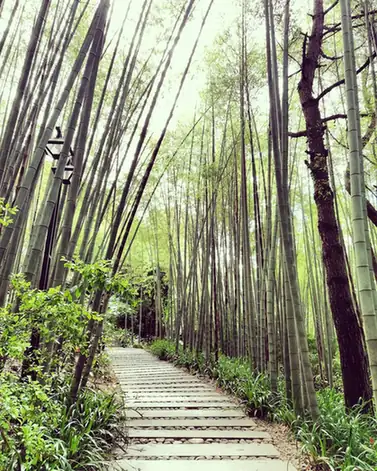 Yannanfei Tea Garden · 雁南飞茶田
Yannanfei Tea Garden雁南飞茶田
Yannanfei combines cultivated tea fields with orchards, wooded hills and resort architecture. Tea-viewing pavilions make the planted rows the focus, while the tea-art venue provides a different way to approach the crop when…
Read the place guide →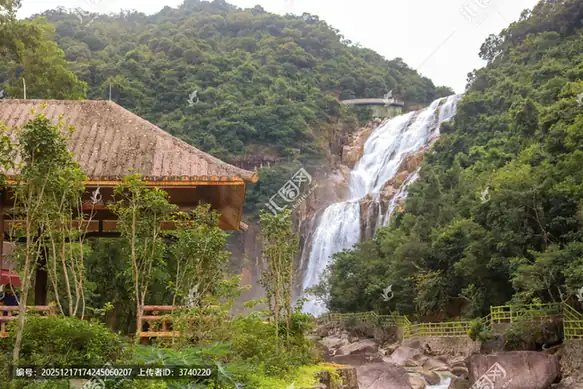 Longguizhai Waterfall · 龙归寨瀑布
Longguizhai Waterfall龙归寨瀑布
Longguizhai Waterfall (龙归寨瀑布) is a waterfall in the Donglian area of Tangkeng Town, Fengshun County, in Guangdong's Meizhou prefecture, about 13 kilometres from the county town.
Read the place guide →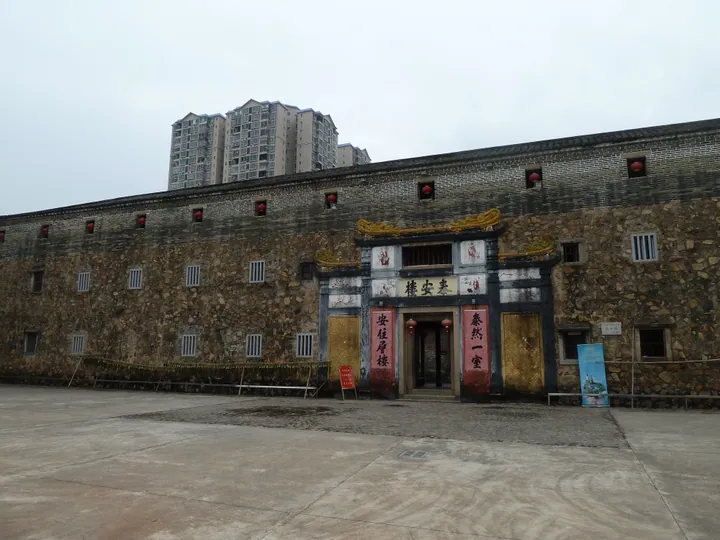 The entrance and stone wall of Tai'an Building (Tai'an Lou), Dabu County, Meizhou · 梅州市大埔县泰安楼入口及外墙 Source-recorded photograph date: 2018-02-02 11:48:49.
Tai'an Lou Fortified House泰安楼
Square Hakka fortified house of the Lan family in Huliao, Dabu, built in 1763 with 200 rooms and a national protected site since 2019.
Read the place guide →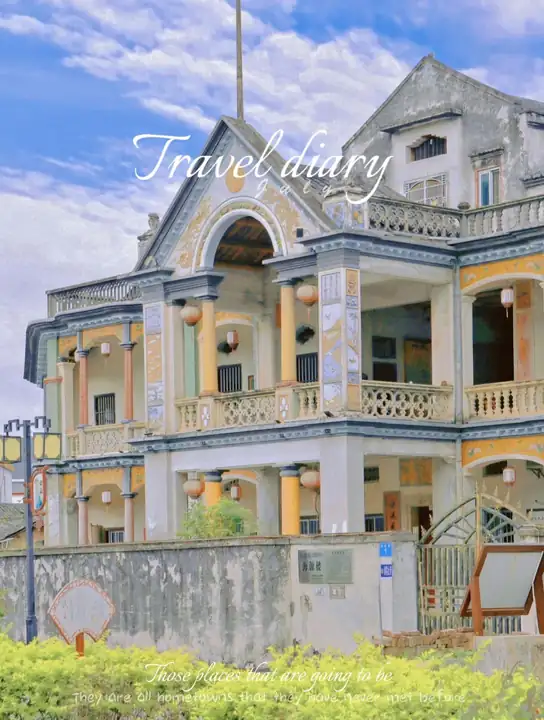 Baihou Ancient Town · 百侯古镇
Baihou Ancient Town百侯古镇
Baihou (百侯古镇) is an old town in the east of Dabu County, in Guangdong's Meizhou prefecture, made a Chinese Historic and Cultural Town in 2010 and known for a dense survival of Ming and Qing Hakka dwellings.
Read the place guide → Five Finger Rock · 五指石
Five Finger Rock五指石
Wuzhishi (五指石) is a Danxia rock massif at Chagan in Pingyuan County, in the north of Guangdong's Meizhou prefecture, named for a landform whose shape is likened to five fingers raised against the sky, and rising to 460 metres.
Read the place guide →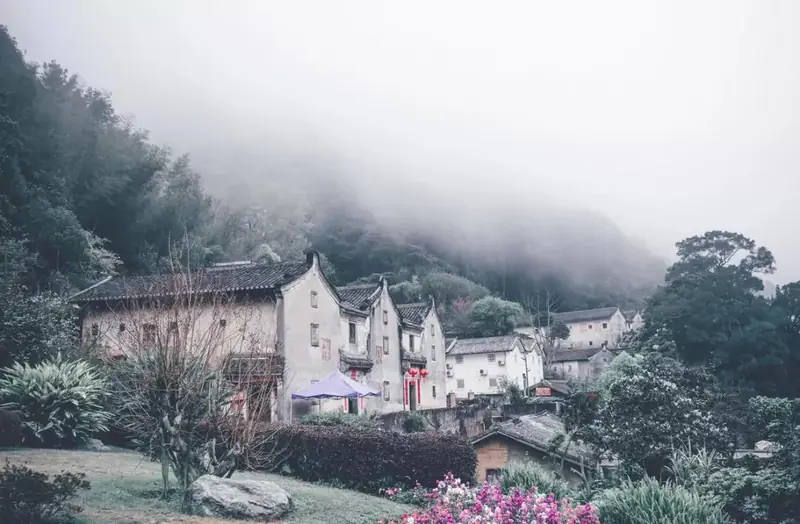 Qiaoxi Heritage Village · 桥溪古韵
Qiaoxi Heritage Village桥溪古韵
Qiaoxi Gu Yun (桥溪古韵) is an eco-tourism attraction that Qiaoxi Village, in Yanyang Town, Meixian District, in Guangdong's Meizhou prefecture, has created by making use of its well-preserved Hakka dwellings; the village's old dwellings building group is protected together as one Guangdong provincial heritage unit.
Read the place guide → AI illustration · AI 示意图(仅供参考,非该地点实拍)
Changtan Scenic Area长潭
Changtan (长潭) is a reservoir and surrounding scenic area north-west of the Jiaoling county town, in Guangdong's Meizhou prefecture, about five kilometres from the county town, known for a long, narrow and deep body of water.
Read the place guide →Local life & food
Meizhou local specialties
梅州市特色美食 · 14 specialties to discover
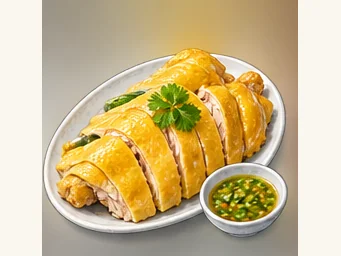 Hakka salt-baked chicken 客家盐焗鸡AI illustration · AI 示意图
The meat is firm, juicy and aromatic, with savory skin rather than a brittle roast crust. Dips can add ginger or other sharper notes.
Source ↗Read the dish guide → Hakka stuffed tofu 客家酿豆腐AI illustration · AI 示意图
Mild, soft tofu contrasts with the denser filling and any browned surface. The sauce spreads the meat flavor through the bean curd.
Source ↗Read the dish guide →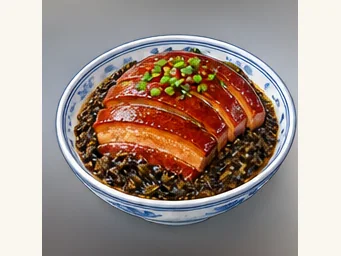 Pork belly with preserved mustard greens 梅菜扣肉AI illustration · AI 示意图
The pork is rich and yielding, while the greens contribute a concentrated salty, fermented flavor. The sauce is especially suited to plain rice.
Source ↗Read the dish guide →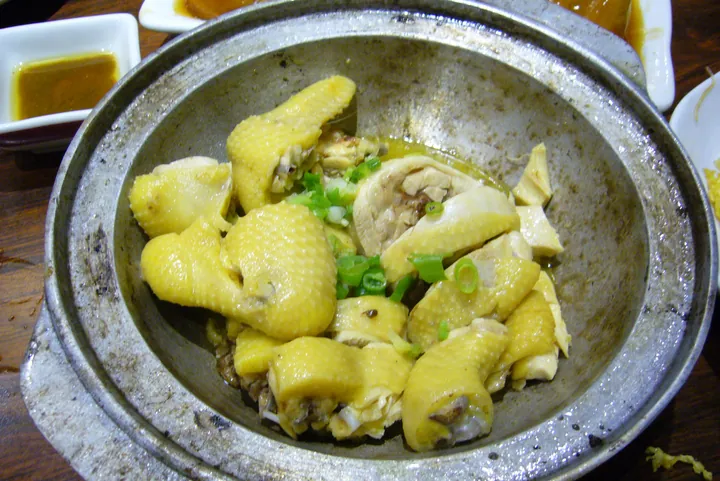 Salt-Baked Chicken 盐焗鸡
Salt-Baked Chicken (盐焗鸡) is a whole chicken cooked buried in hot sea salt, and in Huizhou (惠州), on the Dongjiang (东江) or East River in Guangdong, it counts as one of the city's "three treasures" (惠州三宝).
Source ↗Read the dish guide →
Photo adjustments
Full frame retained; proportionally resized and converted to WebP. No retouching or changes to the photographed subject. Card displays may crop the view.
 Lard-Tossed Noodles 腌面
Lard-Tossed Noodles (腌面) are a Hakka (客家) snack particular to Meizhou (梅州), and a favourite Hakka breakfast.
Read the dish guide →
Photo adjustments
EXIF orientation normalized; resized without changing aspect ratio; converted to WebP. No subject edits.
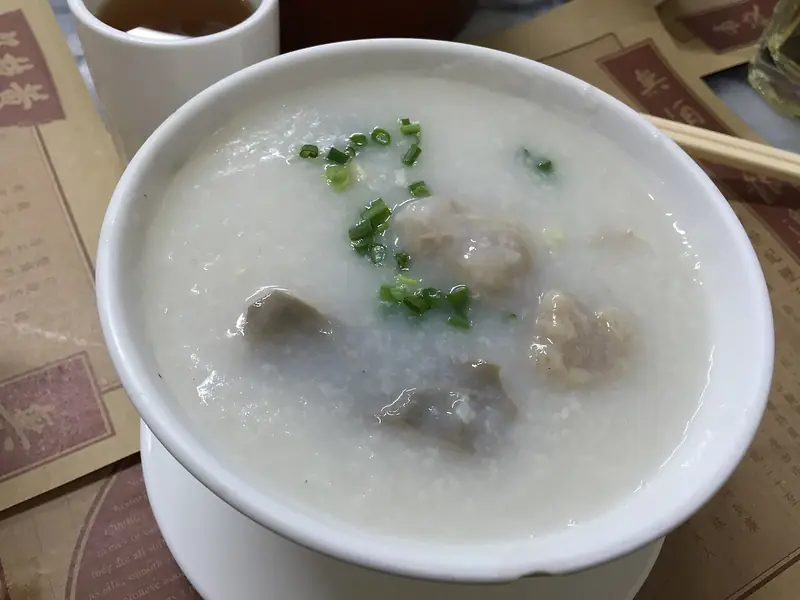 Sanjidi Pork and Offal Soup 三及第汤
Sanjidi Pork and Offal Soup (三及第汤) is a soup of pig's liver, pork small intestine and choice lean pork, cooked with wolfberry leaves (枸杞叶) or other greens, from Meizhou (梅州), Guangdong.
Read the dish guide →
Photo adjustments
EXIF orientation normalized; resized without changing aspect ratio; converted to WebP. No subject edits.
 Dabu Bamboo Shoot Dumplings 大埔笋粄AI illustration · AI 示意图(仅供参考,非实拍)
Dabu Bamboo Shoot Dumplings (大埔笋粄) are half-moon Hakka dumplings from Dabu County (大埔县) in Meizhou (梅州), Guangdong. A starch-based wrapper holds a filling of chopped bamboo shoot and pork.
Read the dish guide →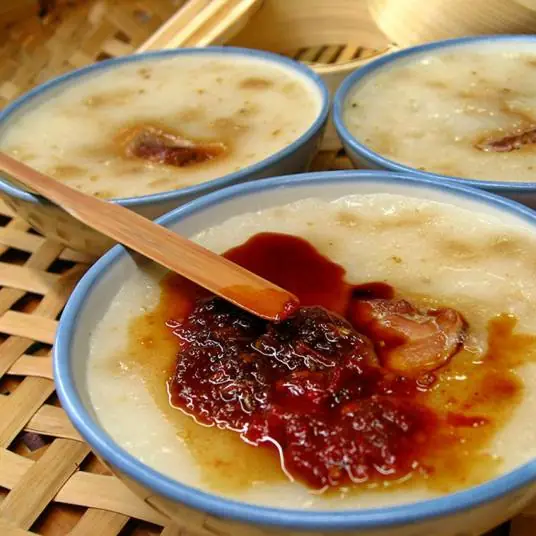 Weijiao Steamed Rice Cakes 味酵粄
Weijiao Steamed Rice Cakes (味酵粄) are a traditional Hakka (客家) snack of Meizhou (梅州), Guangdong: small bowls of rice batter mixed with alkaline water and steamed until the edges puff up and the centre sinks into a hollow.
Read the dish guide →Photo adjustments
EXIF orientation normalized; resized without changing aspect ratio; converted to WebP. No subject edits.
All dish names · 全部菜名 (14)
- Hakka salt-baked chicken · 客家盐焗鸡
- Hakka stuffed tofu · 客家酿豆腐
- Pork belly with preserved mustard greens · 梅菜扣肉
- Salt-Baked Chicken · 盐焗鸡
- Lard-Tossed Noodles · 腌面
- Sanjidi Pork and Offal Soup · 三及第汤
- Dabu Bamboo Shoot Dumplings · 大埔笋粄
- Weijiao Steamed Rice Cakes · 味酵粄
- Taro Abacus Beads · 算盘子
- Open-Pot Pork Meatballs · 开锅肉丸
- Hakka Rice Wine Chicken · 客家娘酒鸡
- Fengshun Rice-Sheet Rolls · 丰顺捆粄
- Pingyuan Yellow Rice Cake · 平远黄粄
- Jiaoling Sanjidi Pork and Liver Soup · 蕉岭三及第
More dishes from across Guangdong are in the Guangdong food guide.
Counties & districts in Meizhou
8 areas belong directly to Meizhou.
8 areas
Meijiang District 梅江区
Meijiang (simplified Chinese: 梅江区; traditional Chinese: 梅江區; pinyin: Méijiāng Qū) is a district of Meizhou City, Guangdong Province, China.
Explore the area →DistrictMeixian District 梅县区
Meixian District is a district of Meizhou Prefecture, Guangdong, China, bordering Fujian Province to the east. The district is an important Hakka settlement and is the ancestral home of many Hakka descendants…
Explore the area →CountyDabu County 大埔县
Dabu County is a county in Meizhou City, in the east of Guangdong Province, China. A center of Hakka culture, it has a population of 375,000.
Explore the area →CountyFengshun County 丰顺县
Fengshun (postal: Fungshun or Pungshan; simplified Chinese: 丰顺县; traditional Chinese: 豐順縣; pinyin: Fēngshùn Xiàn) is a county located in eastern Guangdong Province, China, and falls under the administration…
Explore the area →Show fewer areas
Wuhua County 五华县
Wuhua County (simplified Chinese: 五华县; traditional Chinese: 五華縣; pinyin: Wǔhuá Xiàn, Hakka: Ng-Fa Yen), formerly known as Changle County (長樂縣), adopted its present name in the early Republic of China period.
Explore the area →CountyPingyuan County 平远县
Pingyuan County (postal: Pingyun; simplified Chinese: 平远县; traditional Chinese: 平遠縣; pinyin: Píngyuǎn Xiàn, Hakka: Phin-yen) is a county in the northeast of Guangdong Province, People's Republic of China.
Explore the area →CountyJiaoling County 蕉岭县
Jiaoling County (postal: Chiuling; simplified Chinese: 蕉岭; traditional Chinese: 蕉嶺) is a county in the northeast of Guangdong Province, China, bordering Fujian province to the north.
Explore the area →County-level cityXingning 兴宁市
Xingning is also the era name for Emperor Ai of the Jin dynasty.
Explore the area →No areas match this name.
Plan your visit
Getting there
Search for 梅州市 in a map app to find stations and your accommodation.
Where to stay →Build your route
Meizhou and Ye Jianying Memorial Park are about 25 km apart in a straight line. The linked place guides have entrance and visit details.
Continue with Guangdong →More in Guangdong
Sources & geographic information
Administrative names and parent areas: Official geographic directory · Reference date 2026-09-06.
Some facts checked against 梅州市 — Wikipedia contributors, CC BY-SA 4.0.
Some facts checked against 国家5A级旅游景区 — Wikipedia contributors, CC BY-SA 4.0.
Photo: Meizhou · Zhangzhugang · CC BY-SA 3.0. Full frame retained; proportionally resized and converted to WebP. No retouching or changes to the photographed subject. Card displays may crop the view.

Photo: Ye Jianying Memorial Park · 9old9 · CC BY-SA 3.0. Full frame retained; proportionally resized and converted to WebP. No retouching or changes to the photographed subject. Card displays may crop the view.

Photo: Hakka Museum of China · Zhangzhugang · CC BY-SA 3.0. Full frame retained; EXIF orientation normalized, proportionally resized to at most 800 pixels and converted to WebP. No generated pixels or subject changes. Cards may crop the display.

Photo: Lingguang Temple · CundiP · CundiP — 灵光寺.jpg — CC0 · CC0. The exact downloaded source bytes are separately retained and hashed. Prepared JPEG is proportionally reduced to a maximum 720-pixel long edge; full frame retained, no subject alteration. Final website rendition: full frame retained, proportionally resized to at most 720 pixels and converted to WebP. No additional retouching or subject alteration. Card displays may crop the view.

Photo: Yannanfei Tea Garden · Source photographer · License not provided. EXIF orientation normalized; resized without changing aspect ratio; converted to WebP. No subject edits.
Photo: Longguizhai Waterfall · Source photographer · License not provided. EXIF orientation normalized; resized without changing aspect ratio; converted to WebP. No subject edits.
Photo: Tai'an Lou Fortified House · STW932 · CC BY-SA 4.0. Full frame retained; proportionally resized and converted to WebP. No retouching or changes to the photographed subject. Card displays may crop the view.

Photo: Baihou Ancient Town · Source photographer · License not provided. EXIF orientation normalized; resized without changing aspect ratio; converted to WebP. No subject edits.
Photo: Five Finger Rock · Source photographer · License not provided. EXIF orientation normalized; resized without changing aspect ratio; converted to WebP. No subject edits.
Photo: Qiaoxi Heritage Village · Source photographer · License not provided. EXIF orientation normalized; resized without changing aspect ratio; converted to WebP. No subject edits.
Map data © OpenStreetMap contributors. Pins mark approximate centres, not entrances or boundaries.