


Get to know Jiamusi
Photo adjustments
Full frame retained; proportionally resized and converted to WebP. No retouching or changes to the photographed subject. Card displays may crop the view.
- Administrative area
- Prefecture-level city · 地级市
- Part of
- Heilongjiang
- Chinese name
- 佳木斯市
- Local areas
- 10 local areas
Area & population
- Area in the source
- 31,528.00 km²
- Population · 2020 census
- 2,156,505
- Administrative seat
- Qianjin District
Source: cited geographic source, as of the dates shown.
Setting and landscape
The land tilts from southwest to northeast: low hills extending the Wanda Mountains (完达山) and the Zhangguangcai Range (张广才岭) cover the south, while the northern riverside plain lies at about 80 metres, flat and widely marshy, and has largely been turned into farmland. Across the Amur and the Ussuri the prefecture faces Russia's Khabarovsk and the Jewish Autonomous Oblast along a 382-kilometre border.
History
The name, recorded in the late Kangxi reign of the Qing as Jiamukesi gashan (甲母克寺噶珊), comes from a Manchu word the city glosses as 'post-station master' or 'station officer's village'. In 1930 Jiamusi village merged with Dongxing town (东兴镇) as Jiamusi town. Manchukuo made it the seat of its Sanjiang province (三江省) in 1934 and a city in 1937; from 1945 to 1949 it was the capital of Hejiang province (合江省).
The city calls Jiamusi the main home of the Hezhe (赫哲族), one of China's less populous ethnic groups, whose culture grew from fishing and hunting. Their Yimakan (伊玛堪) storytelling, in which a single performer mixes speech and song without instruments, entered the first national intangible heritage list in 2006; the Wurigong gathering (乌日贡大会) of Hezhe arts and sports, held every four years since 1997, was listed from Tongjiang (同江) in 2021.
What to see
The Jiejinkou Hezhe resort (街津口赫哲旅游度假区), a national 4A area 45 kilometres northeast of Tongjiang city, includes a Hezhe culture village presenting songs, dances, fishing and hunting life and fish-skin culture. The city's recommended sunrise spot is the meeting of the Amur and the Ussuri in Fuyuan (抚远), where, it says, the sun rises about an hour earlier than elsewhere in China. Heixiazi Island (黑瞎子岛) at the confluence was split by a 2004 China–Russia agreement that gave China 171 of its 335 square kilometres; the Chinese part belongs to Fuyuan, and a national nature reserve was designated there in 2015.
Food and local products
Hezhe cooking centres on fish. For talaha (塌拉哈), skin-on slices of fresh fish are threaded on sharpened willow sticks, roasted over a fire until only partly cooked and dipped in vinegar and salt. In winter, frozen fish is skinned and shaved into curls (刨花) eaten with vinegar, salt and chili oil; fish floss (鱼毛), boiled, boned, pounded and stir-fried until golden and crisp, is stored in fish oil.
Getting oriented
The city government sits in Jiaoqu (郊区). The Harbin–Jiamusi (哈佳) and Mudanjiang–Jiamusi (牡佳) high-speed railways reach the city, and airports serve Jiamusi, Fuyuan and Jiansanjiang (建三江).
Highlights
- Jiejinkou Hezhe resort 街津口赫哲旅游度假区: National 4A area 45 km northeast of Tongjiang city with a Hezhe culture village.
- Heixiazi Island 黑瞎子岛: Island at the Amur-Ussuri confluence, divided with Russia under a 2004 agreement; the Chinese part belongs to Fuyuan.
- Hezhe Yimakan 赫哲族伊玛堪: Solo spoken-and-sung storytelling without instruments, on the first national intangible heritage list (2006).
- Talaha 塌拉哈: Skin-on fish slices roasted on willow sticks until partly cooked and dipped in vinegar and salt.
Sources for this guide
佳木斯概况_佳木斯概况_ 佳木斯市人民政府 · Jiamusi Municipal People's Government
建制沿革_ 佳木斯市人民政府 · Jiamusi Municipal People's Government
自然地理_ 佳木斯市人民政府 · Jiamusi Municipal People's Government
关于佳木斯东极日出_旅游景点_ 佳木斯市人民政府 · Jiamusi Municipal People's Government
同江街津口赫哲旅游度假区简介_旅游景点_ 佳木斯市人民政府 · Jiamusi Municipal People's Government (text from the Jiamusi culture, radio, television and tourism bureau)
赫哲族特色饮食_赫哲风情_ 佳木斯市人民政府 · Jiamusi Municipal People's Government
赫哲族伊玛堪 - 中国非物质文化遗产网·中国非物质文化遗产数字博物馆 · China Intangible Cultural Heritage Network (ihchina.cn)
赫哲族乌日贡大会 - 中国非物质文化遗产网·中国非物质文化遗产数字博物馆 - 赫哲族乌日贡大会 · China Intangible Cultural Heritage Network (ihchina.cn)
黑瞎子岛 - 维基百科,自由的百科全书 · Wikipedia (Chinese) · CC BY-SA 4.0
Original English written from the listed sources and checked sentence by sentence against quoted extracts by a separate reviewer. Updated 2026-09-30.
Explore Jiamusi
Core places to explore, with English and Chinese names.
Bolshoy Ussuriysky Island 黑瞎子岛
Dongji Square 东极广场
Sanjiangkou River Confluence 三江口
Jiejinkou Hezhe Ethnic Township 街津口赫哲族乡
Fujin National Wetland Park 富锦国家湿地公园
Heixiazi Island Scenic Area 黑瞎子岛开放旅游区
Xiangyang District 向阳区
Qianjin District 前进区
Dongfeng District 东风区
Jiaoqu 郊区
Huanan County 桦南县
Huachuan County 桦川县
Tangyuan County 汤原县
Tongjiang 同江市
Fujin 富锦市
Fuyuan 抚远市
Places to explore around Jiamusi
 Riverbank and the new eastern outpost on Bolshoy Ussuriysky Island · 黑瞎子岛 Photograph date recorded by the source: 29 September 2025, 09:38:59.
Bolshoy Ussuriysky Island黑瞎子岛
Known in Chinese as Heixiazi Island, this low island landscape lies where the Heilongjiang and Ussuri rivers meet. Channels, willow-covered ground and wetlands dominate the terrain, while the Chinese-side visitor area includes…
Read the place guide →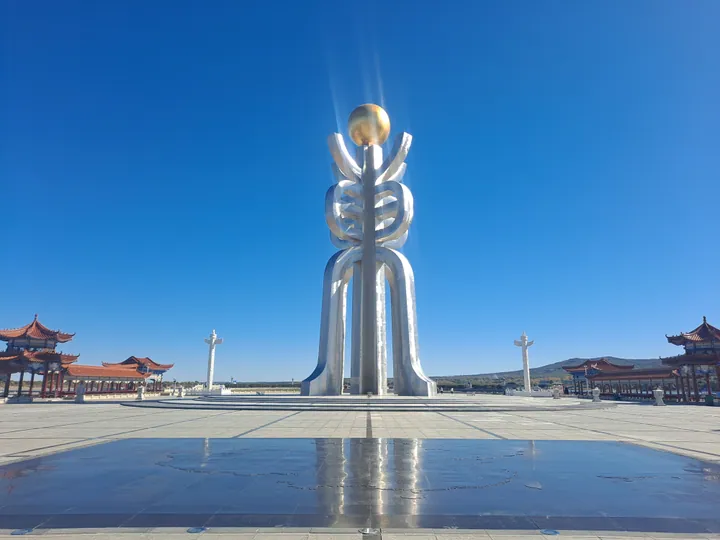 The monumental sundial-form sculpture at Dongji Square, Fuyuan · 抚远东极广场地标雕塑 Source-recorded photograph date: 2025-09-29 10:01:05.
Dongji Square东极广场
Dongji Square marks Fuyuan's eastern river landscape with a tall sculpture based on the seal-script character for east. A golden sphere suggests the sun above it, while a large marble map of China forms the base. The surrounding…
Read the place guide → AI illustration · AI 示意图(仅供参考,非该地点实拍)
Sanjiangkou River Confluence三江口
Sanjiangkou in Tongjiang is the meeting place of the Songhua and Heilongjiang rivers.
Read the place guide → AI illustration · AI 示意图(仅供参考,非该地点实拍)
Jiejinkou Hezhe Ethnic Township街津口赫哲族乡
Jiejinkou Hezhen Township in Tongjiang combines a forested waterside setting with places that interpret Hezhen fishing, hunting and craft traditions.
Read the place guide →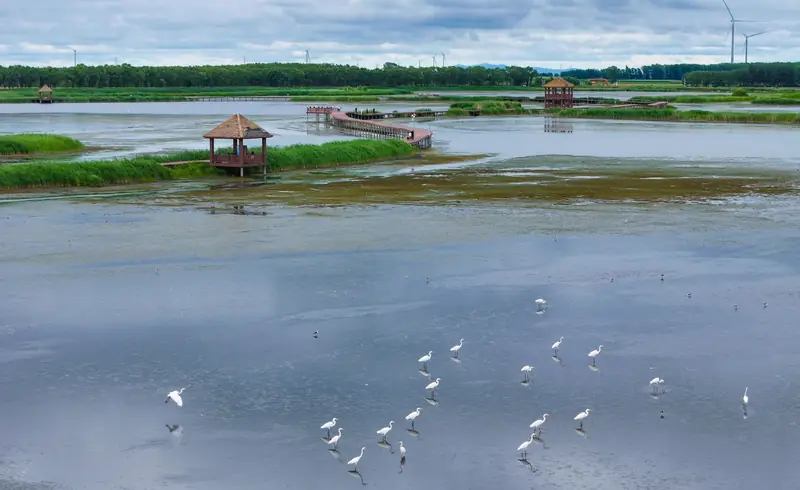 Fujin National Wetland Park · 富锦国家湿地公园
Fujin National Wetland Park富锦国家湿地公园
Fujin National Wetland Park lies in the central Sanjiang Plain, where reedbeds and open water provide habitat for migratory waterbirds.
Read the place guide → AI illustration · AI 示意图(仅供参考,非该地点实拍)
Heixiazi Island Scenic Area黑瞎子岛开放旅游区
The Chinese visitor area of Heixiazi Island in Fuyuan pairs wetland scenery with Dongji Pagoda on an island shared by China and Russia.
Read the place guide →Local life & food
Jiamusi local specialties
佳木斯市特色美食 · 9 specialties to discover
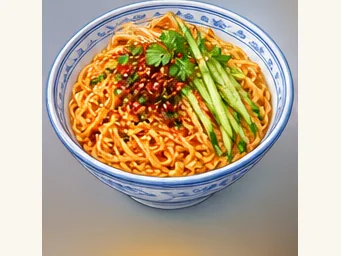 Jiamusi mixed noodles 佳木斯拌面AI illustration · AI 示意图
Springy noodles carry a concentrated coating rather than floating in soup; fresh garnishes add crunch and lighten the richer dressing.
Source ↗Read the dish guide →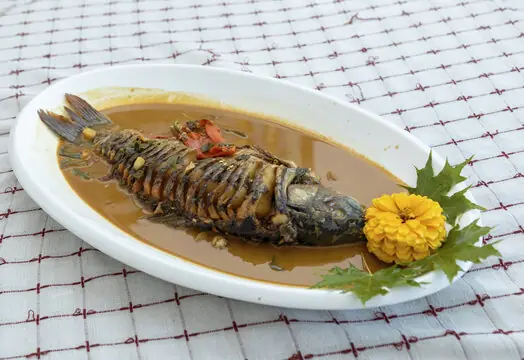 Hezhe Talaha Grilled Fish 赫哲塔拉哈
Hezhe Talaha Grilled Fish (赫哲塔拉哈) is the charcoal-grilled fish of the Hezhen (赫哲族) people of Heilongjiang: slices of fish are seared briefly over a fierce fire, the scales are peeled away and the fish is dipped in sauce.
Read the dish guide →Photo adjustments
EXIF orientation normalized; resized without changing aspect ratio; converted to WebP. No subject edits.
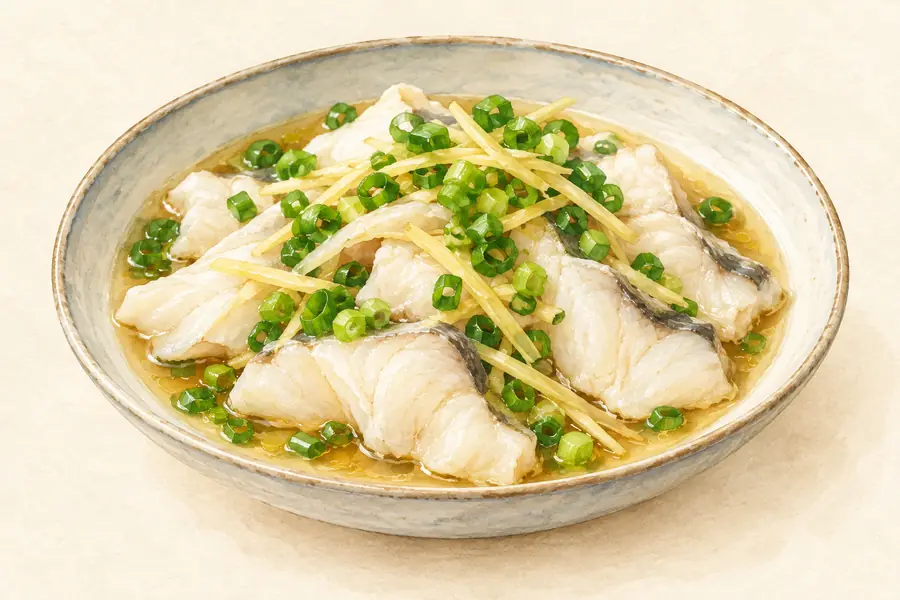 Frozen Raw Fish Shavings 刨花鱼片AI illustration · AI 示意图(仅供参考,非实拍)
Frozen Raw Fish Shavings (刨花鱼片) are thin curls planed from frozen, skinned raw fish and eaten with a sour-hot dip, a winter food of the Hezhe (赫哲族), the fishing and hunting people of Heilongjiang's river country.
Read the dish guide →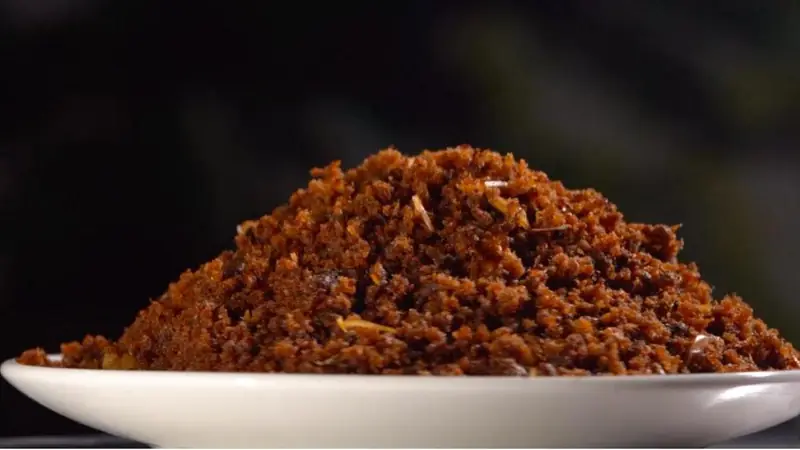 Fish Floss 鱼毛
Fish Floss (鱼毛) is a dish of the Hezhen people (赫哲族), a river-fishing people of Heilongjiang; Chinese Wikipedia lists it as tasihan (它斯罕), also called stir-fried fish floss (炒鱼毛).
Read the dish guide →Photo adjustments
EXIF orientation normalized; resized without changing aspect ratio; converted to WebP. No subject edits.
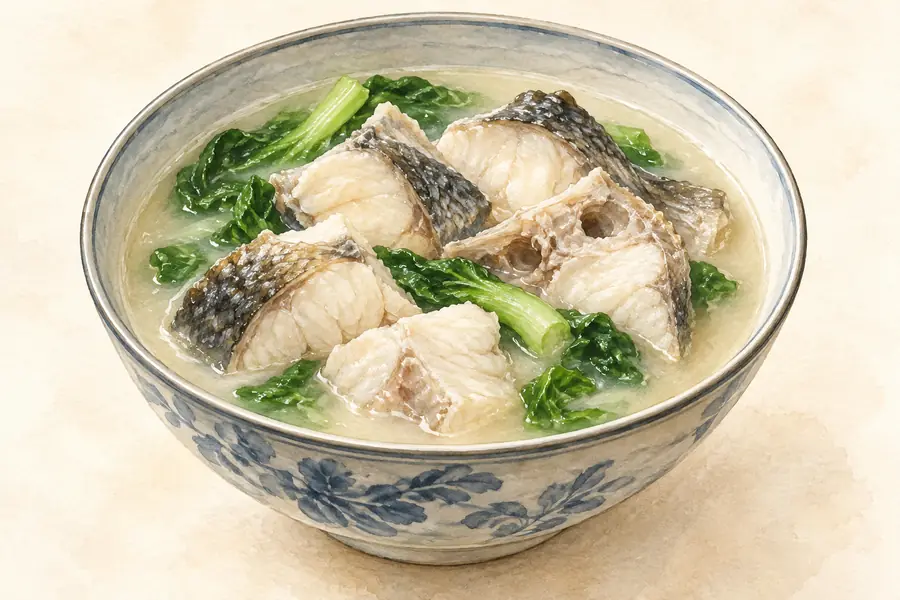 Fish Stewed with Pickled Cabbage 酸菜炖鱼AI illustration · AI 示意图(仅供参考,非实拍)
Fish Stewed with Pickled Cabbage (酸菜炖鱼) is listed among the local specialties of Jiamusi, Heilongjiang. The name includes 鱼 (fish), 酸菜 (pickled vegetables). 炖 describes slow simmering.
Read the dish guide → Pig-Slaughter Stew 杀猪菜Dish photograph · see caption for context
Pig-Slaughter Stew (杀猪菜), literally pig-killing dish, is the north-east Chinese pot of pork cooked with pickled cabbage; in Heilongjiang it also takes the form of a Manchu (满族) whole-pig banquet from Lanling (兰棱).
Read the dish guide →
Photo adjustments
Resized proportionally to a maximum 640 px long edge, EXIF orientation applied where present, and encoded as WebP. No crop or subject alteration.
 Korean Cold Noodles 朝鲜冷面
Korean Cold Noodles (朝鲜冷面) are a chilled noodle dish found in Jiamusi (佳木斯). China News Service describes the city’s summer bowl as springy, smooth buckwheat noodles in iced beef broth, topped with spicy cabbage, egg and pear slices, then finished with a spoonful of red chilli sauce.
Source ↗Read the dish guide →
Photo adjustments
Full frame retained; proportionally resized and converted to WebP. No retouching or changes to the photographed subject. Card displays may crop the view.
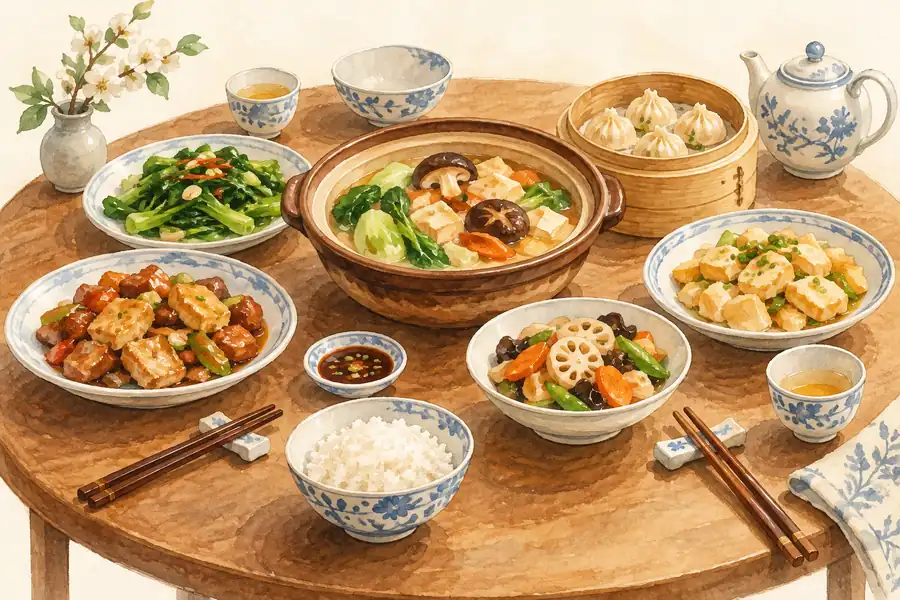 Tongjiang Fish Banquet 同江鱼宴AI illustration · AI 示意图(仅供参考,非实拍)
Tongjiang Fish Banquet (同江鱼宴) brings several Hezhe-style fish preparations to the same table in Tongjiang (同江), where the Heilongjiang River (黑龙江) and Songhua River (松花江) meet.
Read the dish guide →More dishes from across Heilongjiang are in the Heilongjiang food guide.
Counties & districts in Jiamusi
10 areas belong directly to Jiamusi.
10 areas
Xiangyang District 向阳区
Xiangyang District (simplified Chinese: 向阳区; traditional Chinese: 向陽區; pinyin: Xiàngyáng Qū) is an administrative subdivision of the city of Jiamusi, Heilongjiang province, China, with 233,855 inhabitants.
Explore the area →DistrictQianjin District 前进区
Qianjin District (simplified Chinese: 前进区; traditional Chinese: 前進區; pinyin: Qiánjìn Qū) is a district of the city of Jiamusi, Heilongjiang, China, located on the southern (right) bank of the Songhua River.
Explore the area →DistrictDongfeng District 东风区
Dongfeng District (simplified Chinese: 东风区; traditional Chinese: 東風區; pinyin: Dōngfēng Qū; lit. 'east wind') is a district of the city of Jiamusi, Heilongjiang province, People's Republic of China.
Explore the area →DistrictJiaoqu 郊区
Jiaoqu (simplified Chinese: 郊区; traditional Chinese: 郊區; pinyin: Jiāo Qū; lit. 'suburbs') is a suburban district of the city of Jiamusi, Heilongjiang, People's Republic of China.
Explore the area →Show fewer areas
Huanan County 桦南县
Huanan County (simplified Chinese: 桦南县; traditional Chinese: 樺南縣; pinyin: Huànán Xiàn) is a county of eastern Heilongjiang province, People's Republic of China.
Explore the area →CountyHuachuan County 桦川县
Huachuan County (simplified Chinese: 桦川县; traditional Chinese: 樺川縣; pinyin: Huàchuān Xiàn) is a county of eastern Heilongjiang province in the People's Republic of China.
Explore the area →CountyTangyuan County 汤原县
Tangyuan County (simplified Chinese: 汤原县; traditional Chinese: 湯原縣; pinyin: Tāngyuán Xiàn) is a county in the east of Heilongjiang province, China.
Explore the area →County-level cityTongjiang 同江市
Tongjiang is a city of 160,000 in eastern Heilongjiang province, People's Republic of China, located at the confluence and on the right banks of the Songhua and Amur Rivers, the latter which marks the border…
Explore the area →County-level cityFujin 富锦市
Fujin (simplified Chinese: 富锦; traditional Chinese: 富錦; pinyin: Fùjǐn) is a county-level city in the east of Heilongjiang province, People's Republic of China.
Explore the area →County-level cityFuyuan 抚远市
Fuyuan (simplified Chinese: 抚远市; traditional Chinese: 撫遠市; pinyin: Fǔyuǎn Shì; Russian: Фуюань) is a county-level city of the province of Heilongjiang, China.
Explore the area →No areas match this name.
Plan your visit
Getting there
Search for 佳木斯市 in a map app to find stations and your accommodation.
Where to stay →Build your route
Bolshoy Ussuriysky Island and Dongji Square are about 10 km apart in a straight line. The linked place guides have entrance and visit details.
Continue with Heilongjiang →More in Heilongjiang
Sources & geographic information
Administrative names and parent areas: Official geographic directory · Reference date 2026-09-06.
Some facts checked against 黑瞎子岛 — Wikipedia contributors, CC BY-SA 4.0.
Photo: Bolshoy Ussuriysky Island · H2v5o68z · CC0. Full frame retained; proportionally resized and converted to WebP. No retouching or changes to the photographed subject. Card displays may crop the view.

Photo: Dongji Square · H2v5o68z · CC0. Full frame retained; proportionally resized and converted to WebP. No retouching or changes to the photographed subject. Card displays may crop the view.

Photo: Fujin National Wetland Park · Source photographer · License not provided. EXIF orientation normalized; resized without changing aspect ratio; converted to WebP. No subject edits.
Map data © OpenStreetMap contributors. Pins mark approximate centres, not entrances or boundaries.