


Get to know Qiqihar
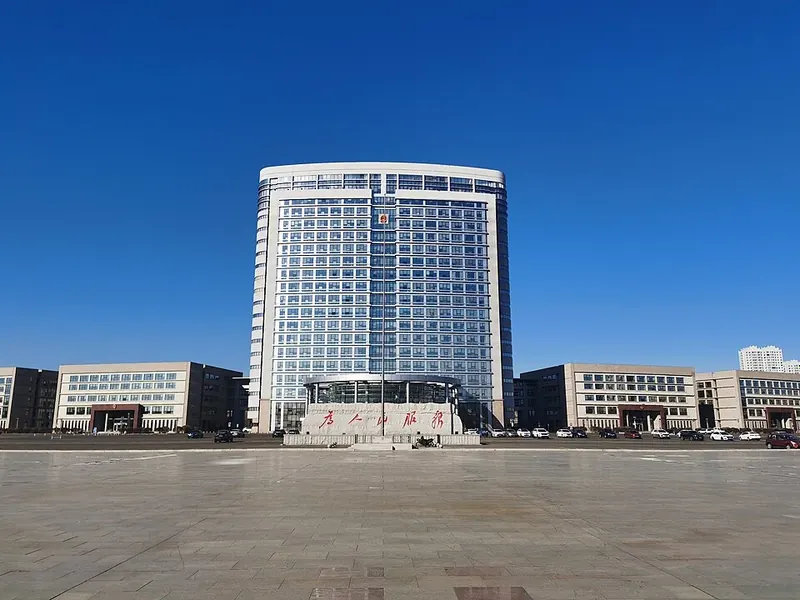
Photo adjustments
Full frame retained; proportionally resized and converted to WebP. No retouching or changes to the photographed subject. Card displays may crop the view.
- Administrative area
- Prefecture-level city · 地级市
- Part of
- Heilongjiang
- Chinese name
- 齐齐哈尔市
- Local areas
- 16 local areas
Area & population
- Area in the source
- 42,205.82 km²
- Population · 2020 census
- 4,067,489
- Administrative seat
- Jianhua District
Source: cited geographic source, as of the dates shown.
Setting and landscape
Rivers such as the Nuomin (诺敏河), Yalu (雅鲁河) and Wuyur (乌裕尔河) also cross the prefecture, which the city describes as a zone where farming meets herding and an internationally recognised golden belt for dairy and maize. The Zhalong wetland (扎龙湿地), covering 210,000 hectares, is on the List of Wetlands of International Importance; the city says it is home to wild red-crowned cranes and to 6 of the world's 15 known crane species.
History
The city traces its story to the Neolithic fishing and hunting culture of Ang'angxi (昂昂溪), some 7,000 years ago; the Ang'angxi site is a national key protected site. Pangge city (庞葛城) stood here under the Liao and Jin. The Qing opened a post station at Bukui (卜奎) in 1665 and built Qiqihar city in 1691, and the office of the General of Heilongjiang moved here in 1699; the city counts 255 years as the provincial capital. On 4 November 1931, Ma Zhanshan (马占山) led Chinese troops against the Japanese assault on the Nen River bridge at Jiangqiao (江桥), which the city calls the first organised Chinese armed resistance to the invasion. The First and Second Five-Year Plans made Qiqihar a heavy-industry base, home to plants such as China First Heavy Industries (中国一重).
The city glosses its name as Daur (达斡尔) for 'natural pasture'. Daur villages such as Hanbodai (罕伯岱) in Fularji (富拉尔基) keep folk songs sung in the Daur language, passed down orally because the Daur have no script; they joined the national intangible heritage list in 2008.
What to see
Besides Zhalong, the city has the Bukui Mosque (卜奎清真寺) in Jianhua District (建华区), made up of an East Mosque and a West Mosque and listed as a national key protected site in 2006, and Longsha Park (龙沙公园), which keeps the Wangjiang Tower (望江楼) and Laodong Lake (劳动湖) and has ice displays in winter.
Food and local products
Barbecue restaurants are found all over the city, and the city government lists International Barbecue Food Capital (国际烤肉美食之都) among the titles Qiqihar has received. The city also names Beidacang liquor (北大仓白酒) and fresh-eating maize among its nationally known green foods.
Getting oriented
The city government sits in Jianhua District. Four railways, the Binzhou (滨洲), Pingqi (平齐), Qibei (齐北) and Fuxi (富西) lines, meet here, and Qiqihar South (齐齐哈尔南站) is a high-speed railway station.
Highlights
- Zhalong wetland 扎龙湿地: 210,000-hectare wetland of international importance, home to wild red-crowned cranes.
- Bukui Mosque 卜奎清真寺: Made up of an East and a West mosque, in Jianhua District; national key protected site since 2006.
- Longsha Park 龙沙公园: City park with the Wangjiang Tower and Laodong Lake, and ice displays in winter.
- Qiqihar barbecue 齐齐哈尔烤肉: Served in restaurants across the city; International Barbecue Food Capital is among the titles the city government lists.
Sources for this guide
鹤城概况_齐齐哈尔市人民政府 · Qiqihar Municipal People's Government
历史沿革_齐齐哈尔市人民政府 · Qiqihar Municipal People's Government (text from the Qiqihar Yearbook 2025)
面积人口_齐齐哈尔市人民政府 · Qiqihar Municipal People's Government (text from the Qiqihar Yearbook 2025)
达斡尔族民歌(罕伯岱达斡尔族民歌) - 中国非物质文化遗产网·中国非物质文化遗产数字博物馆 · China Intangible Cultural Heritage Network (ihchina.cn)
齐齐哈尔市 - 维基百科,自由的百科全书 · Wikipedia (Chinese) · CC BY-SA 4.0
卜奎清真寺 - 维基百科,自由的百科全书 · Wikipedia (Chinese) · CC BY-SA 4.0
Original English written from the listed sources and checked sentence by sentence against quoted extracts by a separate reviewer. Updated 2026-09-30.
Explore Qiqihar
Core places to explore, with English and Chinese names.
Qiqihar 齐齐哈尔
Zhalong wetlands 扎龙湿地
Bukui Mosque 卜奎清真寺
Dacheng temple 齐齐哈尔大乘寺
Longsha Park 龙沙公园
Nianzishan Mountain Scenic Area 碾子山山地旅游区
Zhalong Wetland Visitor Area 扎龙生态旅游区
Longsha District 龙沙区
Jianhua District 建华区
Tiefeng District 铁锋区
Ang'angxi District 昂昂溪区
Fularji District 富拉尔基区
Nianzishan District 碾子山区
Meilisi Daur District 梅里斯达斡尔族区
Longjiang County 龙江县
Yi'an County 依安县
Tailai County 泰来县
Gannan County 甘南县
Fuyu County 富裕县
Keshan County 克山县
Kedong County 克东县
Baiquan County 拜泉县
Nehe 讷河市
Places to explore around Qiqihar
Qiqihar's municipal government building (齐齐哈尔市政府), viewed from its forecourt in March 2023. Photograph date recorded by the source: 2023-03-11.Qiqihar齐齐哈尔
Qiqihar links an old regional capital with the wetland landscape of the Nen River plain. In the city, Bukui Mosque preserves two historically separate prayer compounds, while Longsha Park offers the lake and hilltop Wangjiang…
Read the place guide →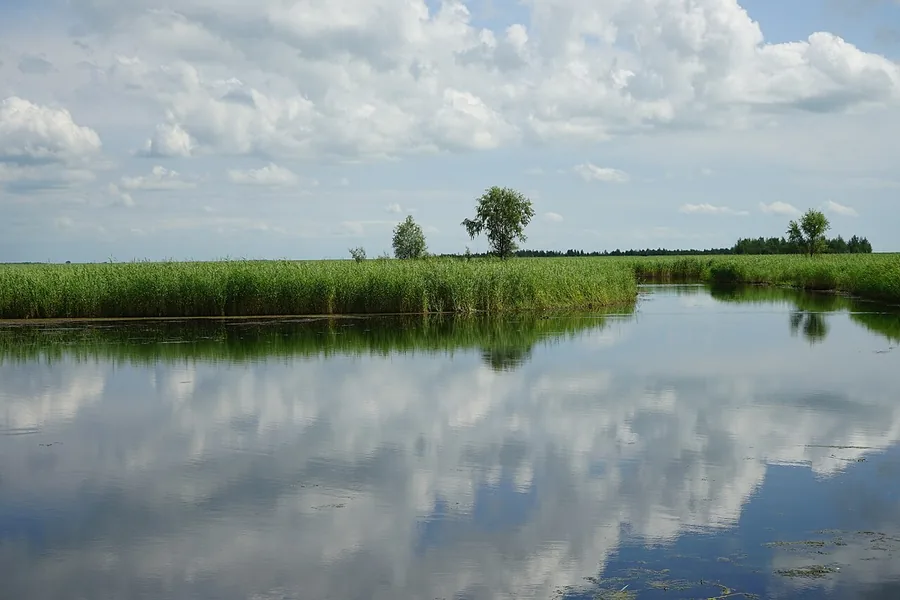 A reed-lined river bend in Zhalong Nature Reserve near Qiqihar, August 2017.
Zhalong wetlands扎龙湿地
Zhalong is a broad wetland formed where the lower Wuyur River spreads across the Songnen plain. Shallow lakes, reed beds and wet meadows provide habitat for cranes and other waterbirds. The landscape is as important as any…
Read the place guide → The Yaodian prayer-hall structure at Bukui Mosque, Qiqihar; 28 July 2017.
Bukui Mosque卜奎清真寺
Bukui Mosque preserves the history of two Muslim congregations within one complex. The eastern mosque dates to the seventeenth century, while the western compound was established in the nineteenth century by a community…
Read the place guide →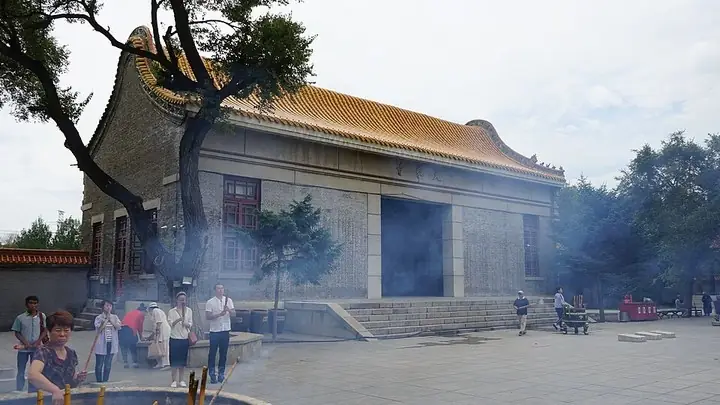 Dacheng Temple mountain entrance hall, Qiqihar · 齐齐哈尔大乘寺山门殿 Photograph date recorded by the source: 30 July 2017, 10:09:18.
Dacheng temple齐齐哈尔大乘寺
Dacheng Temple in Qiqihar has an unusual octagonal composition around its principal Buddhist halls. The arrangement of side buildings is as interesting as the individual shrines: roofs, courtyards and repeated hall fronts create…
Read the place guide →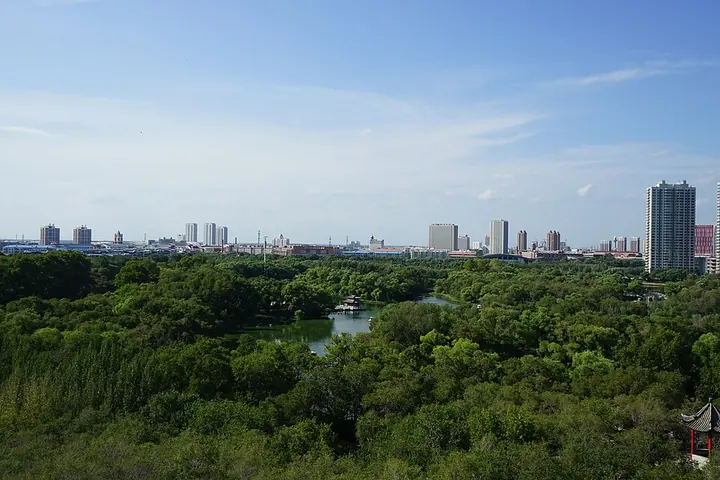 Longsha Park viewed from Tianyuan Pavilion, photographed in 2017 · 龙沙公园 Photograph date recorded by the source: 30 July 2017, 15:31:03.
Longsha Park龙沙公园
Longsha Park's most distinctive relationship is between Laodong Lake and Wangjiang Pavilion, which stands on an artificial hill beside the water. The pavilion was first built in 1908 and gives the garden a clear visual focus. A…
Read the place guide → Nianzishan Mountain Scenic Area · 碾子山山地旅游区
Nianzishan Mountain Scenic Area碾子山山地旅游区
Nianzishan's mountain recreation landscape includes Aobaoling's wooded slopes and landmarks around Chongshan Park, Shedong Mountain and the Yalu River.
Read the place guide → Zhalong Wetland Visitor Area (扎龙生态旅游区), Tiefeng District. Photograph: "Zhalong".
Zhalong Wetland Visitor Area扎龙生态旅游区
Zhalong is a large reed-marsh wetland landscape near Qiqihar, best known for its connection with red-crowned cranes.
Read the place guide →Local life & food
Qiqihar local specialties
齐齐哈尔市特色美食 · 10 specialties to discover
 Qiangmian filled buns 戗面包子AI dish illustration · AI 菜品示意图
The bun has a tighter, more substantial crumb than a very airy steamed bun, setting off its moist savory filling. The result still needs fresh steaming to stay tender.
Source ↗Read the dish guide →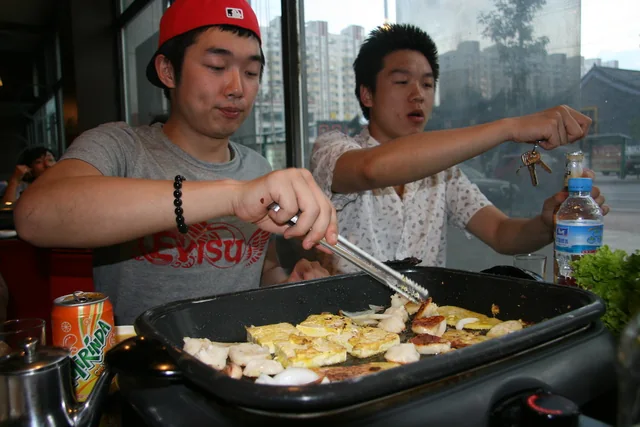 Qiqihar barbecue 齐齐哈尔烤肉
Browning gives the meat savory edges while thin slicing keeps the bite manageable. Onion, herbs or dry seasoning can add sharpness and spice.
Source ↗Read the dish guide → Tofu pudding 豆腐脑
The tofu is fragile and silky, while the topping supplies most of the salt, aroma and contrasting texture.
Source ↗Read the dish guide →
 Griddle-Grilled Beef Slices 烤牛肉
Griddle-Grilled Beef Slices (烤牛肉) are central to Qiqihar’s (齐齐哈尔) barbecue tradition. The city’s Meilisi (梅里斯) style is known for large, evenly cut pieces from the upper shoulder and rib area.
Read the dish guide →
Photo adjustments
EXIF orientation normalized; resized without changing aspect ratio; converted to WebP. No subject edits.
 Pig-Slaughter Stew 杀猪菜Dish photograph · see caption for context
Pig-Slaughter Stew (杀猪菜), literally pig-killing dish, is the north-east Chinese pot of pork cooked with pickled cabbage; in Heilongjiang it also takes the form of a Manchu (满族) whole-pig banquet from Lanling (兰棱).
Read the dish guide →
Photo adjustments
Resized proportionally to a maximum 640 px long edge, EXIF orientation applied where present, and encoded as WebP. No crop or subject alteration.
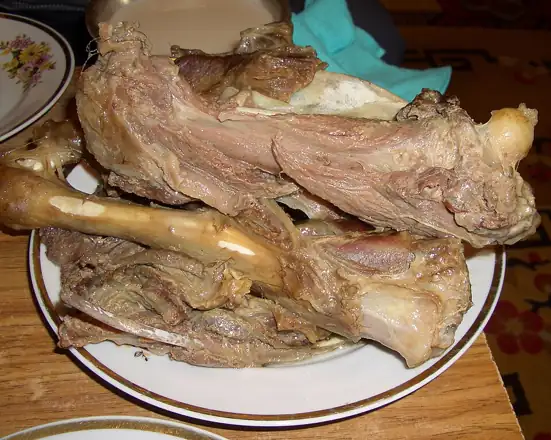 Hand-Held Boiled Mutton 手把肉
Hand-Held Boiled Mutton (手把肉) belongs to the Daur food traditions represented in Meilisi Daur District (梅里斯达斡尔族区), Qiqihar (齐齐哈尔).
Source ↗Read the dish guide →
 Beidacang Liquor-Braised Pork 北大仓酒焖肉AI illustration · AI 示意图(仅供参考,非实拍)
Beidacang Liquor-Braised Pork (北大仓酒焖肉) is listed among the local specialties of Qiqihar, Heilongjiang. The term 酒 points to an alcoholic or fermented drink.
Read the dish guide → Pickled Cabbage and Pork Belly Hotpot 酸菜白肉锅AI illustration · AI 示意图(仅供参考,非实拍)
Pickled Cabbage and Pork Belly Hotpot (酸菜白肉锅) is a pot of Northeast sour cabbage and stock, heated with live charcoal, in which pork belly is swished until cooked. It is also called Northeast hotpot (东北火锅).
Read the dish guide →All dish names · 全部菜名 (10)
- Qiangmian filled buns · 戗面包子
- Qiqihar barbecue · 齐齐哈尔烤肉
- Tofu pudding · 豆腐脑
- Griddle-Grilled Beef Slices · 烤牛肉
- Pig-Slaughter Stew · 杀猪菜
- Hand-Held Boiled Mutton · 手把肉
- Beidacang Liquor-Braised Pork · 北大仓酒焖肉
- Pickled Cabbage and Pork Belly Hotpot · 酸菜白肉锅
- Nehe Potato Starch Noodles · 讷河马铃薯粉
- Kedong Fermented Tofu with Congee · 克东腐乳配粥
More dishes from across Heilongjiang are in the Heilongjiang food guide.
Counties & districts in Qiqihar
16 areas belong directly to Qiqihar.
16 areas
Longsha District 龙沙区
Longsha District (simplified Chinese: 龙沙区; traditional Chinese: 龍沙區; pinyin: Lóngshā Qū) is a district of the city of Qiqihar, Heilongjiang, China.
Explore the area →DistrictJianhua District 建华区
Jianhua District (simplified Chinese: 建华区; traditional Chinese: 建華區; pinyin: Jiànhuá Qū) is a district and the seat of the city of Qiqihar, Heilongjiang province, People's Republic of China.
Explore the area →DistrictTiefeng District 铁锋区
Tiefeng District (simplified Chinese: 铁锋区; traditional Chinese: 鐵鋒區; pinyin: Tiěfēng Qū) is an urban district of the city of Qiqihar, Heilongjiang province, China.
Explore the area →DistrictAng'angxi District 昂昂溪区
Ang'angxi is a county-level district of the city of Qiqihar in Heilongjiang province, China. It has an area of 623 km² (241 sq mi) and a population of approximately 90,000.
Explore the area →Show fewer areas
Fularji District 富拉尔基区
Fularji (simplified Chinese: 富拉尔基区; traditional Chinese: 富拉爾基區; pinyin: Fùlā'ěrjī Qū) is a district of the province of Heilongjiang, People's Republic of China.
Explore the area →DistrictNianzishan District 碾子山区
Nianzishan District is an outlying district of the city of Qiqihar, Heilongjiang province, China.
Explore the area →DistrictMeilisi Daur District 梅里斯达斡尔族区
Meilisi Daur District (simplified Chinese: 梅里斯达斡尔族区; traditional Chinese: 梅里斯達斡爾族區; pinyin: Méilǐsī Dáwò'ěrzú Qū) is an outlying district of the city of Qiqihar, Heilongjiang Province, China.
Explore the area →CountyLongjiang County 龙江县
Longjiang (simplified Chinese: 龙江; traditional Chinese: 龍江; pinyin: Lóngjiāng) is a county under the jurisdiction of Qiqihar City in the west of Heilongjiang province of the People's Republic of China…
Explore the area →CountyYi'an County 依安县
Yi'an County (simplified Chinese: 依安县; traditional Chinese: 依安縣; pinyin: Yī'ān Xiàn) is a county in the west of Heilongjiang province, China.
Explore the area →CountyTailai County 泰来县
Tailai County is a county in the west of Heilongjiang province, People's Republic of China, bordering Inner Mongolia to the west and Jilin province to the south.
Explore the area →CountyGannan County 甘南县
Gannan is a county in Qiqihar, in the west of Heilongjiang province, China, about 50 km (31 mi) northwest of the city seat of Qiqihar and bordering Inner Mongolia to the west.
Explore the area →CountyFuyu County 富裕县
Fuyu is a county of western Heilongjiang province, China, under the administration of Qiqihar City. Various economic crops and the milk are produced in the fertile land.
Explore the area →CountyKeshan County 克山县
Keshan is a county in western Heilongjiang province, China, about 100 km (62 mi) northeast of Qiqihar, which administers it.
Explore the area →CountyKedong County 克东县
Kedong County ( simplified Chinese: 克东县; traditional Chinese: 克東縣; pinyin: Kèdōng Xiàn ) is a county under the jurisdiction of Qiqihar City in west-central Heilongjiang province, the People's Republic of…
Explore the area →CountyBaiquan County 拜泉县
Baiquan is a county of western Heilongjiang province, People's Republic of China. It is under the jurisdiction of the prefecture-level city of Qiqihar.
Explore the area →County-level cityNehe 讷河市
Nehe (simplified Chinese: 讷河; traditional Chinese: 訥河; pinyin: Nèhé) is a county-level city of western Heilongjiang in Northeast China, It is located near the border with Inner Mongolia to the west and is…
Explore the area →No areas match this name.
Plan your visit
Getting there
Search for 齐齐哈尔市 in a map app to find stations and your accommodation.
Where to stay →Build your route
Qiqihar and Zhalong wetlands are about 40 km apart in a straight line. The linked place guides have entrance and visit details.
Continue with Heilongjiang →More in Heilongjiang
Sources & geographic information
Administrative names and parent areas: Official geographic directory · Reference date 2026-09-06.
Some facts checked against 齐齐哈尔市 — Wikipedia contributors, CC BY-SA 4.0.
Some facts checked against 卜奎清真寺 — Wikipedia contributors, CC BY-SA 4.0.
Photo: Qiqihar · Fghjhj · CC BY-SA 4.0. Full frame retained; proportionally resized and converted to WebP. No retouching or changes to the photographed subject. Card displays may crop the view.

Photo: Zhalong wetlands · Huanokinhejo · CC BY-SA 4.0. Proportionally resized and converted to WebP without cropping, retouching or changing the photographed subject.

Photo: Bukui Mosque · Huanokinhejo · CC BY-SA 4.0. Proportionally resized and converted to WebP without cropping, retouching or changing the photographed subject.

Photo: Dacheng temple · Huanokinhejo · Huanokinhejo — 齐齐哈尔大乘寺 山门殿.jpg — CC BY-SA 4.0 · CC BY-SA 4.0. The exact downloaded source bytes are separately retained and hashed. Prepared JPEG is proportionally reduced to a maximum 720-pixel long edge; full frame retained, no subject alteration. Final website rendition: full frame retained, proportionally resized to at most 720 pixels and converted to WebP. No additional retouching or subject alteration. Card displays may crop the view.

Photo: Longsha Park · Amarespeco · CC BY-SA 4.0. Full frame retained; proportionally resized and converted to WebP. No retouching or changes to the photographed subject. Card displays may crop the view.

Photo: Nianzishan Mountain Scenic Area · Source photographer · License not provided. EXIF orientation normalized; resized without changing aspect ratio; converted to WebP. No subject edits.
Photo: Zhalong Wetland Visitor Area · Fanghong · CC BY-SA 3.0. Full frame retained; EXIF orientation normalized, proportionally resized to at most 800 pixels and converted to WebP. No generated pixels or subject changes. Cards may crop the display.

Map data © OpenStreetMap contributors. Pins mark approximate centres, not entrances or boundaries.