

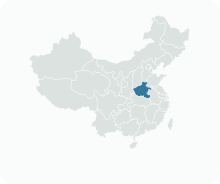
Get to know Xinxiang
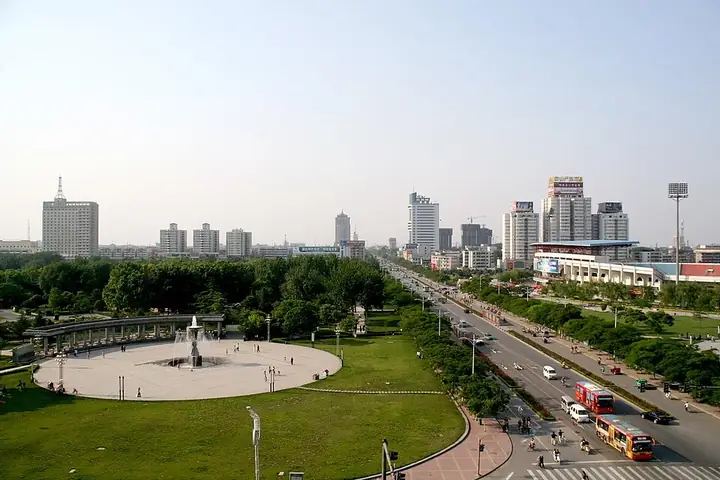
Photo adjustments
Full frame retained; resized proportionally to a maximum dimension of 960 pixels and converted to WebP quality 88. No crop, retouch, generated elements, or subject alteration. Final website rendition: full frame retained, proportionally resized to at most 720 pixels and converted to WebP. No additional retouching or subject alteration. Card displays may crop the view.
- Administrative area
- Prefecture-level city · 地级市
- Part of
- Henan
- Chinese name
- 新乡市
- Local areas
- 12 local areas
Area & population
- Area in the source
- 8,629.00 km²
- Administrative seat
- Hongqi District
Source: cited geographic source, as of the dates shown.
Setting and landscape
The northwest is low mountains and hills; the rest is plain laid down by the Yellow River and the Wei River (卫河), which crosses the prefecture and flows through the city. The Yellow River runs 170 kilometres along the south, edged by 1,290 square kilometres of floodland, the most in Henan by the city government's count.
History
The city government counts the Battle of Muye (牧野大战) and the Chenqiao Mutiny (陈桥兵变) among events that took place here, and says poems once current in the area make up a quarter of the 'Airs of the States' (国风) in the Book of Songs (诗经). Xinxiang County dates from 586; the Ming and Qing ruled the area as Weihui Prefecture (卫辉府), and from 1949 to 1952 Xinxiang was the capital of Pingyuan Province (平原省). Huixian (辉县) was the Zhou state of Gong (共国), whose ruler Gong Bo He (共伯和) governed in the king's place after a revolt in 841 BC; the first year of this Gonghe regency (共和行政) is, the city says, the start of China's precisely dated history.
What to see
In Huixian the city government lists Baligou (八里沟) and Baoquan (宝泉) as national 5A areas, with Wanxian Mountain (万仙山) and Guanshan (关山), also a national geopark, among its 4A sites. Guoliang Village (郭亮村) sits on a cliff 1,700 metres up; its villagers cut a road tunnel through the rock face between 1972 and 1977. At Baiquan (百泉), a kilometre northwest of Huixian city, a fair grew from river-god sacrifices in 608; the national intangible heritage list, joined in 2008, calls it one of China's three great medicinal-herb fairs.
Weihui (卫辉), on the Wei at the eastern foot of the Taihang, is where the loyal minister Bigan (比干) is buried, and Bigan Temple (比干庙) there is a 4A site. The Ming Prince Lu (潞简王) held his fief in Weihui, but his tomb, the Luwang Tomb (潞王陵), lies at the southern foot of Fenghuang Mountain (凤凰山) in Fengquan District (凤泉区); it became a national key cultural relics protection unit in 1996.
Food and local products
Henan Daily's food route for Xinxiang names braised mutton (红焖羊肉), Niu Zhongxi shaobing (牛忠喜烧饼), Yanjin huoshao (延津火烧) and Yuanyang huimian (原阳烩面); Xinxiang Daily reported the first three among the first 'Xinxiang gifts' (新乡礼物). Changyuan (长垣), at the Yellow River's last bend, is billed by the city government as 'China's hometown of chefs' (中国厨师之乡).
Getting oriented
The Beijing–Guangzhou and Zhengzhou–Jinan high-speed railways meet the Beijing–Guangzhou, Xinxiang–Yueshan (新月) and Xinxiang–Heze (新菏) lines in Xinxiang.
Highlights
- Baligou 八里沟: Southern Taihang scenic area in Huixian, listed by the city government as a national 5A area.
- Guoliang Village 郭亮村: Cliff village 1,700 metres up in the Taihang whose villagers cut a road tunnel through the rock face in 1972-1977.
- Baiquan 百泉: Site of the Baiquan medicine fair, on the national intangible heritage list since 2008.
- Bigan Temple 比干庙: Cultural sight in Weihui, where the loyal minister Bigan is buried.
- Luwang Tomb 潞王陵: Tomb of the Ming Prince Lu Jian at the foot of Fenghuang Mountain in Fengquan District; a national key cultural relics protection unit since 1996.
Sources for this guide
新乡概况_新乡市人民政府 · Xinxiang Municipal People's Government
辉县市简介_新乡市人民政府 · Xinxiang Municipal People's Government
卫辉市简介_新乡市人民政府 · Xinxiang Municipal People's Government
长垣市简介_新乡市人民政府 · Xinxiang Municipal People's Government
药市习俗(百泉药会) - 中国非物质文化遗产网·中国非物质文化遗产数字博物馆 · China Intangible Cultural Heritage Network (ihchina.cn)
新乡市 - 维基百科,自由的百科全书 · Chinese Wikipedia · CC BY-SA 4.0
新乡日报--保护传承非遗讲好“黄河故事” · Xinxiang Daily
河南日报-老家河南精品旅游线路 · Henan Daily
郭亮洞 - 维基百科,自由的百科全书 · Chinese Wikipedia · CC BY-SA 4.0
潞简王墓 - 维基百科,自由的百科全书 · Chinese Wikipedia · CC BY-SA 4.0
Original English written from the listed sources and checked sentence by sentence against quoted extracts by a separate reviewer. Updated 2026-10-01.
Explore Xinxiang
Core places to explore, with English and Chinese names.
Baligou 八里沟
Guoliang Village 郭亮村
Xinxiang Museum 平原博物院
Baoquan Tourism Area 宝泉旅游区
Mausoleum of Prince Lu 潞王陵
Bi Gan Temple 比干庙
Wanxian Mountain Guoliang Village 万仙山郭亮村
Guanshan Geopark 关山
Huilong Tianjie Mountain 回龙天界山
Hongqi District 红旗区
Weibin District 卫滨区
Fengquan District 凤泉区
Muye District 牧野区
Xinxiang County 新乡县
Huojia County 获嘉县
Yuanyang County 原阳县
Yanjin County 延津县
Fengqiu County 封丘县
Weihui 卫辉市
Huixian 辉县市
Changyuan City 长垣市
Places to explore around Xinxiang
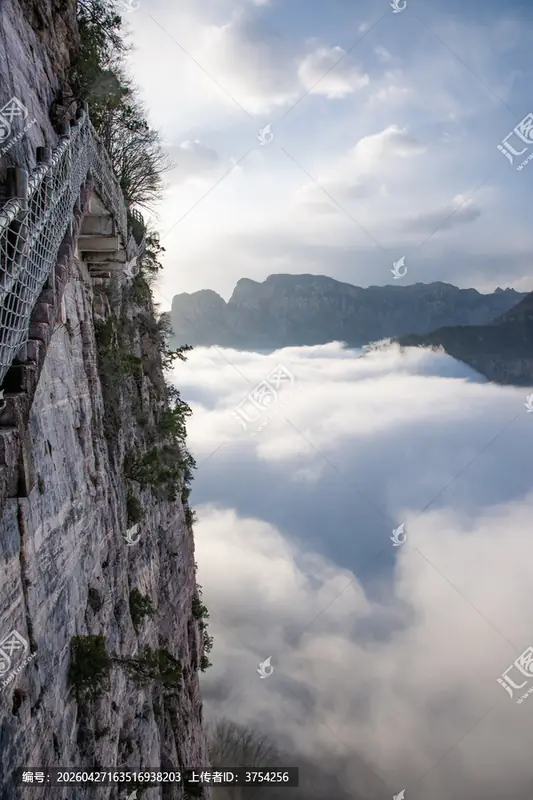 Baligou · 八里沟
Baligou八里沟
Baligou follows streams and pools into a steep-sided valley of the southern Taihang Mountains. Peach Blossom Bay introduces the lower water landscape, while Tianhe Waterfall gives the gorge a much larger vertical scale. Higher…
Read the place guide →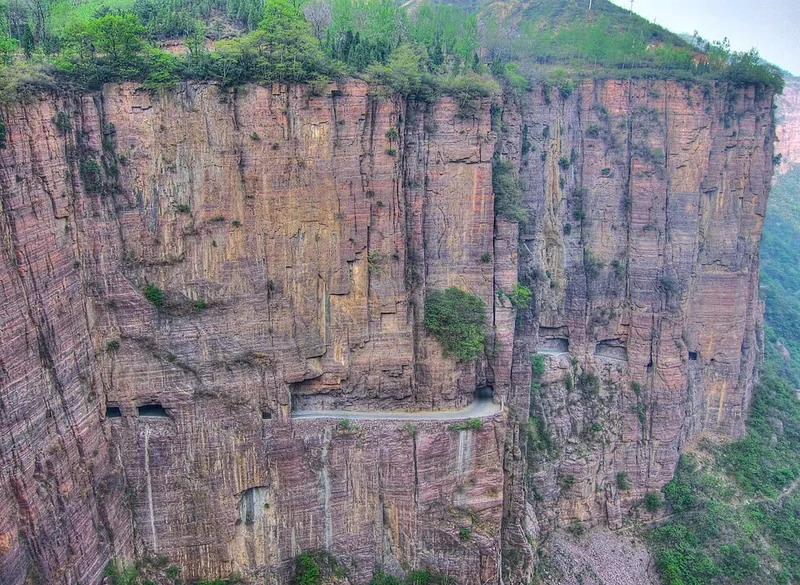 Guoliang tunnel road cut into the cliff face. Photograph date recorded by the source: 2011-04-29 17:23.
Guoliang Village郭亮村
Guoliang’s most striking approach is the road tunnel cut through the cliff by villagers during the 1970s. Openings in the rock wall frame the sheer landscape outside and reveal the relationship between the settlement and its…
Read the place guide →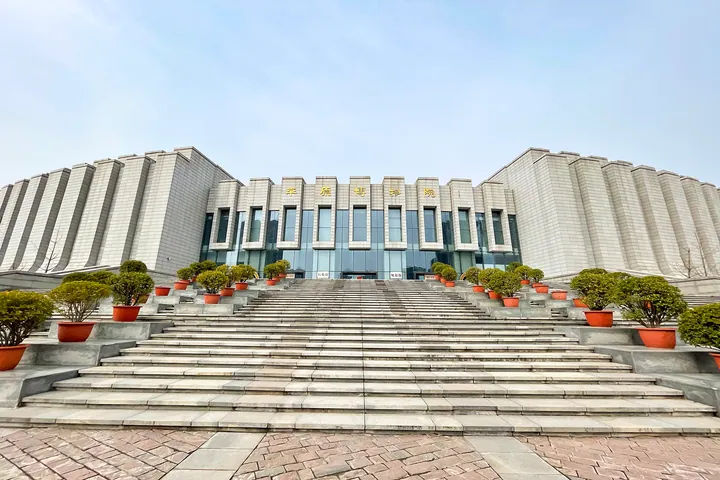 Exterior of the Pingyuan Museum (Xinxiang Museum), Xinxiang · 平原博物院外观,新乡市 Source-recorded photograph date: 2023-02-17 14:44:49.
Xinxiang Museum平原博物院
The Pingyuan Museum building houses Xinxiang’s museum, whose galleries put the surrounding Muye region into a wider historical sequence. The main history display moves from early settlement toward later dynasties. A separate…
Read the place guide → AI illustration · AI 示意图(仅供参考,非该地点实拍)
Baoquan Tourism Area宝泉旅游区
Baoquan in Huixian has two principal visitor areas: the water-focused Grand Canyon and the elevated cliff landscape of Yatianxia.
Read the place guide →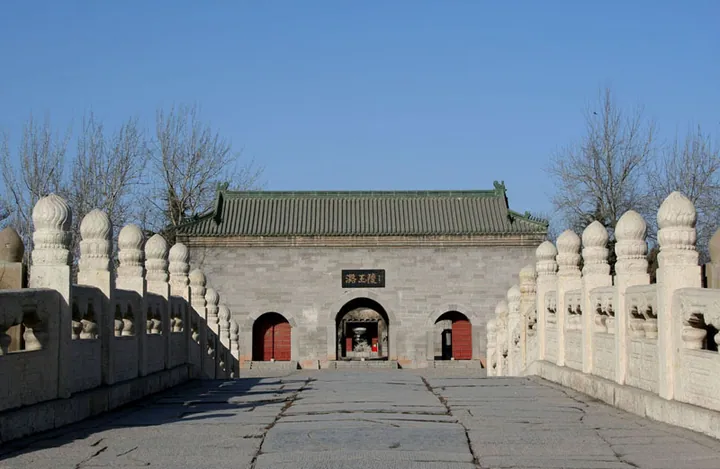 The gate hall of the Mausoleum of Prince Jian of Lu (Mausoleum of Prince Lu), Fengquan District, Xinxiang · 新乡市凤泉区潞王陵门殿 Source-recorded photograph date: 31 January 2010 (original upload date).
Mausoleum of Prince Lu潞王陵
Mausoleum of Prince Lu (潞王陵), also called the Tomb of Prince Jian of Lu, is a Ming princely burial complex at the foot of Fenghuang Shan north of Xinxiang, in Fengquan District, Henan, run as a museum.
Read the place guide →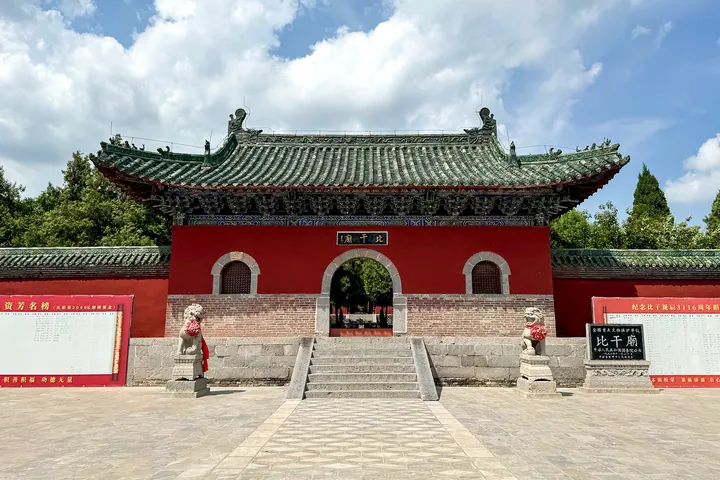 The main gate hall of Bi Gan Temple, Weihui · 卫辉比干庙山门 Source-recorded photograph date: 2024-08-03 14:26:26.
Bi Gan Temple比干庙
Combined temple and tomb of the Shang minister Bi Gan near Weihui, Henan, founded in 494 and revered as the ancestral shrine of the Lin clan.
Read the place guide →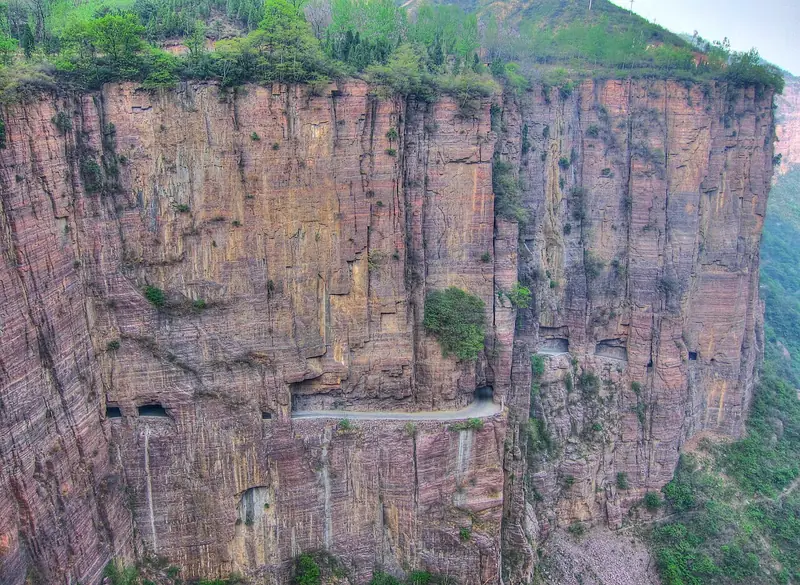 Wanxian Mountain Guoliang Village (万仙山郭亮村), Huixian. Photograph: "Guoliang tunnel road 2011-4-29 17-24-01 (5689275863)".
Wanxian Mountain Guoliang Village万仙山郭亮村
Guoliang (郭亮村) is a stone-built village high on a red cliff in Shayao Township, Huixian, Henan, reached by a tunnel that its own residents cut through the rock; it forms one section of the Wanxian Shan scenic area in the South Taihang mountains.
Read the place guide →AI illustration · AI 示意图(仅供参考,非该地点实拍)Guanshan Geopark关山
Guanshan (关山) is a national geopark on the southern flank of the Taihang mountains, in Shangbali Town, Huixian, Henan, covering about 34 square kilometres of collapsed and fissured rock scenery.
Read the place guide → AI illustration · AI 示意图(仅供参考,非该地点实拍)
Huilong Tianjie Mountain回龙天界山
Huilong Tianjieshan (回龙天界山) is a mountain scenic area of 43 square kilometres in Shangbali Town, Huixian, Henan, in the heart of the Taihang range, combining red-rock gorge scenery with a Daoist summit and a road villagers cut through the cliff.
Read the place guide →Local life & food
Xinxiang local specialties
新乡市特色美食 · 10 specialties to discover
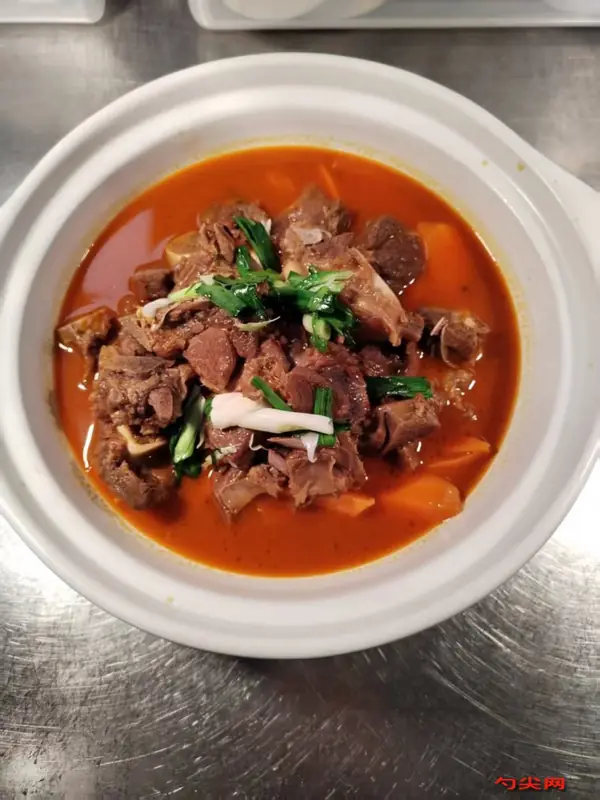 Red-Braised Mutton 红焖羊肉
Red-Braised Mutton (红焖羊肉) is a hotpot of braised mutton from Xinxiang (新乡), Henan.
Read the dish guide →Photo adjustments
EXIF orientation normalized; resized without changing aspect ratio; converted to WebP. No subject edits.
 Yuanyang Huimian Noodle Soup 原阳烩面AI illustration · AI 示意图(仅供参考,非实拍)
Yuanyang Huimian Noodle Soup (原阳烩面) is the huimian (烩面) of Yuanyang County (原阳县) in Xinxiang (新乡), and its full name is Yuanyang mutton huimian (原阳羊肉烩面).
Read the dish guide →Huojia Pressed Wheat Noodles 获嘉饸饹条AI illustration · AI 示意图(仅供参考,非实拍)
Huojia Pressed Wheat Noodles (获嘉饸饹条) are hele (饸饹) noodles from Huojia County (获嘉县) in Xinxiang (新乡), Henan: an alkaline wheat dough pressed straight into boiling stock and topped with minced beef.
Read the dish guide →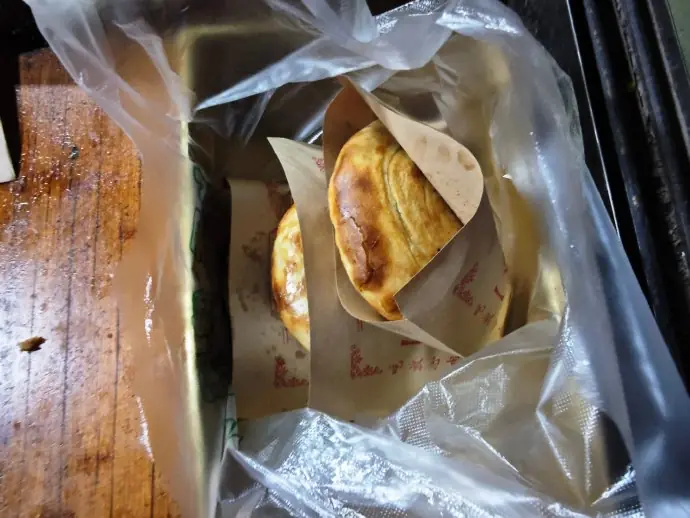 Yanjin Stuffed Baked Buns 延津火烧
Yanjin Stuffed Baked Buns (延津火烧) are the pork-filled baked buns of Yanjin County (延津县) in Xinxiang (新乡), northern Henan. In 2013 they were confirmed in the third batch of Xinxiang municipal intangible cultural heritage items.
Read the dish guide →Photo adjustments
EXIF orientation normalized; resized without changing aspect ratio; converted to WebP. No subject edits.
 Niu Zhongxi Flaky Flatbread 牛忠喜烧饼Reference photo of a similar dish · 同类菜品参考照片
Niu Zhongxi Flaky Flatbread (牛忠喜烧饼) is a layered oil-shortcrust flatbread from Xinxiang (新乡) in Henan, named after the baker Niu Zhongxi (牛忠喜) of Weibin District (卫滨区), whose bread was formally given his name in the spring of 1980.
Read the dish guide →
Photo adjustments
Full frame retained; EXIF orientation normalized, proportionally resized to at most 800 pixels and converted to WebP. No generated pixels or subject changes. Cards may crop the display.
 Fengqiu Rolled Pork and Egg Loaf 封丘卷尖AI illustration · AI 示意图(仅供参考,非实拍)
Fengqiu Rolled Pork and Egg Loaf (封丘卷尖) is a steamed roll of seasoned pork, egg and starch made in Fengqiu (封丘) county, Henan, and described by China News Service as one of the most common meat dishes at traditional Henan banquets.
Read the dish guide → Weihui Duji Beef 卫辉杜记牛肉AI illustration · AI 示意图(仅供参考,非实拍)
Weihui Duji Beef (卫辉杜记牛肉) is the cooked beef of the Du family line in Weihui (卫辉), a city in Xinxiang (新乡), Henan, made from young northern-Henan yellow cattle and sold today under the brand name Shikui (世魁).
Read the dish guide → Luoguo Sauce-Braised Meat 罗锅酱肉AI illustration · AI 示意图(仅供参考,非实拍)
Luoguo Sauce-Braised Meat (罗锅酱肉) is a Xinxiang (新乡) pork speciality associated with Luoguoju (罗锅居).
Read the dish guide →All dish names · 全部菜名 (10)
- Red-Braised Mutton · 红焖羊肉
- Yuanyang Huimian Noodle Soup · 原阳烩面
- Huojia Pressed Wheat Noodles · 获嘉饸饹条
- Yanjin Stuffed Baked Buns · 延津火烧
- Niu Zhongxi Flaky Flatbread · 牛忠喜烧饼
- Fengqiu Rolled Pork and Egg Loaf · 封丘卷尖
- Weihui Duji Beef · 卫辉杜记牛肉
- Luoguo Sauce-Braised Meat · 罗锅酱肉
- Huixian Hawthorn Cake · 辉县山楂糕
- Xinxiang Braised Chicken · 新乡烧鸡
More dishes from across Henan are in the Henan food guide.
Counties & districts in Xinxiang
12 areas belong directly to Xinxiang.
12 areas
Hongqi District 红旗区
Hongqi District (simplified Chinese: 红旗区; traditional Chinese: 紅旗區; pinyin: Hóngqí Qū; lit. 'red flag') is a district and the municipal seat of the city of Xinxiang, Henan province, China.
Explore the area →DistrictWeibin District 卫滨区
Weibin District (simplified Chinese: 卫滨区; traditional Chinese: 衛濱區; pinyin: Wèibīn Qū) is a district of the city of Xinxiang, Henan province, China.
Explore the area →DistrictFengquan District 凤泉区
Fengquan District (simplified Chinese: 凤泉; traditional Chinese: 鳳泉; pinyin: Fèngquán; lit. 'phoenix spring') is a district of the city of Xinxiang, Henan province, China.
Explore the area →DistrictMuye District 牧野区
Muye District is a district of the city of Xinxiang, Henan province, China.
Explore the area →Show fewer areas
Xinxiang County 新乡县
Xinxiang County (simplified Chinese: 新乡县; traditional Chinese: 新鄉縣; pinyin: Xīnxiāng Xiàn) is a county in Xinxiang, Henan Province. It is situated in the center of the northern Henan Plateau.
Explore the area →CountyHuojia County 获嘉县
Huojia County (simplified Chinese: 获嘉; traditional Chinese: 獲嘉; pinyin: Huòjiā) is a county under the administration of the prefecture-level city of Xinxiang, in the northwest of Henan province, China.
Explore the area →CountyYuanyang County 原阳县
Yuanyang County (simplified Chinese: 原阳县; traditional Chinese: 原陽縣; pinyin: Yuányáng Xiàn) is a county under the administration of the prefecture-level city of Xinxiang, in the north of Henan province, China.
Explore the area →CountyYanjin County 延津县
Yanjin County is a county under the administration of the prefecture-level city of Xinxiang, in the north of Henan province, China.
Explore the area →CountyFengqiu County 封丘县
Fengqiu County (simplified Chinese: 封丘; traditional Chinese: 封邱; pinyin: Fēngqiū) is a county in the north of Henan province, located on the north (left) bank of the Yellow River.
Explore the area →County-level cityWeihui 卫辉市
Weihui (simplified Chinese: 卫辉; traditional Chinese: 衛輝; pinyin: Wèihuī), formerly Jixian or Ji County (simplified Chinese: 汲县; traditional Chinese: 汲縣), is a county-level city in the north of Henan province…
Explore the area →County-level cityHuixian 辉县市
Huixian (simplified Chinese: 辉县; traditional Chinese: 輝縣; pinyin: Huīxiàn) is a county-level city under the administration of the prefecture-level city of Xinxiang, in the northwest of Henan province, China…
Explore the area →County-level cityChangyuan City 长垣市
Changyuan (simplified Chinese: 长垣市; traditional Chinese: 長垣市; pinyin: Chángyuán Shì) is a county-level city in the east of Henan province, China, bordering Shandong province to the east.
Explore the area →No areas match this name.
Plan your visit
Getting there
Search for 新乡市 in a map app to find stations and your accommodation.
Where to stay →Build your route
Baligou and Guoliang Village are about 15 km apart in a straight line. The linked place guides have entrance and visit details.
Continue with Henan →More in Henan
Sources & geographic information
Administrative names and parent areas: Official geographic directory · Reference date 2026-09-06.
Some facts checked against 新乡市 — Wikipedia contributors, CC BY-SA 4.0.
Some facts checked against 郭亮洞 — Wikipedia contributors, CC BY-SA 4.0.
Some facts checked against 潞简王墓 — Wikipedia contributors, CC BY-SA 4.0.
Photo: Baligou · Source photographer · License not provided. EXIF orientation normalized; resized without changing aspect ratio; converted to WebP. No subject edits.
Photo: Guoliang Village · FANG Chen from Beijing, China · CC BY 2.0. Full frame retained; proportionally resized and converted to WebP. No retouching or changes to the photographed subject. Card displays may crop the view.
.jpg)
Photo: Xinxiang Museum · Windmemories · CC BY-SA 4.0. Full frame retained; proportionally resized and converted to WebP. No retouching or changes to the photographed subject. Card displays may crop the view.

Photo: Mausoleum of Prince Lu · 新乡日报-李宝忠 · CC BY 3.0. Full frame retained; proportionally resized and converted to WebP. No retouching or changes to the photographed subject. Card displays may crop the view.

Photo: Bi Gan Temple · Windmemories · CC BY-SA 4.0. Full frame retained; proportionally resized and converted to WebP. No retouching or changes to the photographed subject. Card displays may crop the view.

Photo: Wanxian Mountain Guoliang Village · FANG Chen from Beijing, China · CC BY 2.0. Full frame retained; EXIF orientation normalized, proportionally resized to at most 800 pixels and converted to WebP. No generated pixels or subject changes. Cards may crop the display.

Map data © OpenStreetMap contributors. Pins mark approximate centres, not entrances or boundaries.