


Get to know Gaoling District
- Administrative area
- District · 市辖区
- Part of
- Xi’an
- Chinese name
- 高陵区
- Local areas
- District guide
Area & population
- Area
- 285.03 km²
- Population · 2020
- 416,996
Source: English Wikipedia, as of the dates shown.
Gaoling is a current county-level district of Xi’an, not a separate city or a development-zone name. Shaanxi’s latest published administrative-code directory lists Gaoling District (610117) with seven subdistricts, while Xi’an’s official history records the county-to-district change in 2015. The district lies north of the central city, so plan its sights as a dedicated half-day or day outing rather than an extension of a walk around the old city.
Start around Zhaohui Square
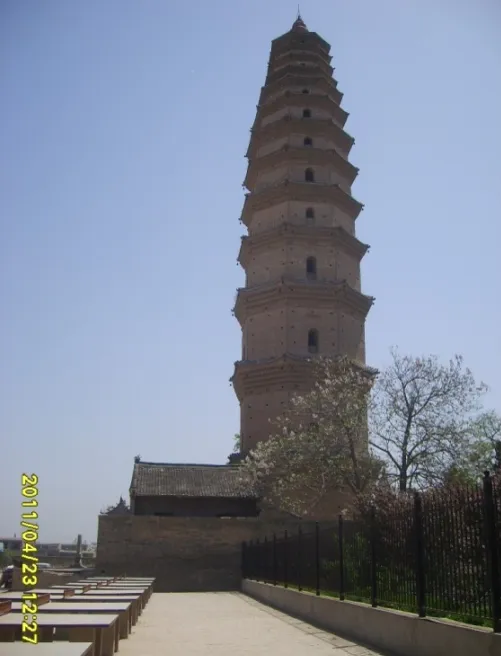
At Gaoling Museum (高陵博物馆), look for the local story in the collections: the museum presents Gaoling stone inscriptions, local history, economic and social development, and revolutionary history. Its axial, garden-style layout gives the visit an outdoor courtyard dimension as well as indoor displays. The grounds also include Zhaohui Pagoda (昭慧塔) and the Li Sheng Stele (李晟碑), so allow time to view the historic monuments rather than treating the museum as a single exhibition hall.
The pagoda is a Tang-period landmark and a nationally protected monument; the stele is a major local example of inscribed stone heritage. A photograph below shows the pagoda in 2011 and should be read as a historical view, not a promise about today’s landscaping or access.
The museum was reported as open to the public in 2017, but current opening days, hours, admission, and reservation rules could not be confirmed from a current operator notice. Check the museum or district’s latest notice before making a special trip.
Follow the rivers north
The Jing–Wei Confluence Viewing Platform (泾渭分明观景台) is a separate riverside outing, not a second stop within the museum grounds. At the meeting of the Jing and Wei rivers, visitors look for the contrasting water colors that gave the scene its familiar “clear distinction between Jing and Wei” description. The visible contrast varies with river conditions, so treat it as a landscape observation rather than a guaranteed color effect.
For a quieter cultural stop on the same metro corridor, the Xi’an Metro Museum (西安地铁博物馆) is inside Jingwei Peninsula Station (泾渭半岛站). It focuses on the history of bridges and the rivers around Xi’an; it is a distinct small museum, separate from Gaoling Museum. Current visiting arrangements were not established here, so check on-site notices before planning around it.
Getting around
From central Xi’an, use Metro Line 10 to Zhaohui Square (昭慧广场), the line’s northern terminal reported when the line began initial service in 2024. Gaoling Museum is at Zhaohui Square on South Huandong Road (南环东路); follow station and square signs toward the museum. No reliable exit number was confirmed, so do not rely on an assumed exit. The Xi’an Rail Transit Group provides official journey-planning and timetable tools for checking the day’s service.
For the river confluence, Line 10 to Yangguanzhai (杨官寨) followed by a taxi is the reported practical approach. A bus alternative was mentioned in local reporting, but a dependable route number and stop could not be verified. Give the driver 泾渭分明观景台(陕西省西安市高陵区渭阳一路南侧); this is the listed locality, not a verified street-number address. Ask to alight only at the signed public visitor access, not on the river embankment. No dedicated legal drop-off point was confirmed. Return to Yangguanzhai by taxi and take Line 10 back toward the city; confirm the last train and interchange plan in the operator’s journey planner before setting out.
The district has no single taxi destination. For the museum, use 高陵博物馆(昭慧广场), 西安市高陵区南环东路昭慧广场 Xī’ān Shì Gāolíng Qū Nánhuán Dōng Lù Zhāohuì Guǎngchǎng, and follow public signs to the visitor entrance. For other neighborhoods, enter the specific destination rather than “Gaoling District.”
Guide sources
- Shaanxi Civil Affairs Department, 2025 administrative division codes
- Xi’an Municipal People’s Government, historical administrative divisions
- People’s Daily Online Shaanxi, Take Metro Line 10 to travel in Xi’an
- China National Radio, Gaoling Museum and its Tang pagoda
- Trip.com, Jing–Wei Confluence Viewing Platform listing
- Xi’an Rail Transit Group passenger site
Explore Gaoling District
Core places to explore, with English and Chinese names.
Places to explore around Gaoling District
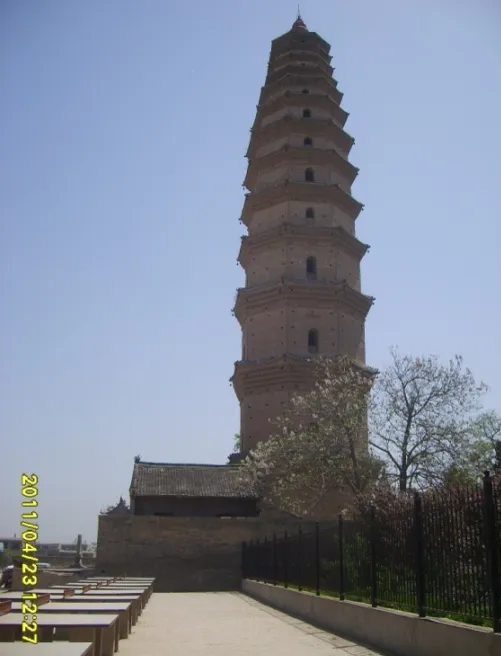 Zhaohui Pagoda in Gaoling; the photograph bears a 2011 camera-date imprint. Photo:
Plan your visit
Getting there
Gaoling District is about 30 km (straight-line distance) from central Xi’an. Search for 高陵区 in a map app to find stations and your accommodation.
Where to stay →Build your route
Start with Zhaohui Pagoda. The linked place guides have entrance and visit details.
Continue with Xi’an →More in Xi’an
Sources & geographic information
Administrative names and parent areas: Official geographic directory (dmfw.mca.gov.cn) · Reference date 2026-09-06.
Background text adapted from Gaoling, Xi'an — Wikipedia contributors, under CC BY-SA 4.0. Text has been shortened and reorganized; source revision 1372981667.
Map data © OpenStreetMap contributors. Pins mark approximate centres, not entrances or boundaries.
Image credits & notes (2)
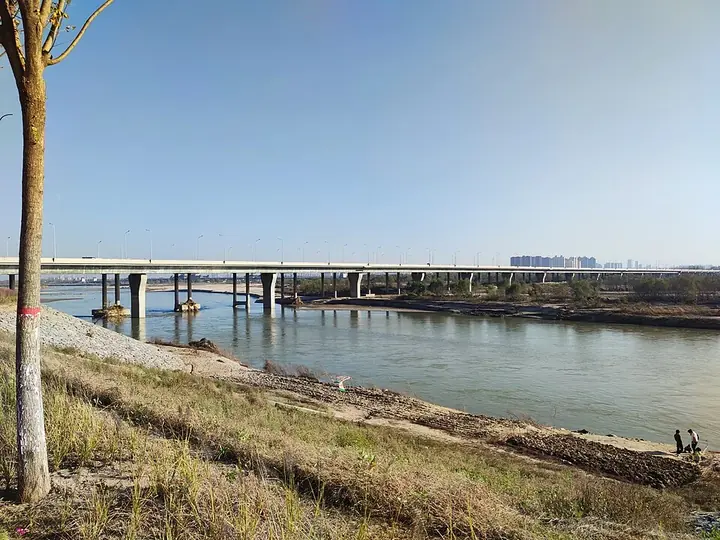
- The Jingwei Road bridge over the Wei River in Gaoling District, Xi'an. Photo: 2021-11-13 15:34:46.Photo: Liuxingy · CC BY-SA 4.0Resized for the web; the photo itself has not been edited. Thumbnails may show a cropped view.
- Zhaohui Pagoda at Gaoling, photographed in 2011. Photo: 申威隆 (Shen Weilong)Photo: CC BY-SA 3.0
