


Get to know Lianhu District
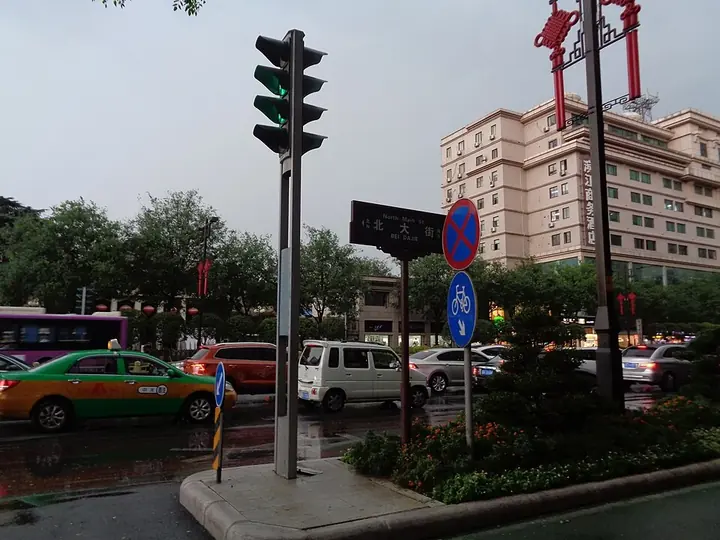
Photo adjustments
Full frame retained; proportionally resized and converted to WebP. No retouching or changes to the photographed subject. Card displays may crop the view.
- Administrative area
- District · 市辖区
- Part of
- Xi’an
- Chinese name
- 莲湖区
- Local areas
- District guide
Area & population
- Area in the source
- 38.32 km²
- Population · 2020
- 1,019,102
Source: cited geographic source, as of the dates shown.
History
The district government counts 125 relics from 13 dynasties, among them the Zhou, Qin, Han and Tang, within its borders, eight of them national protected sites. It presents Lianhu as the start of the old Silk Road: caravans bound for the Western Regions set out from Kaiyuan Gate (开远门), whose site lies here. In Tang Chang'an the West Market stood near today's Laodong South Road (劳动南路), a market for ordinary people with many traders from the Western Regions and Japan; a 4A scenic area in the district now carries the name Tang West Market (大唐西市).
What to see
The Drum Tower (鼓楼), which the district yearbook describes as the largest surviving in China, faces the Bell Tower (钟楼). The Bell Tower was first built in 1384 at the mouth of Guangji Street (广济街) and moved to its present site in 1582.
The Great Mosque in Huajue Lane (化觉巷清真大寺), called the East Great Mosque by local people, is dated by the district to 742 and was placed on the national protected list in 1988. Its present Ming and Qing buildings fill four courtyards in a long east-west rectangle of more than 12,300 square metres, in the style of Chinese palace halls.
The Xi'an City God Temple (西安都城隍庙), founded in 1387, was one of three Ming temples of a "capital" city god, in charge of the northwest provinces, and the district says it is the only one left. Its drum music ensemble, with more than 300 pieces descended from Tang court banquet music, has been inscribed as world intangible heritage.
Guangren Temple (广仁寺), in the northwest corner inside the city wall, is Shaanxi's only Tibetan Buddhist temple. It was founded in 1705 with funds granted by the Kangxi Emperor when he toured Shaanxi; its lamas are of the Gelug school, and a lamp festival on the 24th and 25th of the tenth lunar month marks Tsongkhapa's enlightenment.
Food and local products
The making of beef and mutton paomo (牛羊肉泡馍) at Tongshengxiang (同盛祥) has been national intangible heritage since 2008, with the Lianhu cultural centre as its guardian. Tongshengxiang uses Qinchuan (秦川) cattle and Tan sheep from Yanchi in Ningxia (宁夏盐池), seasons with plenty of fennel and a sharp note of Sichuan pepper, and runs through 15 stages and 110 steps. It was named a China Time-honoured Brand in 2011.
Highlights
- Drum Tower of Xi'an 西安鼓楼: Described by the district yearbook as the largest surviving drum tower in China.
- Great Mosque of Xi'an 化觉巷清真大寺: Dated to 742; four courtyards of Ming and Qing halls; national protected site since 1988.
- Xi'an City God Temple 西安都城隍庙: Founded 1387; home of a drum music ensemble with more than 300 pieces.
- Guangren Temple 广仁寺: Shaanxi's only Tibetan Buddhist temple, founded by the Kangxi Emperor in 1705.
- Tongshengxiang paomo 同盛祥牛羊肉泡馍: Beef and mutton paomo made in 110 steps; national intangible heritage since 2008.
Sources for this guide
莲湖区概况 · Lianhu District People's Government, Xi'an (Lianhu Yearbook)
清真大寺—国家级文物保护单位 · Lianhu District Culture, Tourism and Sports Bureau
西安钟鼓楼 · Lianhu District Culture, Tourism and Sports Bureau
都城隍庙—国家级文物保护单位 · Lianhu District Culture, Tourism and Sports Bureau
大唐西市—4A级景区 · Lianhu District Culture, Tourism and Sports Bureau
同盛祥—国家级非物质文化遗产代表性项目名录 · Lianhu District Culture, Tourism and Sports Bureau
广仁寺—市级文物保护单位、国家3A级旅游景区 · Lianhu District Culture, Tourism and Sports Bureau
Original English written from the listed sources and checked sentence by sentence against quoted extracts by a separate reviewer. Updated 2026-09-25.
Explore Lianhu District
Core places to explore, with English and Chinese names.
Places to explore around Lianhu District
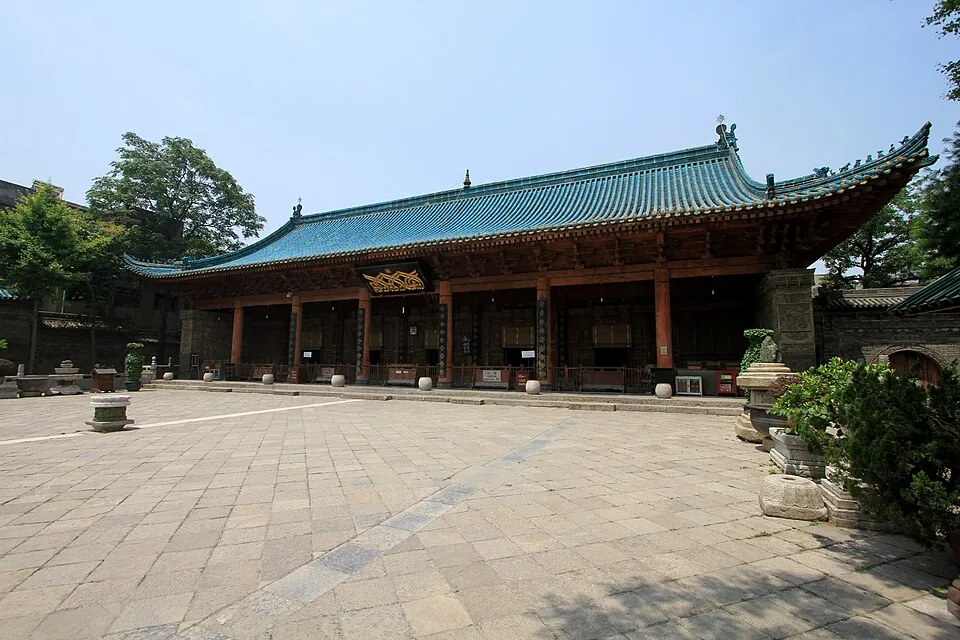 Great Mosque of Xi'an · 西安清真大寺. Photo: 2010-06-14 11:40.
Great Mosque of Xi'an西安清真大寺
Xi’an’s Great Mosque unfolds through courtyards along an east–west axis in Huajue Alley. Its main surviving layout is Ming and Qing, using timber halls, gateways and pavilions while orienting worship towards the west. Chinese…
Read the place guide →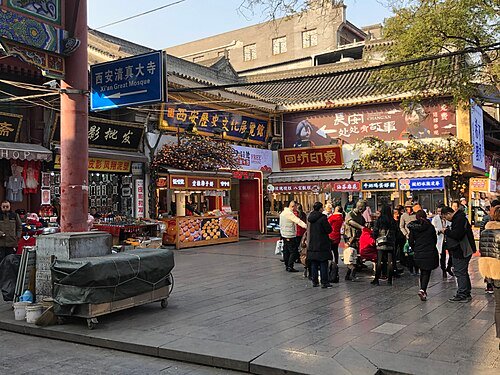 Muslim Quarter · 回民街
Muslim Quarter回民街
Xi’an’s Hui neighbourhood is a network of residential and commercial lanes northwest of the Bell Tower, rather than a single food street. Beiyuanmen is its best-known visitor approach, with other streets such as Xiyangshi and…
Read the place guide →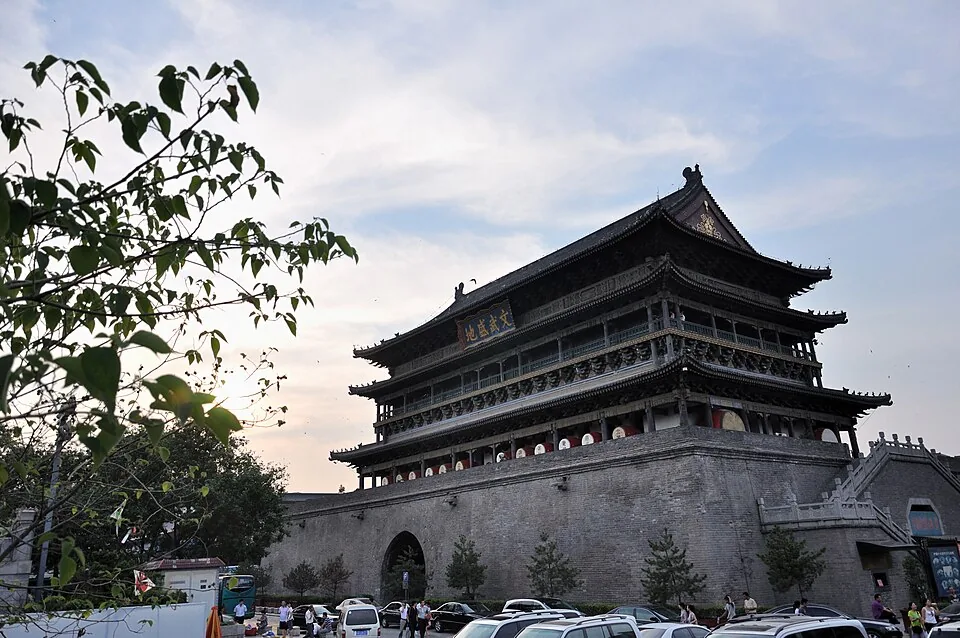 Drum Tower of Xi'an · 西安鼓楼. Photo: 2010-06-23.
Drum Tower of Xi'an西安鼓楼
Xi’an’s Drum Tower stands west of the Bell Tower at the edge of the Beiyuanmen quarter. Built in the Ming period, it combines a massive brick platform with a timber upper structure and layered roofs. The modern set of solar-term…
Read the place guide →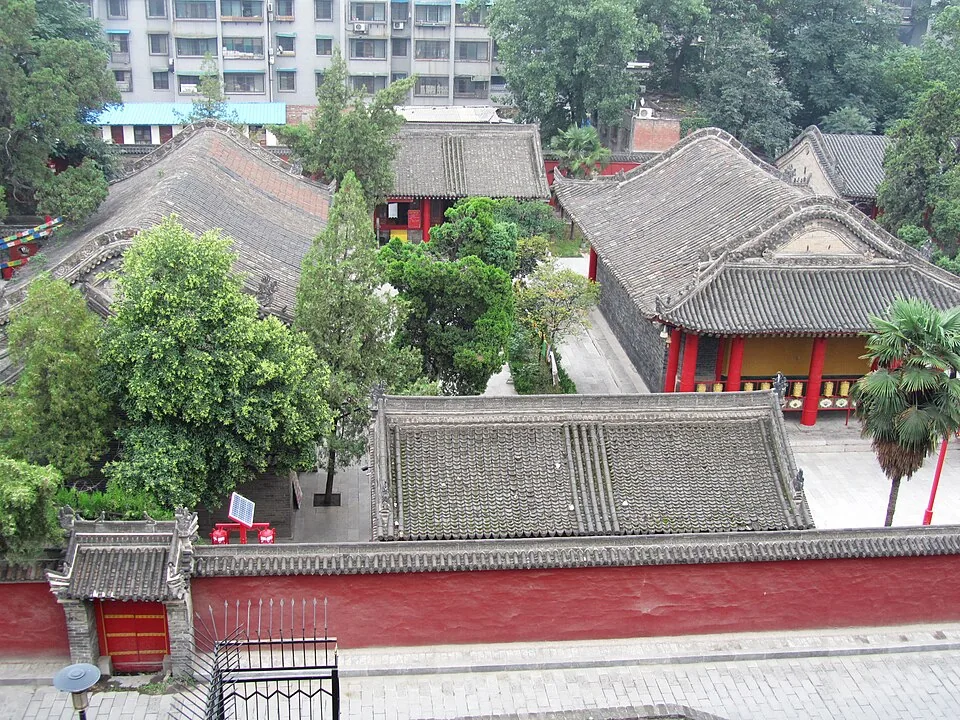 Guangren Temple · 广仁寺. Photo: 2011-07-22 11:10:52.
Guangren Temple广仁寺
Guangren is a Tibetan Buddhist temple tucked inside the northwest corner of Xi’an’s city wall. Established under the Kangxi emperor in 1705, it belongs to the Gelug tradition and has a particular association with Green Tara. Its…
Read the place guide →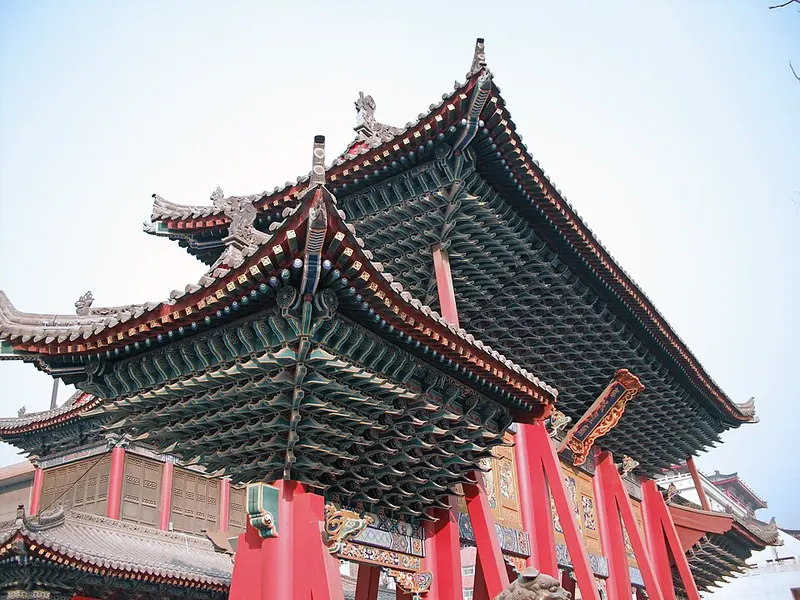 Gateway of Xian City God Temple on West Street · 西安都城隍庙 Photograph date recorded by the source: 2011-02-02 16:03:43.
Xi’an City God Temple西安都城隍庙
Xi’an’s City God Temple opens from West Avenue into a sequence of gates, a theater and a substantial main hall. Much of the surviving architecture reflects Qing rebuilding, including the main hall reconstructed with materials…
Read the place guide →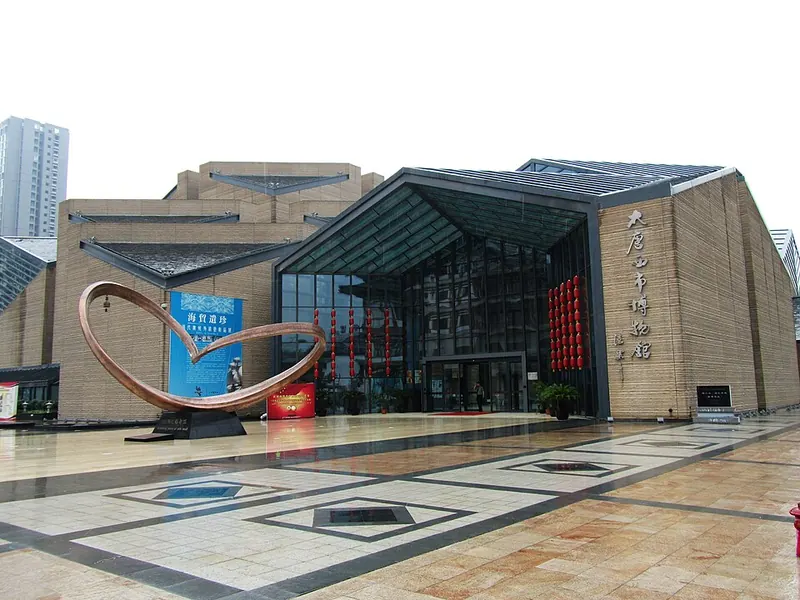 Southeast entrance of the Tang West Market Museum · 大唐西市博物馆 Photograph date recorded by the source: 2011-07-21 10:31:19.
Tang West Market Museum大唐西市博物馆
Tang West Market Museum was built over excavated remains of Chang’an’s western market. The original crossroad, wheel ruts, shop foundations and drainage works are the essential exhibits, showing how a commercial district…
Read the place guide →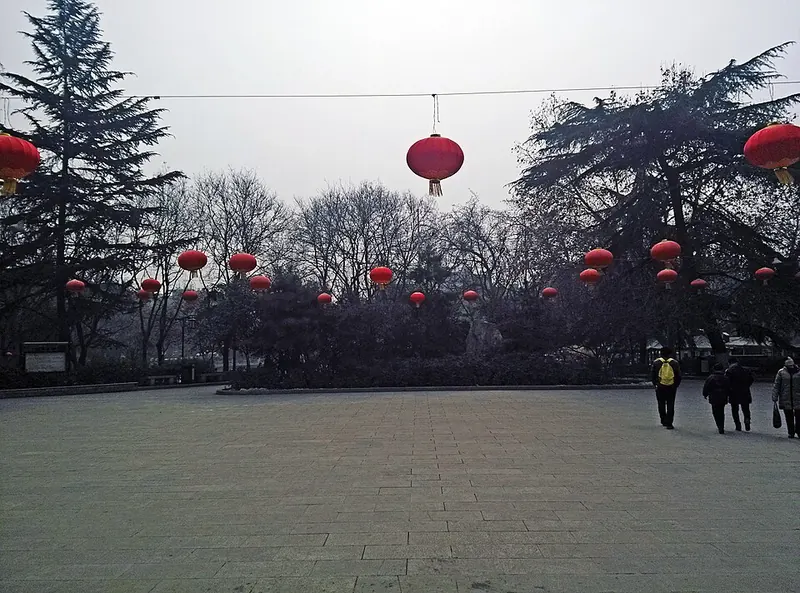 Open grounds and trees in Lianhu Park, Xi’an. Photograph date recorded by the source: 2014-02-15 09:16:37.
Lianhu Park莲湖公园
Lianhu Park preserves a pocket of water and garden space within Xi’an’s old city. Its lotus pond traces a long history of cultivation and later public-park use, giving the surrounding district its name. Today, winding bridges…
Read the place guide →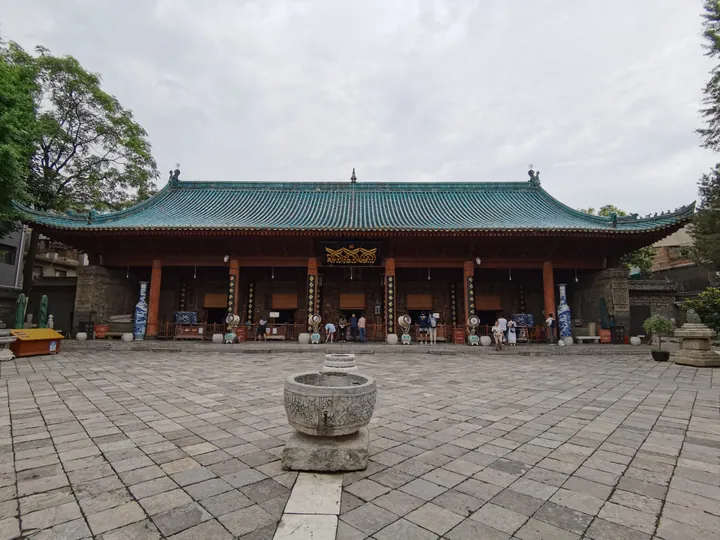 Main prayer hall of the Xi'an Great Mosque, Lianhu District · 莲湖区化觉巷清真大寺礼拜殿 Source-recorded photograph date: 18 July 2020 (according to Exif data).
Huajue Lane Great Mosque化觉巷清真大寺
The Great Mosque in Huajue Lane (化觉巷清真大寺), also called Huajue Temple and known locally as the East Great Mosque, stands north-west of the Xi'an Drum Tower. It was founded in 742, the first year of the Tang Tianbao reign, and is a Chinese palace-form building group in the Ming and Qing style, laid out along an east-west axis, whose architecture the district government describes as a combination of Chinese classical building and Islamic style. It was listed in 1988 as a nationally protected cultural relics unit of the third batch.
Read the place guide → AI illustration · AI 示意图(仅供参考,非该地点实拍)
Bell and Drum Towers and Muslim Quarter钟鼓楼与回坊
The Bell Tower and Drum Tower (钟鼓楼) stand in the centre of Xi'an, and the historic district known as the Hui quarter takes its shape from the streets around them. Both towers were first built in the Hongwu years of the Ming, and the Shaanxi Provincial Cultural Heritage Administration records them as the largest and best-preserved bell and drum towers among surviving buildings of their kind in the country. The Beiyuanmen historic district around them covers about 2.24 square kilometres and retains 21 historic buildings and houses, six of them nationally protected cultural relics units.
Read the place guide →Plan your visit
Getting there
Lianhu District is about 4 km in a straight line from central Xi’an. Search for 莲湖区 in a map app to find stations and your accommodation.
Where to stay →Build your route
Great Mosque of Xi'an and Muslim Quarter are less than 1 km apart. The linked place guides have entrance and visit details.
Continue with Xi’an →More in Xi’an
Sources & geographic information
Administrative names and parent areas: Official geographic directory · Reference date 2026-09-06.
Photo: Great Mosque of Xi'an · Ronnie Macdonald from Chelmsford, United Kingdom · CC BY 2.0. Converted to WebP and resized without changing the subject or cropping the source frame.
.jpg)
Photo: Muslim Quarter · Qianeal · CC BY-SA 4.0. Wikimedia thumbnail; fitted to the ranking-card frame.

Photo: Drum Tower of Xi'an · Wang Zhongyin · CC BY-SA 4.0. Converted to WebP and resized without changing the subject or cropping the source frame.

Photo: Guangren Temple · 猫猫的日记本 · CC BY-SA 3.0. Converted to WebP and resized without changing the subject or cropping the source frame.

Photo: Xi’an City God Temple · Acstar · CC BY-SA 3.0. Full frame retained; proportionally resized and converted to WebP. No retouching or changes to the photographed subject. Card displays may crop the view.

Photo: Tang West Market Museum · 猫猫的日记本 · CC BY-SA 4.0. Full frame retained; proportionally resized and converted to WebP. No retouching or changes to the photographed subject. Card displays may crop the view.

Photo: Lianhu Park · Acstar · CC BY-SA 3.0. Full frame retained; proportionally resized and converted to WebP. No retouching or changes to the photographed subject. Card displays may crop the view.

Photo: Huajue Lane Great Mosque · 長安城根喚朱雀 · CC BY-SA 3.0. Full frame retained; proportionally resized and converted to WebP. No retouching or changes to the photographed subject. Card displays may crop the view.

Map data © OpenStreetMap contributors. Pins mark approximate centres, not entrances or boundaries.