


Get to know Yanta District
- Administrative area
- District · 市辖区
- Part of
- Xi’an
- Chinese name
- 雁塔区
- Local areas
- District guide
Area & population
- Area
- 152.00 km²
- Population · 2020
- 1,202,038
Source: English Wikipedia, as of the dates shown.
Exploring Yanta
Yanta is one of Xi’an’s current 11 districts, not a separate city or a single visitor attraction. Its well-known places are spread across several neighborhoods, so plan around one or two clusters rather than entering “Yanta District” as though it were a gate or taxi stop.
For a history-focused day, start in Xiaozhai (小寨) at the Shaanxi History Museum. Its galleries present Shaanxi’s long history through archaeological and historical objects. The museum’s current visitor information describes entry as free but ticketed, with real-name advance reservation through its official WeChat account. Check that channel before setting out, since a reservation is required and availability can change.
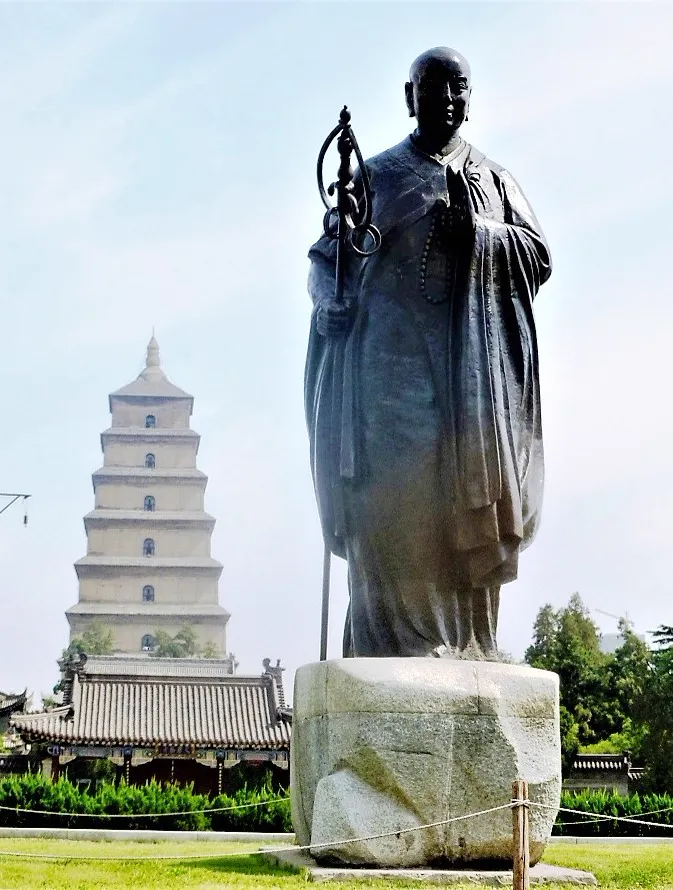
From the museum, continue east toward Dayanta (大雁塔) and the Da Ci’en Temple (大慈恩寺) complex. The seven-storey brick pagoda is associated with Xuanzang and the Buddhist texts he brought back to Chang’an. If the temple and pagoda are open to visitors, take time to walk the temple grounds and look closely at the tower’s stacked square levels and carved details; climbing it involves a narrow, steep stair. Beyond the temple walls, the North Square gives a separate, open-air view toward the pagoda.
A second, more contemporary walk leads south from the pagoda area through Grand Tang All Day Mall (大唐不夜城) toward Tang Paradise (大唐芙蓉园). These are modern cultural and leisure places styled around Tang-era imagery, not preserved Tang streets. Treat them as a contrast to the museum’s archaeological objects and the temple’s religious setting: notice how today’s public realm frames the district’s historical story, then pause in the gardens and lakeside landscapes around Qujiang. Opening, performances and ticket arrangements belong to each venue and should be checked separately.
For a quieter heritage visit, take Line 3 to Qinglongsi (青龙寺). This is another distinct Yanta stop, not the pagoda precinct: allow time to explore the temple grounds and their connection with Buddhist learning in Chang’an. A third option is Daxingshan Temple (大兴善寺) near Xiaozhai, a living temple in a busy urban setting. Be respectful in active worship areas and follow any photography notices.
These clusters show different layers of the district: museum-going and shopping around Xiaozhai, temple and pagoda visits at Dayanta, and a newer landscaped cultural quarter at Qujiang. They are not all one compact site. Choose Xiaozhai plus Dayanta for a museum-and-pagoda pairing, or Dayanta plus Qujiang for a longer walk through contemporary public spaces. Leave Qinglong Temple for a separate stop if you want a more contemplative visit.
Getting around
For the Shaanxi History Museum, use Line 2 or Line 3 to Xiaozhai Station (小寨站), then walk east along Xiaozhai East Road for about 7–8 minutes. Alternatively, take Line 3 or Line 4 to Dayanta Station (大雁塔站) and walk west along Xiaozhai East Road for about 10 minutes. The museum lists buses 5, 19, 24, 26, 30 and 400 among the services stopping at the Shaanxi History Museum stop (陕西历史博物馆站).
For the Da Ci’en Temple entrance and Giant Wild Goose Pagoda, take Line 3 or Line 4 to Dayanta Station, use Exit B or C, and walk south toward the temple entrance; the published walking estimate is about 10 minutes. Buses including 19, 24, 30, 34 and 400 serve the Giant Wild Goose Pagoda area; confirm the correct stop for your chosen entrance before boarding.
A taxi destination with a published street address is Shaanxi History Museum (陕西历史博物馆), No. 91 Xiaozhai East Road, Yanta District, Xi’an (西安市雁塔区小寨东路91号). Its official visitor directions say self-driving visitors should enter the parking area from the museum’s southwest corner; that parking instruction is not a promise of unrestricted curbside drop-off. For the broad district or another attraction, name the actual venue in Chinese rather than asking for a generic “Yanta District” drop-off.
Guide sources
Explore Yanta District
Core places to explore, with English and Chinese names.
Places to explore around Yanta District
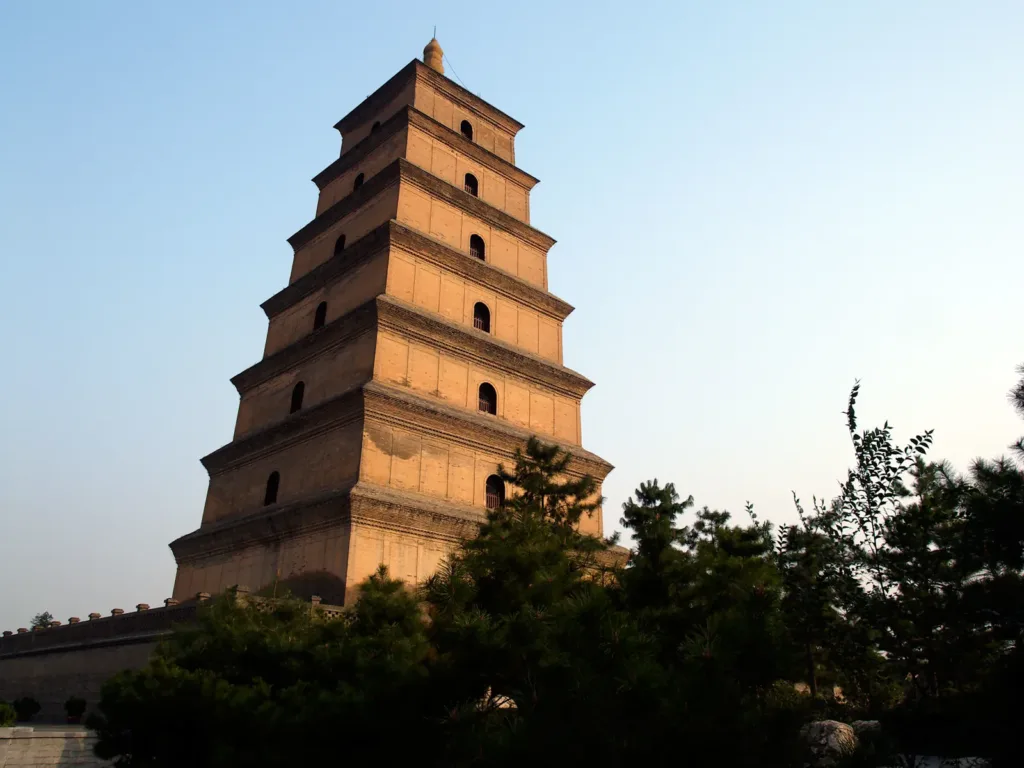 Photo: Alex Kwok (Wikimedia Commons user Citycat) · CC BY-SA 3.0
Giant Wild Goose Pagoda大雁塔
Built under the direction of the monk Xuanzang in 652 to house Buddhist scriptures and images brought from India, the seven-storey brick pagoda stands within Great Ci’en Temple. Its tapering square form, timber-like details and Tang inscriptions make the precinct a place to read both Buddhist transmission and the material history of Chang’an.
Read the place guide →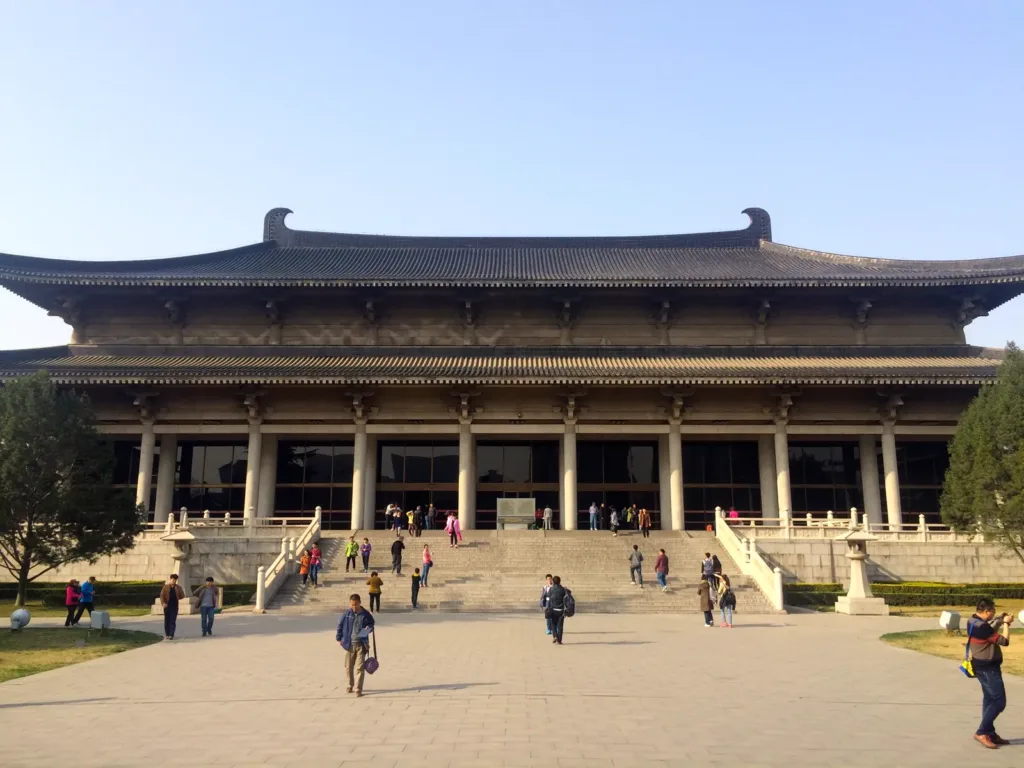 Main Xiaozhai museum façade, viewed from the entrance plaza. Photo: Jesse (JesseW900 on Wikimedia Commons) · CC BY-SA 4.0
Shaanxi History Museum陕西历史博物馆
A landmark museum in Xi’an’s Yanta District, the main Xiaozhai campus brings together Shaanxi’s ancient history through Shang–Zhou bronzes, pottery figures, Han–Tang metalwork and Tang tomb murals. Reserve a visit through the museum’s official account and check which galleries are included for your date.
Read the place guide → Nighttime view of a Tang-inspired building, illuminated shopfronts, and pedestrians in Tang Everbright City. Photo: 源義信 · CC BY 4.0
Tang Everbright City大唐不夜城
A contemporary pedestrian district below the Giant Wild Goose Pagoda, where Tang-inspired architecture, public culture, shops, food, and performances share a long urban promenade.
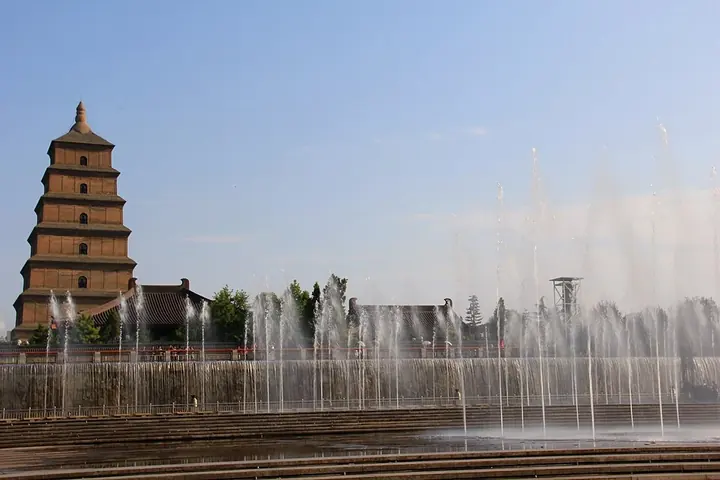
Read the place guide → The North Square fountain basin in the foreground, aligned with the Giant Wild Goose Pagoda. Photo: xiquinhosilva · CC BY 2.0
Giant Wild Goose Pagoda North Square大雁塔北广场
A broad, stepped public landscape aligns a water axis with the Giant Wild Goose Pagoda. Walk it from the northern approach toward the temple wall to read the changing views; the fountain is an occasional show, not a guarantee of continuous activity.
Read the place guide →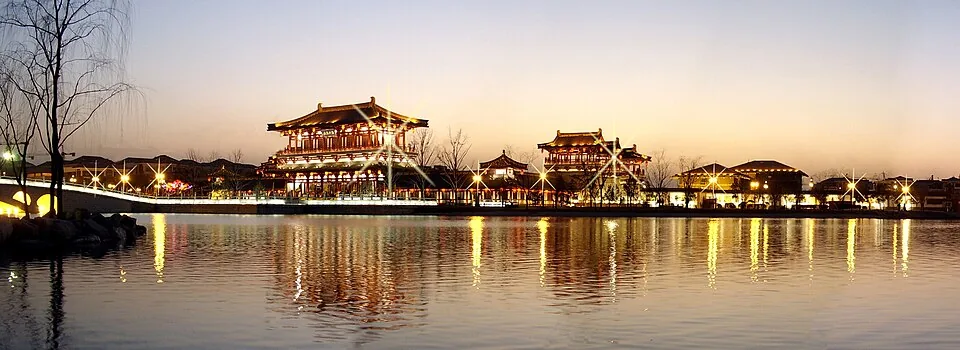 Tang Paradise · 大唐芙蓉园. Photo: 2008-09-12.
Tang Paradise大唐芙蓉园
Tang Paradise is a modern cultural garden in Xi’an’s Qujiang New District, arranged around Furong Lake and monumental Tang-inspired buildings. Walk the lakeside landscape, look for its poetry and other cultural zones, and treat any performance or boat experience as subject to the day’s programme.
Read the place guide →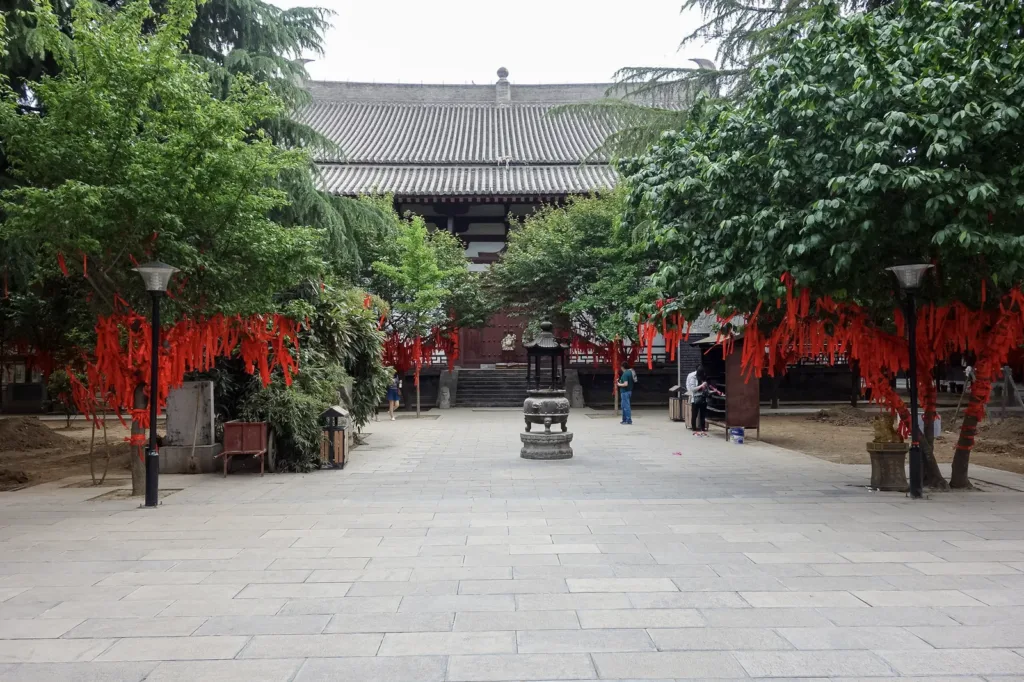 Temple hall and forecourt at Qinglong Temple, Xi’an. Photo: KQuhen · CC BY-SA 4.0
Qinglong Temple青龙寺
A green heritage precinct in southeast Xi’an where a museum and memorial buildings interpret the Tang-era Buddhist exchange associated with master Huiguo and the Japanese monk Kūkai. The garden’s cherry trees add a seasonal spring attraction.
Read the place guide →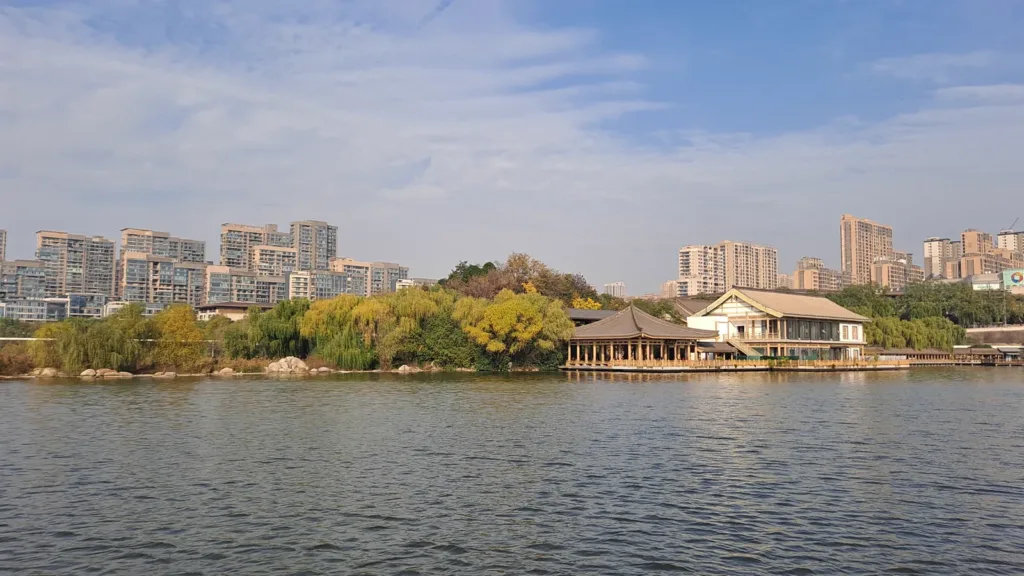 Lake water and a waterside pavilion at Qujiang Pool Heritage Park, Xi’an. Photo: H2v5o68z · CC0 1.0
Qujiang Pool Heritage Park曲江池遗址公园
A broad, lake-centered landscape park in Xi’an’s Qujiang New District, where a contemporary garden interprets the area’s long history through water, planted banks and quiet paths.
Read the place guide →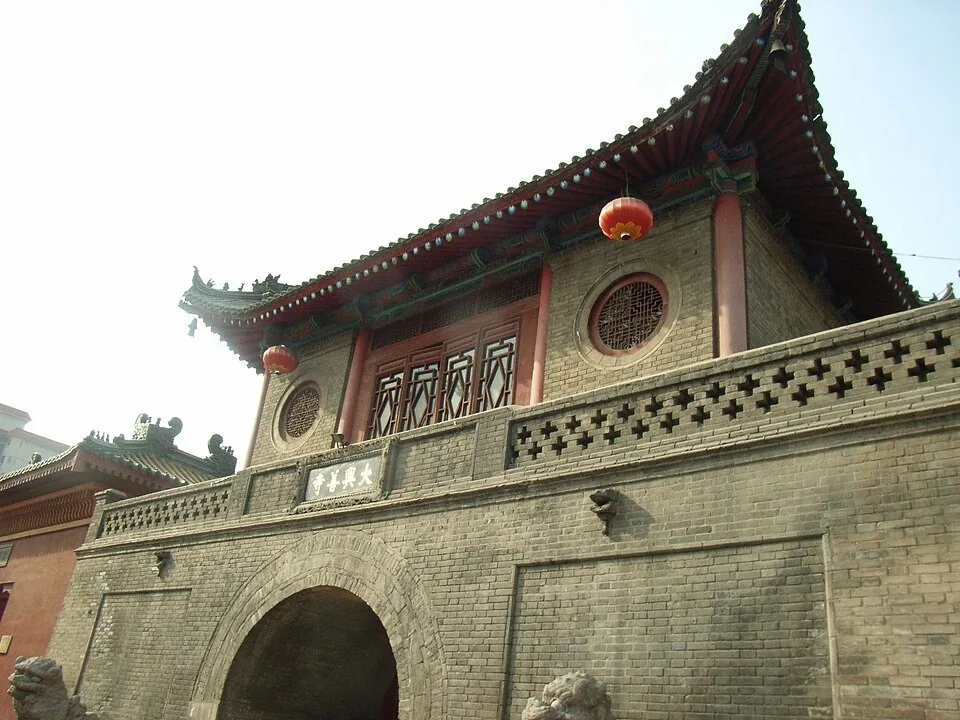 Daxingshan Temple · 大兴善寺. Photo: 2008-03-17.
Daxingshan Temple大兴善寺
A working Buddhist temple in Xi’an’s busy Xiaozhai district, Daxingshan Temple is associated with the formation of Tang Esoteric Buddhism. Its halls, devotional images and archaeological remains reward a quiet, respectful walk through the north–south courtyards.
Read the place guide →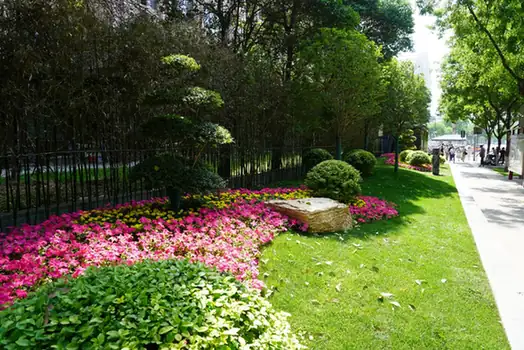 Xi’an Botanical Garden · 西安植物园新园
Xi’an Botanical Garden西安植物园新园
A working botanical research garden in Qujiang where Qinling, Silk Road, rock, water, rose and other themed collections invite a slower, season-led visit.
Read the place guide →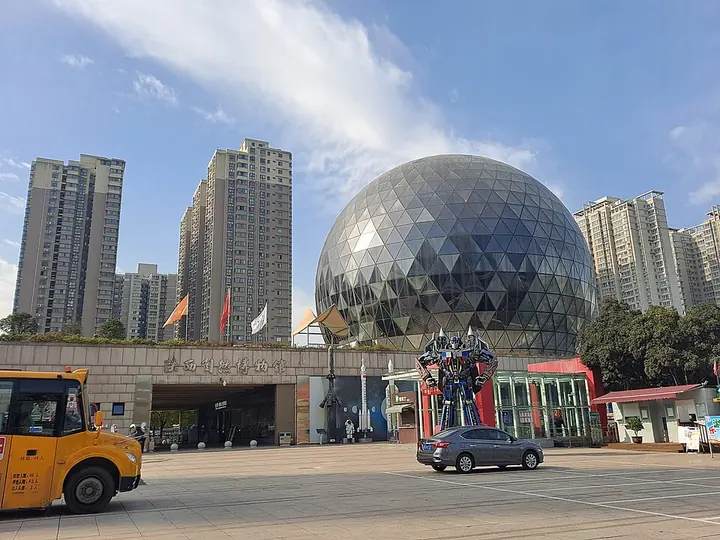 Shaanxi Natural History Museum in Xi’an · 陕西自然博物馆 Photograph date recorded by the source: 13 November 2025, 13:41:23.
Shaanxi Natural History Museum陕西自然博物馆
In Yanta District, this museum pairs a crescent-shaped natural-history hall with a spherical wildlife and science exhibition building, with displays ranging from fossils and insects to Qinling ecology.
Read the place guide →Plan your visit
Getting there
Yanta District is about 6 km (straight-line distance) from central Xi’an. Search for 雁塔区 in a map app to find stations and your accommodation.
Where to stay →Build your route
Giant Wild Goose Pagoda and Shaanxi History Museum are less than 1 km apart. The linked place guides have entrance and visit details.
Continue with Xi’an →More in Xi’an
Sources & geographic information
Administrative names and parent areas: Official geographic directory (dmfw.mca.gov.cn) · Reference date 2026-09-06.
Background text adapted from Yanta, Xi'an — Wikipedia contributors, under CC BY-SA 4.0. Text has been shortened and reorganized; source revision 1372982158.
Photo: Tang Paradise · Charlie fong 冯成 · Public domain. Resized for the web; the photo itself has not been edited.

Photo: Daxingshan Temple · 时雨 · CC BY-SA 3.0. Resized for the web; the photo itself has not been edited.

Photo: Xi’an Botanical Garden · sn.cri.cn. Resized for the web; the photo itself has not been edited.
Photo: Shaanxi Natural History Museum · H2v5o68z · CC0. Resized for the web; the photo itself has not been edited. Thumbnails may show a cropped view.

Map data © OpenStreetMap contributors. Pins mark approximate centres, not entrances or boundaries.
Image credits & notes (2)
- The fountain square by the Giant Wild Goose Pagoda in Yanta District, Xi'an. Photograph date recorded by the source: 2013-06-29 17:35:43.Photo: Zhu yihan · CC BY-SA 3.0Resized for the web; the photo itself has not been edited. Thumbnails may show a cropped view.
- Xuanzang statue in front of the Giant Wild Goose Pagoda, Xi’an. Photo: John HillPhoto: CC BY-SA 4.0
