

Yunnan local food
Local dishes, ingredients and the stories behind them.

Notoginseng Steam-Pot Chicken 三七汽锅鸡
Notoginseng Steam-Pot Chicken (三七汽锅鸡) is Yunnan's steam-pot chicken (汽锅鸡) cooked with the roots of notoginseng (三七), the medicinal plant for which Wenshan Zhuang and Miao Autonomous Prefecture (文山壮族苗族自治州) is known.
Read dish guide →
Qiubei Stir-Fried Pork with Chili 丘北辣椒炒肉
Qiubei Stir-Fried Pork with Chili (丘北辣椒炒肉) is listed among the local specialties of Wenshan Zhuang and Miao Autonomous Prefecture, Yunnan. 炒 describes stir-frying.
AI illustration · AI 示意图(仅供参考,非实拍)
Read dish guide →
Guangnan Bahang Sour Soup Chicken 广南岜夯鸡
Guangnan Bahang Sour Soup Chicken (广南岜夯鸡) is a traditional dish of the Zhuang communities of Guangnan (广南). Its name refers to bahang (岜夯), the Zhuang term for sour soup.
AI illustration · AI 示意图(仅供参考,非实拍)
Read dish guide →
Yanshan Pepper-Salt Flatbread 砚山椒盐饼
Yanshan Pepper-Salt Flatbread (砚山椒盐饼) is listed among the local specialties of Wenshan Zhuang and Miao Autonomous Prefecture, Yunnan. The term 饼 points to cakes or flatbreads. 椒盐 describes pepper-and-salt seasoning.
AI illustration · AI 示意图(仅供参考,非实拍)
Read dish guide →Funing Star Anise Chicken 富宁八角鸡
Funing Star Anise Chicken (富宁八角鸡) is listed among the local specialties of Wenshan Zhuang and Miao Autonomous Prefecture, Yunnan. The name includes 鸡 (chicken).
AI illustration · AI 示意图(仅供参考,非实拍)
Read dish guide →
Malipo Zhuang Multicolored Rice 麻栗坡壮族花米饭
Malipo Zhuang Multicolored Rice (麻栗坡壮族花米饭) is listed among the local specialties of Wenshan Zhuang and Miao Autonomous Prefecture, Yunnan. It is grouped here with rice & congee; retain the complete Chinese name when comparing local menus.
AI illustration · AI 示意图(仅供参考,非实拍)
Read dish guide →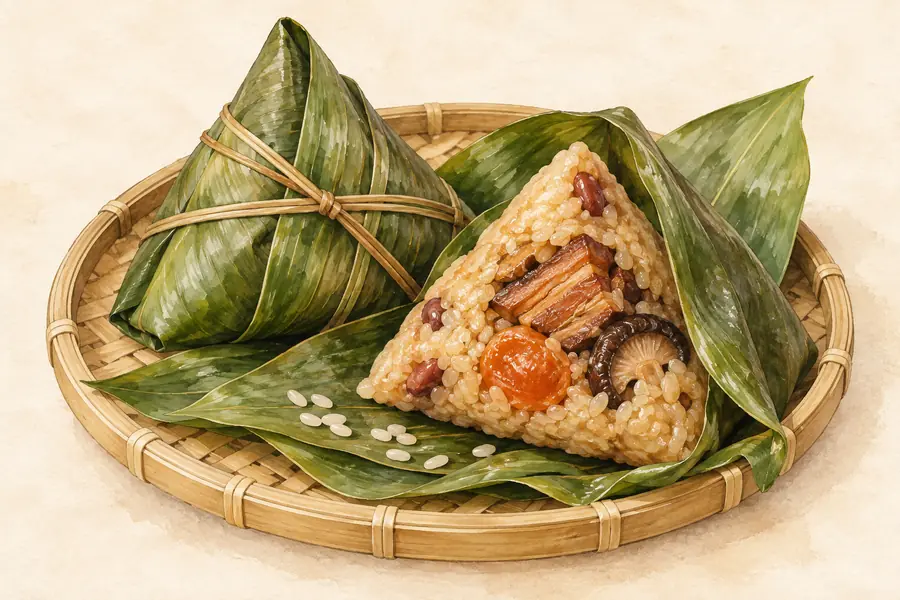
Xichou Zhuang Leaf-Wrapped Rice Parcels 西畴壮家粽粑
Xichou Zhuang Leaf-Wrapped Rice Parcels (西畴壮家粽粑) is listed among the local specialties of Wenshan Zhuang and Miao Autonomous Prefecture, Yunnan. The term 粽 points to leaf-wrapped rice parcels.
AI illustration · AI 示意图(仅供参考,非实拍)
Read dish guide →Maguan Multicolored Rice 马关花米饭
Maguan Multicolored Rice (马关花米饭) is glutinous rice dyed in several colours with plant dyes in Maguan County (马关县), Wenshan Zhuang and Miao Autonomous Prefecture (文山壮族苗族自治州), Yunnan.
AI illustration · AI 示意图(仅供参考,非实拍)
Read dish guide →Notoginseng Stewed Chicken 三七炖鸡
Notoginseng Stewed Chicken (三七炖鸡) is a chicken soup cooked with the roots of notoginseng (三七), the medicinal plant that has earned Wenshan Zhuang and Miao Autonomous Prefecture (文山壮族苗族自治州) the name 'home of notoginseng'.
AI illustration · AI 示意图(仅供参考,非实拍)
Read dish guide →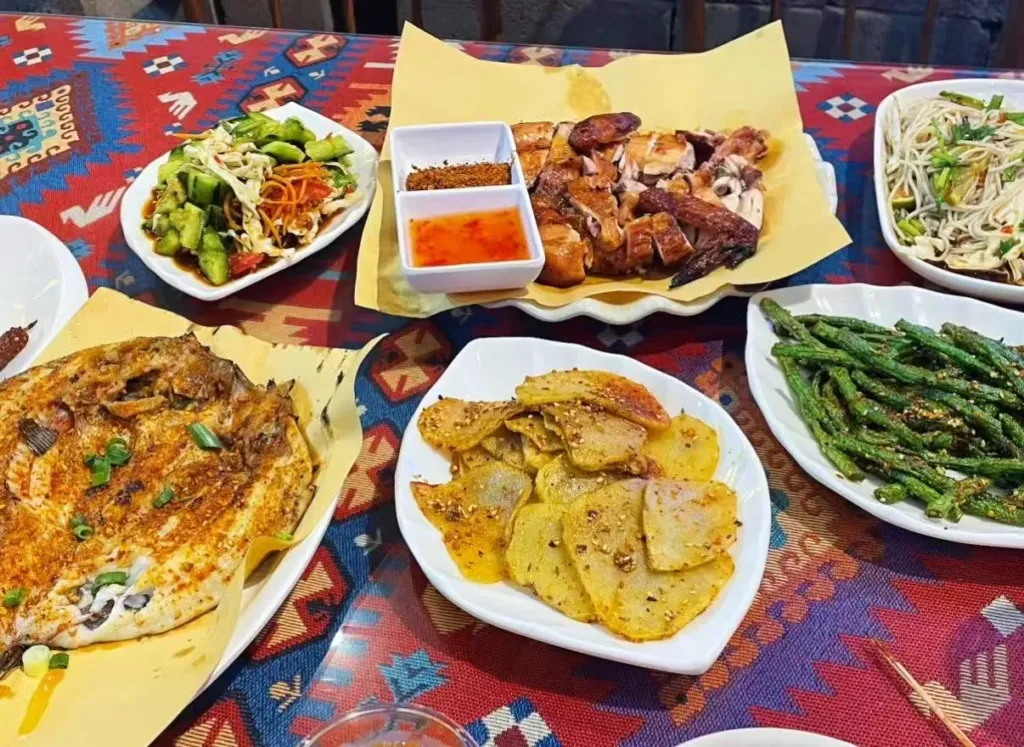
Dai-Style Barbecue 傣味烧烤
Dai-Style Barbecue (傣味烧烤) is Xishuangbanna’s broad charcoal-grilled street-food tradition: lightly seasoned skewers, fish or meat scented with lemongrass, and sharp dips that let each bite move between savoury, sour and spicy. It is especially good for an evening market meal because you can order several small portions rather than one fixed recipe.
Read dish guide →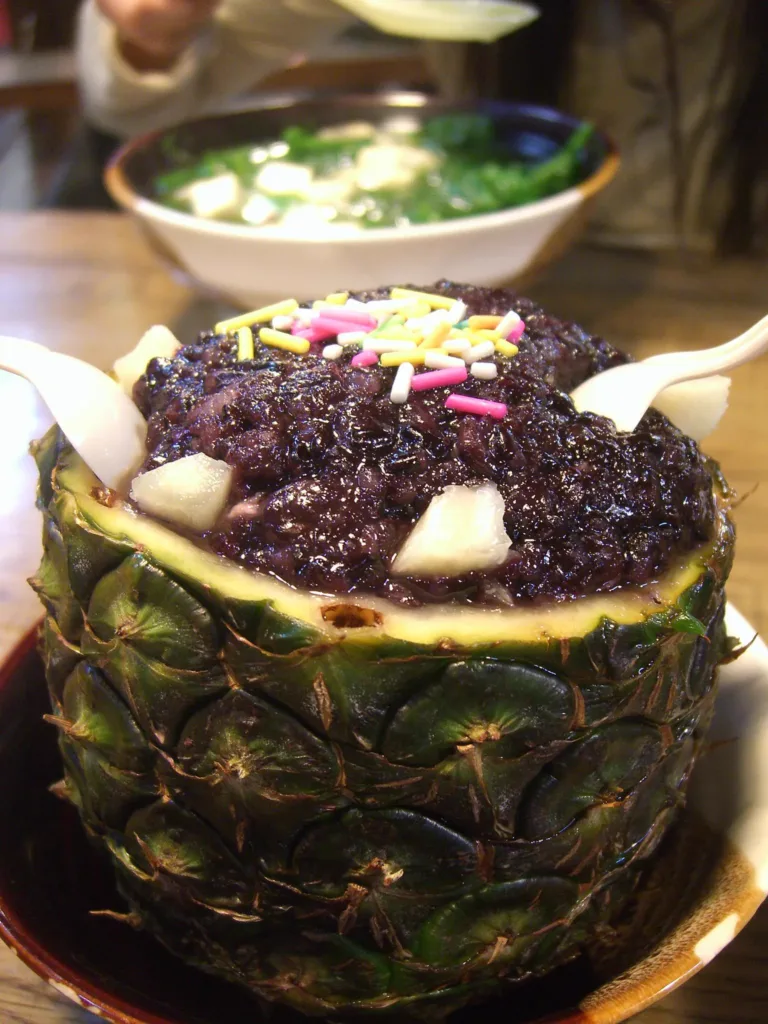
Purple Rice Steamed in Pineapple 菠萝紫米饭
A sweet Dai-style rice dish associated with Xishuangbanna: purple glutinous rice is steamed with pineapple in a hollowed fruit, creating a soft, fragrant sweet-sour bite and a purple-and-yellow presentation. Recipes vary, so the same name may arrive with different rice blends, sweetness, or optional nuts.
Read dish guide →
Pounded Chicken Feet 舂鸡脚
Pounded Chicken Feet (舂鸡脚) is a Xishuangbanna Dai-style cold dish in which cooked chicken feet are worked in a mortar with green lime or lemon, chilli and fresh produce. The pounding releases juice and softens the feet without removing their characteristic chew; it is a vivid way to taste the prefecture’s sour, spicy “舂” tradition.
AI illustration · AI 示意图(仅供参考,非实拍)
Read dish guide →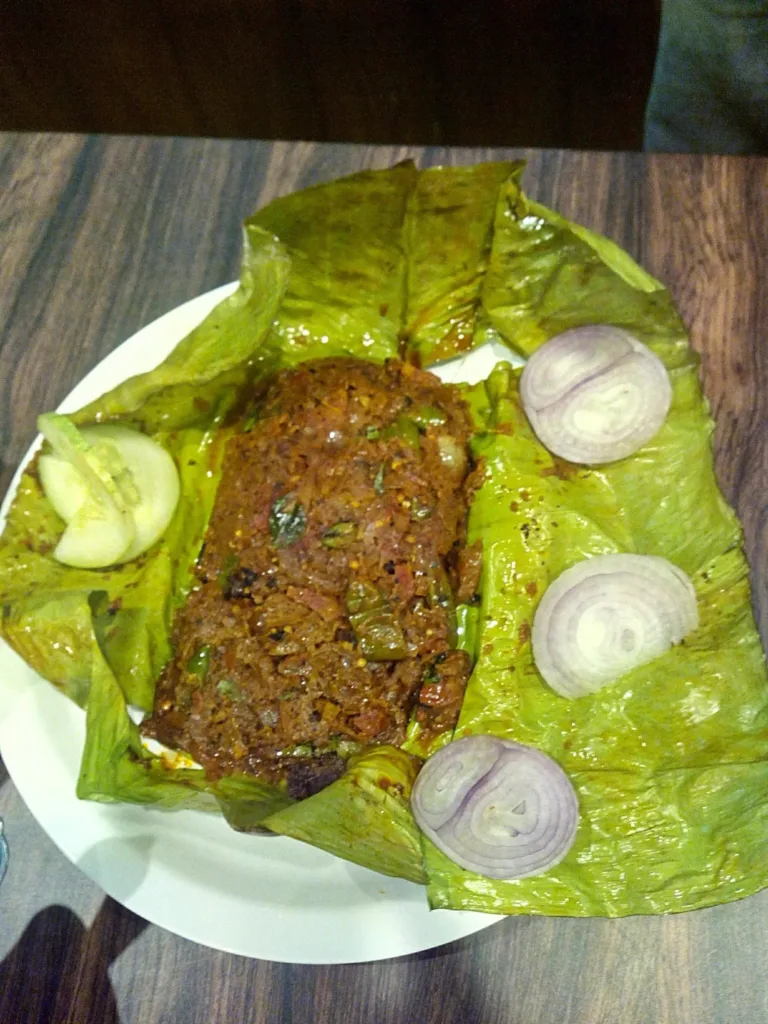
Leaf-Wrapped Grilled Dishes 包烧
Bao shao (包烧) is a Dai leaf-wrapping cooking method associated with Xishuangbanna: fresh banana or mudong leaves enclose chopped ingredients over charcoal. The packet holds in moisture and aroma, while fillings can range from vegetables and freshwater foods to meat and are often served with a tangy, spicy sauce.
Read dish guide →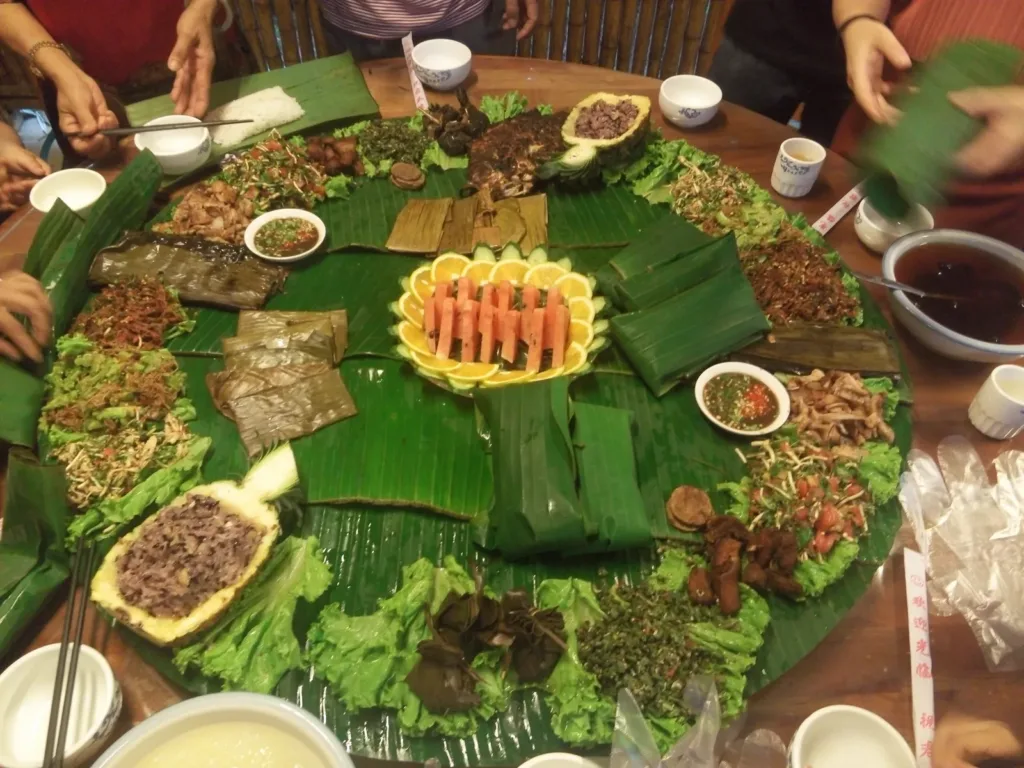
Nanmi Dipping Sauce 喃咪
Nanmi (喃咪) is a family of Dai dipping sauces associated with Xishuangbanna, not one fixed recipe. Vegetables, tomatoes, fruit, fish, shrimp or crab may be roasted, simmered, pounded, chopped or mixed into versions that run from sour and hot to fragrant, savoury, sweet or bitter; the sauce is eaten with vegetables, sticky rice and other table foods. Nanmi is best understood as a bowl that changes with its main ingredient. A local Xishuangbanna account lists green-vegetable, tomato, sour-bamboo-shoot, fish, crab and qingguo-fruit versions. The point is not a single “authentic” red sauce but the Dai practice of matching a fresh, grilled or sticky accompaniment with a strongly seasoned dip.
Read dish guide →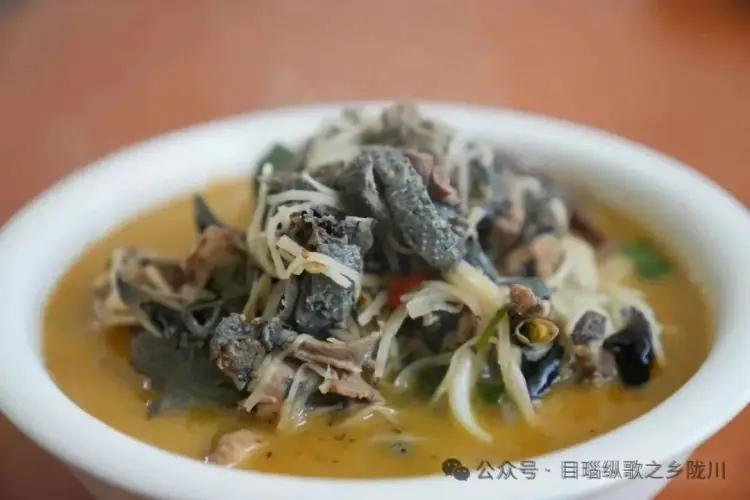
Chicken Boiled with Sour Bamboo Shoots 酸笋煮鸡
Chicken Boiled with Sour Bamboo Shoots (酸笋煮鸡) is a Xishuangbanna Dai-style soup built around fermented bamboo shoots: sharp, aromatic sourness, tender chicken and, in many versions, fresh chilli or herbs. It is a regional dish rather than a fixed recipe, so the shoot’s intensity and the seasonings can change from one kitchen to the next.
Read dish guide →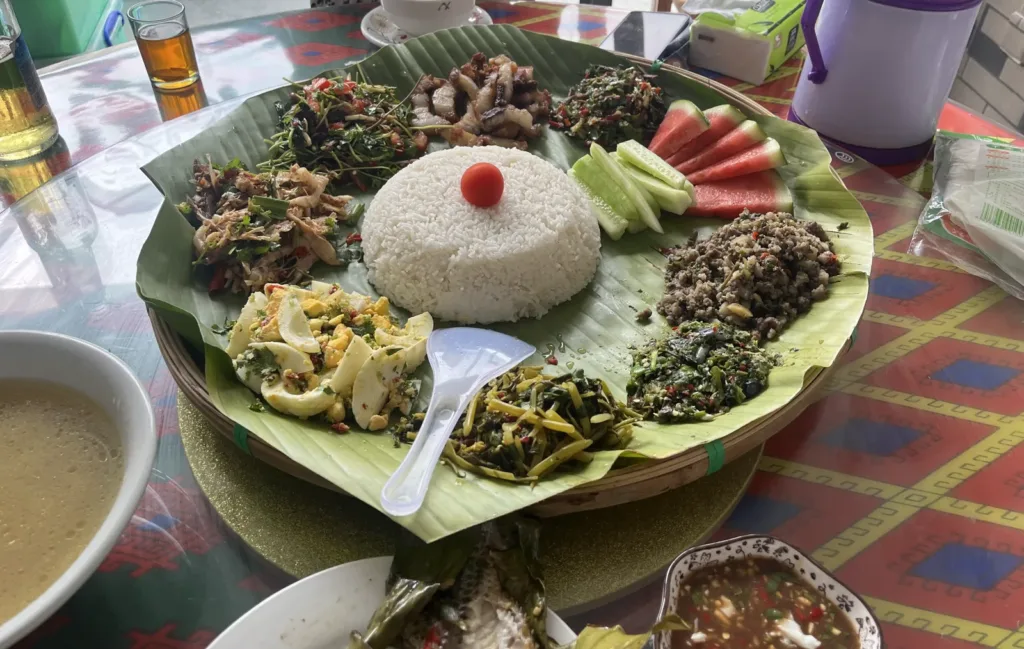
Dai-Style Rice Eaten by Hand 傣味手抓饭
Dai-style rice eaten by hand (傣味手抓饭, Daiwei shouzhua fan) is a shared Xishuangbanna Dai meal built around rice, often purple and white rice, with grilled meats, vegetables, fruit and dipping sauces arranged around it. Its special feature is the format: a colourful spread to share and combine by hand, while the surrounding flavours change with the kitchen.
Read dish guide →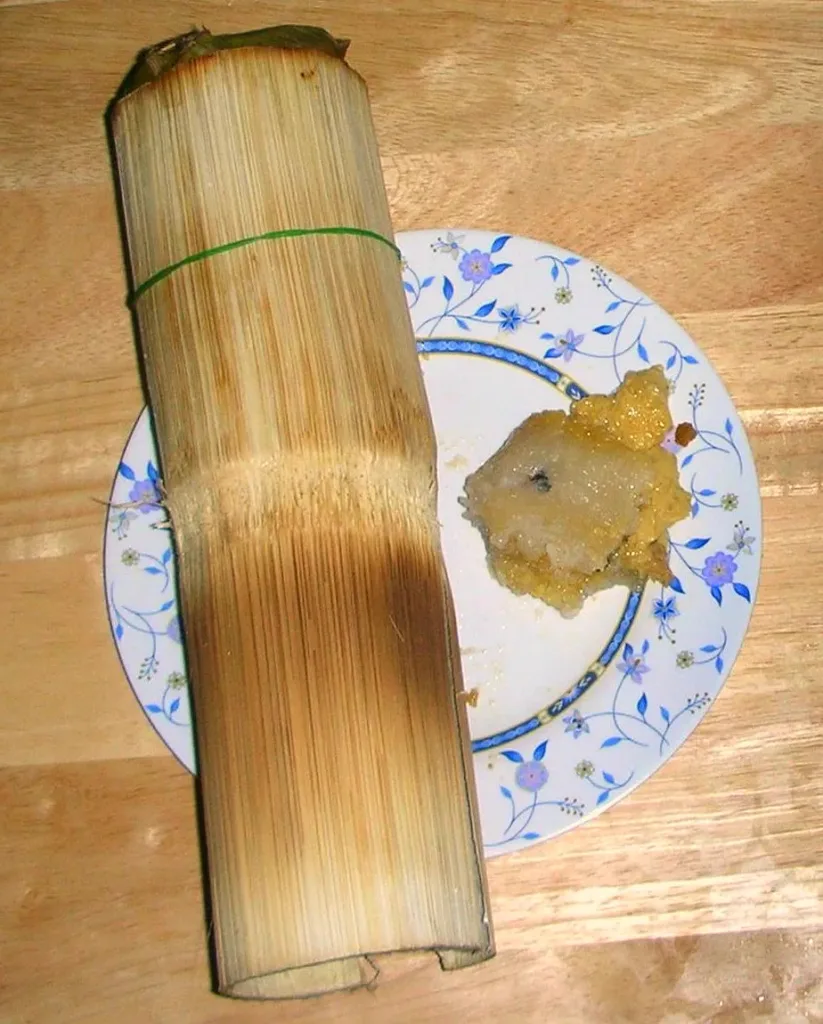
Bamboo Tube Rice 竹筒饭
Bamboo Tube Rice (竹筒饭, zhútǒng fàn) is a Xishuangbanna Dai rice food made by slowly roasting soaked glutinous rice—sometimes purple glutinous rice—in fragrant bamboo. The tube lends a clean bamboo aroma to the soft, sticky rice; the point is the bamboo cooking vessel as much as the rice itself.
Read dish guide →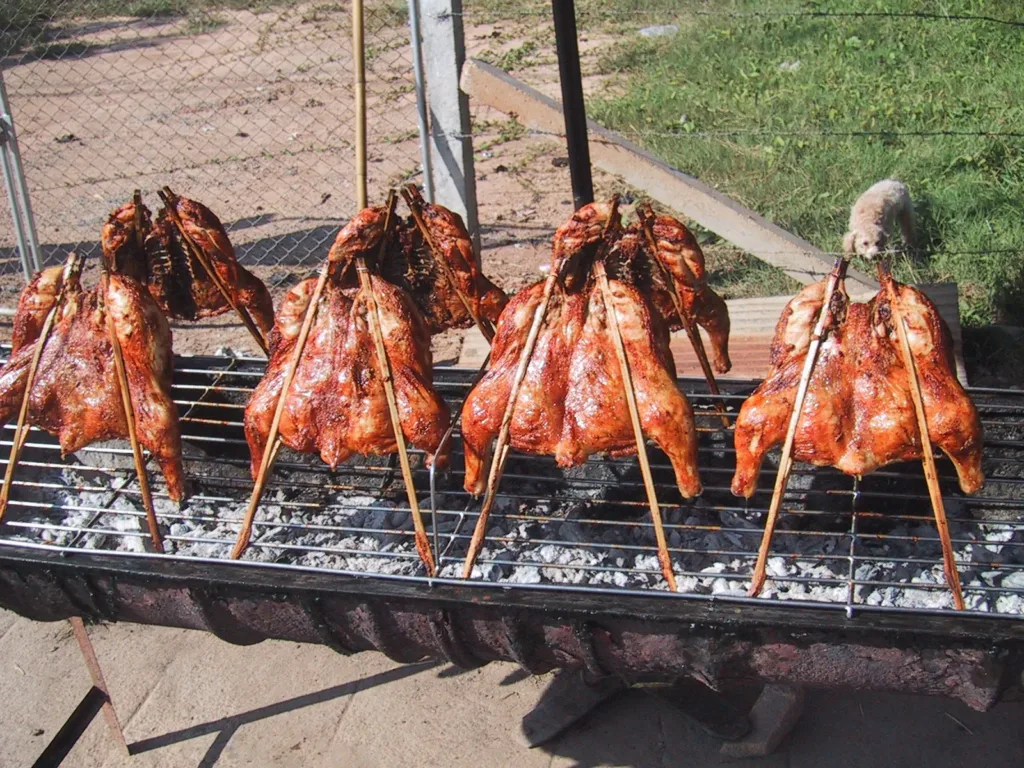
Grilled Chicken 烤鸡
Grilled Chicken (烤鸡, kǎojī) is a small whole chicken associated with Dai cooking in Xishuangbanna, especially Menghai. Its appeal is the contrast between a crisp golden skin, compact tender meat, charcoal fragrance, and a spicy dipping sauce.
Read dish guide →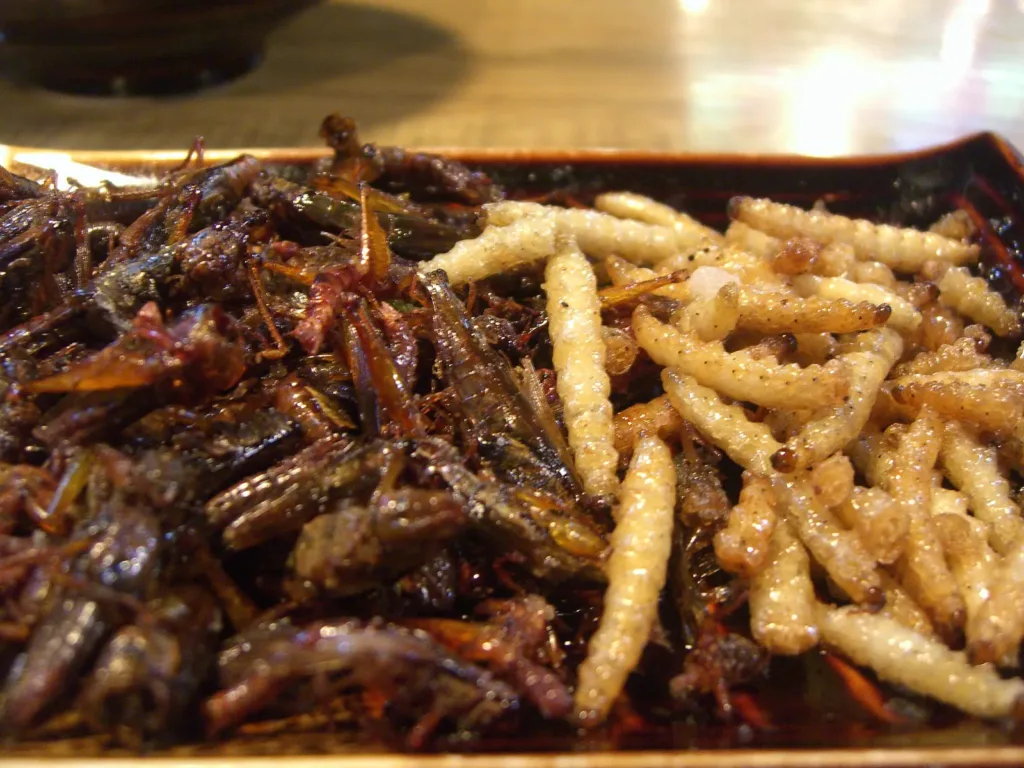
Deep-Fried Bamboo Worms 油炸竹虫
Deep-Fried Bamboo Worms (油炸竹虫, yóuzhá zhúchóng) are edible bamboo-dwelling larvae fried until crisp and usually finished with pepper salt. In Xishuangbanna, they sit within a wider local insect-food tradition: the same ingredient may also be dressed cold, giving a softer, more seasoned bite.
Read dish guide →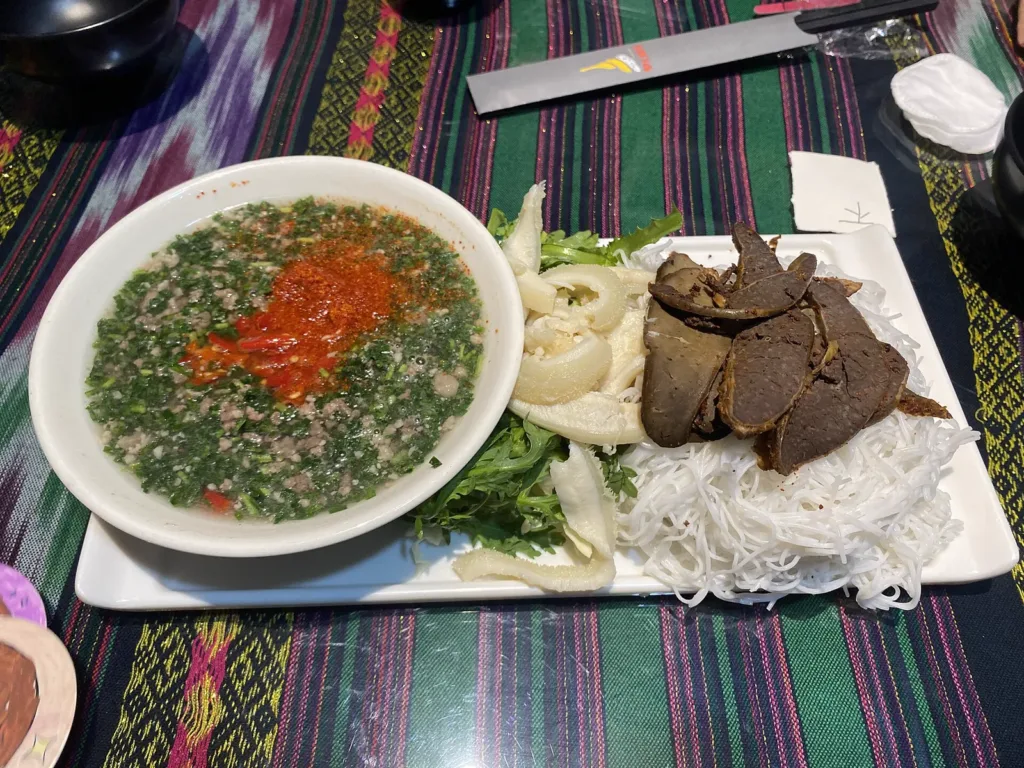
Sapie Cold Dish 撒撇
Sapie (撒撇) is a Dai family of mixed dishes built around fresh meat, cooked offal, aromatic herbs and a filtered bitter or sour dressing. In Xishuangbanna, the best-known version is beef Sapie, often served with rice noodles in Menghai County; its unusual bitterness, fresh beef and changing raw-to-cooked preparations are the point, not a fixed recipe.
Read dish guide →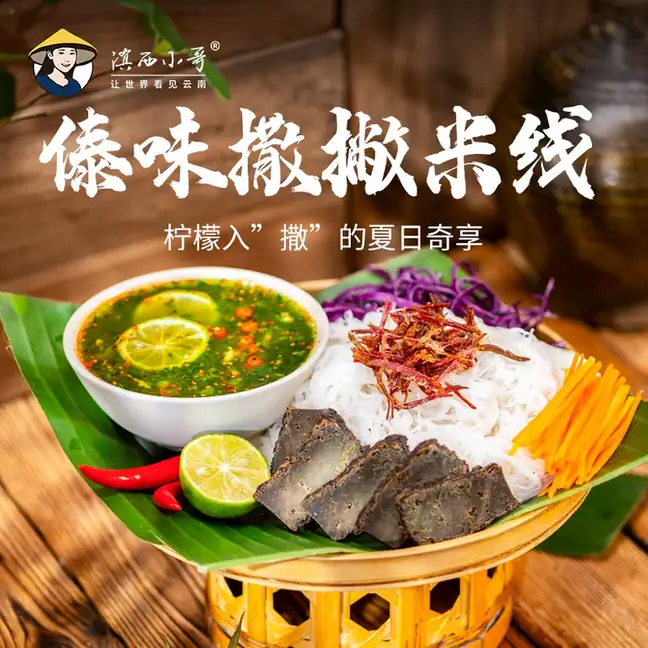
Lemon Sa Cold Dish 柠檬撒
Lemon Sa (柠檬撒) is the sour, lemon-dressed branch of Xishuangbanna’s Dai sapie tradition: rice noodles and changing side dishes are dipped into a sharp, chilli-seasoned sauce. Its appeal is the fresh contrast of citrus, herbs and heat rather than a single fixed recipe.
Read dish guide →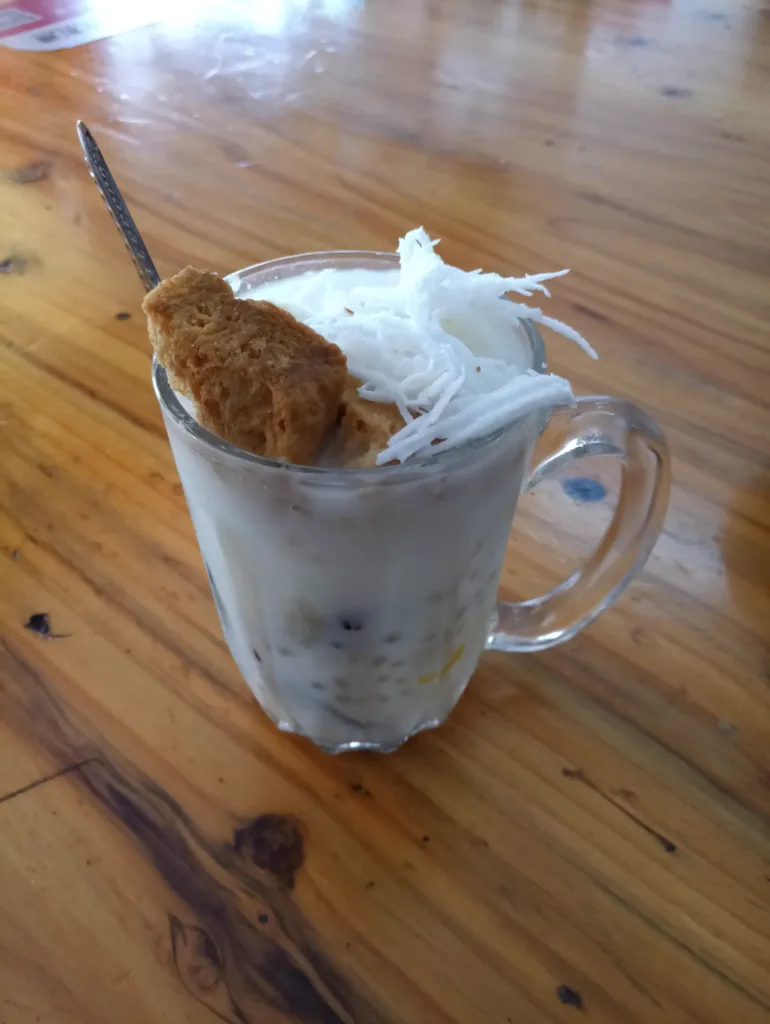
Paluda Iced Dessert Drink 帕露达
Paluda (帕露达, also written Paoluda 泡鲁达) is a cold Yunnan dessert drink built around milky or coconut-milk liquid, ice, shredded coconut and crisp dried bread. In Xishuangbanna, it is a Dai-associated sweet often sought at cold-drink stalls and night-market food stands, but recipes vary by maker.
Read dish guide →
Dali Clay Pot Fish 大理砂锅鱼
Dali Clay Pot Fish (大理砂锅鱼) is fish from Erhai Lake (洱海) stewed with a large assortment of other ingredients in a clay pot.
AI illustration · AI 示意图(仅供参考,非实拍)
Read dish guide →
Lightly Torched Raw Pork Skin 生皮
Lightly Torched Raw Pork Skin (生皮) is the Bai (白族) dish of Dali Bai Autonomous Prefecture (大理白族自治州) in which pork skin and meat are eaten with a sour-sweet dip. In the Bai language it is called 'haige' (海格).
Read dish guide →Yunnan · Food stories

Food articles are in progress
Long-form food stories for this topic are being written. Until then, browse the dish guides above or see all Chinese food guides.