


Get to know Huyi District
- Administrative area
- District · 市辖区
- Part of
- Xi’an
- Chinese name
- 鄠邑区
- Local areas
- District guide
Area & population
- Area
- 1,282.00 km²
- Population · 2019
- 564,600
Source: English Wikipedia, as of the dates shown.
Read the district by landscape
Huyi (鄠邑区) is one of Xi’an’s current county-level districts, not a neighbouring city or a development-zone label. Its current administrative code is 610118. The older county name appears in English as Huxian or Hu County; the written form 户县 was replaced when the county became Huyi District in 2016. A project or campus described with a development-zone name does not change the administrative destination: use 鄠邑区 when identifying the district.
The visitor’s useful division is practical rather than administrative: the built-up centre around Ganting (甘亭) is where the district’s local art and daily services are easiest to reach; southward, roads rise toward Qinling foothills and separate river valleys; western settlements such as Zu’an (祖庵) make a different cultural excursion. Do not treat these as one walkable attraction cluster.
In Ganting: Huxian farmer painting
Start in the district centre at the Huxian Farmers’ Painting Museum / Exhibition Hall (鄠邑区农民画博物馆, also called 鄠邑区农民画展览馆), listed at No. 14 Huazhan Street (画展街14号). The museum, founded in 1976, presents rural life through a locally rooted painting tradition: planting and harvest, festivals, folk customs, and changing village life. A 2025 report describes more than 10,000 works in the collection and over 200 works in its standing display.
Allow time to move through the exhibition rooms at your own pace and look for the contrast between scenes of agricultural work and the saturated, direct colours used for celebration and communal life. This is not a promise of a live workshop: demonstrations or artist encounters are not guaranteed. Check the museum’s current opening and admission arrangements before setting out; the address is a better taxi destination than the district name alone.
At the Qinling edge: choose one valley
South of the plain, Huyi’s Qinling foothill attractions are spread among distinct gullies and access roads. Taiping National Forest Park (太平国家森林公园) is the waterfall-and-forest option in Taiping Valley; Zhuque National Forest Park (朱雀国家森林公园) is a separate destination, not another gate of Taiping. Choose one for a day rather than assuming a short transfer between parks. In either case, use the full Chinese park name in a ride app and ask to be taken to that park’s public visitor entrance or designated car park—not a roadside stopping place. The district is too large for a single taxi drop-off point, and a current park shuttle or feeder-bus timetable was not confirmed for this guide.
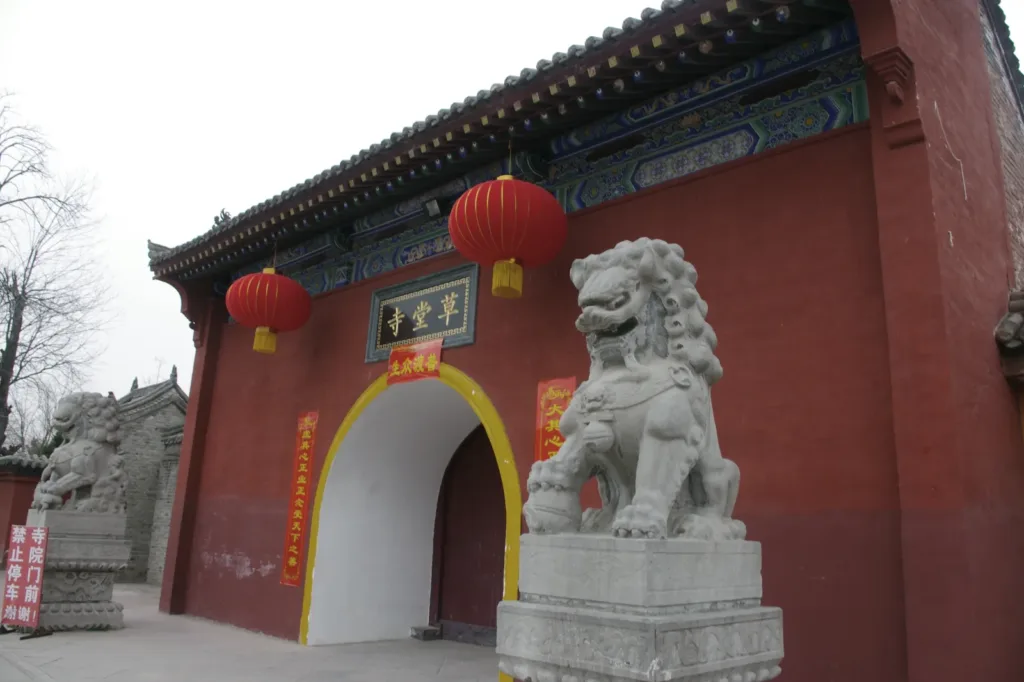
Caotang Temple (草堂寺), below Mount Guifeng (圭峰山), offers a more compact cultural visit. The temple is associated with the Buddhist translator Kumārajīva and was founded in the Later Qin period in 401. Enter through the temple’s south gate and follow the main north–south courtyard sequence; pause at the relic stupa traditionally associated with Kumārajīva, then look for the Smoke Well (烟雾井) and surviving inscriptions. The stupa is a particularly valuable object to notice: its carved, multi-coloured stonework is a tangible counterpoint to the temple’s history as a place of translation and teaching.
Treat this as an active place of worship as well as a heritage site. Keep voices low, follow signs about photography, and do not enter closed halls. The Chinese taxi destination is 草堂寺, in 草堂街道 beneath Guifeng; request the temple’s public gate, not an assumed bus stop or mountain-road shoulder. Opening, admission, and any restrictions on particular halls should be checked with the site before travel.
Westward: Zu’an’s Daoist heritage
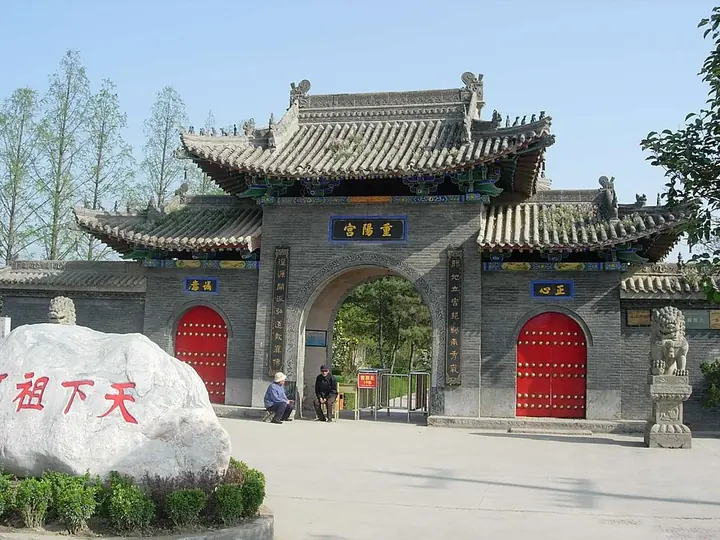
A separate westward outing leads to Chongyang Palace (重阳宫) in Zu’an, associated with Wang Chongyang and the Quanzhen Daoist tradition. The historic stele collection known as the Zu’an Stele Forest (祖庵碑林) is the reason to allow time inside rather than treating the palace as a quick roadside photo stop. It is a different destination from Caotang Temple and from the Qinling forest parks; use 重阳宫 as the exact Chinese destination and confirm the current public entrance and visiting arrangements before departure.
Getting around
Do not confuse the regional West Huyi railway (西户线) with a numbered city Metro line. The operator publishes a separate 西户线 timetable, and a paid-area passage connects its Afanggongnan (阿房宫南) station with Metro Line 5 at the same-named station. From the Huyi end, use the station name 户县站, then take a local taxi or confirmed local connection to the exact venue. The 2023 connection report described the railway as a one-train shuttle at that time; do not assume a convenient departure or return without checking the operator’s live timetable on the travel date.
Bus 928 links 鄠邑汽车站 and 西安城南客运站 in both directions. The published stop list includes 鄠邑汽车站, 渭滨公园 and 城南客运站; use the correct terminal for the direction of travel. Its available timetable source is not a live operator guarantee, so verify the departure and last return before relying on it, especially for a same-day trip.
A separate high-speed station, 鄠邑站, serves the Xi’an–Chengdu passenger railway in the Qin-Du area. It is not the same place as 户县站 on the West Huyi railway and is not in central Ganting. Check 12306 for the exact date, origin and destination; then arrange a local ride from the station to the named attraction. Do not book a journey to “Huyi” without checking which station the ticket uses.
For a taxi or ride-hail, enter the full Chinese name of the attraction—such as 鄠邑区农民画博物馆, 草堂寺, 太平国家森林公园, 朱雀国家森林公园, or 重阳宫—and confirm the site’s actual public gate or car park with the driver. There is no district-wide visitor gate or universal legal drop-off. For foothill visits, arrange the return ride or verified local transport before leaving the urban centre; no exact fares, journey times, or rural service intervals are promised here.
Guide sources
- Xi’an Municipal Government City Profile
- Shaanxi Civil Affairs Department 2025 Administrative Division Codes
- Huxian Farmer Paintings: Rural Life and Local Art
- West China Network: Huyi Farmers’ Painting Exhibition Hall
- Huxian Farmers’ Painting Exhibition Hall Visitor Listing
- Caotang Temple
- Chongyang Palace and Zu’an Stele Forest
- Xi’an Metro Group Timetables
- West Huyi Line Transfer at Afanggongnan
- Xi’an Bus Route 928 Stops and Schedule Listing
- China Railway 12306 Huyi–Xi’an West Search
- Xi’an Municipal Government Administrative History
Explore Huyi District
Core places to explore, with English and Chinese names.
Places to explore around Huyi District
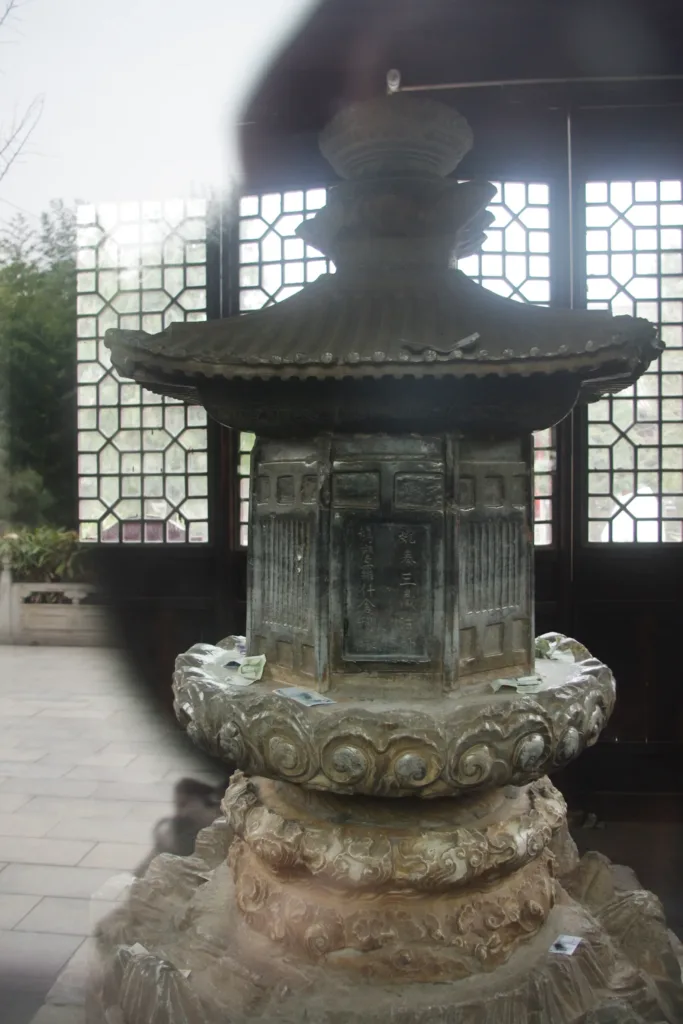 The multicolored stone relic stupa dedicated to Kumārajīva at Caotang Temple. Photo: Acstar · CC BY-SA 4.0
Caotang Temple草堂寺
A quiet Buddhist temple below Mount Guifeng in Xi’an’s Huyi District, best known for its ties to the translator-monk Kumārajīva and a finely carved, multicolored relic stupa.
Read the place guide → AI illustration · AI 示意图(仅供参考,非该地点实拍)
Taiping National Forest Park太平国家森林公园
In the Qinling foothills of Huyi District, Taiping National Forest Park is a mountain-valley landscape of cascades, forest and spring Chinese redbud blossoms. Walk the valley trail toward named waterfalls, allowing extra time for the distance between the visitor centre and trailhead.
Read the place guide → AI illustration · AI 示意图(仅供参考,非该地点实拍)
Zhuque National Forest Park朱雀国家森林公园
A Qinling mountain forest park in Xi’an’s Huyi District, with wooded ravines, streams and waterfalls, high meadows, and broad ridge scenery. Plan for a full day and check which trails are open before setting out.
Read the place guide →Plan your visit
Getting there
Huyi District is about 35 km (straight-line distance) from central Xi’an. Search for 鄠邑区 in a map app to find stations and your accommodation.
Where to stay →Build your route
Caotang Temple and Taiping National Forest Park are about 20 km apart (straight-line distance). The linked place guides have entrance and visit details.
Continue with Xi’an →More in Xi’an
Sources & geographic information
Administrative names and parent areas: Official geographic directory (dmfw.mca.gov.cn) · Reference date 2026-09-06.
Background text adapted from Huyi, Xi'an — Wikipedia contributors, under CC BY-SA 4.0. Text has been shortened and reorganized; source revision 1366343082.
Map data © OpenStreetMap contributors. Pins mark approximate centres, not entrances or boundaries.
Image credits & notes (2)
- The entrance to Chongyang Palace in Huyi District, Xi'an. Photo: 2008-04-05 09:29:04.Photo: 李伯大夢 · CC BY-SA 4.0Resized for the web; the photo itself has not been edited. Thumbnails may show a cropped view.
- South entrance gate and stone lions at Caotang Temple. Photo: AcstarPhoto: CC BY-SA 4.0
