
North · Destination guide
Datong 大同
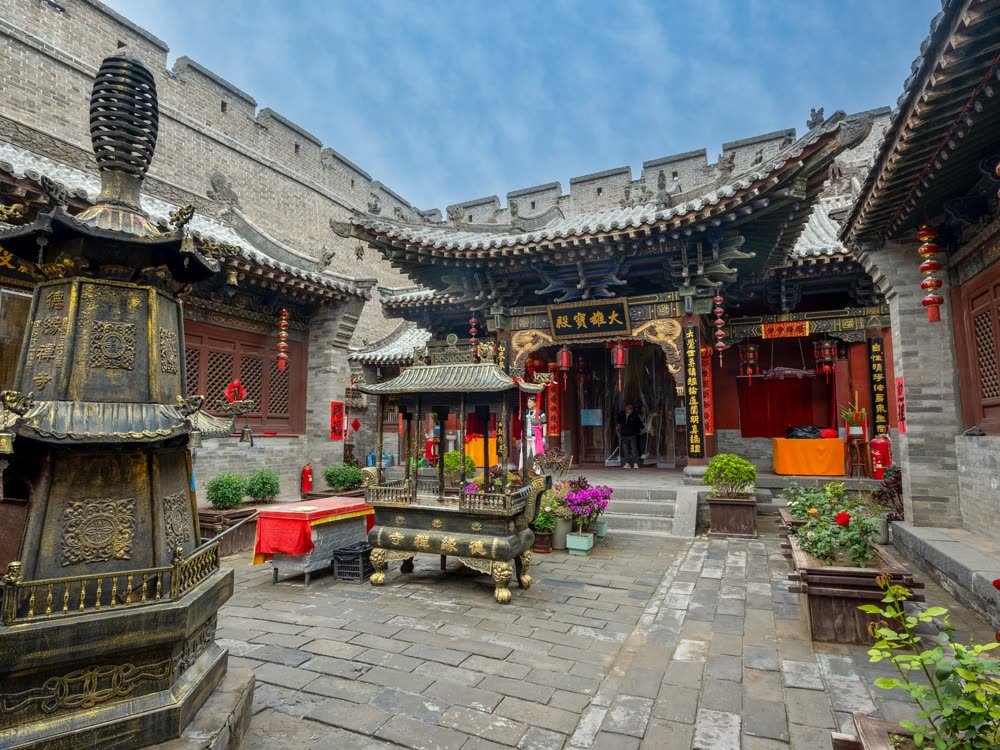
Datong is a highland city in northern Shanxi where the Northern Wei capital of Pingcheng, Liao–Jin temple architecture, a Ming frontier city and a northern-Shanxi food culture still meet. Come for the UNESCO-listed Yungang Grottoes, then read the old city’s timber halls, glazed dragons, walls and everyday bowls as parts of a place shaped by exchange across the farming–pastoral frontier.
Datong at a glance
- Population
- 3,044,000Year-end resident population, entire city administrative area · 2025Published as 3.044 million (304.4万).Source ↗
- Income per person
- 34,220Mean annual disposable income per person, all residents · 2025 · CNYUrban residents 44,454; rural residents 17,291.Source ↗
- Languages & dialects
- Mandarin, with the local Jin dialect of northern Shanxi.Source ↗
- Geography
- In the northern Shanxi basin, where the farming heartland meets the northern steppe, bordering Inner Mongolia and Hebei.Source ↗
- Elevation
- Not available on a comparable basis
- Province / region
- ShanxiPrefecture-level city
Map & places
Explore Datong
Browse places and sight guides by category, or choose a district below the map to see its location and boundary.
Browse 10 places; 10 have map coordinates. Some listings cover overlapping areas.
Colour-coded categories. Pins are approximate; confirm entrances and routes in Amap or Apple Maps before setting off. District boundaries: © OpenStreetMap contributors (ODbL), simplified, for travel reference only.
Counties & districts in Datong
Select a district name to show its boundaries on the map above; its details remain available separately.
Top sights in Datong
- 1Trip.Best #1
Yungang Grottoes云冈石窟
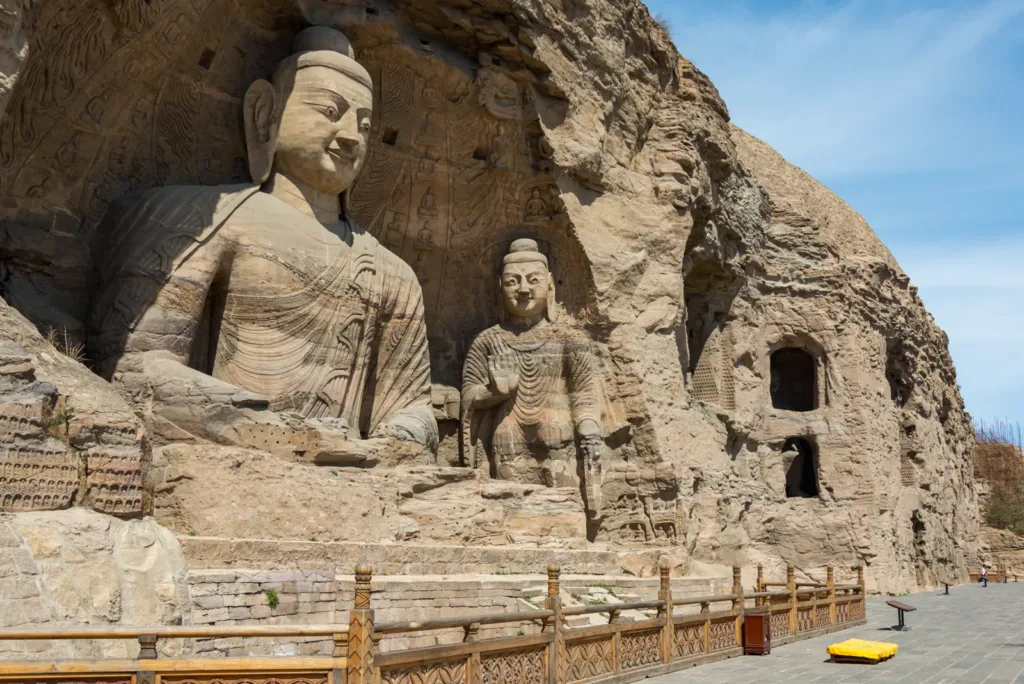
Yungang Grottoes is a west-of-Datong Buddhist cave complex cut into the southern face of Wuzhou Mountain in the Northern Wei period. Its early imperial caves, music-filled reliefs and later transformation of South and Central Asian Buddhist forms into a distinctly Chinese visual language make it one of China’s clearest places to see art, power and Silk Road exchange in the same cliff.
- 2Trip.Best #2
Hanging Temple悬空寺
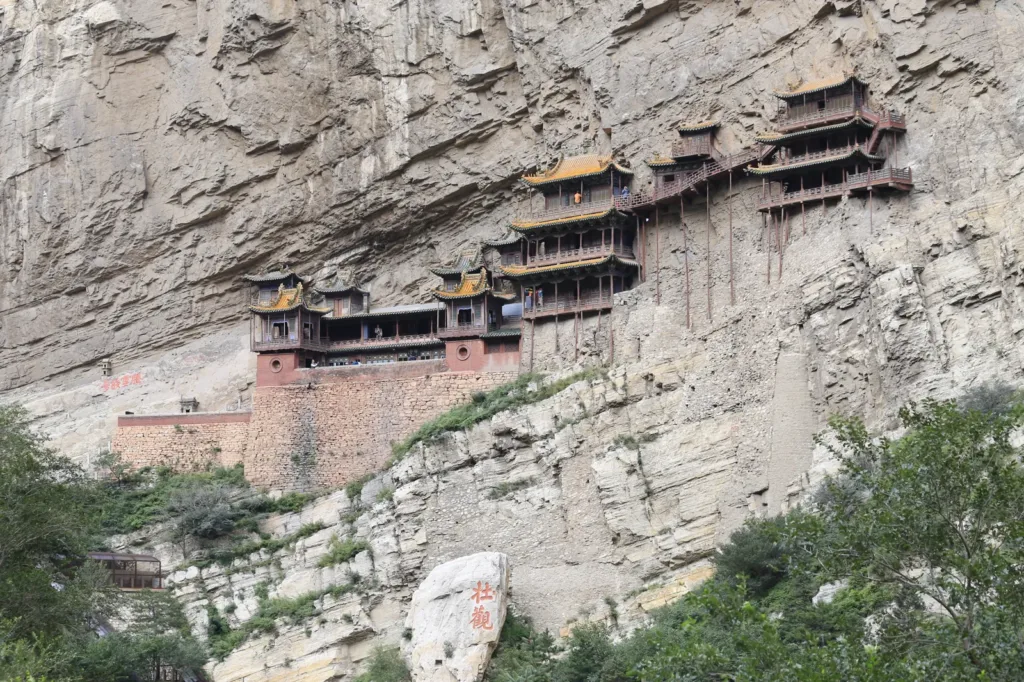
Xuankong Si (悬空寺) is a cliff-built temple in Hunyuan County, Datong, where timber galleries and halls occupy the rock face above Jinlong Gorge. Its Northern Wei origin, surviving timber-and-rock engineering, and a small setting that brings Buddhism, Daoism and Confucianism together make it a distinct visit from the separate Mount Heng summit area.
- 3Trip.Best #3
Huayan Temple华严寺
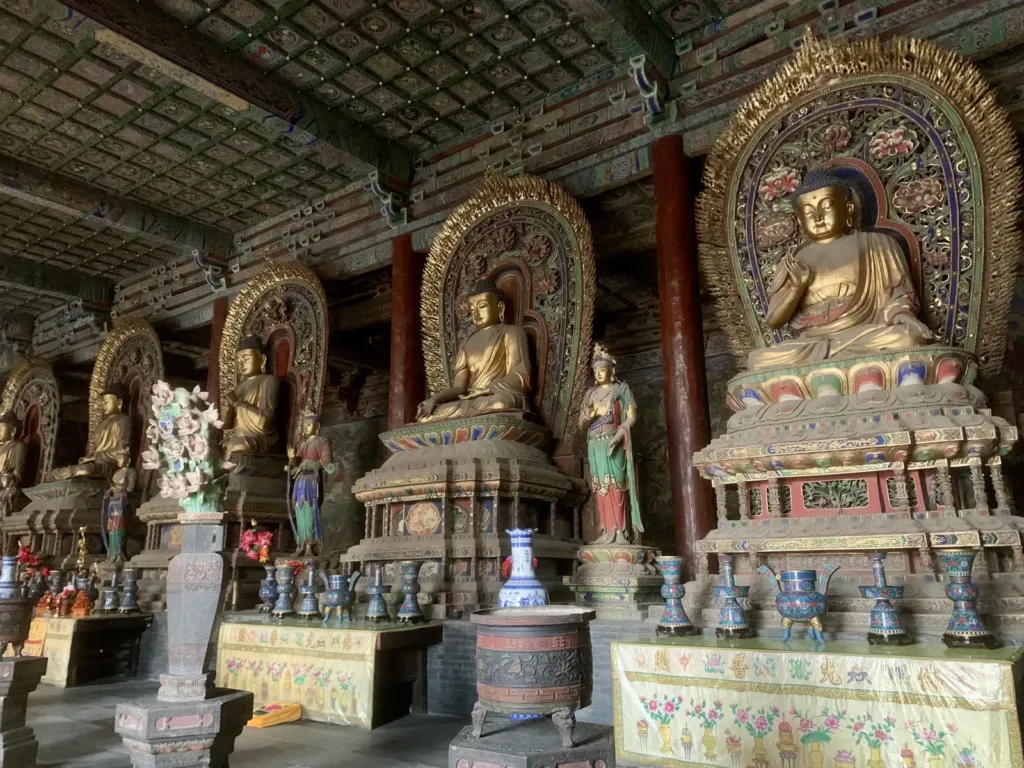
Huayan Temple is a Buddhist complex in Datong’s old city, where an east-facing Liao-period scripture hall and a Jin-period reconstruction of the Daxiongbao Hall preserve two different ways of making sacred space. Compare the intimate Bojia Jiaozang Hall, with its Liao sculpture and small timber scripture cabinets, with the broad Daxiongbao Hall and its monumental roof.
- 4Trip.Best #4
Mount Heng (Shanxi)恒山
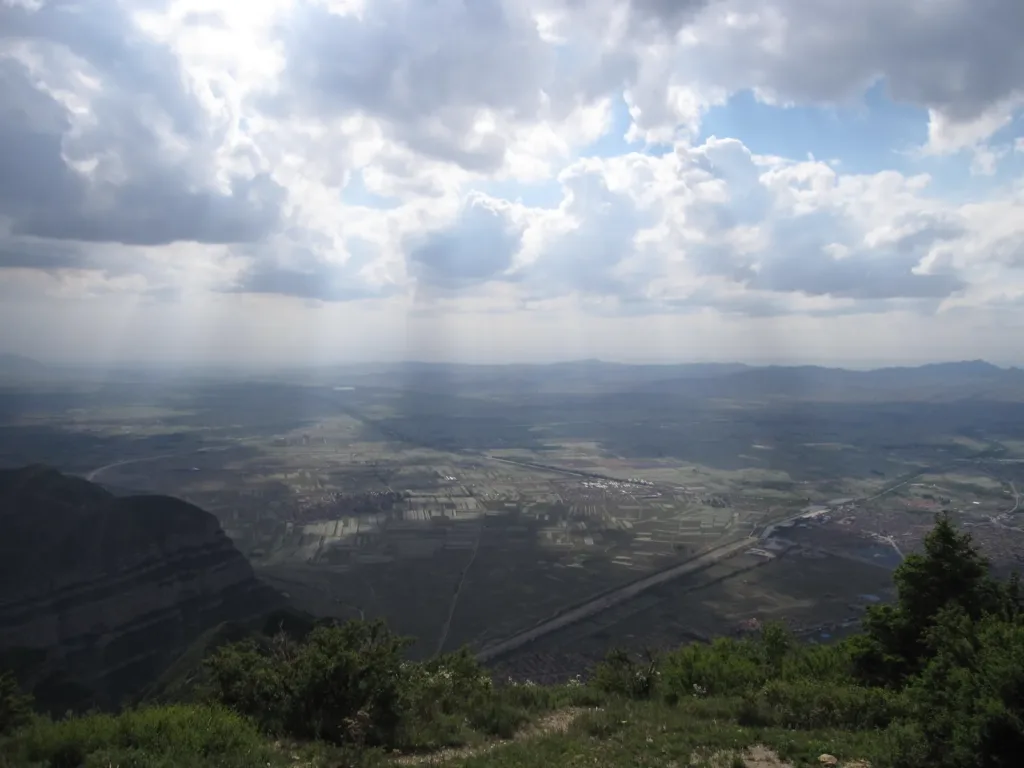
Mount Heng (Beiyue Hengshan, 北岳恒山) is the northern sacred mountain in Hunyuan County, Datong, where Tianfengling Peak rises to 2,016.1 metres above steep ridges and historic religious buildings. Come for the temple group and mountain views, but treat the ascent as a separate hiking choice from the temple-group visit.
- 5Trip.Best #5
Datong Ancient City Wall大同古城墙
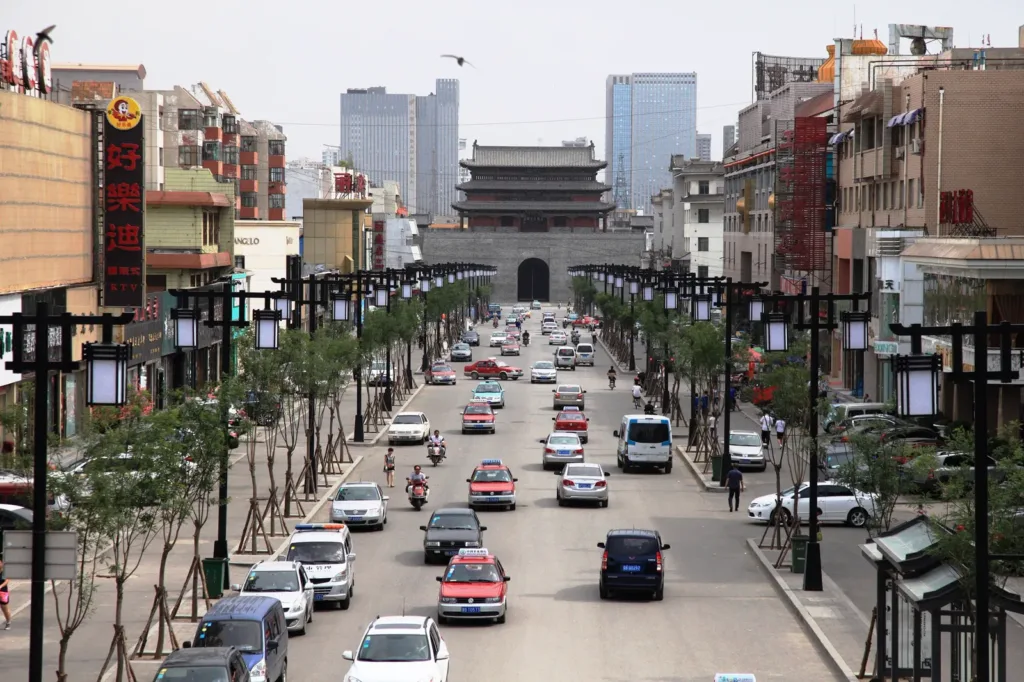
Datong Ancient City Wall is a restored circuit around the old city in Pingcheng District. Its four Ming-style gates, brick-faced ramparts, watchtowers, moat and surrounding park make the wall a place to read both Datong’s frontier-city history and its carefully rebuilt urban landscape.
Datong travel guides
In-depth articles and itineraries for planning your time in Datong.
SOON
Itinerary
3 days in Datong: a first-timer's itinerary
How to split your days between the essential sights, neighbourhood walks and a relaxed evening, with transport tips between each stop.
Coming soonSOON
Food
Where to eat in Datong
Local dishes worth seeking out, how to order and what to expect.
Coming soonSOON
Transport
Getting around Datong by metro and taxi
Cards, apps and station tips for moving between sights.
Coming soonSOON
Day trip
Day trips from Datong
Plan the outward and return journeys and visiting time before mapping out your day.
Coming soonSOON
Neighbourhoods
Neighbourhood walks in Datong
Discover everyday Datong on a slow walk.
Coming soonSOON
Seasons
Choosing a season for Datong
See how visiting changes from spring to winter.
Coming soonLocal dishes
Knife-shaved noodles刀削面
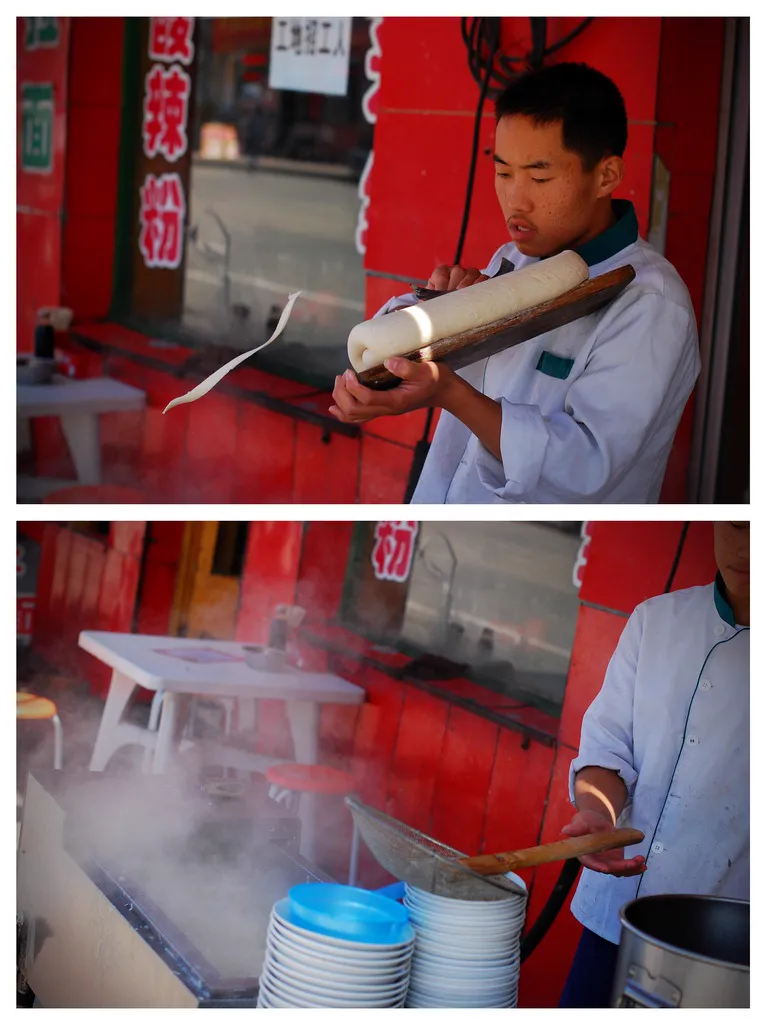
Knife-shaved noodles (刀削面, dāoxiāomiàn) are a Shanxi wheat-noodle style also listed in Datong’s local dining guide. Their defining feature is the making: a firm block of dough is shaved straight into boiling water, leaving irregular edges that hold broth. Datong has a documented local “Datong knife-shaved noodles” production standard, but the dish is a wider Shanxi tradition rather than a Datong-only recipe.
Datong copper hotpot大同铜火锅
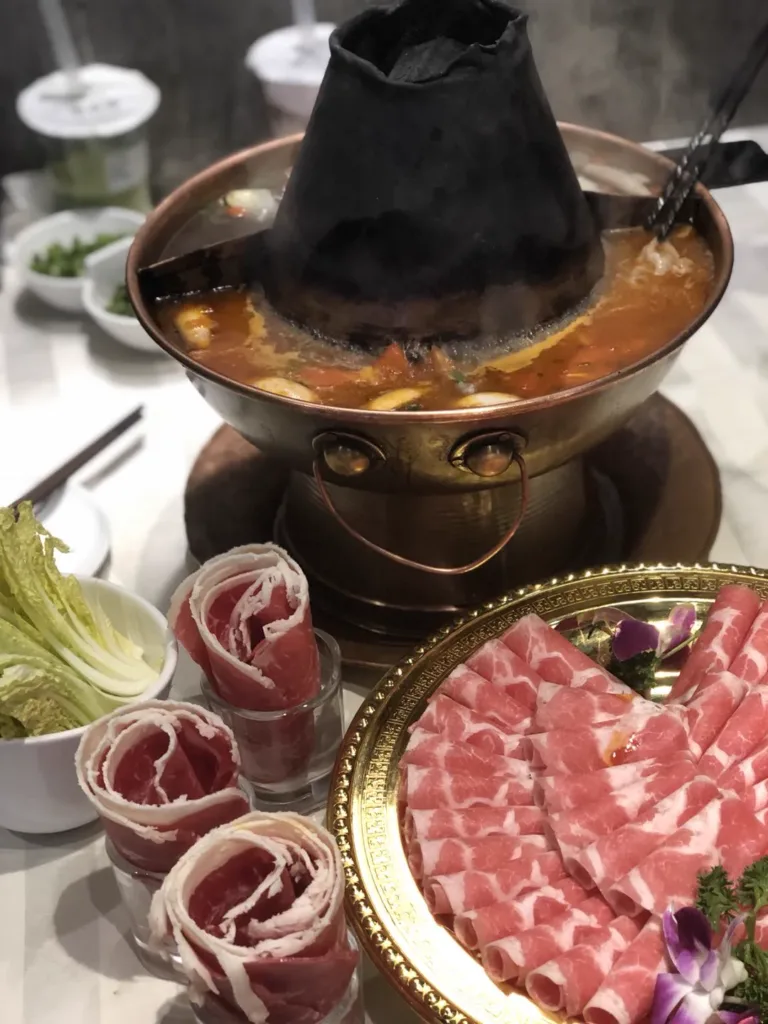
Datong copper hotpot (大同铜火锅) is a shared Datong dish built around a traditional copper vessel, often served as a stacked shijincai assorted hotpot (什锦火锅). Meat, vegetables, dried ingredients and noodles share one broth, while the hand-worked, tin-lined pot is part of the experience—not just cookware.
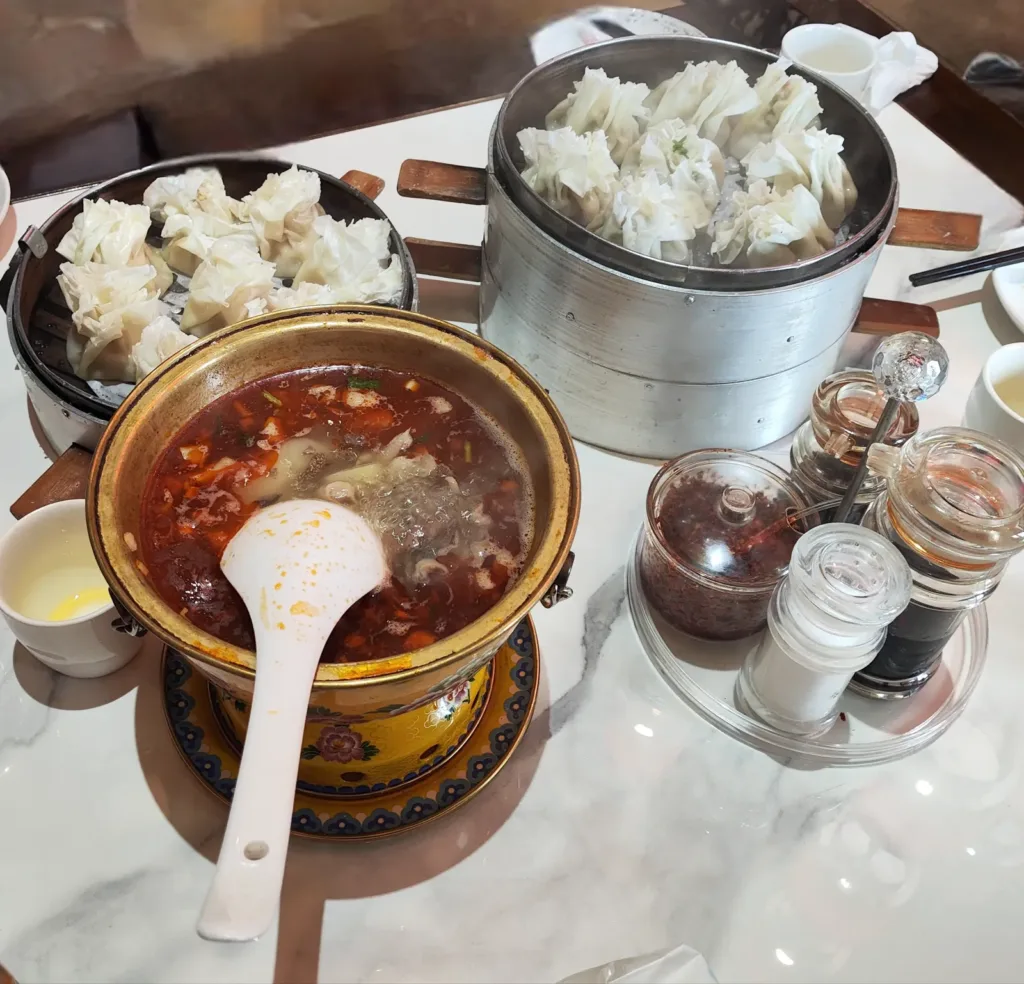
Flower-shaped steamed dumplings百花烧麦
Datong’s baihua shaomai (百花烧麦) is an open-topped steamed dumpling whose thin, pleated wrapper is shaped into a flower around a savoury filling. It is worth ordering for the hand-shaped edge and the contrast between a delicate wrapper and a moist centre—not for one fixed recipe: fillings, colours and flower forms vary between kitchens. Datong’s baihua shaomai is best understood as a local style of shaomai rather than a single nationally standardised dumpling. Shanxi’s 2022 provincial food-promotion programme included 百花烧麦 among 50 specialty snacks, with selection based partly on cultural transmission and making skill. That recognition establishes a regional place for the dish, but it does not prescribe one filling or one restaurant’s version.
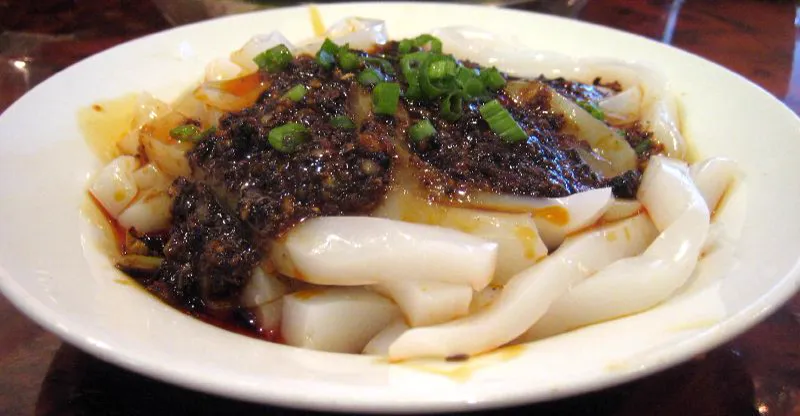
Hunyuan liangfen浑源凉粉
Hunyuan liangfen is a cold potato-starch jelly from Hunyuan County in Datong, served with Shanxi vinegar, chili oil, lotus beans and dried tofu. Its appeal is the contrast between a cool, springy base and sharp, crunchy toppings, and the bowl is a practical way to taste Hunyuan’s everyday food culture.
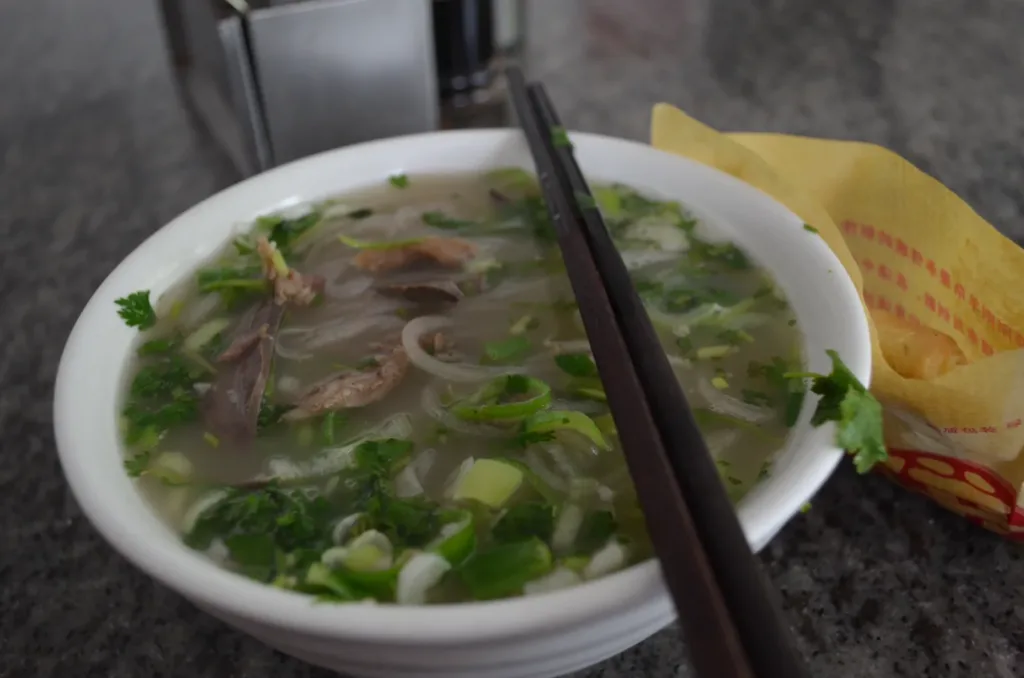
Datong Sheep Offal Bowl大同羊杂
Datong Sheep Offal Bowl (大同羊杂, Datong yangza) is a northern Shanxi bowl of chopped sheep offal and broth, commonly served with yam vermicelli. Its identity lies in the Datong-style large-pot cooking and in the sharp finishing contrast of Shanxi aged vinegar and chilli oil.
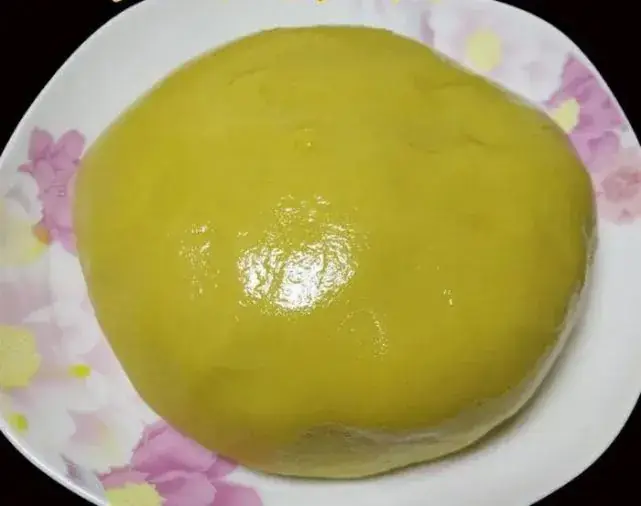
Steamed Yellow Millet Cake黄糕
Datong’s 黄糕 is a steamed cake made from yellow-millet flour. Served plain with a savoury stew it is soft and springy; shaped around a filling and fried, it becomes crisp outside and soft inside. The same food carries local good-wish customs through the homophone of 糕 and 高.
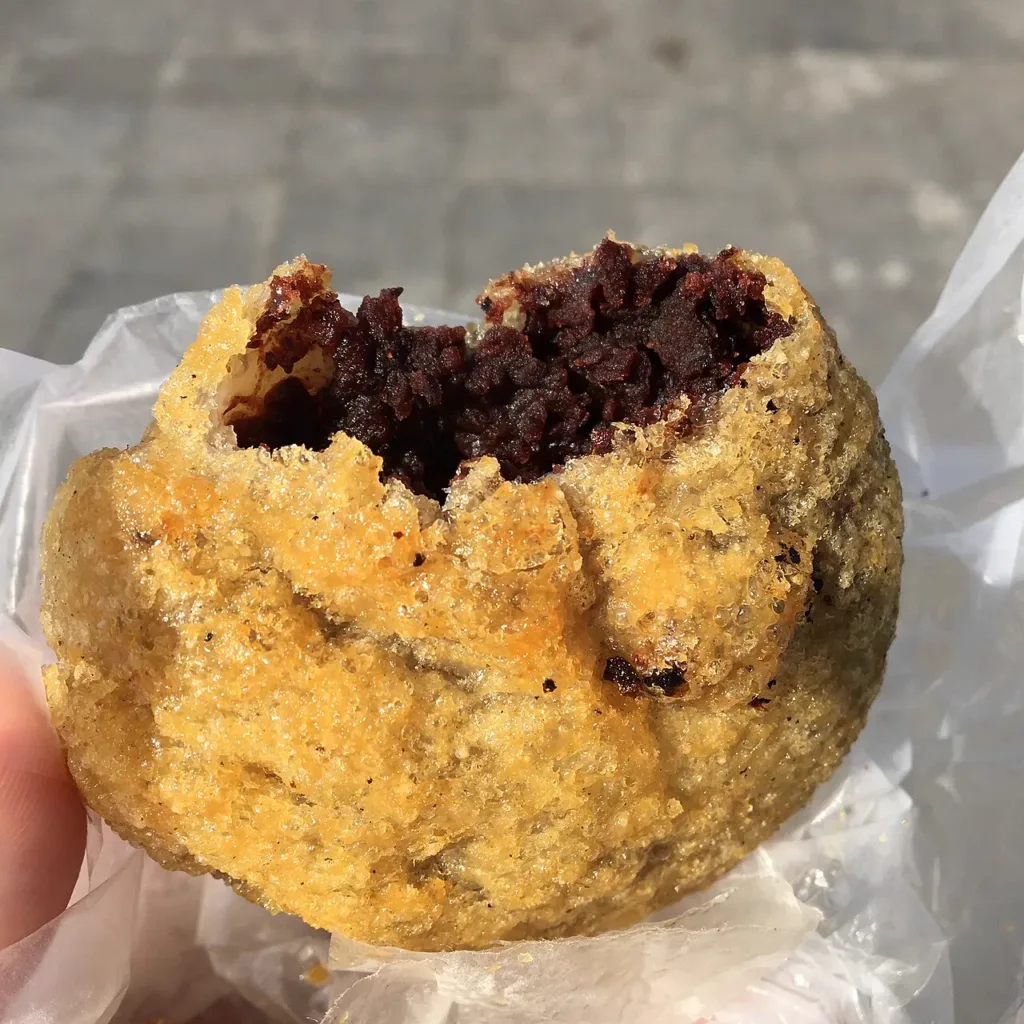
Datong Fried Millet Cakes油炸糕
Datong fried millet cakes (油炸糕, yóuzhágāo) are small filled cakes made from steamed yellow-millet dough, shaped and deep-fried. What makes the Datong style worth trying is the combination of a thin, crisp shell with soft, chewy millet dough, plus local fillings that range from bean and sugar to vegetables and the richer marrow-oil version.
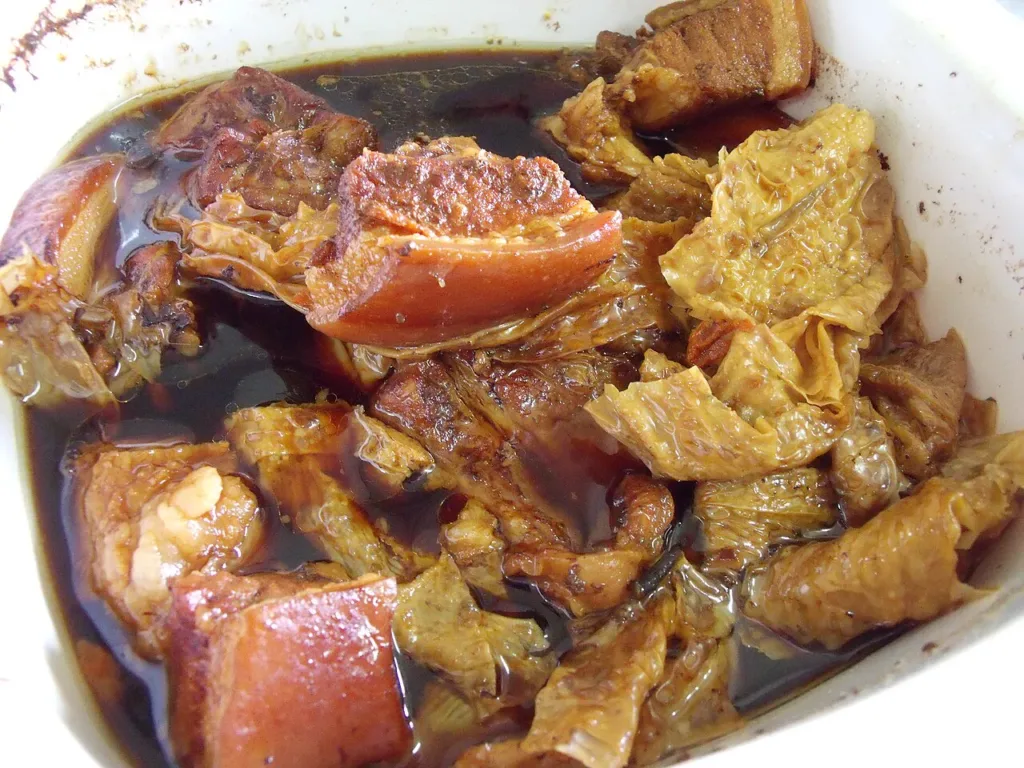
Datong Braised Pork Belly Strips大同扒肉条
Datong braised pork belly strips (大同扒肉条), also called xiao shao rou (小烧肉), are a skin-on pork dish in Datong’s traditional Old Eight Great Dishes (老八大件). The meat is boiled with aromatics, cut into strips, fried until the skin blisters and colours, then returned to its broth and steamed in a bowl until tender. Datong’s 老八大件 belongs to banquet cooking rather than a single street snack. Shanxi’s government description ties the set to the old New Year table, while an English reference describes the eight large bowls at festivals and weddings. The set’s importance is cultural, but individual kitchens may serve the dish in different formats, and it is not guaranteed on every daily menu.
Arrival, stays & getting around
Arrive, stay & get around Datong
Check the precise airport or station name on the ticket before arranging the final transfer to your hotel.
Your arrival gateway
Datong 大同
Transport gateways for Datong. The city has no metro. High-speed trains use Datong South, with Datong Comprehensive Transport Centre beside it; Datong Railway Station in the centre serves conventional trains; Datong Yungang International Airport is about 17 km east of the centre.
Airports
Datong Yungang International Airport
大同云冈国际机场
Datong's airport in Beijiazao Town, Yunzhou District, about 17 km east of the city centre, with separate T1 international and T2 domestic terminals. Bus Route 67 links it with Datong Comprehensive Transport Centre at Datong South; the return run is timed to arriving flights, so check the current service.
Railway stations
Datong South Railway Station
大同南站
Datong's high-speed station in Pingcheng District, on the Zhangjiakou–Datong line towards Beijing, the Datong–Xi'an line and the Jining–Datong–Yuanping line. Datong Comprehensive Transport Centre beside it has city buses, taxis and coaches. On 12306 it is listed as 大同南.
Datong Railway Station
大同站
The central station at 4 Zhanqian Street, Pingcheng District, at the junction of the Beijing–Baotou and Beitongpu railways. It serves conventional trains; most high-speed trains use Datong South. On 12306 it is listed as 大同.
Bus stations
Datong Comprehensive Transport Centre
大同综合客运中心
The transport centre beside Datong South Railway Station, which began trial operation in 2024, bringing high-speed trains, city buses, taxis and long-distance coaches together in one place. Airport bus Route 67 ends here.
More about getting around
High-speed trains use Datong South Railway Station, on the lines to Zhangjiakou and Beijing and to Taiyuan and Xi'an; Datong Comprehensive Transport Centre beside it links trains with city buses, taxis and coaches. Datong Railway Station in Pingcheng District serves conventional trains. Datong Yungang International Airport is about 17 km east of the centre, with bus Route 67 to the transport centre. The Hanging Temple and Mount Heng are a separate road trip to Hunyuan County.
Transport reference review: 2026-10-25. Consult the operator for current services and timetables.
Accommodation
Stay in Datong
Stay inside or near the old city walls for the temples and evening walks; near Datong South for early trains and the transport centre.
Find hotels on Trip.com ↗Change your destination, dates and guests on Trip.com.
Weather
Datong weather
Loading the current-hour forecast…
A cold, dry northern climate with four seasons. Winters are long and cold; summers are warm and shorter than on the plains to the south. Late spring to early autumn is the easiest time to visit; in winter, dress for wind and cold on the city wall and at Yungang.
Seasons & when to go
Check the city forecast ↗Bookings & travel
Make your travel plans a reality
Stays
Find hotels in Datong on Trip.com
Change your destination, dates and guests on Trip.com.
Find hotels on Trip.comWhy I recommend Trip.comFlights
Search for flights on Trip.com
Change your destination, dates and passengers on Trip.com.
Search flights on Trip.comWhy I recommend Trip.comTrains
Search for trains on Trip.com
Change your stations, travel date and passengers on Trip.com.
Search trains on Trip.comWhy I recommend Trip.comCars
Browse car rentals on Trip.com
Change your pick-up location and rental dates on Trip.com.
Open Trip.comWhy I recommend Trip.comActivities
Explore activities on Trip.com
Change your destination, dates and participants on Trip.com.
Explore activities on Trip.comWhy I recommend Trip.comFood
Explore local food guides
Browse local dishes, breakfast ideas, snacks and regional cooking.
Explore food guidesWhat to eat in DatongWritten by China Revealed · Editorially updated 2026-10-25
Maps & transport note
Transport suggestions on this site may be inaccurate or out of date. Confirm your exact destination, visitor entrance, current route and return connection before setting off.
For travel in mainland China, we recommend Amap (高德地图) or Apple Maps (苹果地图) for checking local directions. Both support English. Keep the Chinese place name and full address handy, and compare the result with the venue or transport operator’s latest information.
Do not rely on Google Maps or another overseas map as your only route check for mainland China. Map coverage and features vary, and no app can guarantee an error-free route.
Amap’s English interface depends on the app version and store region. Apple Maps follows your device or app language settings; some place labels may remain in Chinese. Apple states that its map service in China uses AutoNavi (Amap). Features differ in Hong Kong, Macao and Taiwan.
Information checked 2026-09-07.Photo credits (2)
- The old city wall · DatongPhoto: xiquinhosilva, Wikimedia Commons · CC BY 4.0
- Steamed Yellow Millet Cake (黄糕)Photo: view.inews.qq.com
Sources & useful links (15)
- Datong 2025 statistical communique (Datong Municipal Bureau of Statistics)
- National Ethnic Affairs Commission: reading the old city of Datong
- Wikipedia: Datong
- UNESCO World Heritage Centre: Yungang Grottoes
- Xinhua Shanxi: Shanhua Temple, the largest surviving Liao–Jin monastery
- China Intangible Cultural Heritage: tasting Shanxi heritage food
- People's Daily Shanxi: Datong heritage food
- China Railway: Datong Railway Station
- Shanxi Government: Datong–Zhangjiakou high-speed railway opens
- National Railway Administration: Jining–Datong–Yuanping high-speed railway opens
- Datong Civilisation Network: Datong Comprehensive Transport Centre opens
- Shanxi Civil Aviation Airport Group: Datong Yungang Airport
- Shanxi Civil Aviation Airport Group: Datong Yungang Airport transport
- Datong Evening News: Datong South–Yungang Grottoes shuttle opens
- Trip.Best: Global Traveller-Picked Attractions in Datong