

Beijing local food
Local dishes, ingredients and the stories behind them.

Hawthorn in syrup 炒红果
Chao hongguo (炒红果) is a Beijing-associated sweet of hawthorn fruit gently simmered with sugar and water. The fruit stays in recognizable pieces, with a glossy red finish and a sharp-sweet, soft bite; it is quite different from the brittle sugar shell on tanghulu.
AI illustration · AI 示意图
Read dish guide →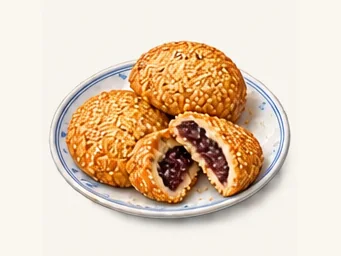
Bean-filled sesame pastries 蛤蟆吐蜜
Hama Tu Mi (蛤蟆吐蜜) is a Beijing-associated baked wheat bun filled with sweet bean paste and sesame-coated around its edge. In the oven, the filling expands through a split in the crust—the “honey-spitting toad” image behind its name. Eat it warm for a fragrant, tender-crisp crust and a substantial, sweet bean centre.
AI illustration · AI 示意图
Read dish guide →
Crisp fried dough ribbons 排叉
Paicha (排叉) is a Beijing-associated snack made by folding and cutting thin wheat dough, threading the pieces together, and frying them until crisp. Sesame-speckled savoury paicha is one familiar style; ginger paicha (姜汁排叉) is fried pale gold and coated with ginger-scented osmanthus malt syrup, giving it a sweet, fragrant finish. Recipes and shapes vary.
AI illustration · AI 示意图
Read dish guide →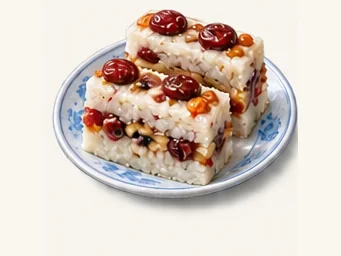
Sliced sticky-rice cake 切糕
Beijing qiegao (切糕), also called jiangmi qiegao (江米切糕), is a dense, slice-to-order sticky-rice cake found among the city’s traditional snacks. Depending on the maker, steamed sticky rice or rice flour is layered with red dates or sweet bean filling; expect a tender, chewy bite rather than the nut-and-syrup confection also called qiegao elsewhere in China.
AI illustration · AI 示意图
Read dish guide →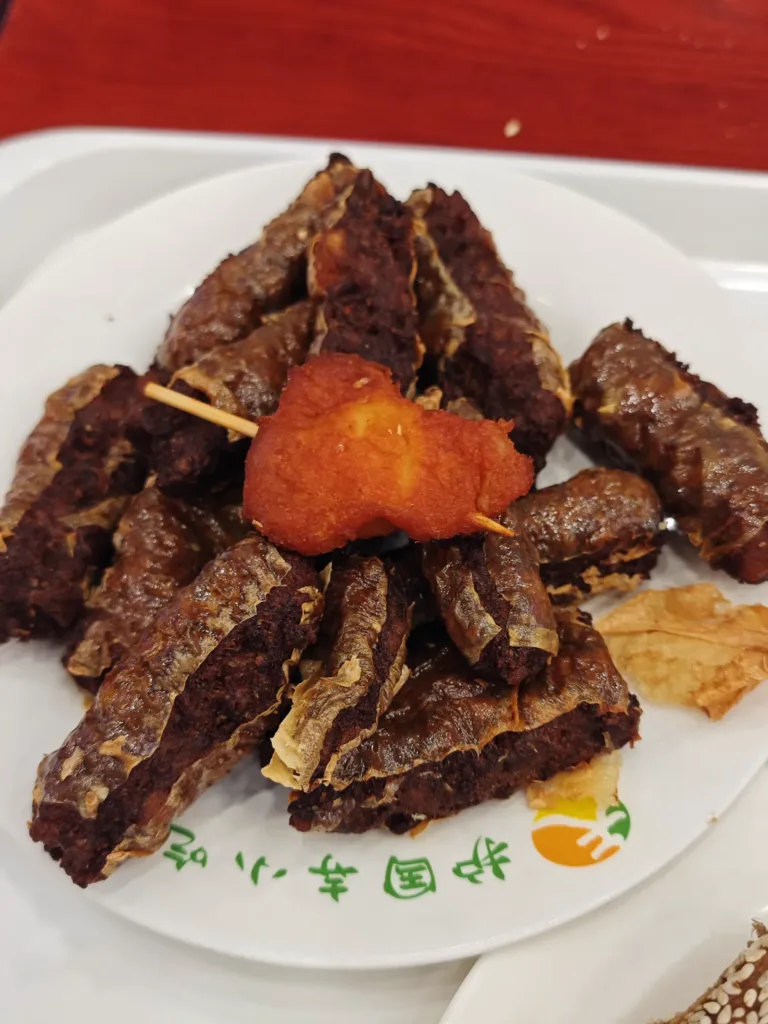
Fried beef-and-potato slices 炸松肉
炸松肉 (zhá sōng ròu) is a Beijing-associated Hui Muslim snack of seasoned minced beef enclosed in thin wrappers and fried until browned. One documented Niujie-style preparation adds crushed gāozhi for a distinct crisp layer; the exact filling and wrapper vary, so potatoes are not part of a fixed definition.
Read dish guide →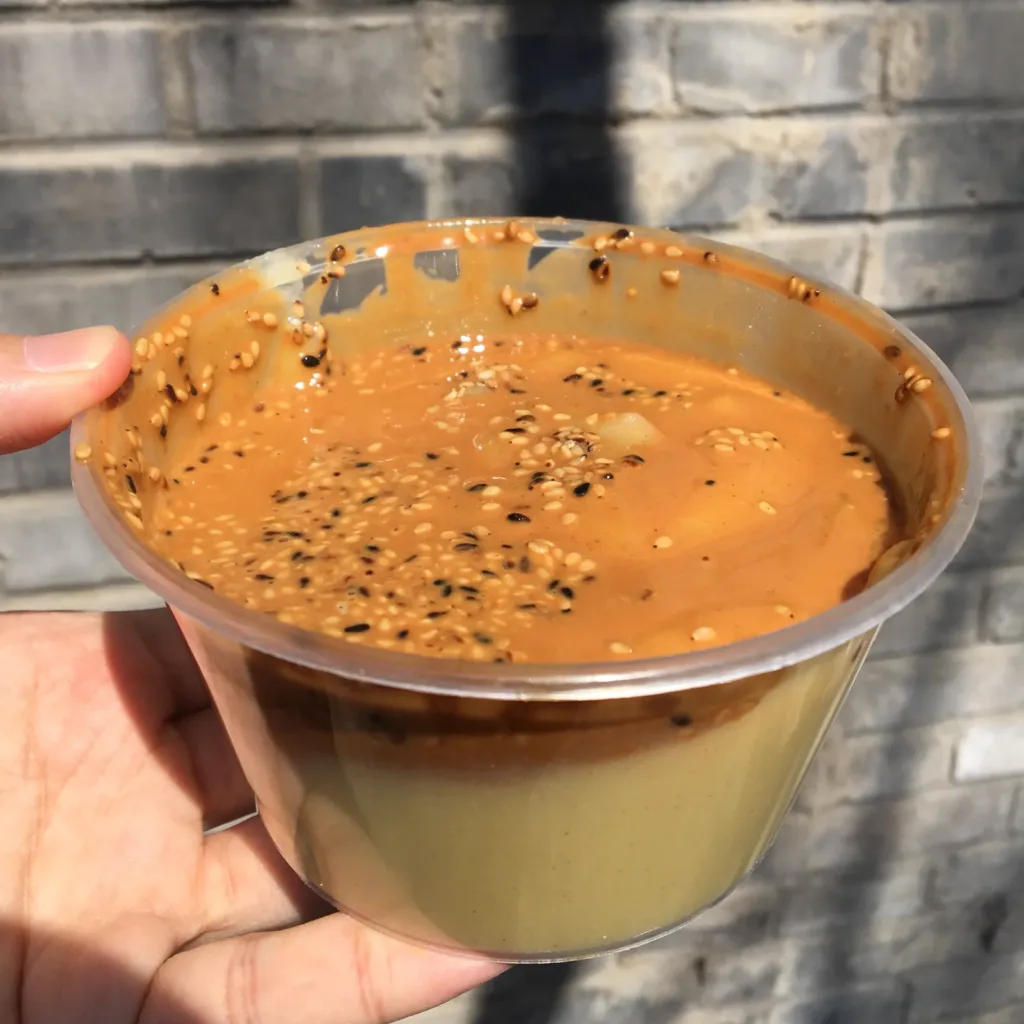
Miancha 面茶
Miancha (面茶) is a hot, thick Beijing-associated grain porridge, usually made with millet flour and finished with sesame paste and seasoned sesame. Its mild, smooth base contrasts with the nutty, savory topping; versions and seasonings vary, and it is also found in Tianjin.
Read dish guide →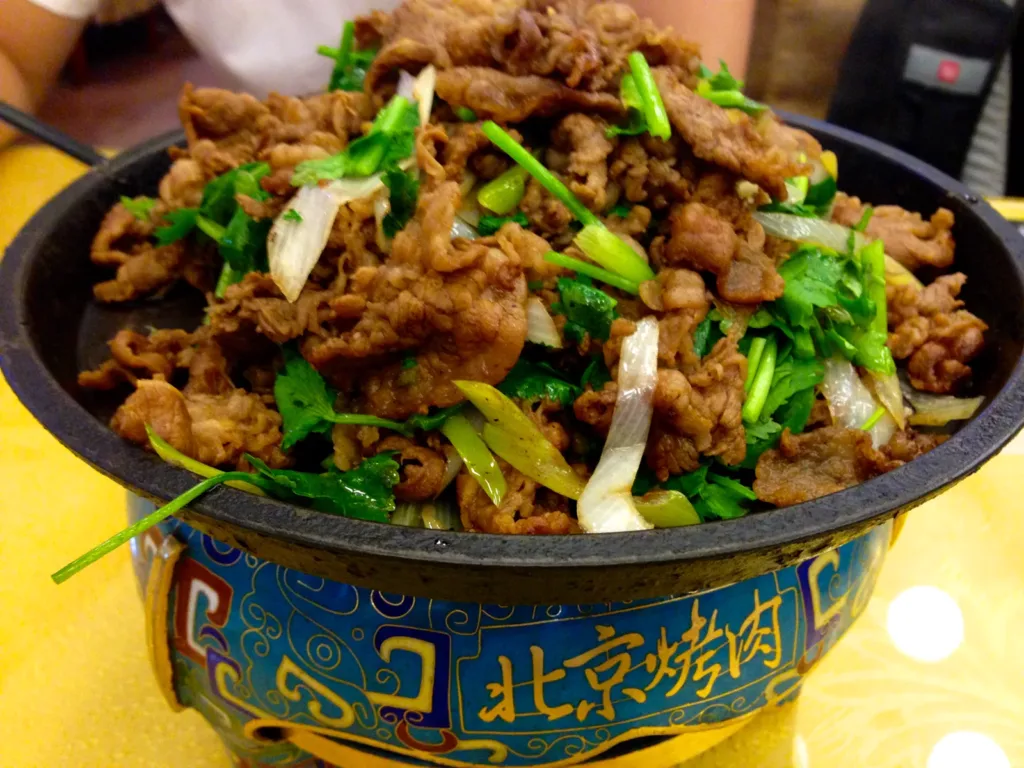
Beijing iron-griddle barbecue 炙子烤肉
Beijing iron-griddle barbecue (炙子烤肉) is thinly sliced, seasoned beef or lamb cooked on a heated iron-bar griddle called a zhizi. In Beijing's best-known versions, beef and lamb are associated respectively with Kaorou Wan and Kaorou Ji; seasonings and table service vary, so expect a shared hot meat dish rather than one fixed recipe.
Read dish guide →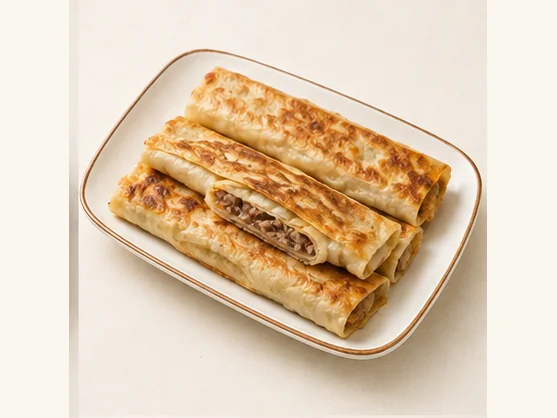
Dalian huoshao pan-fried parcels 褡裢火烧
Dalian huoshao (褡裢火烧) is a Beijing-associated wheat parcel folded into a long, narrow shape and pan-fried in oil until golden. A common traditional filling combines pork with scallion and ginger; the crisp browned wrapper contrasts with a hot, savoury centre. The name refers to an old shoulder-carried pouch, not the northeastern city of Dalian.
AI dish illustration / AI 菜品示意图
Read dish guide →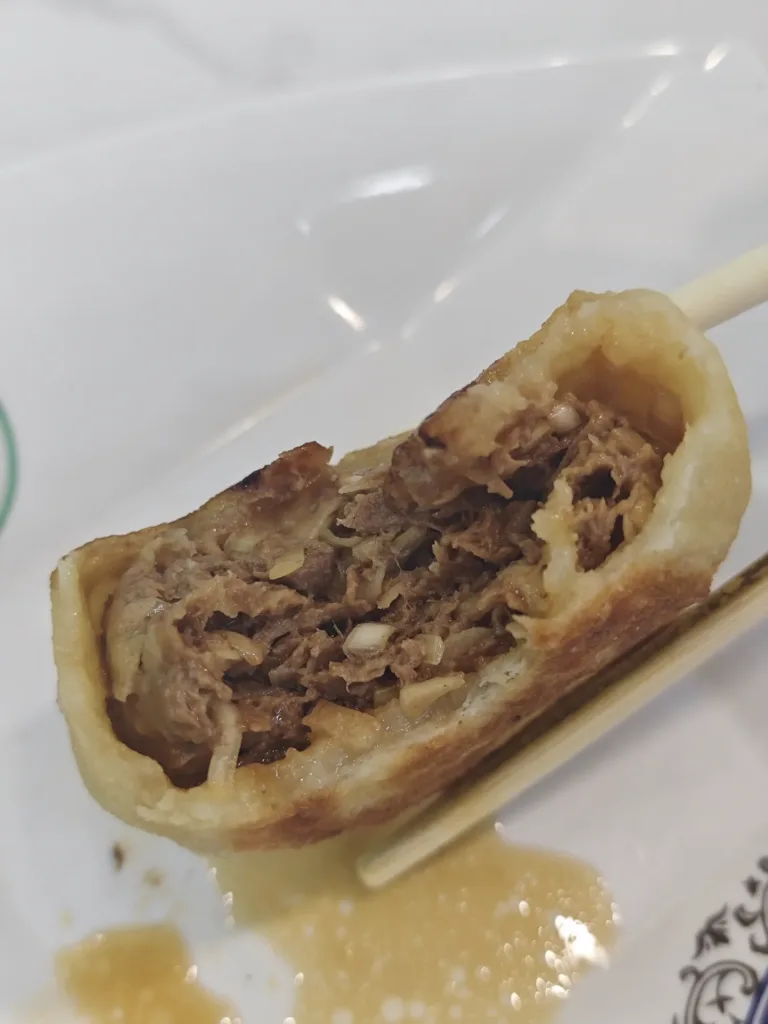
Mending beef pies 门钉肉饼
Mending beef pies (门钉肉饼) are Beijing-style, thick round griddle pies named for their resemblance to old gate studs. A soft wheat wrapper encloses a juicy beef-and-scallion filling; the pie is browned on a hot griddle and is best eaten warm, carefully, with a small opening to release steam. Recipes and sizes vary by shop.
Read dish guide →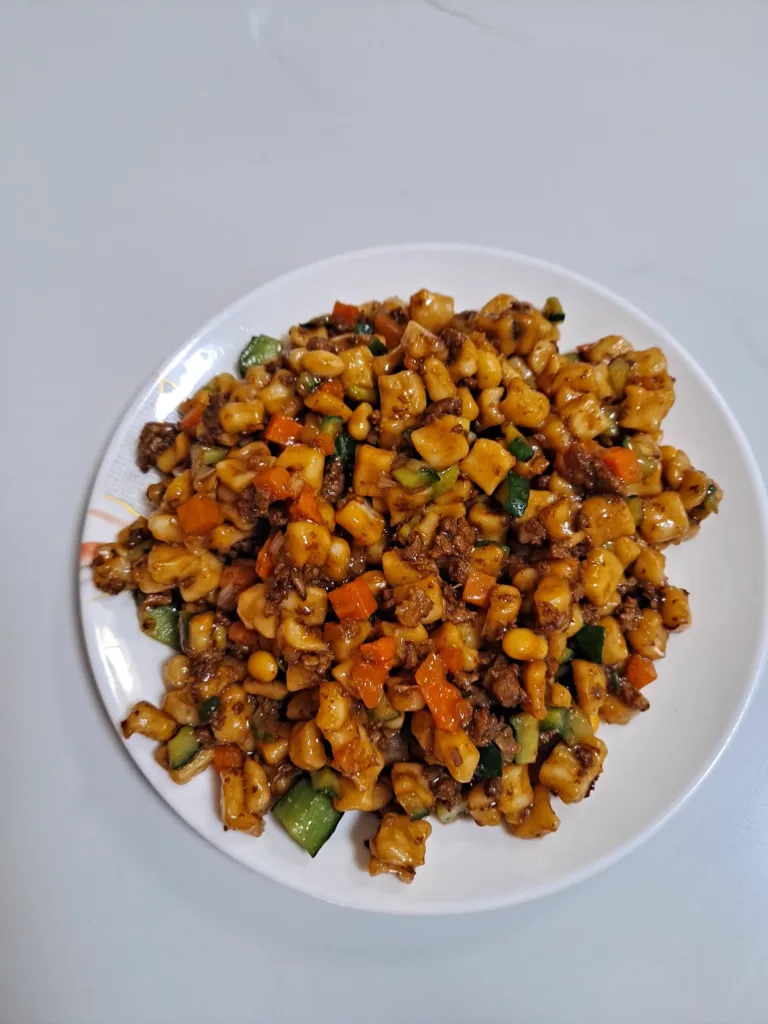
Stir-fried dough nuggets 炒疙瘩
Chao geda (炒疙瘩) is a Beijing-associated dish of small wheat-dough pieces, boiled and then stir-fried until glossy and golden with meat or seafood, vegetables and seasoning. The nuggets are springy and chewy; recipes and toppings vary, so ask what is in the particular plate.
Read dish guide →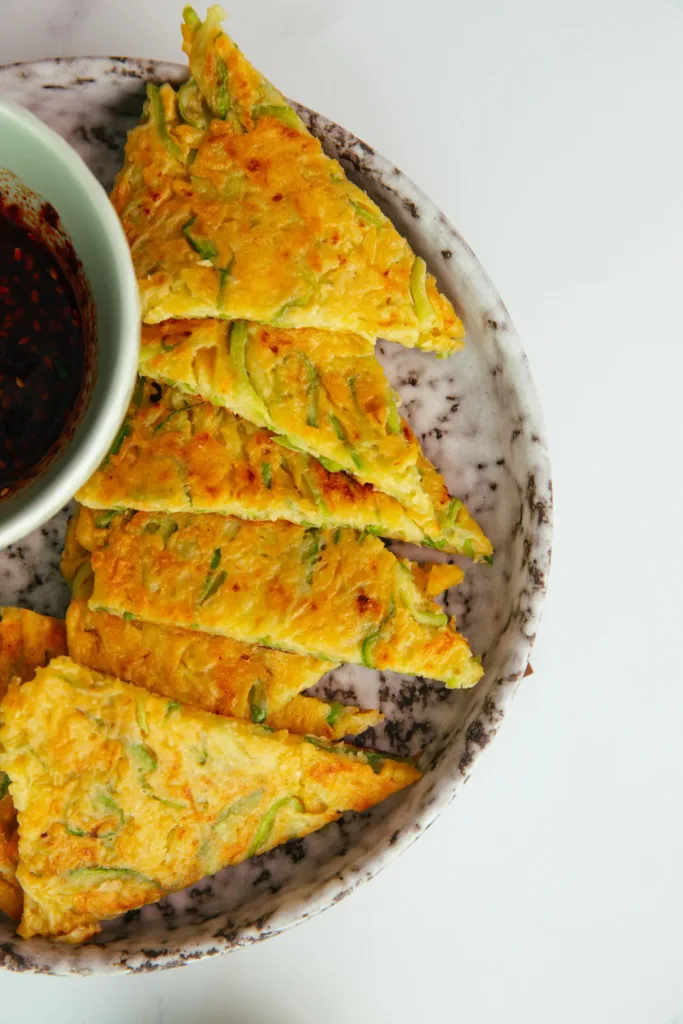
Hutazi vegetable pancakes 糊塌子
Hutazi (糊塌子) is a Beijing-associated home-style pancake made by binding shredded zucchini with egg and wheat flour, then pan-frying it until golden. The moist, tender center and lightly crisp edges pair well with a sharp garlic-and-vinegar dip; household and shop versions vary in thickness, seasoning, and accompaniments.
Read dish guide →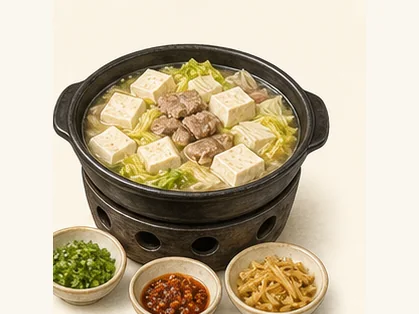
Liugou tofu brazier feast 柳沟火盆锅豆腐宴
Liugou’s tofu brazier feast is a communal Yanqing meal built around an open-topped, simmering pot of fresh, frozen and fried tofu, cabbage, potato vermicelli and smoked pork. Its mild bean-curd textures take on a savoury meat-and-bone broth, while a larger farmhouse spread may add side pots, cold dishes and staple foods; the exact menu varies by restaurant.
AI dish illustration / AI 菜品示意图
Read dish guide →
Yipin Tofu with Savoury Filling 一品豆腐
Yipin tofu (一品豆腐) is a refined stuffed-tofu dish documented at Beijing’s Fangshan palace-cuisine restaurant: delicate tofu forms a container for a savoury filling that can include bird’s-nest soup, sea cucumber and fish maw. Its Beijing connection is Fangshan’s restaurant tradition, not an exclusive claim that the dish originated in Beijing.
AI dish illustration / AI 菜品示意图
Read dish guide →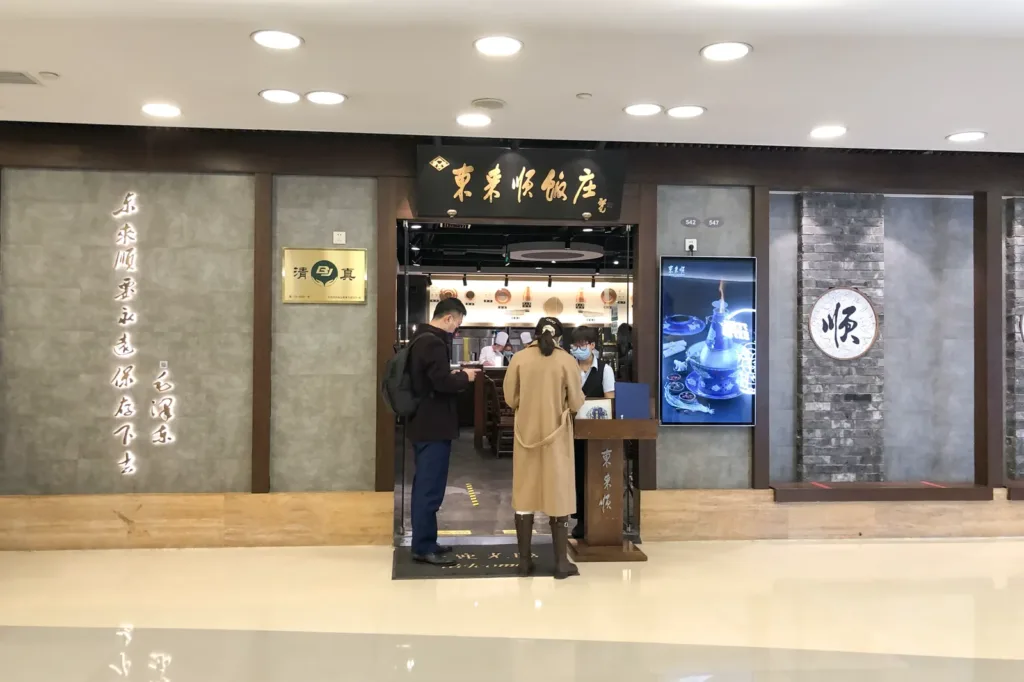
Donglaishun-style sliced-lamb hotpot 东来顺涮羊肉
Donglaishun-style sliced-lamb hotpot (东来顺涮羊肉) is a Beijing-associated brand tradition of briefly cooking thin lamb slices in a clear, gently savory broth, then dipping them in a rich sesame-based sauce. Its craft also includes carefully selected lamb cuts, copper-pot service, pickled garlic and seasonal accompaniments; the technique is listed as a national intangible cultural heritage project.
Read dish guide →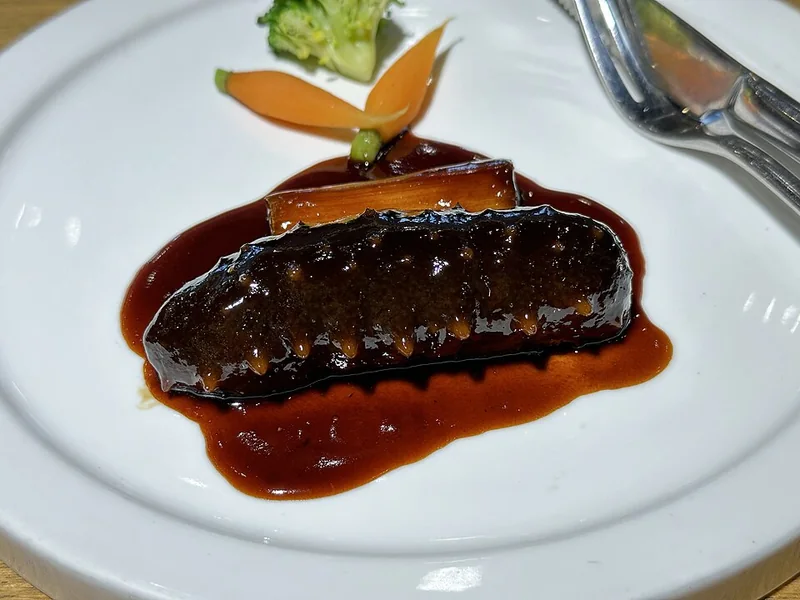
Beijing sea cucumber braised with scallions 北京葱烧海参
Scallion-braised sea cucumber (葱烧海参) is a rich Shandong Lu-cuisine dish that also has a documented place in Beijing’s long-running restaurant tradition. Sea cucumber is braised with scallions and a savory glaze; expect a soft, yielding bite, concentrated sauce and a deep cooked-scallion aroma, with the exact recipe varying by kitchen.
Read dish guide →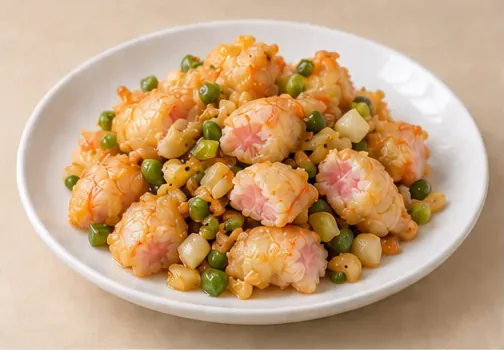
Crisp-Fried Prawn Pieces with Aromatics 炸烹虾段
Zha peng xia duan (炸烹虾段) pairs fried prawn sections with a fast, fragrant wok finish. A Beijing tourism listing includes it among the city’s classic dishes, and Xicheng’s Li Quanjü restaurant has presented it as a signature; versions differ in whether the prawns are shell-on or peeled. Expect a crisp, golden outside, tender seafood and a light savoury-sour seasoning rather than a heavy stew.
AI dish illustration / AI 菜品示意图
Read dish guide →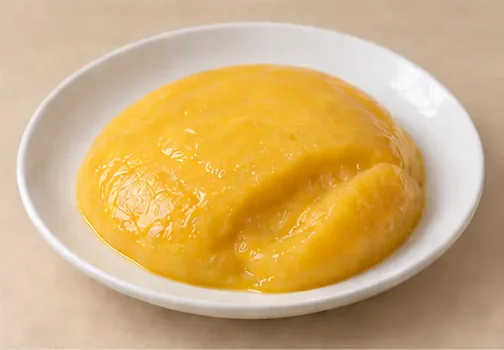
Sanbuzhan egg-yolk sweet 三不沾
Sanbuzhan (三不沾) is a warm Chinese sweet made by patiently stirring egg yolks, sugar, starch and water in a pan, with cooking fat worked into the mixture. Beijing's Tongheju restaurant is closely associated with the dish, though accounts of its original birthplace differ. The finished sweet is glossy golden, soft and cohesive, with an egg-rich flavour and a texture that yields to a spoon without behaving like a firm cake.
AI dish illustration / AI 菜品示意图
Read dish guide →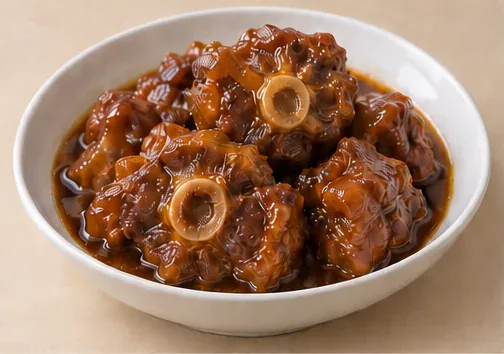
Beijing braised oxtail 红烧牛尾
Hongshao niuwei (红烧牛尾), or braised oxtail, is a signature dish at Beijing’s Hongbinlou, a Hui-style restaurant that moved from Tianjin to Beijing in 1955. Its bone-in tail pieces are slowly cooked until the meat releases easily, then served with a rich, glossy, slightly sweet sauce. It is a well-documented Beijing restaurant specialty, not a dish claimed to have originated only in Beijing.
AI dish illustration / AI 菜品示意图
Read dish guide →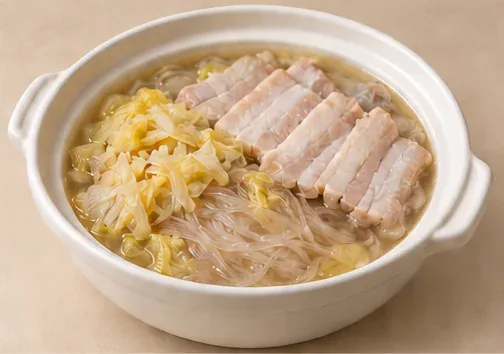
Beijing pork and pickled-cabbage casserole 砂锅白肉
Shaguo bairou (砂锅白肉) is a Beijing-associated casserole of thinly sliced cooked pork, Chinese pickled cabbage and glass noodles warmed together in a light meat broth. At the Beijing restaurant Shaguoju, the documented version uses pork from the rear-end cut; versions and condiments vary, so expect a tangy, pork-rich hot pot rather than one fixed recipe.
AI dish illustration / AI 菜品示意图
Read dish guide →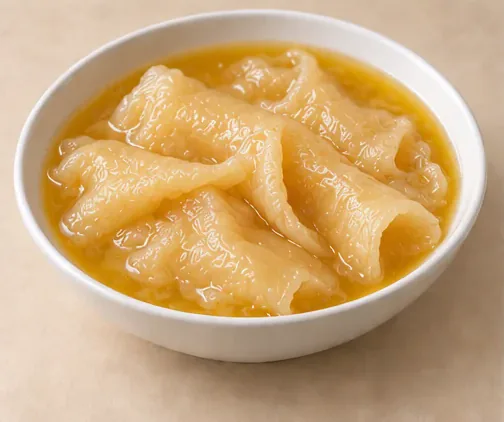
Fish Maw in Rich Yellow Broth 黄焖鱼肚
Fish Maw in Rich Yellow Broth (黄焖鱼肚) is a Beijing-associated Tan Family Cuisine braise: dried fish swim bladder is prepared until tender, then served in a glossy, golden, deeply savory stock. Its hallmark is the contrast between the soft, yielding maw and concentrated broth—not a piece of fish fillet. Recipes and fish-maw varieties differ, so ask what stock and seafood are in the serving.
AI dish illustration / AI 菜品示意图
Read dish guide →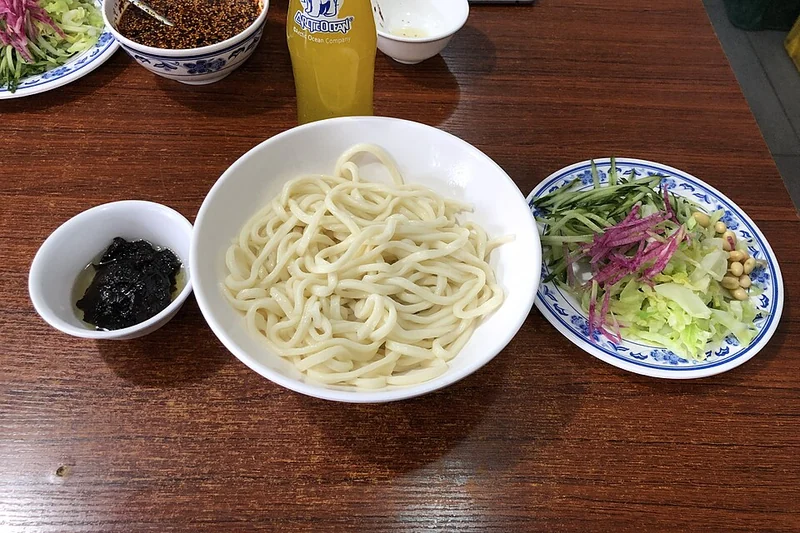
Old Beijing Noodles with Fried Bean Sauce 老北京炸酱面
Chewy noodles carry a strongly savoury sauce. Mixing the crisp vegetables through the bowl spreads that intensity rather than leaving one very salty mouthful at the top.
Read dish guide →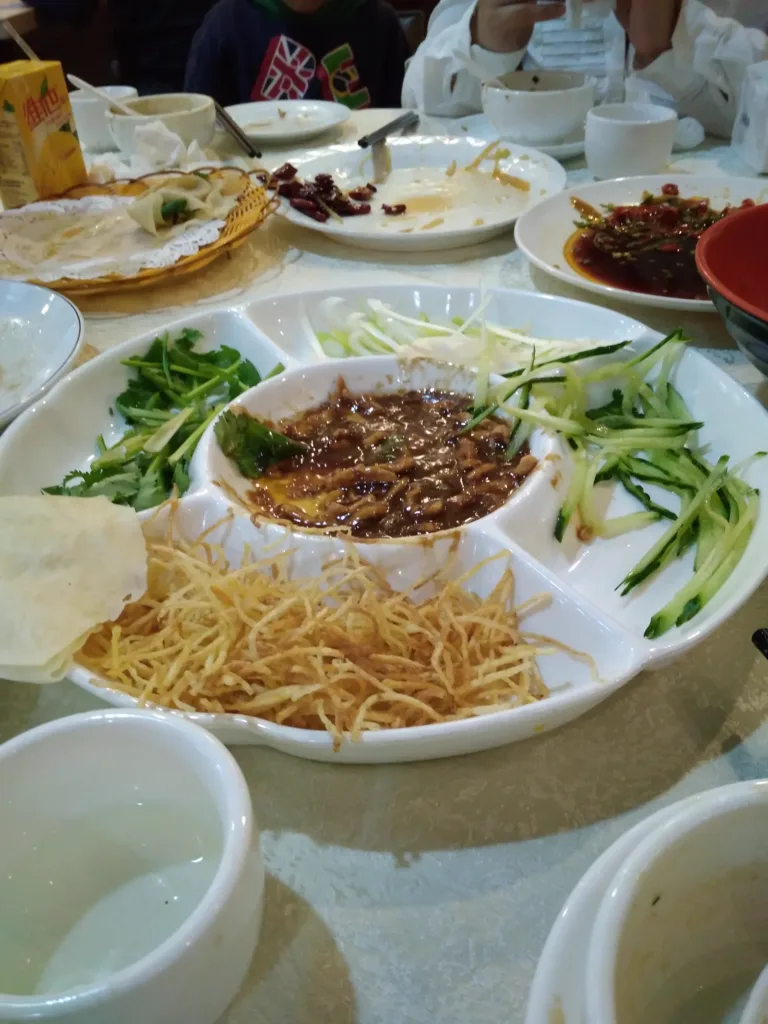
Shredded Pork with Sweet Wheat Sauce 京酱肉丝
Jing jiang rou si (京酱肉丝) is thinly cut pork stir-fried until coated in a thick, dark, sweet-savoury wheat paste sauce. In one common Beijing-style serving, it comes with sharp raw scallion and thin tofu sheets to wrap around the meat; restaurants and home cooks also serve it over rice or with pancakes.
Read dish guide →
Fried Starch Slices with Garlic Sauce 灌肠
The attraction is the contrast between crisp edges, a softer centre and pungent garlic dipping sauce. It is a small savoury snack rather than a meat main course.
Read dish guide →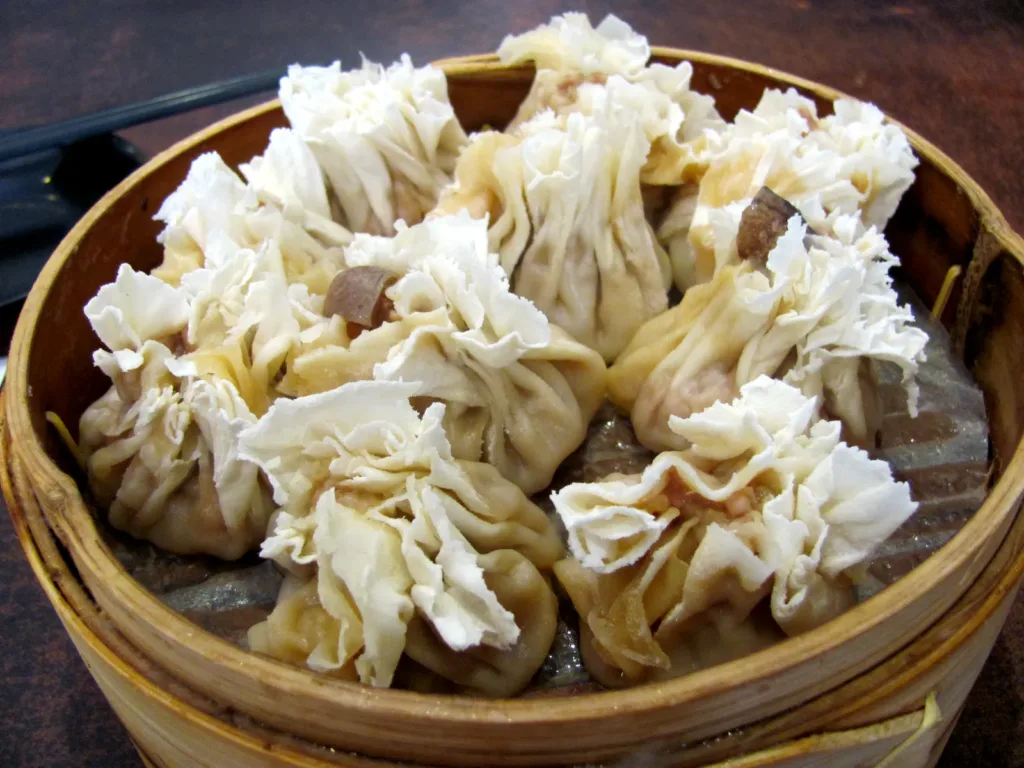
Duyichu Shaomai Dumplings 都一处烧麦
Duyichu shaomai (都一处烧麦) is the signature steamed dumpling craft of a historic Beijing restaurant. Its thin, open-topped wrapper is pleated into a flower-like, wheat-ear rim around juicy meat, vegetable, or seafood fillings. The documented menu tradition changes with the seasons.
Read dish guide →Beijing · Food stories

Food articles are in progress
Long-form food stories for this topic are being written. Until then, browse the dish guides above or see all Chinese food guides.