

Lhasa local food
Local dishes, ingredients and the stories behind them.
← Lhasa travel guideAll Tibet (Xizang) food →Food from all of China →
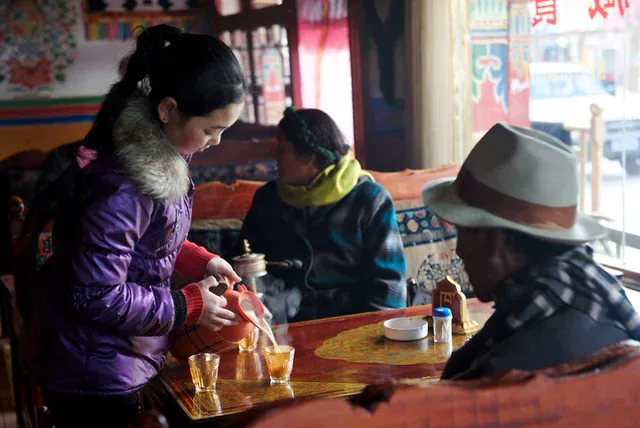
Lhasa sweet tea 拉萨甜茶
Lhasa sweet tea is a hot, milky black tea sweetened with sugar and closely tied to everyday teahouse life in Lhasa, where breakfast, conversation, and unhurried time share the same table.
Read dish guide →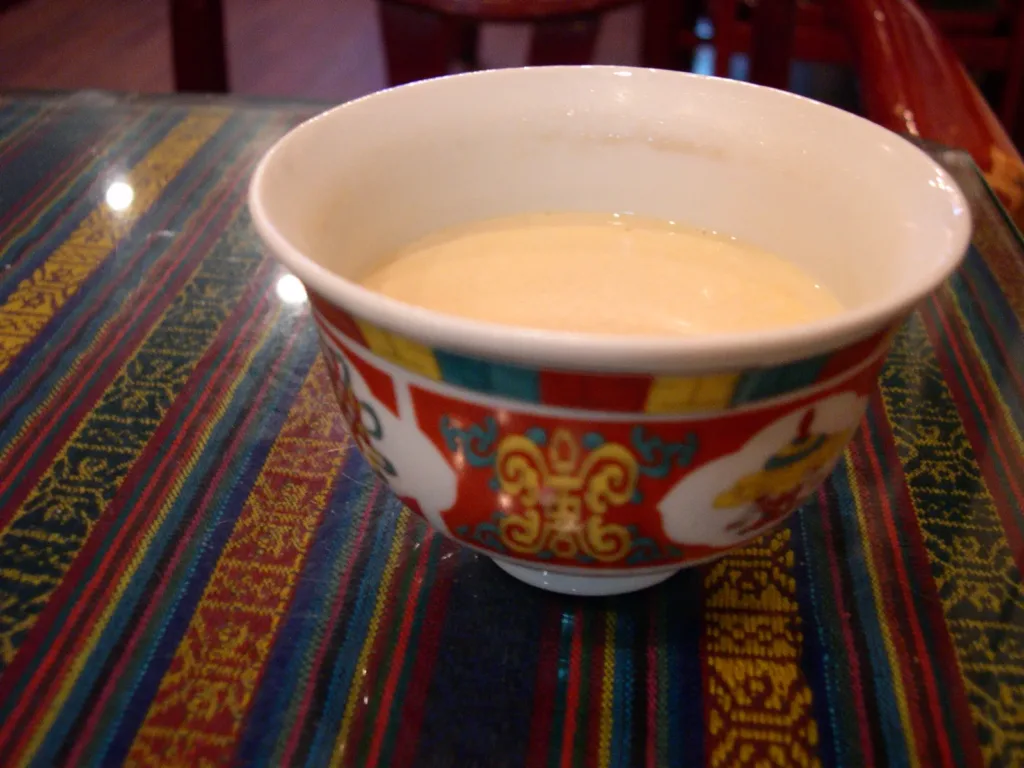
Butter tea 酥油茶
Butter tea is a hot, savoury Tibetan drink made by blending strong tea with butter and salt. In Lhasa, it is a taste of everyday hospitality and a natural partner for tsampa—not a sweet milk tea and not a treatment for altitude sickness.
Read dish guide →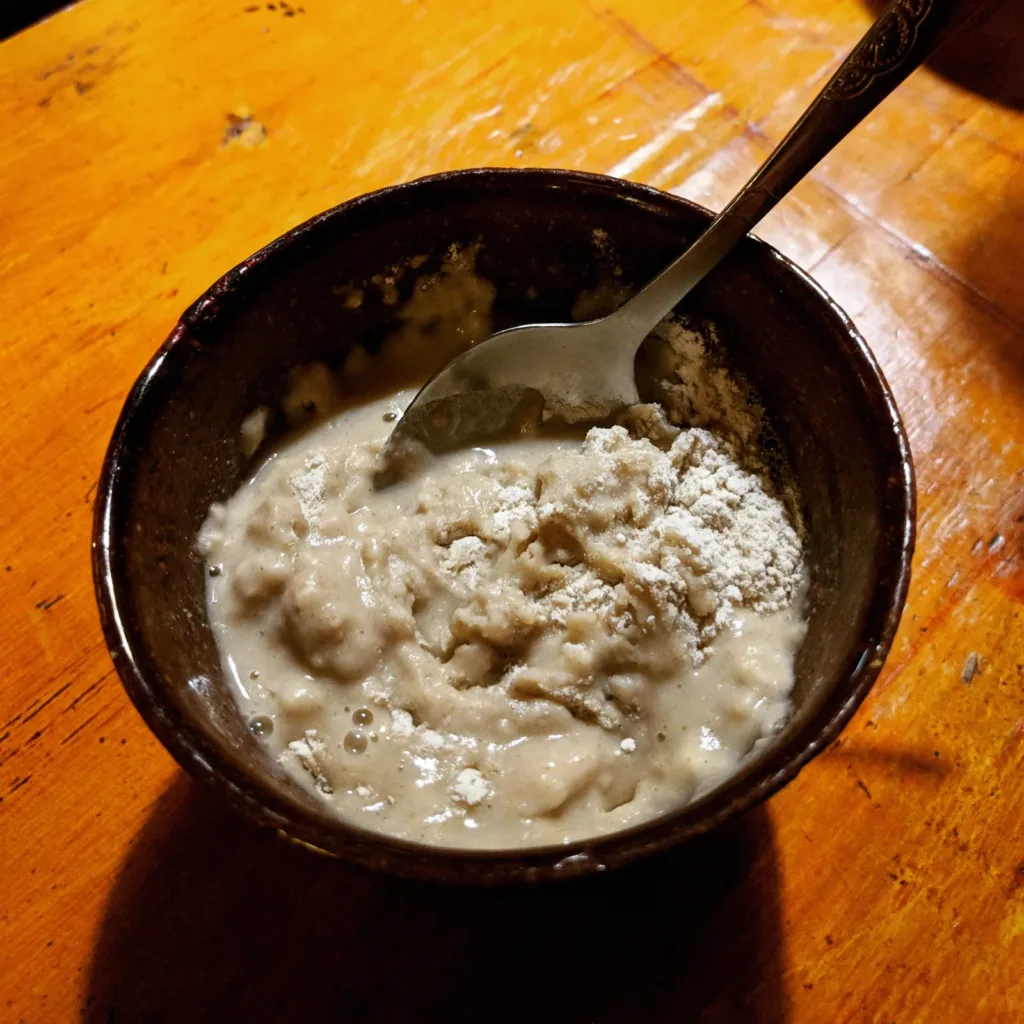
Tsampa 糌粑
Tsampa is roasted highland-barley flour mixed to order with tea, butter or other dairy. In Lhasa, it is best understood as a staple and a way of eating: toasted, grainy flour becomes a hand-mixed dough or porridge, with local variations in grains and accompaniments.
Read dish guide →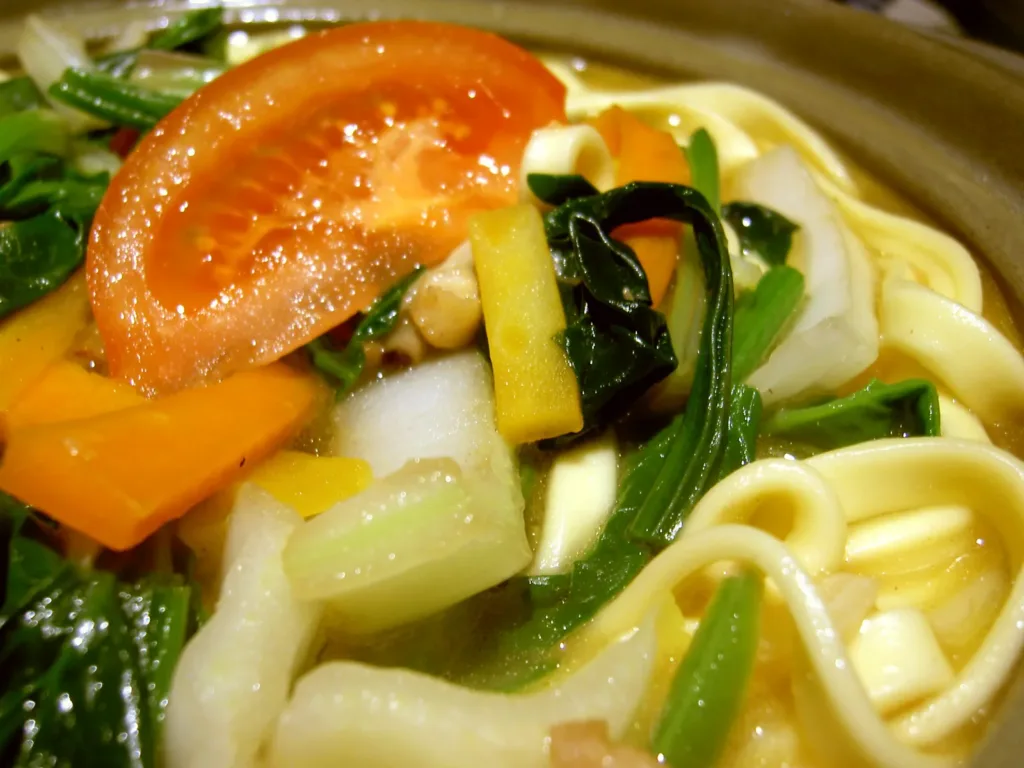
Tibetan broth noodles 藏面
Tibetan broth noodles, or 藏面 (Zangmian), are a familiar Lhasa tea-house breakfast: pale, alkaline wheat noodles served in hot yak-bone or beef broth, commonly finished with diced meat and scallion. The bowl is simple, but it is also a way into the everyday rhythm of Lhasa’s tea houses.
Read dish guide →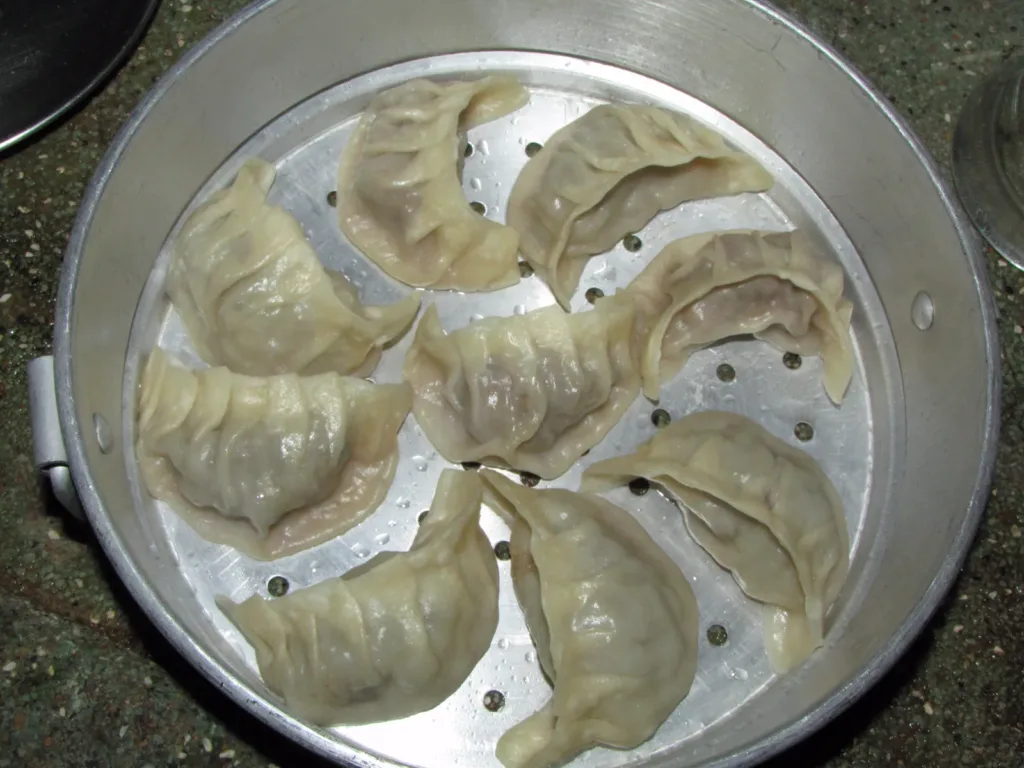
Lhasa meat-filled momo 拉萨藏包子
Lhasa meat-filled momo, known locally as Xia momo (夏馍馍) or zang bao, are Tibetan steamed dumplings with an unleavened wheat wrapper and a juicy meat filling. In Lhasa, they are a practical way to taste Tibetan home-style food: ask what meat is used, then try the first dumpling before adding chilli sauce.
Read dish guide →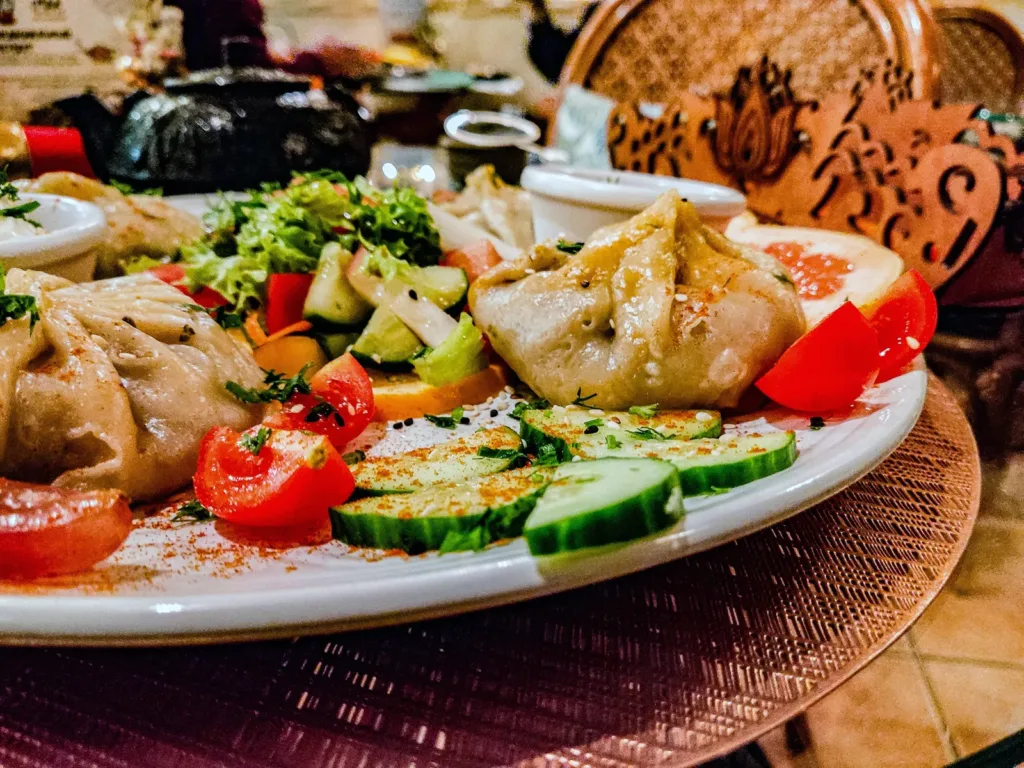
Tibetan Steamed Dumplings 藏式包子
Tibetan steamed dumplings (藏式包子, also described as 藏包 or 夏馍馍) are pleated steamed parcels usually filled with finely chopped yak meat. Their juicy filling, restrained seasoning, and usual pairing with bone broth and Tibetan chilli make them a useful introduction to everyday Tibetan cooking rather than a fixed restaurant speciality.
Read dish guide →
Yak Meat Hot Pot 牦牛肉火锅
In Lhasa, yak meat hot pot is a shared Tibetan meal built around yak, a long-simmered bone broth and a changing selection of vegetables; the copper pot, dipping sauce and way of finishing the broth make it more than a generic hot pot.
Reference photo of a similar dish · 同类菜品参考照片
Read dish guide →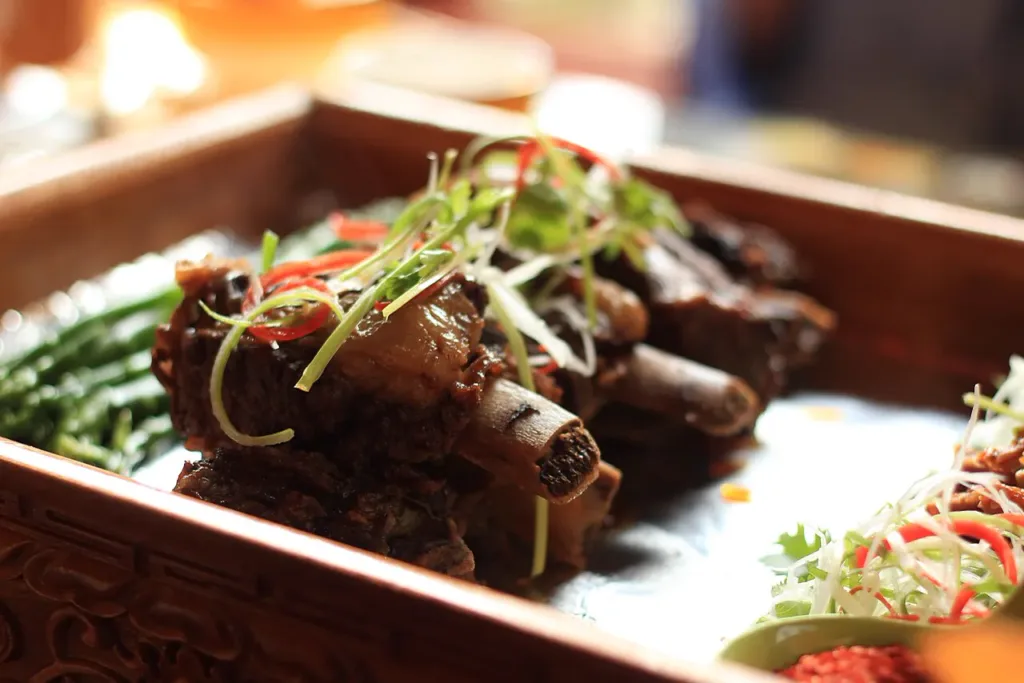
Yak Meat Stewed with Radish 萝卜炖牦牛肉
Yak Meat Stewed with Radish is a simple Tibetan-style shared stew of yak beef and white radish (daikon). In Lhasa it is best approached as a regional, home-style dish rather than a recipe with one fixed restaurant or a claim of Lhasa-only invention: the meat, broth and seasonings can change from kitchen to kitchen.
Read dish guide →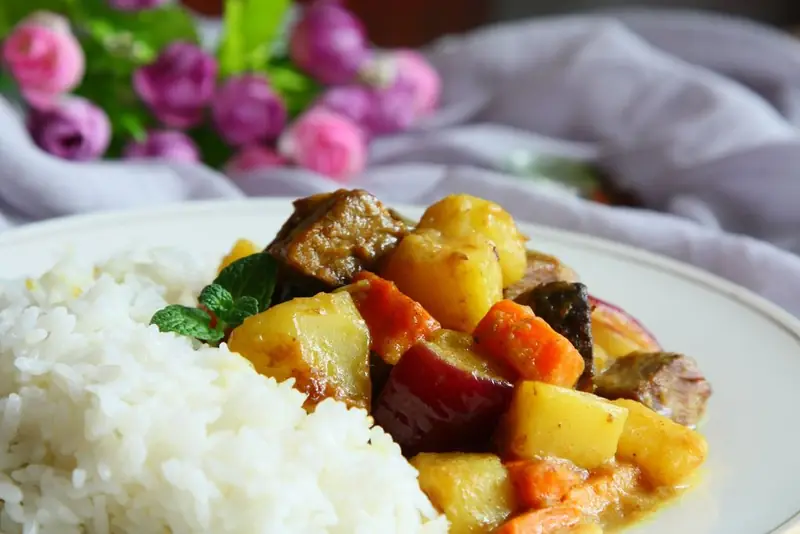
Tibetan-Style Curry Beef 藏式咖喱牛肉
A Lhasa-reported curry beef rice made with sliced yak and curry powder, turmeric and masala; treat it as a local preparation with changing kitchen versions, not a fixed Tibetan recipe.
Read dish guide →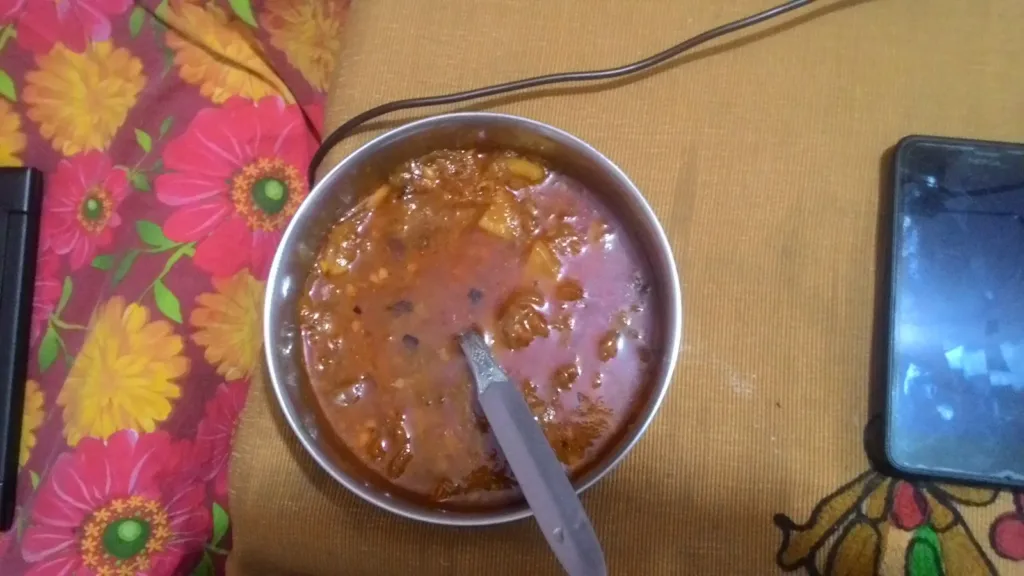
Tibetan-style curry potatoes 藏式咖喱土豆
In Lhasa, Tibetan-style curry potatoes is a flexible potato-and-curry dish rather than one fixed recipe. Look for it as 咖喱土豆拌面 (curry potatoes mixed with noodles) or 咖喱土豆牛肉饭 (curry potatoes and beef with rice): soft, starchy potatoes carry a fragrant sauce, and the order may include yak or other meat depending on the kitchen.
Read dish guide →
Tibetan Blood Sausage 藏式血肠
Tibetan Blood Sausage (藏式血肠) is a Tibetan stuffed-intestine dish that appears in Lhasa’s local-food repertoire. Fresh cattle or sheep blood is combined with tsampa and, in some versions, chopped offal and fat; boiling, chilli sauce and grilling are all documented ways of serving it. Recipes and availability vary, so it is best treated as a dish to ask for rather than a guaranteed menu item.
Read dish guide →
Wind-Dried Meat 风干肉
Wind-Dried Meat (风干肉, fēnggān ròu) is a winter Tibetan preparation in which yak meat is cut into strips and dried in cold, ventilated conditions; in Lhasa it is closely tied to home food-making and serving guests around Losar.
Read dish guide →
Yak Jerky 牦牛肉干
A preserved yak-meat snack associated with Tibet, with a concrete Lhasa-area link through the grasslands and yak industry of Damxung County. Traditional air-dried versions are made in the winter slaughtering season, while packaged products may be seasoned or processed in modern facilities.
Read dish guide →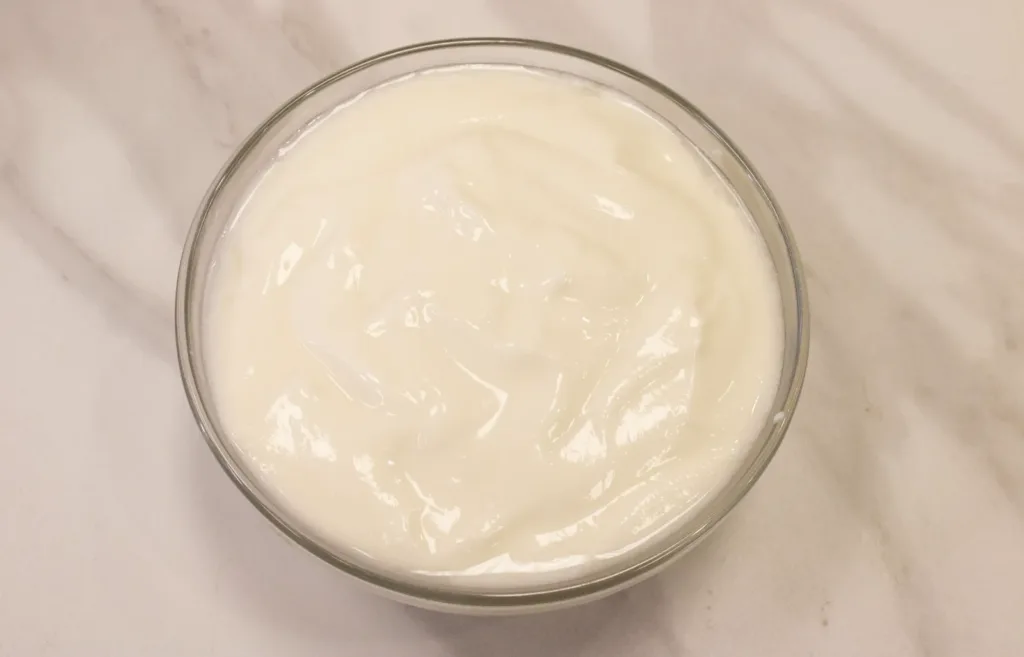
Tibetan Yogurt 酸奶
Tibetan yogurt (酸奶, suannai) is a thick, tangy Lhasa dairy specialty, traditionally made from boiled and cooled yak milk with a little previous yogurt as starter; sugar, fruit, honey, or other toppings create less sour modern versions. Its link to Shoton, the “yogurt banquet” festival, makes it a useful food to try alongside Lhasa’s Tibetan food culture.
Read dish guide →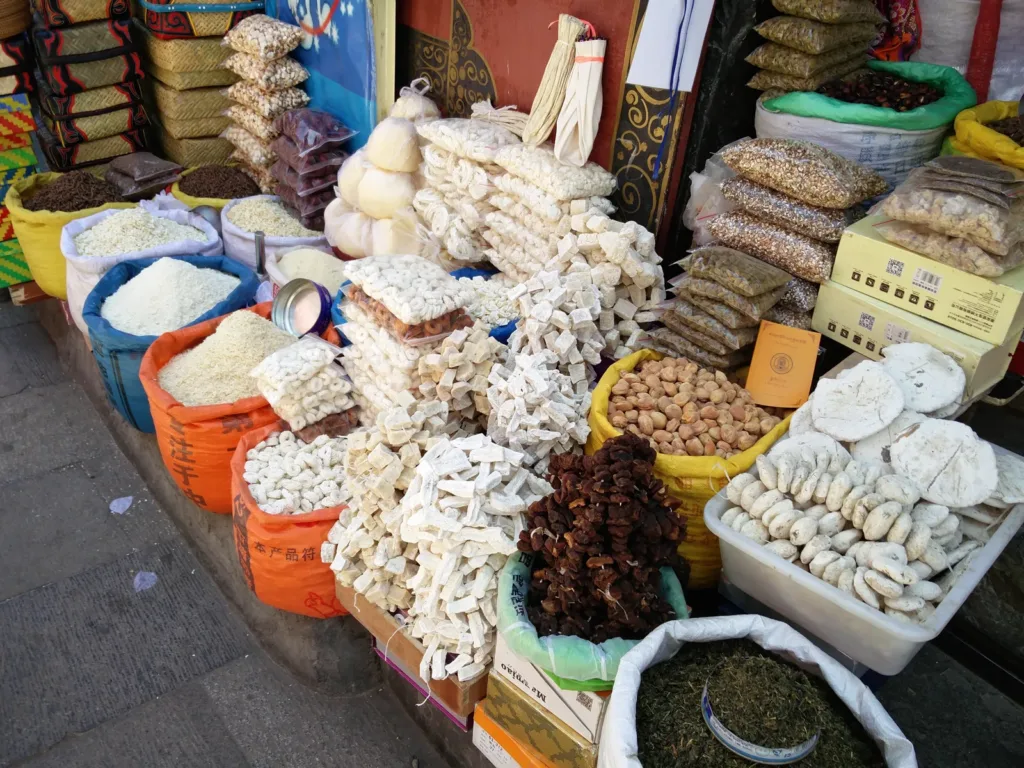
Dried Cheese Curds 奶渣
Dried Cheese Curds (奶渣, naizha) are a traditional Tibetan dairy food made by separating curds from milk after butter-making or souring, then draining and drying them. In Lhasa they may appear as hard pieces or rings to eat on their own, or as an ingredient with tea, tsampa, porridge, and soup.
Read dish guide →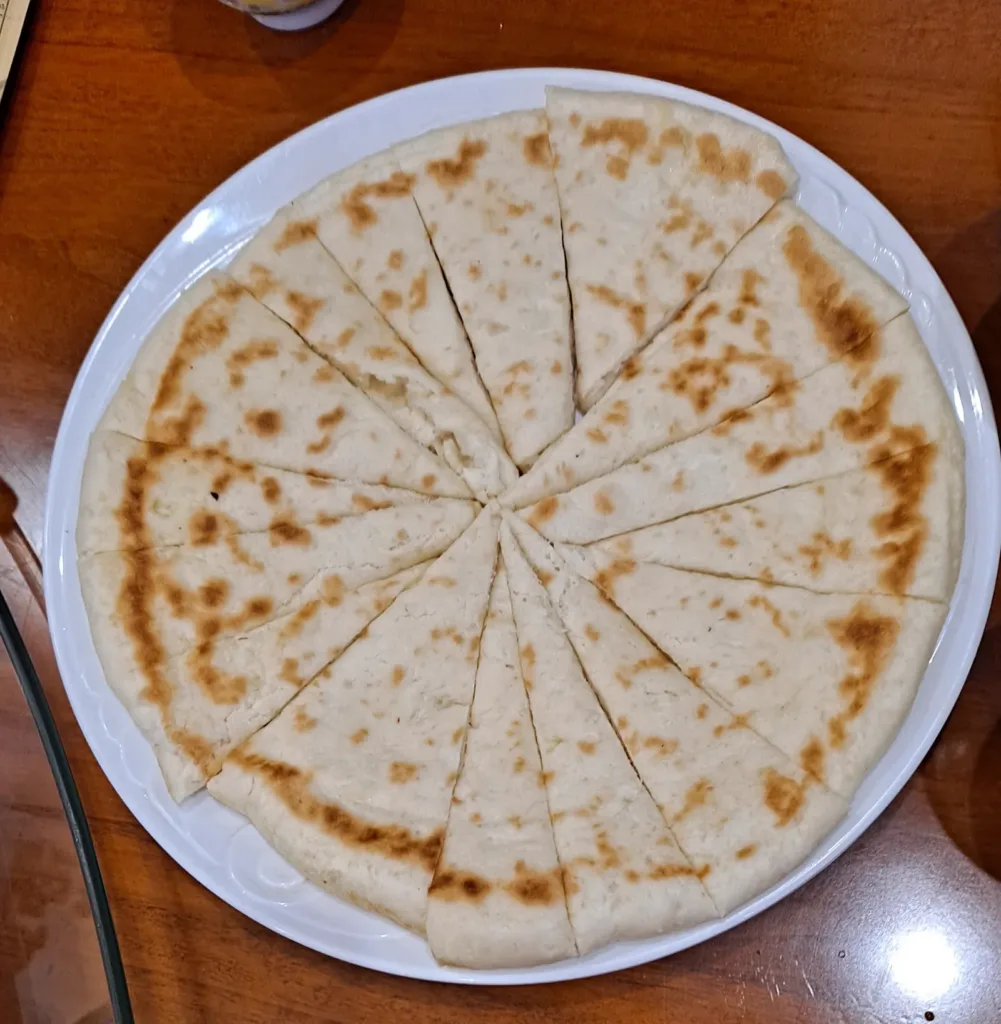
Highland-barley flatbread 青稞饼
Highland-barley flatbread (青稞饼) is a Tibetan barley-based flatbread with a grain-forward texture and kitchen-to-kitchen variations in flour, sweetness, fillings and cooking method. In Lhasa, treat it as a food to ask for at a Tibetan restaurant or tea house, not as a dish with one fixed recipe or one guaranteed shop.
Read dish guide →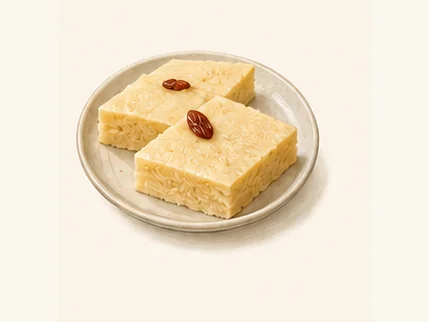
Tibetan butter-and-curd cake 藏式酥酪糕
A dense Tibetan dairy sweet made from a dried, milk-derived powder mixed with butter, sugar and optional dried fruit and nuts, then shaped and steamed. In Lhasa, show 藏式酥酪糕 and ask which version is available that day.
AI dish illustration / AI 菜品示意图
Read dish guide →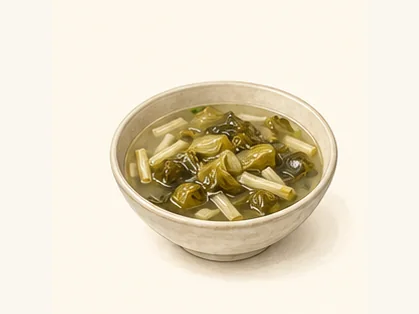
Tibetan pickled-greens soup 藏式酸菜汤
Tibetan pickled-greens soup is a sour, vegetable-led Tibetan preparation: preserved greens are simmered until tender, and the broth may be light or enriched according to the kitchen. It is a useful Lhasa food to seek when you want something sharper and lighter than a meal built around meat, butter or grain.
AI dish illustration / AI 菜品示意图
Read dish guide →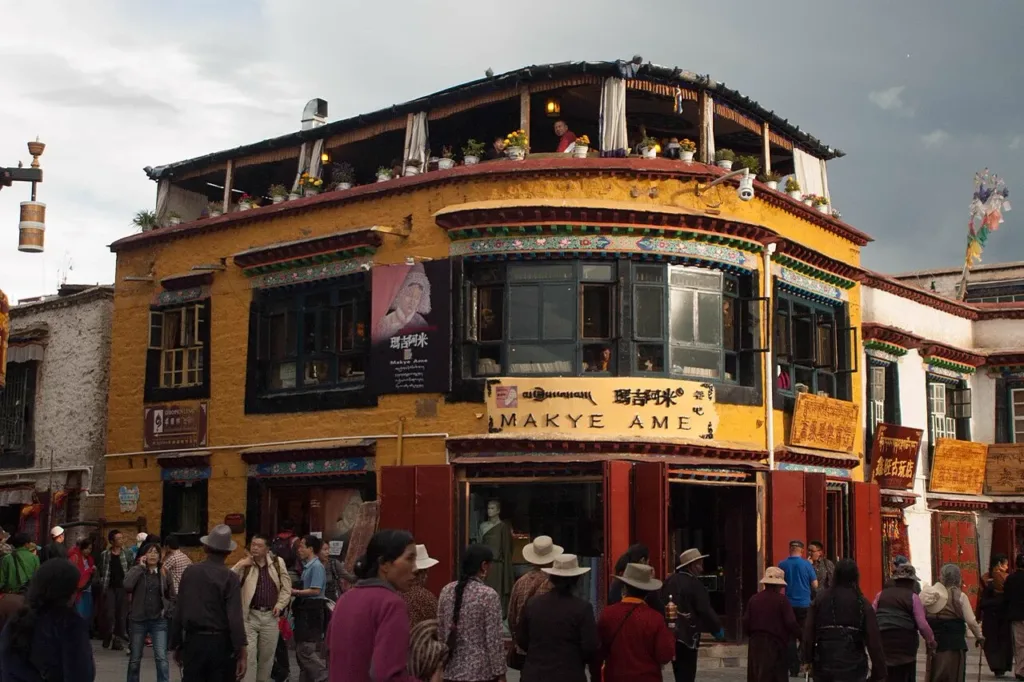
Makye Ame vegetable rolls 玛吉阿米素菜卷
Makye Ame vegetable rolls are a named restaurant order associated with the Makye Ame restaurant at the southeast corner of Lhasa’s Barkhor. A thin wrapper encloses cooked vegetables; kitchens may finish the rolls soft or crisp, while the exact filling and sauce are not standardized in the sources reviewed.
Read dish guide →Tibet (Xizang) · Food stories

Food articles are in progress
Long-form food stories for this topic are being written. Until then, browse the dish guides above or see all Chinese food guides.