


Get to know Pingliang
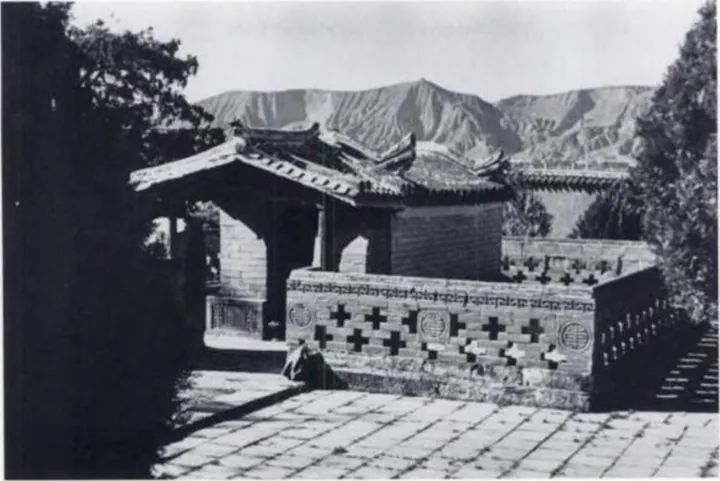
- Administrative area
- Prefecture-level city · 地级市
- Part of
- Gansu
- Chinese name
- 平凉市
- Local areas
- 7 local areas
Area & population
- Area
- 11,196.71 km²
- Population · 2020
- 1,848,607
- Administrative seat
- Kongtong District
Source: English Wikipedia, as of the dates shown.
Setting and landscape
The land is highest in the centre: loess gullies in the east, the Liupan range in the middle and ridged hill country in the west. The Jing River (泾河) crosses the middle from west to east and drains the five eastern counties and districts, while the two western counties drain to the Wei River (渭河).
History
Pingliang County was created in 572 under the Northern Zhou. The Jin made the area Pingliang Prefecture in 1131, the Ming placed it under Shaanxi, and in 1669 it passed to Gansu. As a Silk Road town it was called a 'dry port' and 'the first city west of Chang'an'. In Jingchuan County (泾川县), belief in the Queen Mother of the West (西王母信俗) is on the national intangible heritage list.
What to see
Legend says the Yellow Emperor climbed Kongtong Mountain to ask the sage Guangchengzi (广成子) about governing and nurturing life, and the mountain is called a holy source of the Dao. Its historic buildings are a national key cultural relic, and Gansu Daily counts 42 building groups on the mountain.
About 1 km northwest of the Jingchuan county town, the Wangmu Palace grotto (王母宫石窟) is a 12 m high Northern Wei cave whose central pillar and walls are carved with the thousand-Buddha motif, guardians, bodhisattvas and white elephants bearing pagodas. Across the Jing River, Dayun Temple (大云寺), where Wu Zetian had the Dayun Sutra kept, yielded a gold coffin and silver casket holding 14 Buddha relics in 1964. In Zhuanglang County (庄浪县), the Yunya Temple grottoes (云崖寺石窟), begun in the late Northern Wei, cover a cliff about 300 m long and 80 m high.
Food and local products
Jingning apples (静宁苹果), a Chinese geographical indication product, are bright-skinned and crisp and grow mainly in the Lidian (李店河) and Hulu (葫芦河) river valleys; Jingning replaced its native apples with Western varieties in the late Qing and planted Fuji orchards widely after 1988. Pingliang Jinguo (平凉金果), 'golden fruit', is also a geographical indication product.
Getting oriented
The city government sits in Kongtong District (崆峒区). The Baoji–Zhongwei, Xi'an–Pingliang and Tianshui–Pingliang railways and National Highway 312 pass through the city, and Pingliang Station on the Baoji–Zhongwei line is 203 km from Baoji.
Highlights
- Kongtong Mountain 崆峒山: A national 5A scenic area; Gansu Daily notes that Qin Shi Huang and Emperor Wu of Han are also said to have climbed it.
- Dayun Temple and Wangmu Palace 大云寺王母宫: The two sites stand on either side of National Highway 312 outside Jingchuan; the temple was converted from the Sui Daxingguo Temple (大兴国寺).
- Wangmu Palace Grottoes 王母宫石窟: Rectangular cave cut into the hillside, with figures in three tiers around a square central pillar; a national key cultural relic.
Sources for this guide
平凉市 - 维基百科,自由的百科全书 · Wikipedia (Chinese) · CC BY-SA 4.0
“问道崆峒·养生平凉”多条主题线路扮靓这个夏天_甘肃旅游_中国甘肃网 · Gansu Daily (China Gansu Net / Lanzhou Morning Post)
静宁苹果 - 维基百科,自由的百科全书 · Wikipedia (Chinese) · CC BY-SA 4.0
Original English written from the listed sources and fact-checked against them. Updated 2026-09-30.
Explore Pingliang
Core places to explore, with English and Chinese names.
Places to explore around Pingliang
 Wangmu Palace Grottoes · 王母宫石窟
Wangmu Palace Grottoes王母宫石窟
The Wangmu Palace grotto at the foot of Huishan is a Buddhist cave beneath a hill associated with the Queen Mother of the West. A central pillar creates a passage around its core, with carved figures covering the pillar and…
Read the place guide →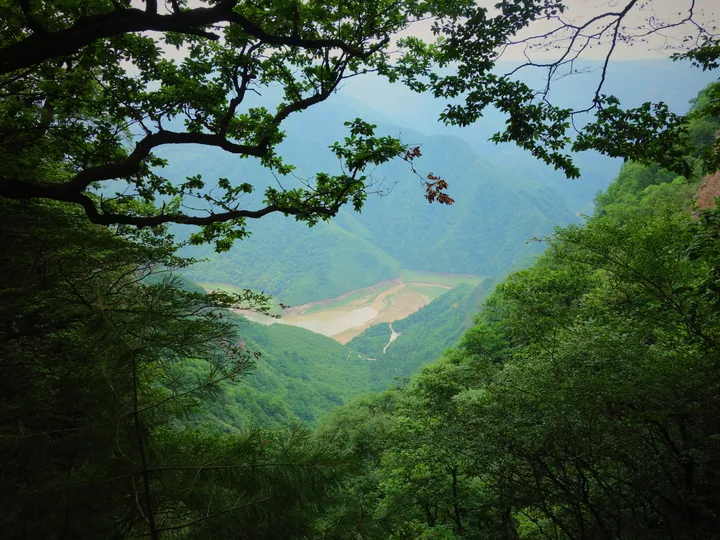 Kongtong Reservoir seen from Kongtong Mountain · 从崆峒山上远眺崆峒水库 Source-recorded photograph date: 2016-07-24.
Kongtong Mountain崆峒山
Kongtong Mountain combines forested ridges with Buddhist and Daoist compounds above Pingliang. The Zhongtai temples and the higher Huangcheng precinct give the ascent a sequence of religious spaces, while gates and steep stairs…
Read the place guide → AI illustration · AI 示意图(仅供参考,非该地点实拍)
Dayun Temple and Queen Mother Palace大云寺王母宫
Dayun Temple and the Wangmu Palace (大云寺王母宫) are the two sites this entry covers in Jingchuan County, Pingliang, Gansu: a Buddhist temple whose predecessor was the Sui Daxingguo Temple, and the palace to Xiwangmu on Hui Mountain, which also carries Northern Wei Buddhist caves.
Read the place guide →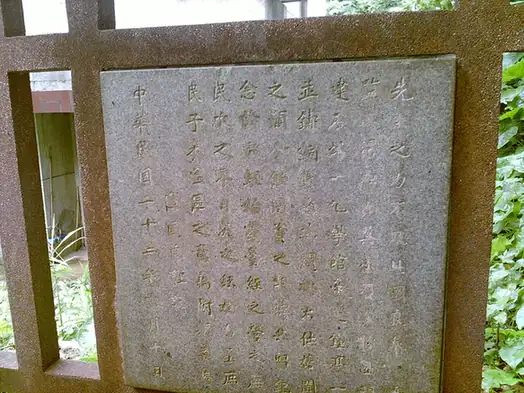 Lingtai Ancient Terrace · 灵台古灵台
Lingtai Ancient Terrace灵台古灵台
The ancient Lingtai platform (古灵台) is a terrace in Lingtai County, Pingliang, Gansu, which the park's own guide describes as built by King Wen of Zhou after he conquered the state of Mixu and used for a sacrifice to heaven reserved to the Son of Heaven.
Read the place guide →Local life & food
Pingliang local specialties
平凉市特色美食 · 9 specialties to discover
 Pingliang Mutton and Bread Soup 平凉羊肉泡馍AI illustration · AI 示意图(仅供参考,非实拍)
Pingliang Mutton and Bread Soup (平凉羊肉泡馍) is the meat-and-broth bowl of Pingliang (平凉) in eastern Gansu, which the Pingliang culture and tourism bureau promotes as the "first bowl of the northwest" (西北第一碗).
Read the dish guide → Jingning braised chicken 静宁烧鸡AI illustration · AI 示意图
The meat is tender and savory, with a fragrant spice note concentrated in the skin. Breast and leg pieces offer different textures.
Source ↗Read the dish guide →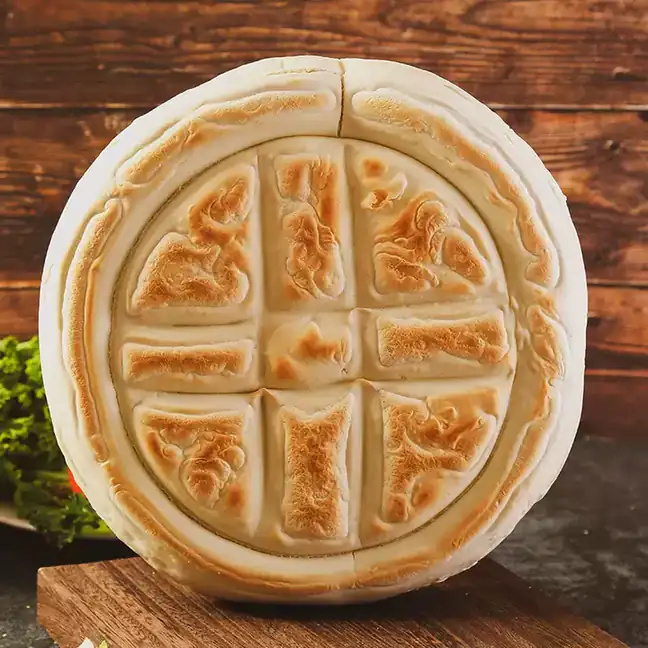 Pingliang Thick Flatbread 平凉锅盔
Pingliang Thick Flatbread (平凉锅盔) is the guokui (锅盔), a thick, oven-baked wheat flatbread, of Pingliang (平凉), Gansu.
Read the dish guide →Image notes
Resized for the web; the photo itself has not been edited.
 Zhuanglang Charcoal Clay Hot Pot 庄浪暖锅AI illustration · AI 示意图(仅供参考,非实拍)
Zhuanglang Charcoal Clay Hot Pot (庄浪暖锅) is a pot of layered pork and vegetables from Zhuanglang (庄浪) in Pingliang (平凉), Gansu, simmered in an earthenware pot around a central tube of burning charcoal.
Read the dish guide →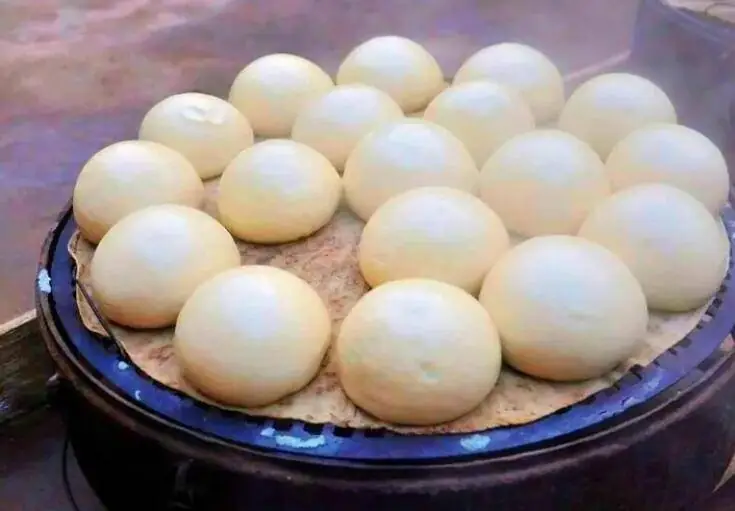 Jingchuan Jar-Shaped Steamed Bread 泾川罐罐蒸馍
Jingchuan Jar-Shaped Steamed Bread (泾川罐罐蒸馍) is a steamed wheat bun from Jingchuan (泾川) in Pingliang (平凉), Gansu.
Read the dish guide →Image notes
Resized for the web; the photo itself has not been edited.
 Lingtai Handmade Noodles 灵台手工面AI illustration · AI 示意图(仅供参考,非实拍)
Lingtai Handmade Noodles (灵台手工面) are long, hand-rolled wheat noodles from Lingtai County (灵台县) in Pingliang (平凉), a loess-plateau county between the Jing (泾河) and Wei (渭河) rivers in Gansu.
Read the dish guide → Chongxin Crisp Filled Pastries 崇信酥合子AI illustration · AI 示意图(仅供参考,非实拍)
Chongxin Crisp Filled Pastries (崇信酥合子) is listed among the local specialties of Pingliang, Gansu. The term 酥 points to flaky pastry or crisp preparation.
Read the dish guide →Jingchuan Long Noodles 泾川长面AI illustration · AI 示意图(仅供参考,非实拍)
Jingchuan Long Noodles (泾川长面) is listed among the local specialties of Pingliang, Gansu. The term 面 points to noodles or flour-based food.
Read the dish guide →All dish names · 全部菜名 (9)
- Pingliang Mutton and Bread Soup · 平凉羊肉泡馍
- Jingning braised chicken · 静宁烧鸡
- Pingliang Thick Flatbread · 平凉锅盔
- Zhuanglang Charcoal Clay Hot Pot · 庄浪暖锅
- Jingchuan Jar-Shaped Steamed Bread · 泾川罐罐蒸馍
- Lingtai Handmade Noodles · 灵台手工面
- Chongxin Crisp Filled Pastries · 崇信酥合子
- Jingchuan Long Noodles · 泾川长面
- Hele Pressed Noodles · 饸饹面
More dishes from across Gansu are in the Gansu food guide.
Counties & districts in Pingliang
7 areas belong directly to Pingliang.
7 areas
Kongtong District 崆峒区
Kongtong is a district of the city of Pingliang, Gansu province, China, bordering Ningxia to the northwest. It is named after the Kongtong Mountains. Kongtong is the seat of Pingliang city's government.
Explore the area →CountyJingchuan County 泾川县
Jingchuan County (simplified Chinese: 泾川县; traditional Chinese: 涇川縣; pinyin: Jīngchuān Xiàn) is a county under jurisdiction of the prefecture-level city of Pingliang, in the east of Gansu Province, China…
Explore the area →CountyLingtai County 灵台县
Lingtai County (simplified Chinese: 灵台县; traditional Chinese: 靈台縣; pinyin: Língtái Xiàn) is a county in the southeast of Gansu province, China, bordering Shaanxi province to the south and east.
Explore the area →CountyChongxin County 崇信县
Chongxin (simplified Chinese: 崇信县; traditional Chinese: 崇信縣; pinyin: Chóngxìn Xiàn) is a county in the southeast of Gansu province, China, located 70 km (43 mi) northeast of Pingliang, which administers it.
Explore the area →Show fewer areas
Zhuanglang County 庄浪县
Zhuanglang County is a rural county under the administration of the prefecture-level city of Pingliang in the east of Gansu Province, China.
Explore the area →CountyJingning County 静宁县
Jingning County (simplified Chinese: 静宁县; traditional Chinese: 靜寧縣; pinyin: Jìngníng Xiàn) is an administrative district in Gansu, China. It is one of 58 counties of Gansu.
Explore the area →County-level cityHuating 华亭市
Huating (simplified Chinese: 华亭; traditional Chinese: 華亭; pinyin: Huátíng) is a county-level city, formerly Huating County, in the east of Gansu province, China, bordering Ningxia to the northwest.
Explore the area →No areas match this name.
Plan your visit
Getting there
Search for 平凉市 in a map app to find stations and your accommodation.
Where to stay →Build your route
Wangmu Palace Grottoes and Kongtong Mountain are about 80 km apart (straight-line distance). The linked place guides have entrance and visit details.
Continue with Gansu →More in Gansu
Sources & geographic information
Administrative names and parent areas: Official geographic directory (dmfw.mca.gov.cn) · Reference date 2026-09-06.
Some facts checked against 平凉市 — Wikipedia contributors, CC BY-SA 4.0.
Some facts checked against 静宁苹果 — Wikipedia contributors, CC BY-SA 4.0.
Photo: Wangmu Palace Grottoes · hk.trip.com. Resized for the web; the photo itself has not been edited.
Photo: Kongtong Mountain · DarthVachel · CC BY-SA 4.0. Resized for the web; the photo itself has not been edited. Thumbnails may show a cropped view.

Photo: Lingtai Ancient Terrace · gansu.gscn.com.cn. Resized for the web; the photo itself has not been edited.
Map data © OpenStreetMap contributors. Pins mark approximate centres, not entrances or boundaries.
Image credits & notes (1)
- A historic gongbei (Sufi saint's tomb) at Pingliang, Gansu, photographed in the early 20th century · 甘肃平凉一处苏非派拱北(圣墓),摄于民国时期 Source-recorded photograph date: between 1912 and 1949date QS:P,+1950-00-00T00:00:00Z/7,P1319,+1912-00-00T00:00:00Z/9,P1326,+1949-00-00T00:00:00Z/9.Photo: Unknown, photographed in Republic of China · Public domainResized for the web; the photo itself has not been edited. Thumbnails may show a cropped view.
