


Get to know Mianyang
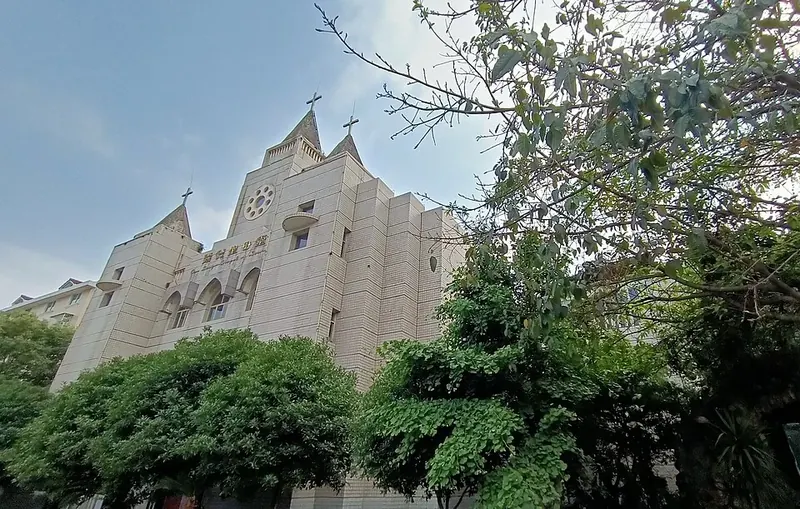
Photo adjustments
Full frame retained; proportionally resized and converted to WebP. No retouching or changes to the photographed subject. Card displays may crop the view.
- Administrative area
- Prefecture-level city · 地级市
- Part of
- Sichuan
- Chinese name
- 绵阳市
- Local areas
- 9 local areas
Area & population
- Area in the source
- 20,267.46 km²
- Population · 2020 census
- 4,868,243
- Administrative seat
- Fucheng District
Source: cited geographic source, as of the dates shown.
Transport
The city has highway and railway connections to several major cities and is on the road from Xi'an to the provincial capital of Chengdu as well as the Baocheng Railway running from Baoji in Shaanxi province to Chengdu.
Mianyang Nanjiao Airport has direct flights to Beijing, Shanghai, Guangzhou, Xi'an, Shenzhen, Kunming, Hangzhou, and so on.
Explore Mianyang
Core places to explore, with English and Chinese names.
Qiqushan Temple 七曲山大庙
Bao'en Temple, Pingwu 平武报恩寺
Jiangyou Li Bai Memorial 李白纪念馆
Beichuan Qiang Town Tourism Area 北川羌城旅游区
Qijiang Ancient Town and Han Cliff Tombs 郪江古镇与汉崖墓群
Jiuhuang Mountain 九皇山
Medicine King Valley 药王谷
Bao'en Temple 报恩寺
Huya Grand Canyon 虎牙大峡谷
Two Bombs City 两弹城
Li Bai's Hometown 李白故里
Douchuan Mountain 窦圌山
Foye Cave 佛爷洞
Mianyang Science and Technology Museum 绵阳科技馆
Mianyang Museum 绵阳博物馆
Yuewang Tower 越王楼
Fucheng District 涪城区
Youxian District 游仙区
Anzhou District 安州区
Santai County 三台县
Yanting County 盐亭县
Zitong County 梓潼县
Beichuan Qiang Autonomous County 北川羌族自治县
Pingwu County 平武县
Jiangyou 江油市
Places to explore around Mianyang
 The red entrance building at Qiqushan Temple above Zitong, February 2015.
Qiqushan Temple七曲山大庙
Qiqushan Temple follows a wooded ridge above Zitong. Its halls step with the hillside instead of following a single rigid axis, creating changing views of tiled roofs, raised corners and carved timberwork. The complex is…
Read the place guide → The Mahavira Hall at Bao'en Temple in Pingwu, in a photograph dated November 2016 by its source.
Bao'en Temple, Pingwu平武报恩寺
Bao’en Temple in Pingwu is arranged around a main axis, with galleries linking halls into enclosed courts. Its most distinctive objects are architectural in scale: a many-armed Guanyin carved from nanmu wood in Dabei Hall and an…
Read the place guide →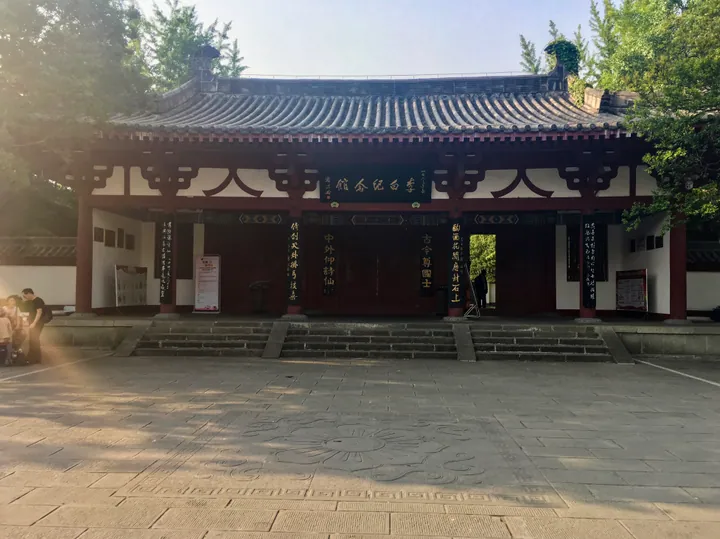 The entrance hall of the Li Bai Memorial in Jiangyou · 江油市李白纪念馆正门 Source-recorded photograph date: 2018-04-29 17:52:15.
Jiangyou Li Bai Memorial李白纪念馆
Jiangyou’s Li Bai Memorial is a garden museum beside the Changming River, with halls built in a Tang-inspired architectural style. The displays move from the poet’s life to the written and painted works created around his…
Read the place guide →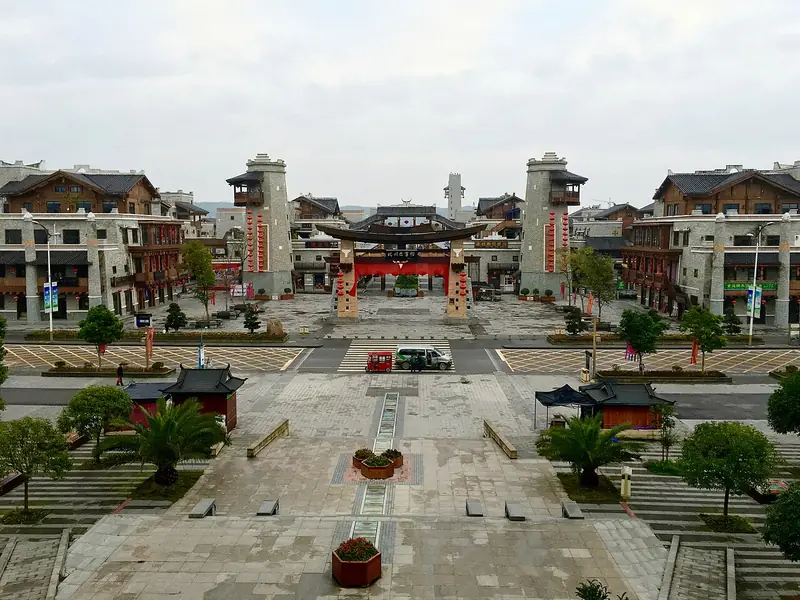 Beichuan Qiang Town Tourism Area (北川羌城旅游区), Beichuan Qiang Autonomous County. Photograph: "Beichuan, Mianyang, Sichuan, China - panoramio (11)".
Beichuan Qiang Town Tourism Area北川羌城旅游区
Beichuan's Qiang Town tourism area connects the old county-town earthquake memorial landscape with the rebuilt town and Qiang cultural venues.
Read the place guide → AI illustration · AI 示意图(仅供参考,非该地点实拍)
Qijiang Ancient Town and Han Cliff Tombs郪江古镇与汉崖墓群
Qijiang is an old town in Santai county, Mianyang, Sichuan, with the Qi river to its south and the Jin river to its east, and the hillsides around it are cut with Han-dynasty cliff tombs. That tomb group, which extends across the towns of Qijiang and Anju, was announced by the State Council in November 1996 as a national key cultural relic protection unit in the fourth batch.
Read the place guide →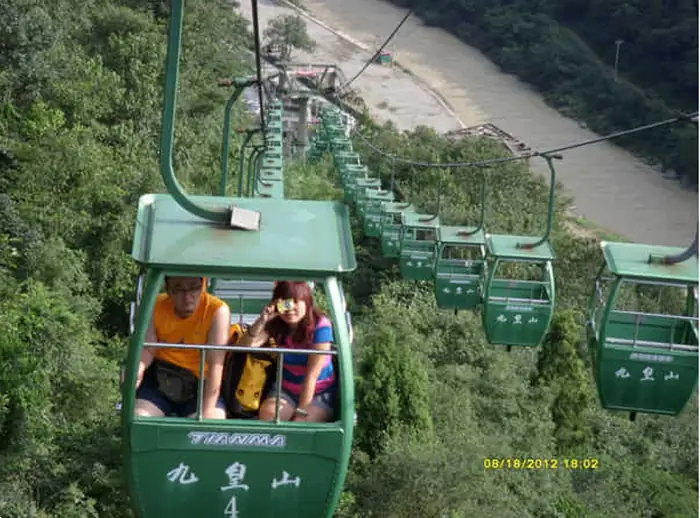 Jiuhuang Mountain · 九皇山
Jiuhuang Mountain九皇山
Jiuhuangshan is a mountain scenic area in Guixi town, in Beichuan Qiang Autonomous County, Mianyang, Sichuan, laid out on karst ground and presented around Western Qiang culture. It is a national AAAA-grade tourist area, one of four in the county.
Read the place guide →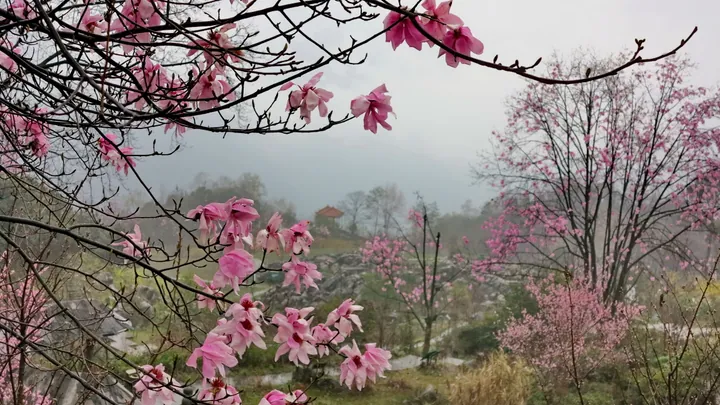 Spring blossoms in the Yaowanggu (Medicine King Valley) scenic area, Beichuan Qiang Autonomous County, Mianyang · 绵阳市北川羌族自治县药王谷春景 Source-recorded photograph date: Taken on 21 March 2016.
Medicine King Valley药王谷
Yaowanggu, the Medicine King Valley, is a wooded valley in Guixi town, Beichuan Qiang Autonomous County, Mianyang, Sichuan, immediately adjoining the Jiuhuangshan scenic area, and its subject is medicinal plants. It is a national AAAA-grade scenic area, a national forest health-and-wellness base and a provincial demonstration base for traditional-medicine health tourism.
Read the place guide →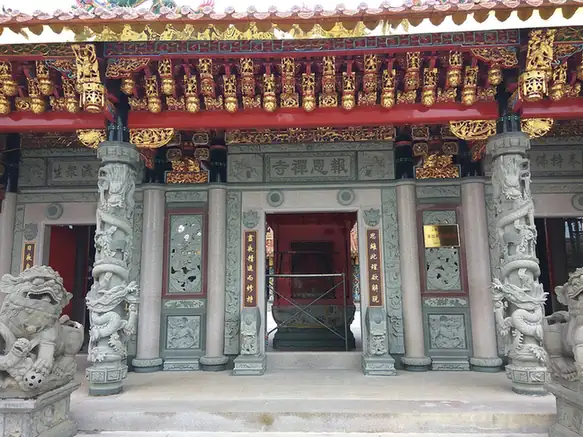 Bao'en Temple · 报恩寺
Bao'en Temple报恩寺
Baoensi is a Ming-dynasty temple in the north-east of Pingwu county town, Mianyang, Sichuan, built under the direction of Wang Xi, a Longzhou Xuanfu Si official, and his son Wang Jian; the two sources cited here date the start of building differently, the provincial archaeology institute to 1439 and a 2014 CPPCC Daily feature to 1440, and both carry the work through to 1460. It is a national key cultural relic protection unit, announced by the State Council in 1996.
Read the place guide →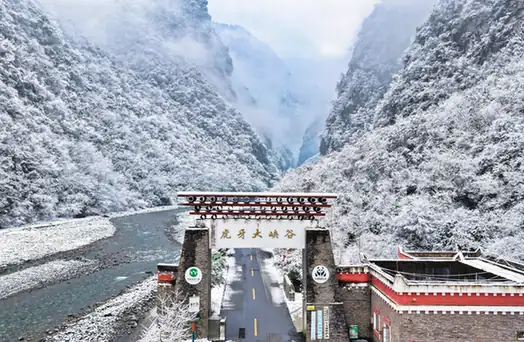 Huya Grand Canyon · 虎牙大峡谷
Huya Grand Canyon虎牙大峡谷
Huya Grand Canyon, the Huya canyon, is in Pingwu county, Mianyang, Sichuan, and is known for the cluster of ice falls that forms in it in winter. A 2026 Sichuan Online report names the canyon and places the Huya ski field both in its interior and in Huya Tibetan township, which lies in the north-west of the county, covers 484 square kilometres and has a population of 2,578, of whom 24.5 percent are Tibetan.
Read the place guide → Two Bombs City · 两弹城
Two Bombs City两弹城
Liangdancheng, the 'Two Bombs City', is the former headquarters compound of the China Academy of Engineering Physics (the '9th Academy'), at the foot of Changqing Shan in Zitong county, Mianyang, Sichuan. It is a national key cultural relic protection unit and a national AAAA-grade tourist area.
Read the place guide → Main gateway inscribed 'Li Bai's Hometown' at the entrance to the Li Bai memorial complex, Jiangyou, Mianyang · 四川省绵阳市江油市李白故里景区大门 Source-recorded photograph date: Taken on 5 October 2015.
Li Bai's Hometown李白故里
Li Bai's Hometown is the scenic area at Li Bai's former residence in Qinglian town, Jiangyou, Mianyang, Sichuan. The Sichuan Provincial Local Chronicles Office records that the Tang poet was born in the same township. Longxi Yuan, the site of his former residence, was listed as a Sichuan provincial cultural relic protection unit in 1961.
Read the place guide → Douchuan Mountain (窦圌山), Jiangyou. Photograph: "江油云岩寺飞天藏".
Douchuan Mountain窦圌山
Douchuan Mountain is a mountain whose main peak stands in bare conglomerate Danxia rock, north-east of Wudu town, the old county seat of Jiangyou, Mianyang, Sichuan, and the site of Yunyan Temple. It is a national AAAA-grade tourist area, a national geopark and a national key cultural relic protection unit.
Read the place guide →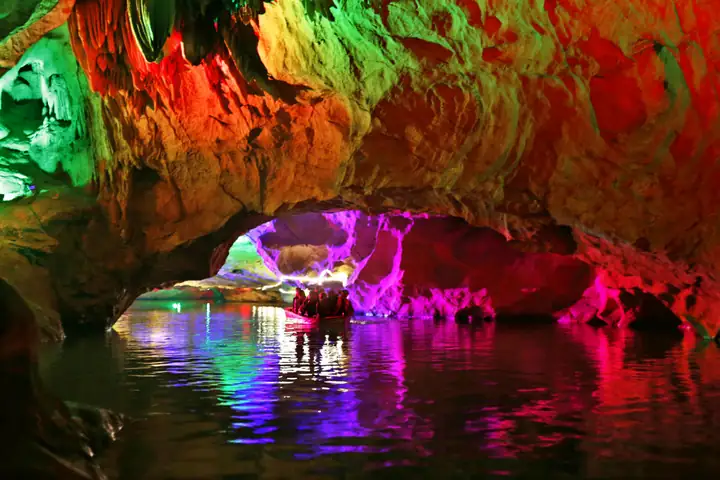 Foye Cave · 佛爷洞
Foye Cave佛爷洞
Karst cave with an underground river in Dakang Town, 14 km from Jiangyou, named for a stone Buddha found inside; a national AAAA scenic area.
Read the place guide →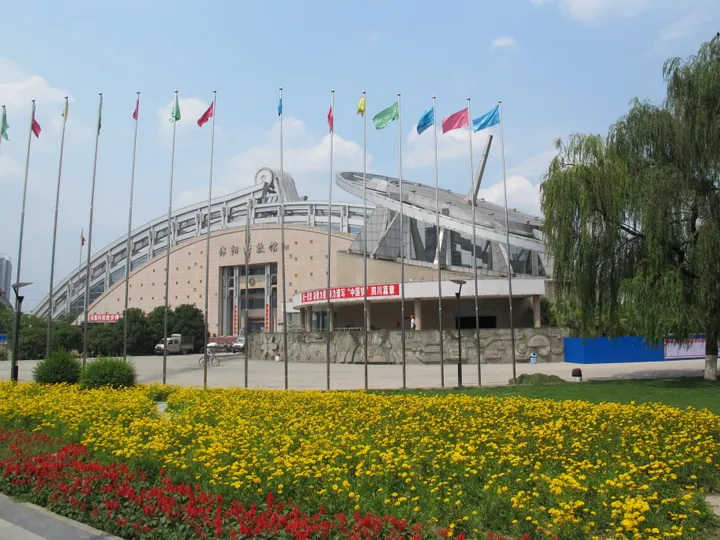 Exterior of the Mianyang Science and Technology Museum building, Fucheng District, Mianyang, with flower beds in front · 四川省绵阳市涪城区绵阳科技馆建筑外观及花坛 Source-recorded photograph date: Taken on 27 May 2013.
Mianyang Science and Technology Museum绵阳科技馆
Mianyang Science and Technology Museum is a 'Two Bombs, One Satellite' themed museum beside the Furong stream in Youxian district, Mianyang, Sichuan. In May 2014 it was designated a national AAAA-grade tourist attraction, which Mianyang Investment Holding, the state-owned company whose corporate site carries a brand page for the museum, describes as the first within Mianyang's urban core.
Read the place guide → Mianyang Museum · 绵阳博物馆
Mianyang Museum绵阳博物馆
Mianyang Museum is the municipal museum of Mianyang, Sichuan, in Youxian district. Its own introduction describes it as a project of the reconstruction that followed the '5.12' Wenchuan earthquake, opened in December 2016 and graded a second-class national museum, and its collection is built around Han-dynasty finds from local tombs, including horse figures, a bronze money tree and an early model of the body's channels.
Read the place guide → Exterior of Yuewang Tower, a multi-storey tower in Youxian District, Mianyang · 绵阳市游仙区越王楼外观,塔身悬挂“越王楼”匾额 Source-recorded photograph date: 2021-08-13.
Yuewang Tower越王楼
Rebuilt 99 m Tang tower on Turtle Hill in Mianyang, first raised by Prince Li Zhen and the subject of more than 150 poems.
Read the place guide →Local life & food
Mianyang local specialties
绵阳市特色美食 · 12 specialties to discover
 Mianyang rice noodles 绵阳米粉AI illustration · AI 示意图
The thin strands are soft and slippery, while the topping brings richer meat or chewy offal texture. Chili changes the bowl's character considerably.
Source ↗Read the dish guide →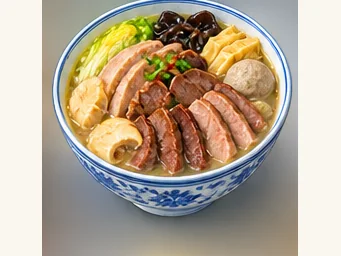 Zitong layered banquet bowl 梓潼镶碗AI illustration · AI 示意图
The bowl offers soft slices, springy prepared components and broth-soaked vegetables rather than one uniform stew texture. It is substantial and meant for sharing.
Source ↗Read the dish guide → Jiangyou braised pork intestine 江油肥肠AI illustration · AI 示意图
They retain a pleasant chew while the fatty inner texture becomes softer. The sauce is savory and substantial rather than merely decorative.
Source ↗Read the dish guide → Zitong Sliced Starch Noodles 梓潼片粉AI illustration · AI 示意图(仅供参考,非实拍)
Zitong Sliced Starch Noodles (梓潼片粉) are thin, green-tinted sheets of bean or sweet-potato starch, cut into strips and dressed with a hot, sour sauce, from Zitong County (梓潼县) in Mianyang (绵阳), northern Sichuan.
Read the dish guide → Zitong Flaky Pastry 梓潼酥饼Reference photo of a similar dish · 同类菜品参考照片
Zitong Flaky Pastry (梓潼酥饼) is a thin, crisp pastry from Zitong (梓潼), round like a full moon and pale yellow, with fine flaky lines. It is also known as bocuizi (薄脆子), meaning a thin crisp, and gongbing (贡饼), or tribute cake.
Read the dish guide →
Photo adjustments
Full frame retained; EXIF orientation normalized, proportionally resized to at most 800 pixels and converted to WebP. No generated pixels or subject changes. Cards may crop the display.
 Pingwu Cured Pork 平武腊肉
Pingwu Cured Pork (平武腊肉) includes smoked black-pig pork described by Pingwu’s Agriculture and Rural Affairs Bureau at a Chengdu (成都) produce fair. The meat in the boiling pot was dark and glossy, with a strong smoke aroma.
Read the dish guide →
Photo adjustments
EXIF orientation normalized; resized without changing aspect ratio; converted to WebP. No subject edits.
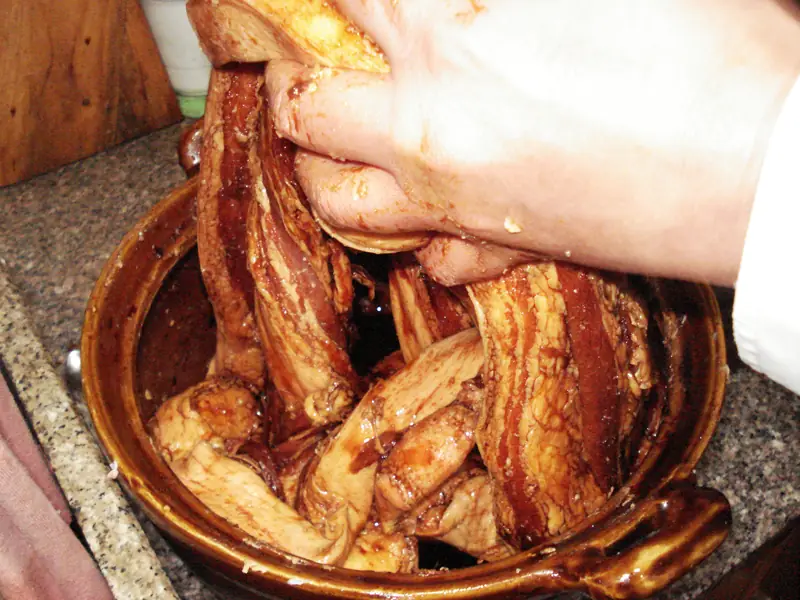 Beichuan Smoked Cured Pork 北川腊肉Reference photo of a similar dish · 同类菜品参考照片
Beichuan Smoked Cured Pork (北川腊肉) is a Qiang (羌族) cured-pork speciality documented by Mianyang (绵阳) Municipal Government.
Read the dish guide →Photo adjustments
Full frame retained; EXIF orientation normalized, proportionally resized to at most 800 pixels and converted to WebP. No generated pixels or subject changes. Cards may crop the display.
 Jiangyou Zhanzhan Dipping Snacks 江油蘸蘸AI illustration · AI 示意图(仅供参考,非实拍)
Jiangyou Zhanzhan Dipping Snacks (江油蘸蘸) is listed among the local specialties of Mianyang, Sichuan. It is grouped here with regional dishes & banquets; retain the complete Chinese name when comparing local menus.
Read the dish guide →All dish names · 全部菜名 (12)
- Mianyang rice noodles · 绵阳米粉
- Zitong layered banquet bowl · 梓潼镶碗
- Jiangyou braised pork intestine · 江油肥肠
- Zitong Sliced Starch Noodles · 梓潼片粉
- Zitong Flaky Pastry · 梓潼酥饼
- Pingwu Cured Pork · 平武腊肉
- Beichuan Smoked Cured Pork · 北川腊肉
- Jiangyou Zhanzhan Dipping Snacks · 江油蘸蘸
- Jiangyou Cold Dipping Snacks · 江油冷沾沾
- Anxian Hongsu Crisps · 安县红酥
- Mianyang Xi Family Starch Jelly · 绵阳席凉粉
- Jiangji Soft Tofu · 蒋记豆花
More dishes from across Sichuan are in the Sichuan food guide.
Counties & districts in Mianyang
9 areas belong directly to Mianyang.
9 areas
Fucheng District 涪城区
Fucheng District (simplified Chinese: 涪城区; traditional Chinese: 涪城區; pinyin: Fúchéng Qū; Wade–Giles: Fu2ch'êng2 Ch'ü1) is a district of Mianyang, Sichuan, China.
Explore the area →DistrictYouxian District 游仙区
Youxian District (simplified Chinese: 游仙区; traditional Chinese: 遊仙區; pinyin: Yóuxiān Qū; Wade–Giles: You2hsien1ch'ü1) is a district of the city of Mianyang, Sichuan Province, China.
Explore the area →DistrictAnzhou District 安州区
Anzhou District (simplified Chinese: 安州区; traditional Chinese: 安州區; pinyin: Ānzhōu Qū) formerly An County is a district of the city of Mianyang, in northeastern Sichuan province, China.
Explore the area →CountySantai County 三台县
Santai County is a county under the administration of the prefecture-level city of Mianyang, in the northeast of Sichuan Province of China. It has an area of 2,660.58 km² (1,027.26 sq mi).
Explore the area →Show fewer areas
Yanting County 盐亭县
Yanting County (simplified Chinese: 盐亭县; traditional Chinese: 鹽亭縣; pinyin: Yántíng Xiàn) is a county under the administration of the prefecture-level city of Mianyang, in the northeast of Sichuan Province…
Explore the area →CountyZitong County 梓潼县
Zitong County is a county in the northeast of Sichuan Province, China. It is under the administration of the prefecture-level city of Mianyang.
Explore the area →Autonomous countyBeichuan Qiang Autonomous County 北川羌族自治县
Beichuan Qiang Autonomous County (simplified Chinese: 北川羌族自治县; traditional Chinese: 北川羌族自治縣; pinyin: Běichuān Qiāngzú Zìzhì Xiàn; Qiang: Juda Rrmea nyujugvexueaji xae) is a county under the jurisdiction of…
Explore the area →CountyPingwu County 平武县
Pingwu County is a county located in the north of Sichuan province, China, bordering Gansu province to the north. It is the northernmost county-level division of the prefecture-level city of Mianyang.
Explore the area →County-level cityJiangyou 江油市
Jiangyou is a Chinese county-level city located in Mianyang, Sichuan. The city proper is subdivided into four urban districts and has jurisdiction over 21 towns, and 19 rural townships.
Explore the area →No areas match this name.
Plan your visit
Getting there
Search for 绵阳市 in a map app to find stations and your accommodation.
Where to stay →Build your route
Qiqushan Temple and Bao'en Temple, Pingwu are about 100 km apart in a straight line. The linked place guides have entrance and visit details.
Continue with Sichuan →More in Sichuan
Sources & geographic information
Administrative names and parent areas: Official geographic directory · Reference date 2026-09-06.
Background text adapted from Mianyang — Wikipedia contributors, under CC BY-SA 4.0. Text has been shortened and reorganized; source revision 1373207979.
Photo: Qiqushan Temple · Nekitarc · CC BY-SA 4.0. Proportionally resized and converted to WebP without cropping, retouching or changing the photographed subject.

Photo: Bao'en Temple, Pingwu · Nekitarc · CC BY-SA 4.0. Proportionally resized and converted to WebP without cropping, retouching or changing the photographed subject.

Photo: Jiangyou Li Bai Memorial · 来斤小仓鼠吧 · CC BY-SA 4.0. Full frame retained; proportionally resized and converted to WebP. No retouching or changes to the photographed subject. Card displays may crop the view.

Photo: Beichuan Qiang Town Tourism Area · ping lin · CC BY-SA 3.0. Full frame retained; EXIF orientation normalized, proportionally resized to at most 800 pixels and converted to WebP. No generated pixels or subject changes. Cards may crop the display.

Photo: Jiuhuang Mountain · Source photographer · License not provided. EXIF orientation normalized; resized without changing aspect ratio; converted to WebP. No subject edits.
Photo: Medicine King Valley · Nyx Ning · CC BY-SA 3.0. Full frame retained; proportionally resized and converted to WebP. No retouching or changes to the photographed subject. Card displays may crop the view.

Photo: Bao'en Temple · Alexbear · CC BY-SA 4.0. EXIF orientation normalized; resized without changing aspect ratio; converted to WebP. No subject edits.

Photo: Huya Grand Canyon · Source photographer · License not provided. EXIF orientation normalized; resized without changing aspect ratio; converted to WebP. No subject edits.
Photo: Two Bombs City · Source photographer · License not provided. EXIF orientation normalized; resized without changing aspect ratio; converted to WebP. No subject edits.
Photo: Li Bai's Hometown · ping lin · CC BY-SA 3.0. Full frame retained; proportionally resized and converted to WebP. No retouching or changes to the photographed subject. Card displays may crop the view.
.jpg)
Photo: Douchuan Mountain · Nekitarc · CC BY-SA 4.0. Full frame retained; EXIF orientation normalized, proportionally resized to at most 800 pixels and converted to WebP. No generated pixels or subject changes. Cards may crop the display.

Photo: Foye Cave · Source photographer · License not provided. EXIF orientation normalized; resized without changing aspect ratio; converted to WebP. No subject edits.
Photo: Mianyang Science and Technology Museum · Nyx Ning · CC BY-SA 3.0. Full frame retained; proportionally resized and converted to WebP. No retouching or changes to the photographed subject. Card displays may crop the view.
.jpg)
Photo: Mianyang Museum · Source photographer · License not provided. EXIF orientation normalized; resized without changing aspect ratio; converted to WebP. No subject edits.

Photo: Yuewang Tower · Lingling1997 · CC BY-SA 4.0. Full frame retained; proportionally resized and converted to WebP. No retouching or changes to the photographed subject. Card displays may crop the view.

Map data © OpenStreetMap contributors. Pins mark approximate centres, not entrances or boundaries.