

Driving in China: Temporary Permits and Car Rental

Driving in China normally requires a Chinese driving licence or a Chinese temporary driving permit: your foreign licence or International Driving Permit alone is not enough to rent a car and drive legally in mainland China.
For a short visit, get a temporary motor vehicle driving permit — 临时机动车驾驶许可, then rent a Chinese-registered car from a branch that accepts your documents and payment method. The permit and the rental approval are separate checks.
By China Revealed. Rules, platform information and source material checked October 20, 2026. This guide covers mainland China.
Quick takeaways
- Get the Chinese permit before driving. An IDP, a translation or a rental confirmation is not a substitute.
- Start by comparing CAR / Shenzhou and eHi. Confirm your exact branch accepts your foreign passport, temporary permit and payment or security arrangement.
- For an economy car on ordinary dates, ¥100–300 a day is a useful starting estimate for the base rental rate. Required fees, protection, tolls, parking and fuel are additional unless expressly included. Larger cars and major holidays can cost substantially more.
- Plan the permit around a working-day appointment, not your flight’s arrival time. Beijing and Shanghai publish different processing arrangements.
- Keep the original foreign licence, its required Chinese translation and the Chinese temporary permit together when driving. Save the rental contract and both pickup and return records.
In this guide
- Should you rent a car in China?
- What licence do you need?
- Get the permit before you collect the car
- Which rental companies should you compare?
- How much does car rental cost in China?
- Book a car your documents and card can actually collect
- Inspect the car and understand the protection
- Navigate, park and use expressways
- Petrol or electric: choose what you can refuel
- If you have an accident, breakdown or fine
- Return the car and finish the rental properly
- Frequently asked questions
- References
Should you rent a car in China?
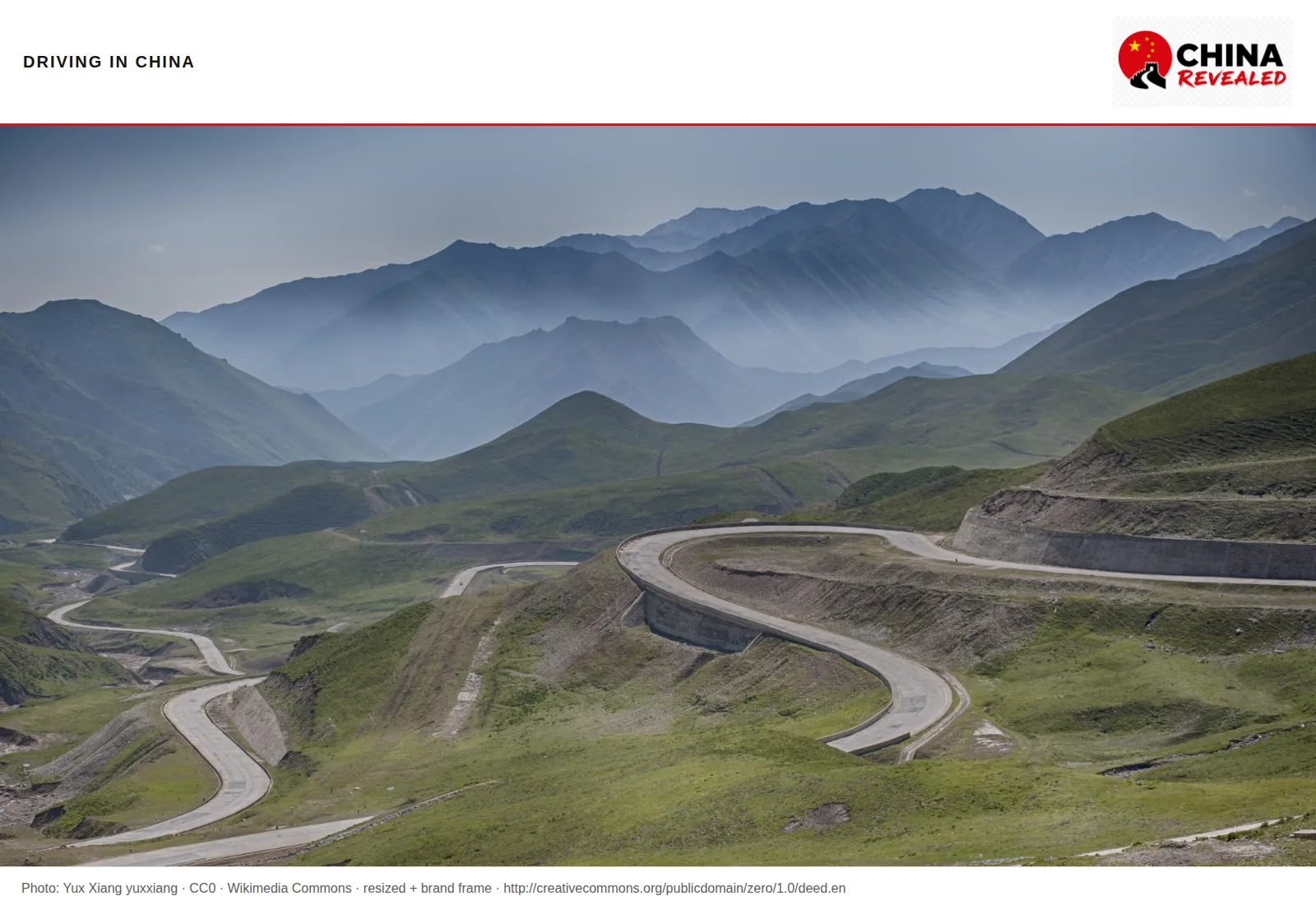
A car is most useful when you want to stop between the places served by railway stations. A few days around Yunnan towns and countryside, a regional family trip, or a route with several rural overnight stops can make a rental worthwhile. You can choose your departure time, carry luggage once and avoid negotiating a new vehicle for every short outing.
The better version of this plan is usually train to the region, rent locally, return locally. A round-trip rental can be simpler than a one-way itinerary if the latter leaves you paying a return fee or depending on a branch with limited stock. Check each scenic stop’s parking and access arrangements: a car does not let you drive inside a pedestrian old town or an attraction that requires a shuttle bus.
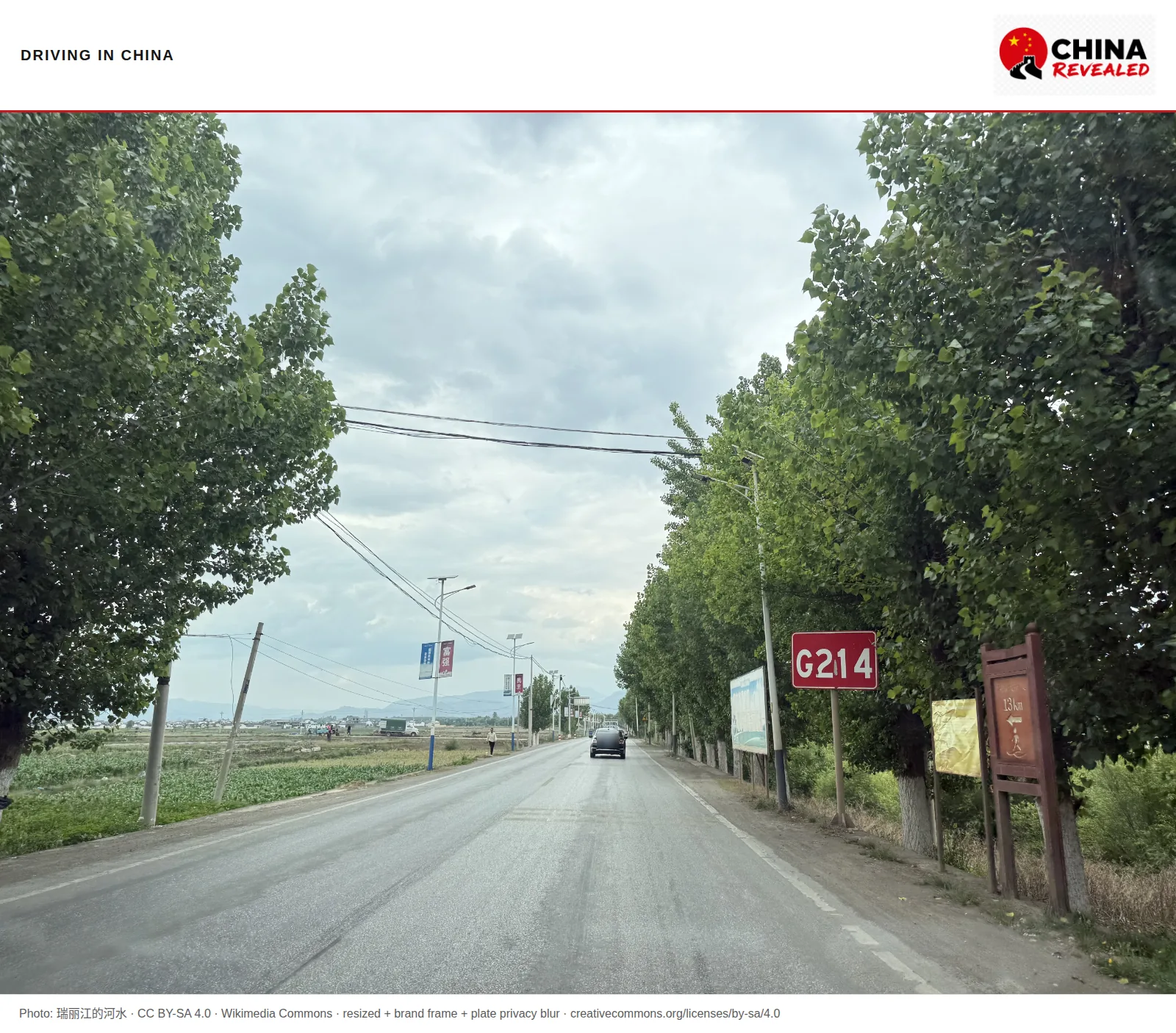
I would not rent a car merely to move around central Beijing or Shanghai. Parking, congestion, unfamiliar junctions and local restrictions can erase the convenience. Nor would I make a long mountain drive my first activity after an overnight flight. Collect the car after you have rested, and keep the first driving day short enough to learn the controls and navigation without rushing.
For the major-city part of your trip, use our China train-ticket guide. You can also compare trains, hotels and flights through our Trip.com link. It is an affiliate link: China Revealed may earn a commission at no extra cost to you.
If you want the flexibility of a car but do not want to drive, ask for a car with a driver, not a self-drive rental. Confirm whether the quote includes the driver’s time, waiting, fuel, tolls, parking, accommodation on overnight trips and the permitted itinerary. A chauffeur booking is a different service; it does not require you to obtain a driving permit because you are not the driver.
What licence do you need?
For the ordinary foreign visitor bringing a valid overseas licence, there are two relevant mainland routes: a temporary driving permit for a short visit, or a Chinese driving licence for longer-term use. Do not choose the full licence-conversion process merely because an online article says you must sit a Chinese driving test before renting for a holiday.
China’s current driving-licence rules provide for a three-month temporary permit for short-term visitors. If the permitted stay or residence exceeds three months, its validity can extend to a maximum of one year. The actual document and your lawful stay govern your own case; a permit does not extend immigration permission. Your overseas licence must remain valid, and you must use it with the Chinese permit and its Chinese translation.
A short-stay temporary permit for a Chinese rental car is limited to the relevant C1 or C2 small-car category and must match the driving entitlement on your overseas licence. C2 is for small automatic-transmission cars. If your home licence restricts you to automatics, do not book a manual car and assume the Chinese document removes that restriction. Ask the issuing office and branch to confirm the category for the vehicle you intend to rent.
A safety lesson is not the full licence-conversion exam
The temporary-permit framework includes education in Chinese road-traffic laws before issuance. Small-car applicants benefit from the national simplification that removes the usual physical-condition examination and certificate for this temporary application. That does not remove the safety-learning step or the need for original-document checks.
The ordinary overseas-licence conversion route for a full Chinese licence is different and normally involves the theory examination. Mutual-recognition arrangements may provide a separate route for eligible licence holders, but do not treat such an arrangement as general permission for everyone carrying an IDP. For a short trip, ask specifically for 临时机动车驾驶许可, not simply “a Chinese driving licence.”
Drivers aged 70 or above should contact the issuing office before planning a pickup. Shanghai’s current guide includes an ability-test requirement for this age group; Beijing directs older applicants to its main vehicle-management office. The rental company’s own age and driving-experience rules remain a separate check.
Bringing your own overseas-registered vehicle is a different project
This article’s main route is renting a car already registered in mainland China. Driving your own foreign-plated vehicle across a border requires additional vehicle-entry approval, temporary vehicle plates and a vehicle licence, together with the applicable customs, inspection and compulsory-insurance arrangements. The temporary vehicle documents can also specify the approved area or route. A temporary driver permit alone does not clear the vehicle.
Likewise, Hong Kong, Macau and Taiwan licences or plates are not automatically mainland driving documents. Check the arrangement for the particular licence and vehicle rather than transferring this rental-car process to a cross-border journey.
Get the permit before you collect the car
Start with the vehicle-management authority in the municipality or city where the rental company is located. The permit rules distinguish the authority for a mainland rental from the authority for a temporarily imported foreign vehicle. For a cross-province rental, confirm the permit and route with the issuing authority and rental company; separately check the contract’s driving area and return arrangements.
Look for 车管所 — vehicle-management office — or an officially listed 车管服务站 — vehicle-management service station. An airport rental counter and an airport police information desk are not necessarily places that issue permits.
Prepare the original documents and an accepted translation
| What to prepare | What to check before travelling to the office |
|---|---|
| Original passport or other entry document | Use the document you entered China with. Bring the relevant visa, stay or residence evidence. Visa-exempt applicants should follow the passport-based requirements, not invent a visa they do not have. |
| Original valid overseas driving licence | Check expiry, vehicle category and any automatic-only restriction. Bring any reverse side or separate part required to show the complete entitlement. |
| Accepted Chinese translation if the licence is not in Chinese | Ask the issuing office which translation or notarisation route it accepts. An IDP or a casual online translation is not automatically the required document. |
| Recent white-background photographs | Beijing and Shanghai list two one-inch photographs. Shanghai specifies photos from the preceding six months. Confirm whether your office can take them onsite. |
| Local contact and address details | Keep your reachable number and your accommodation’s Chinese address ready. Ask the chosen office whether additional contact or entry-record evidence is needed for your case. |
The current Beijing and Shanghai checklists should be your starting points. Do not confuse “useful to bring” with “nationally mandatory”: for example, Beijing’s published temporary-permit list does not separately require a hotel accommodation-registration slip. If an office requests additional evidence, ask precisely what it will accept.
Translation is worth arranging before the driving day. Have the translator confirm the document format, stamp or notarisation, price, turnaround time and whether you need a physical copy. A rental employee saying “we can translate it” is not confirmation that the police issuing office will accept it.
Shanghai: a concrete working-day route
Shanghai publishes an English temporary-permit guide and a current service checklist. Its first vehicle-management branch is at 2999 Huaxia West Road, Pudong — 华夏西路2999号, Gate 3, with the temporary-permit service listed at Window 17 in the first-floor hall. The current service page lists ordinary branch hours as Monday–Friday, 09:00–17:00, excluding public holidays.
For translation, the official guide names Shanghai SISU’s translation service at 573 Chifeng Road — 赤峰路573号, telephone 021-65362032, and the Shanghai foreign-affairs translators’ association at 1277 Beijing West Road, Room 1607 — 北京西路1277号1607室, telephones 021-63218568 / 021-63239910. Their listed service hours are working days, 09:00–16:30. Ask about current fees and delivery before going. The official guide also identifies other accepted translation or notarisation routes.
Shanghai’s current permit service promises onsite completion once the application meets the requirements; its statutory time limit is one working day. Allow time for document verification and the required road-safety learning rather than booking a rental pickup a few minutes after arrival. Confirm the office’s current permit and photo fees directly; do not copy Beijing’s ¥10 fee into a Shanghai quote.
Shanghai also has airport-area traffic-police issuing points:
- Hongqiao: 201 Konggang First Road — 空港一路201号; 021-28952289.
- Pudong: 805 Huhang Road — 沪航路805号; 021-68343234.
The official guide lists their narrower hours as Monday–Thursday 09:00–11:00 and 13:00–16:00, and Friday 09:00–11:00. These are not a promise that a desk beside your arrival gate will issue a permit at any hour. Call the listed traffic-police point to confirm where to go and whether it can handle your case that day.

The Shanghai traffic-police portal has English application and online-learning entry points. Its published service requirements still include in-person verification of the overseas licence. Use the portal to understand the process and follow the office’s instructions about online preparation; do not assume an uploaded application makes the entire procedure remote.
Beijing: official time limit versus airport convenience
Beijing’s temporary-permit guide lists the same key originals, an accepted translation for a non-Chinese licence and two one-inch white-background photos. Its published permit-production fee is ¥10 per document; translation, notarisation or photography may cost extra. The published processing limit is three working days after acceptance, not three days after landing.
Beijing Capital Airport’s official site lists the T3 service station at T3-C, first floor, opposite Door 7, open Monday–Friday 08:30–11:30 and 13:30–16:30, excluding public holidays. Its number is 010-64530010. Contact it before depending on an airport application.
Daxing Airport is also listed as a Beijing permit service location, but the current government directory points to the public enforcement hall at the airport police duty building on Hangxing Road — 航兴路公安勤务楼对外执法大厅. Older reports describe a terminal location. Ask 12123 to confirm the present entrance, service hours and appointment arrangement rather than navigating to the old news report’s floor.
Airport reports of visitors receiving permits quickly show that convenient handling can happen, especially with materials checked beforehand. They do not override the regular published time limit or establish an around-the-clock service for unprepared walk-ins. If your arrival is at night or on a holiday, travel to the hotel without driving and start the rental after issuance.
Check the issued permit, not just an application status
Before leaving the office, check your name, document details, expiry date and permitted vehicle category. Keep the actual issued permit accessible with your overseas licence and translation. An acceptance number, upload confirmation or “under review” status is not permission to drive.

The Shanghai portal’s progress query uses an Acceptance code. Save the code if your application is accepted, but collect the document or follow the issuing office’s confirmed delivery instructions before taking the car. For another city, use that city’s official issuing process rather than assuming Shanghai’s online interface applies nationwide.
Which rental companies should you compare?
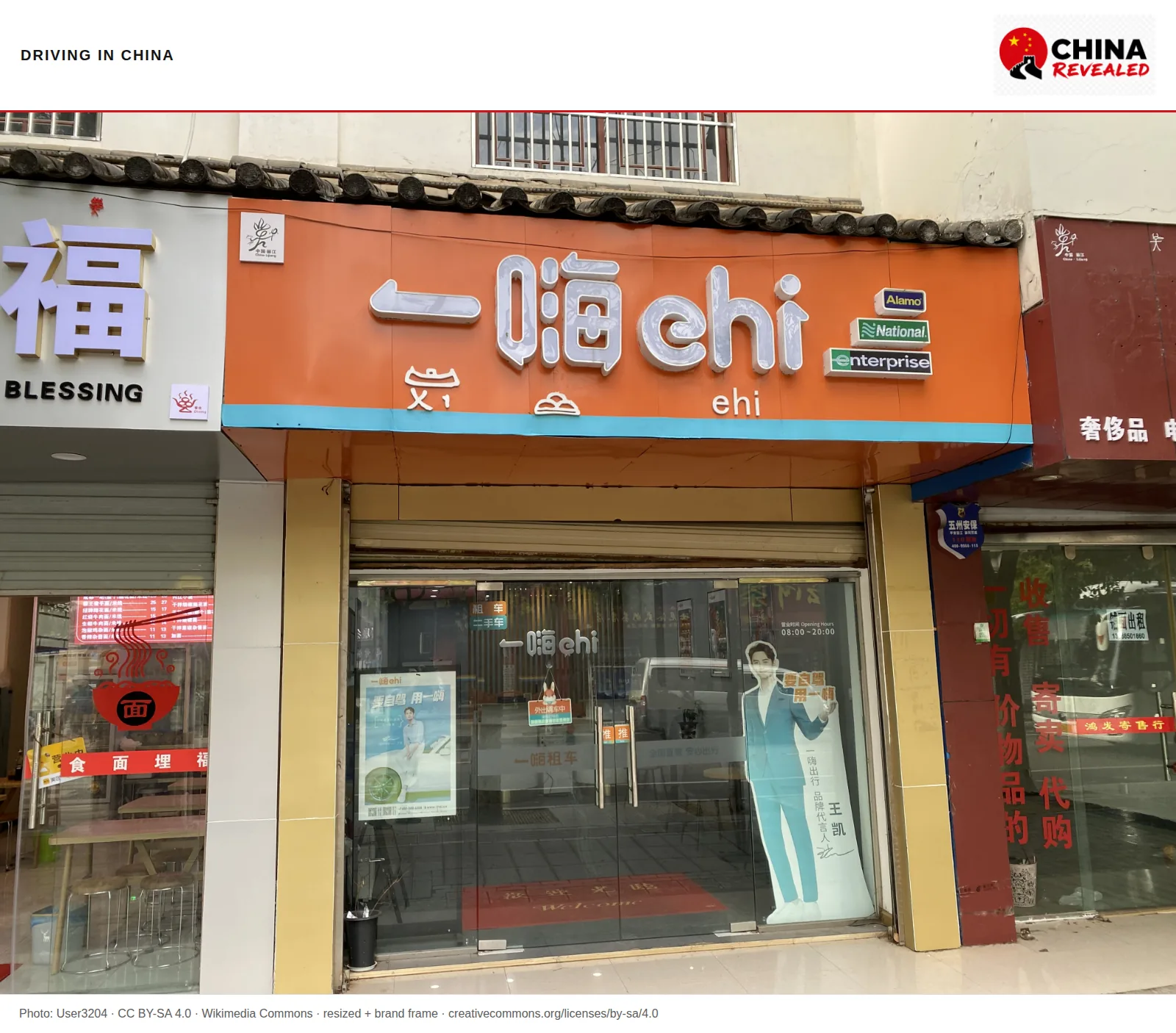
For an overseas visitor, my shortlist starts with CAR / Shenzhou — 神州租车 and eHi — 一嗨租车. Both are major nationwide direct-operated chains, and both provide foreign-customer information. The useful comparison is not which homepage advertises the lowest daily price, but which branch can actually accept your documents, provide a suitable car and complete the security arrangement.
The large platforms count their networks differently. CAR’s 2026 public information describes nearly 200,000 vehicles, more than 360 cities and more than 6,500 direct-operated locations. eHi’s late-2025 information describes more than 500 cities, more than 10,000 direct-operated locations and over 100,000 vehicles. Wukong’s help pages describe roughly 483 cities, more than 40,000 service points and about 200,000 available vehicles in its wider network. These are company-published figures with different dates and definitions, not an audited like-for-like ranking of the three largest fleets.
| Company or platform | Why you might compare it | The foreign-visitor decision |
|---|---|---|
| CAR / Shenzhou — 神州租车 | A large direct-operated network, major transport-hub branches and a broad vehicle selection. Official foreign-customer guidance discusses passports and temporary permits. | Confirm the chosen staffed branch can approve your exact permit, age and payment or deposit arrangement. Do not assume a self-service location handles foreign-document problems. |
| eHi — 一嗨租车 | A large direct-operated network and an English self-drive contact route. Its public information promotes broad one-way-return coverage and bundled pricing. | Confirm the actual pickup and return pair, what’s included in the quote, and passport/permit/card handling. Its English self-drive site lists zjyw@1hai.cn and 400 108 6608. |
| Wukong — 悟空租车 | A broad platform network that includes local supplying businesses, rather than the same direct-operated model as the two chains above. | Its published help page currently says it does not support international users. I would not make it the default for a foreign-passport visitor unless the platform itself explicitly confirms eligibility and the supplier in writing. |
| Trip.com / Ctrip — 携程 | A comparison and booking channel where available suppliers, languages and payment methods can differ from booking directly. | Check that mainland rentals are offered for your route, identify the actual supplying company and read its licence, deposit and protection terms. Paying the platform does not waive supplier checks. |
Wukong’s international-user limitation matters more to this reader than the size of its merchant network. Do not solve an eligibility refusal by having a friend rent in their name while you drive: the declared renter, authorised driver, licence and protection must all be valid for the actual use.
How much does car rental cost in China?
For a small economy car on an ordinary date, ¥100–300 per day for the base rate is a practical starting budget, supported by published ordinary-day examples around ¥128 and a reported typical economy-car rate around ¥280. It is not an October 2026 live quote or an all-in national tariff. Search your exact pickup branch, date, time and rental duration before committing to a route.
For larger cars and holidays, the gap is significant. The following published prices help put the scale in perspective; the holiday rows are specific May 2025 examples, not today’s available inventory.
| Vehicle or booking situation | Useful published price range or anchor | How to use it |
|---|---|---|
| Economy car on ordinary dates | Approximately ¥100–300/day base rental as a starting estimate | Compare the final required-fee total, not the base rate alone. |
| Compact SUVs on a major holiday | Beijing examples around ¥408–458/day | A useful reminder that a popular-date SUV can cost much more than a promotional “from” price. Get an ordinary-date quote if travelling outside holidays. |
| Seven-seat MPV / Buick GL8 on a major holiday | Examples around ¥698–758/day in Chengdu and Hangzhou | Budget for the larger vehicle and check luggage space with all seats occupied, not just the number of seats. |
| Higher-end electric cars and large premium vehicles on a major holiday | Several examples around ¥593–898/day | Compare the particular model, required fees, protection and charging arrangements. Cheap entry-level EV offers are not equivalent to these cars. |
A “¥28/day from” advertisement can be a genuine limited starting price without being a workable budget for your dates. New-user offers, long-rental packages, low-demand branches and specific models can all change the rate. I would ignore the headline until the app shows the exact rental period and everything you must pay.
Add the costs that do not fit in a daily headline
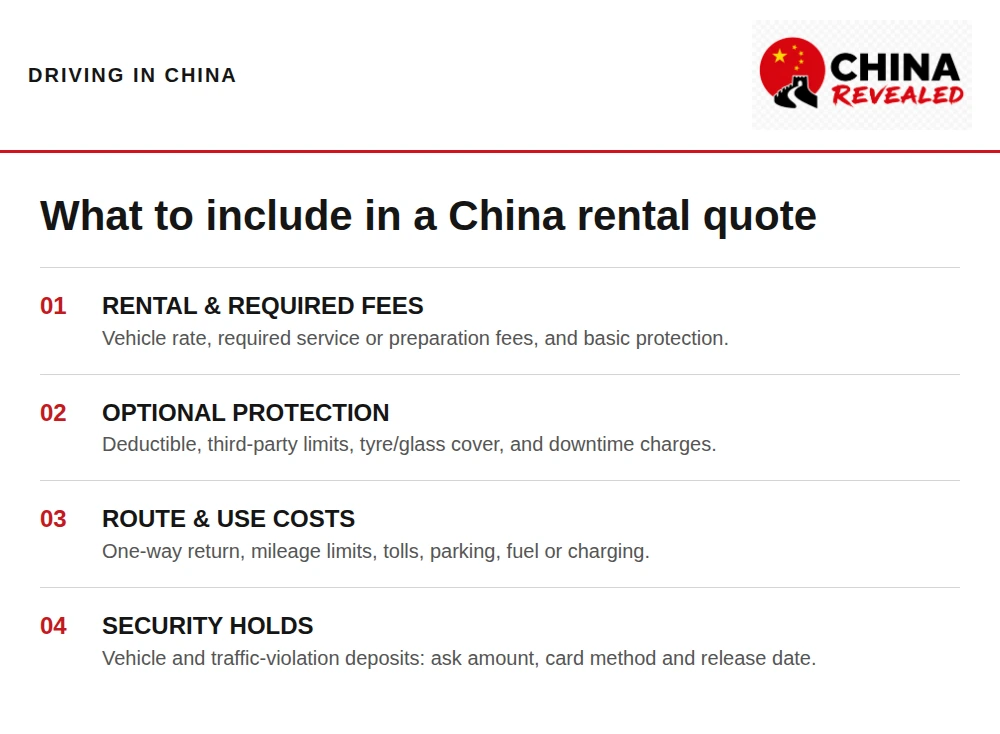
CAR publicly separates vehicle rental/service, basic service and vehicle-preparation charges as required items, then lists possible extras such as delivery, returning to a different branch or city, refuelling services and extra hours. eHi promotes bundled-price products, but the inclusion still needs checking on your particular order.
| Cost | What you need to confirm |
|---|---|
| Base rental and mandatory charges | The total for the whole rental, currency, included tax, required service/preparation charges and basic protection. |
| Optional protection | Price, deductible, covered parts, third-party limits and exclusions. A larger daily fee is not proof of zero liability. |
| One-way or different-branch return | Whether the exact route is allowed and whether a return, repositioning or branch fee appears. |
| Fuel, charging, tolls and parking | These are normally journey costs unless the quote explicitly includes them. Check the return fuel/battery requirement. |
| Time, mileage and delivery | Extra-hour calculation, any daily mileage allowance, excess-kilometre rate, delivery, night or out-of-hours charges. |
| Vehicle and traffic-violation security | Separate deposit or preauthorisation amounts, permitted card/account method and release conditions. A refundable hold is not the same as rental expenditure. |
Compare a rental with its alternatives for the whole party. A car shared by four people may make sense for countryside stops, but paying several days of rental and parking while it sits outside a central-city hotel rarely does. Reserve refundable accommodation and transport around the permit plan where possible, rather than creating a non-refundable driving itinerary before you know the documents will be accepted.
Book a car your documents and card can actually collect
Get the branch to pre-check the difficult parts
Before paying for an inflexible booking, ask the actual pickup branch to confirm these points together: your foreign passport, overseas-licence country and category, Chinese temporary-permit category and validity, age and years licensed, planned route, and payment/security method. Use an official company channel, and send sensitive document copies only through a legitimate verification process when requested; a first eligibility question can describe the documents without broadcasting their numbers.
For the card, state the issuing country and network and ask whether the branch can use your own physical card for the specific security hold. A Visa or Mastercard that works for a hotel purchase may not work for a rental preauthorisation. An overseas card linked to Alipay or WeChat is also not proof that a credit-based deposit waiver or rental guarantee will be available.
Keep this message ready:
I am a foreign visitor and will have a valid Chinese temporary driving permit. Can your branch accept my passport, original overseas licence and translation for this vehicle and these dates? Which payment and deposit method can I use? Please confirm the full required price, protection, return location and cancellation terms before I pay.
In Chinese:
我是外国游客,将持有效的中国临时机动车驾驶许可。请确认贵门店能否接受我的护照、境外驾驶证及中文翻译,办理这款车和这些日期的租赁。租金和押金分别支持什么付款方式?请在付款前确认全部必缴费用、保障条款、还车地点和取消规则。
Use the app or mini-program, but know when to switch to staff
CAR lists its app, WeChat/Alipay mini-programs and mobile website as booking channels. eHi also lists website, app, telephone and branch channels, with an English self-drive enquiry route. Do not treat a desktop homepage as the sole way to rent in China.
Search the exact Chinese company name and check the official developer or company account. In a Chinese flow, identify 取车城市 (pickup city), 取车门店 (pickup branch), 还车门店 (return branch), 取车时间 (pickup time), 还车时间 (return time), and 立即选车 (choose a vehicle).
Choose a staffed 服务点 when you still need assistance with documents. A 自助点 is a self-service point: it may depend on completed app verification, location permissions, an account and a working phone. A QR code or an available car at that location does not make it a staffed foreign-customer counter.
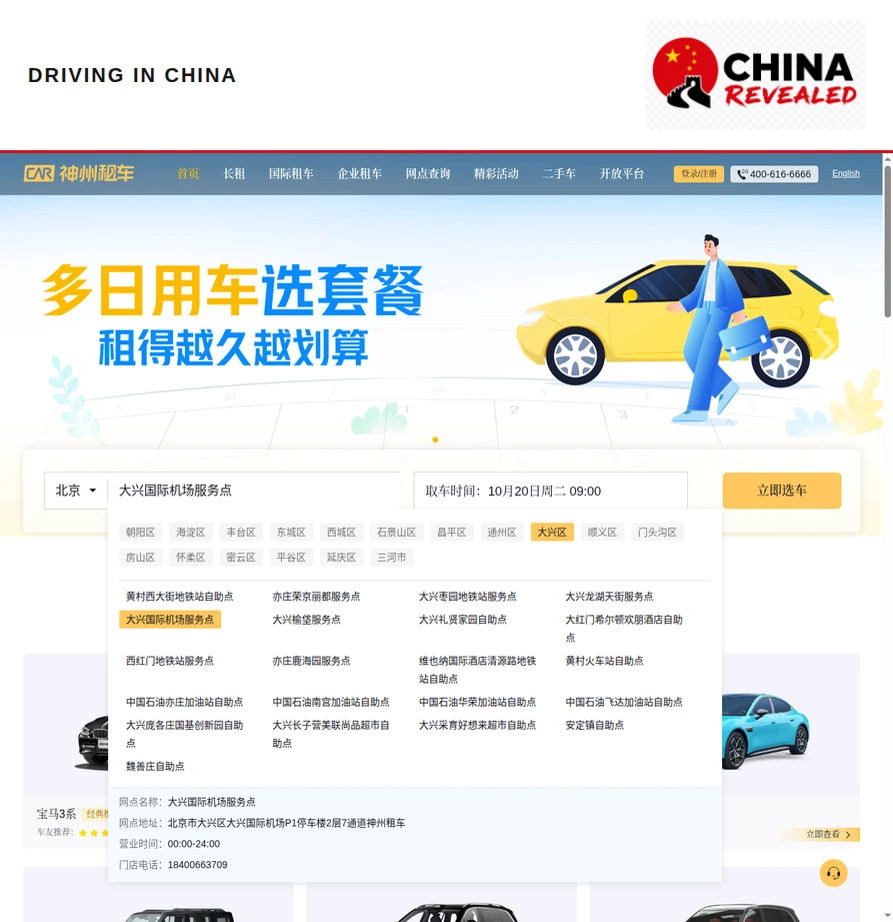
The branch-selection example above lists CAR’s Daxing Airport location at P1 parking building, Level 2, Aisle 7 — P1停车楼2层7通道, with 24-hour rental service shown when captured. That is a rental location and its displayed service arrangement, not a 24-hour police permit office. Recheck your order’s pickup instructions, terminal transfer and actual branch hours before arrival.
CAR’s app registration uses a phone number and SMS verification. Check whether your own number can receive the requested code; a data-only travel eSIM does not supply an SMS number. If the app cannot process your passport, permit or contact setup, ask the company for a confirmed staffed procedure instead of substituting somebody else’s identity.
Check the result after booking
Open 订单 / My orders or the confirmation supplied by the company. Check the branch, date and time, vehicle or vehicle group, renter/driver details, payment status, cancellation deadline and pickup requirements. If the booking is still awaiting review or the branch has not accepted the documents, you are not ready to collect the car.
Confirm how the rental is counted. Returning after the agreed time can create an extra-hour fee or another day’s charge; an early return may recalculate the price and can work differently for discounted packages. Get any extension authorised before the original return time. A second driver must be declared and approved under the contract, not simply handed the keys.
Inspect the car and understand the protection
For a first rental, I would choose a compact automatic with enough luggage space, collect it in daylight if possible, and leave time for an unhurried handover. An impressive seven-seat SUV is not useful if the boot cannot hold your suitcases with the third row in use.
Walk around with the employee. Take a clear video and close photographs of existing scratches, bumpers, wheels, tyres, glass, roof and interior. Record the dashboard’s mileage and fuel or battery level, and ask about any warning light. Have pre-existing damage written into the handover record; photographs are useful evidence, but do not replace the signed record when the company uses one.
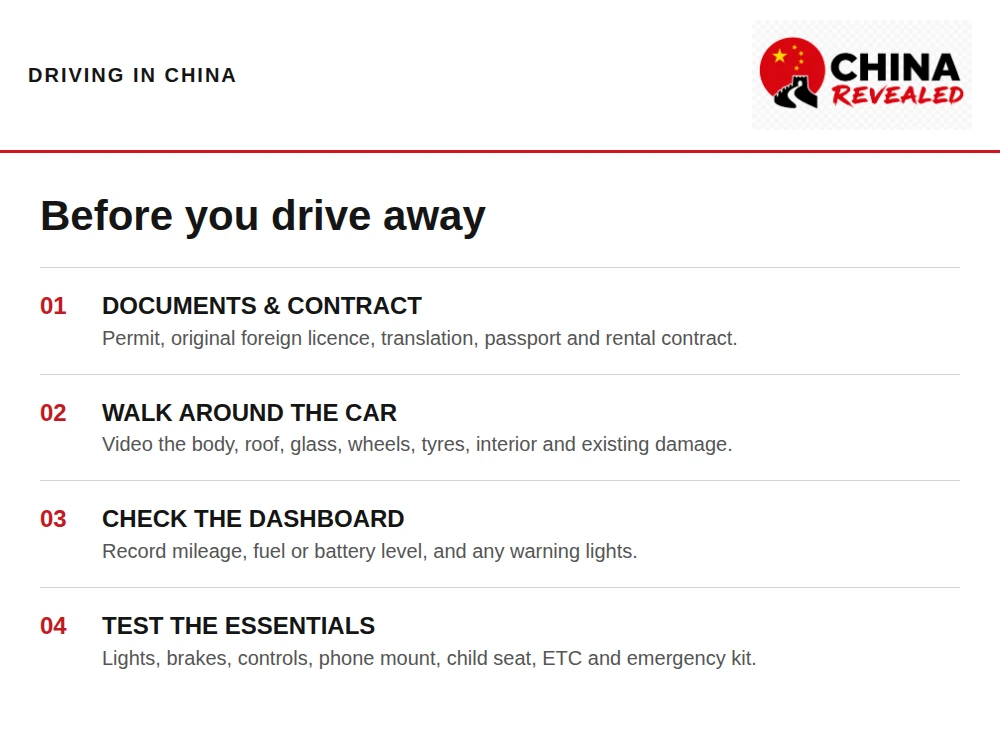
Test the basic controls before entering traffic: gear selector, parking brake, lights, wipers, air conditioning and mirrors. Ask where the fuel flap or charge port releases, how the car locks, whether it has active ETC, and where the warning triangle and emergency equipment are stored. Install the child seat correctly and set up your phone mount and navigation while parked.
Buy protection for the actual exclusions, not its product name
Ask for the deductible — the part you pay yourself — and whether protection includes tyres, glass, underbody damage, theft and third-party liability. Check whether an unauthorised driver, unapproved route, off-road use or a missed reporting deadline can invalidate it. Also ask about 停运损失 (loss of rental use/downtime) and any other charges beyond repairing the visible damage.
eHi’s public FAQ gives a ¥1,500 per-incident deductible example and discusses loss-of-use and reporting responsibilities. That is a reason to read the chosen plan, not a guarantee that every current eHi product has that deductible. CAR offers several additional protection packages whose names alone do not reveal every exclusion. Compare the written terms on your order.
Keep the company’s assistance number and the relevant insurance contact in your phone. If the employee cannot explain a material exclusion, have it clarified through the company before driving away. Do not sign a different supplier contract that adds undisclosed compulsory protection to an already agreed price.
Navigate, park and use expressways
Use Amap / Gaode as your main on-the-ground navigation. Paste the Chinese address of the branch, hotel and destination; check the entrance rather than following the nearest brand-name pin. Choose 驾车 (Driving), not walking navigation.
Where your app provides vehicle or restriction settings, enter the rental’s complete plate. Check the destination city’s current restrictions with the branch or official traffic notices. Amap’s suggested route does not overrule a prohibited road, temporary closure or police instruction.
China drives on the right. Follow the actual speed-limit signs and road markings; expressways have a legal upper ceiling of 120 km/h, but a particular section can be much lower. Allow room for unfamiliar lane splits, merging vehicles, bicycles and e-bikes at junctions. If you miss an exit, let navigation reroute rather than stopping, reversing or cutting across lanes. All occupants should wear seat belts; arrange a correctly fitted child restraint for the child’s size. Do not drink and drive.
Parking is a destination of its own
Search 停车场 (car park) and confirm its entrance, height limit, fee and public access. Ask your hotel about parking before arrival, especially if the driveway serves several buildings. “Parking available” may mean a paid public garage, a limited number of spaces or a different entrance from reception.
Some car parks use plate recognition and a payment QR code. Keep the full plate in a note, pay before the exit where instructed, and use the assistance/intercom button if your payment method fails. Never assume you can abandon the transaction and the barrier will open automatically.
ETC and staffed toll lanes
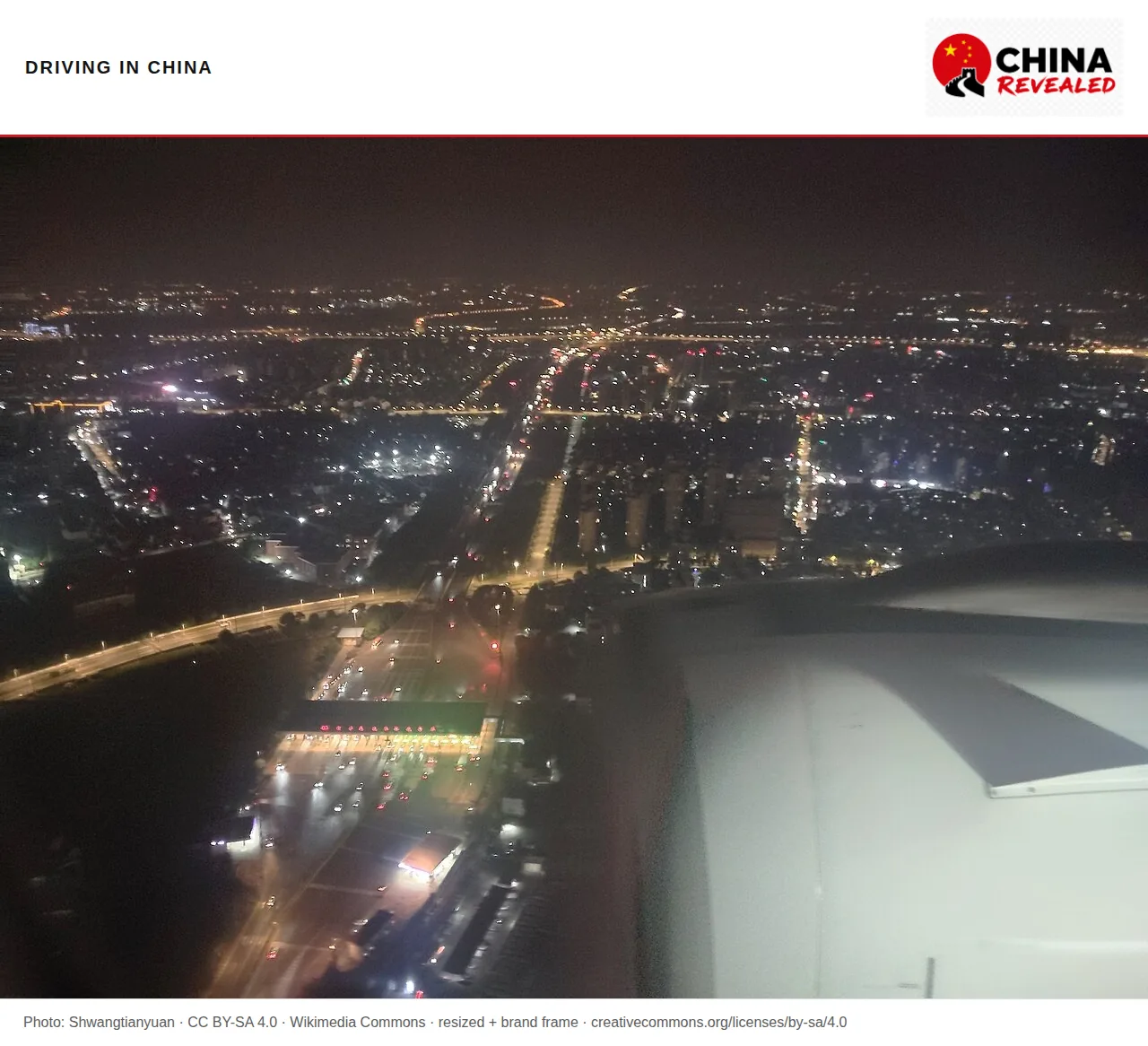
At pickup, ask whether the car has functioning ETC — electronic toll collection — and how those charges will reach your rental bill. Do not remove or switch off the device. Use an ETC-only lane only when the branch has confirmed that it is active.
Otherwise, look for 人工 / MTC, a staffed or manual lane, and follow the lane signs and attendant. Depending on the road and system, you may receive a transit card at entry and present it at exit, or follow a supported electronic process. Keep the card and receipts. China’s newer phone-based toll arrangements are being introduced on supported manual lanes, not every entrance nationwide.
Have a workable payment backup. Ask the attendant about accepted cash or payment methods rather than assuming an overseas card or your particular wallet will work in every lane. Do not reverse out of a toll lane if there is a problem; stop safely and call for assistance. There is no single national per-kilometre toll price worth putting into every itinerary: estimate your actual route, then reconcile it with receipts or the rental’s ETC statement.
Petrol or electric: choose what you can refuel
For a short rural trip when you have never charged a car in China, I would default to a compact automatic petrol car. For a city-based rental or a route with confirmed chargers and hotel charging, an EV can be a sensible choice. Make the decision from your route and payment setup, not just a low rental headline.
Filling a petrol car
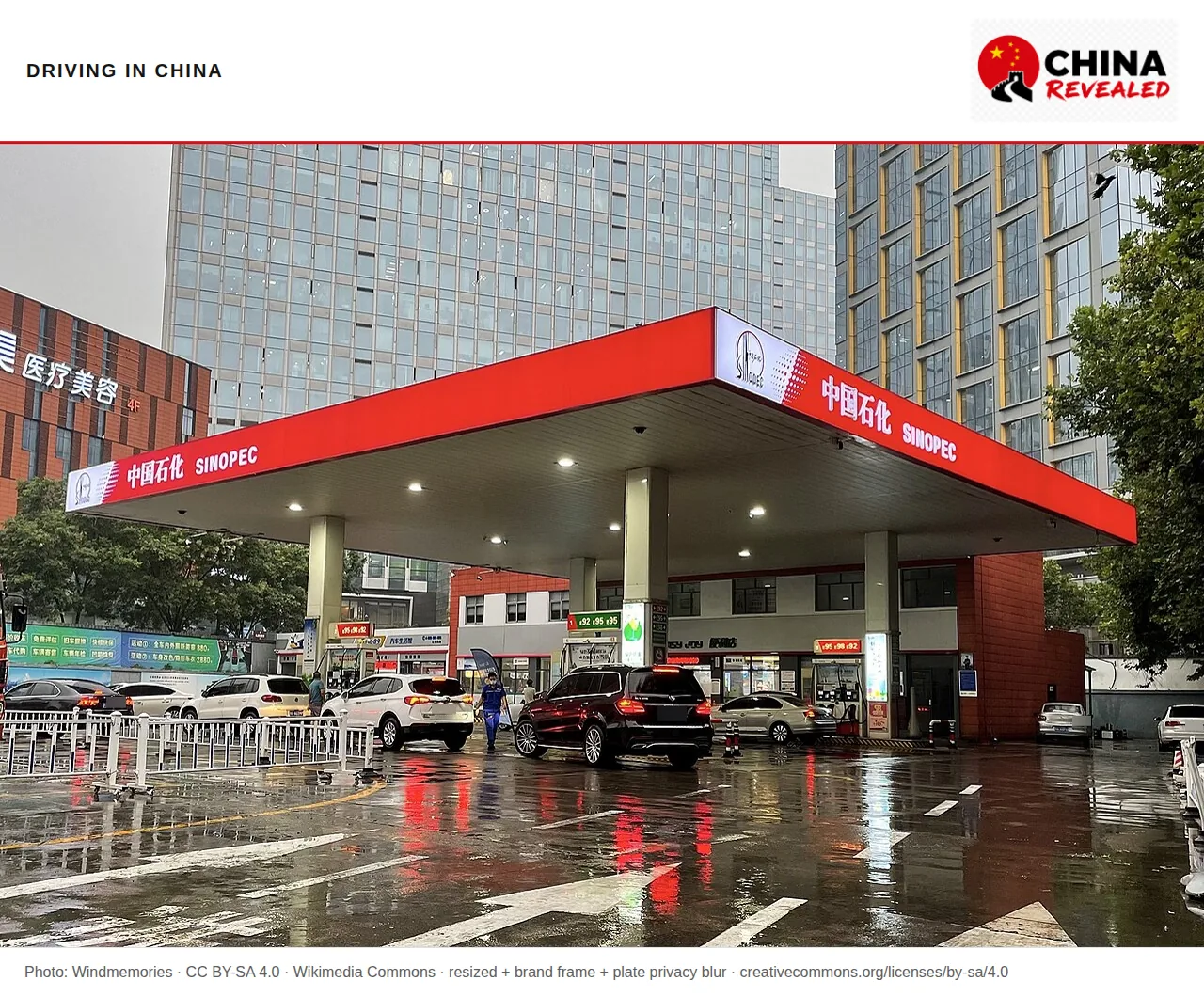
Check the fuel flap, vehicle instructions or handover record for the required petrol grade. Common pump signs include 92号汽油 and 95号汽油; 柴油 is diesel. Higher octane is not automatically better for every engine. At a staffed station, show the exact requirement and ask for 加满 (fill up) if that matches the return policy. Switch off the engine and keep the receipt.
Ask whether the contract requires the same fuel level or a full tank on return. Find a station near the return branch before the final morning; otherwise the company may charge both the missing fuel and a refuelling service fee.
Charging an EV
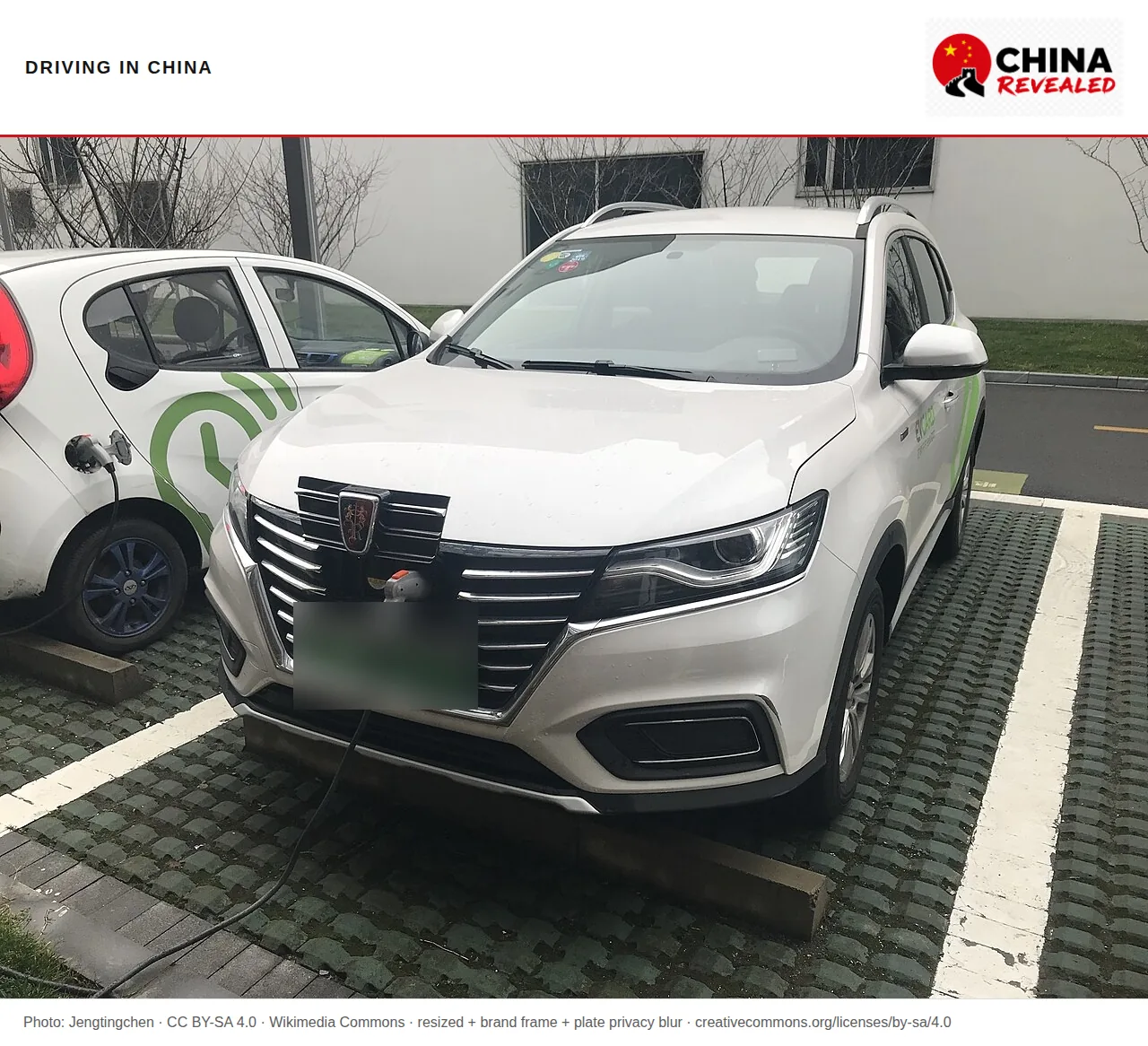
Before accepting an EV, ask the branch to demonstrate a charger or charging account that works with your phone and payment method. Confirm connector compatibility, battery level at pickup, minimum return charge and any supplied charging card. Check whether the advertised car supports the rapid chargers on your intended route.
Major operators such as TELD offer apps and WeChat/Alipay mini-programs or QR-code access, but that does not guarantee every overseas account or card will work. Search 充电站 (charging station), read whether the bays are available and check both the electricity and service components of the displayed price. A charger can sit inside a paid car park.
Do not arrive at your first unfamiliar charging station with almost no battery. Keep a second confirmed option within comfortable range, and end the session in the operator’s app or mini-program when required. Check the final amount and session status, disconnect as instructed, and move the car rather than leaving it blocking a charging bay.
If you have an accident, breakdown or fine
Put people first, then handle the rental
If anyone is hurt, call 120 for medical help and report the incident to the police. 122 is the traffic-accident number; 110 is for police emergencies. 12122 is used for expressway assistance where supported by the local road service. If that number does not connect, use 110 or 122 and give the exact road and direction.
On an expressway, switch on hazard lights and move to a safe place if the vehicle can be moved safely. Get people away from the carriageway, preferably beyond the guardrail where safe, then request help. Chinese law specifies a warning sign more than 150 metres behind a disabled vehicle on an expressway. Do not risk entering moving traffic merely to position the triangle; follow emergency instructions. Report the expressway number, direction, kilometre marker, lane and whether anyone is injured.
Once people are safe, contact the rental company’s assistance line and the insurer or protection service specified in the order. Ask how to report, obtain the police record, arrange towing and get repair authorisation. If safe, photograph the scene, vehicles, damage and road signs; keep police, medical and towing records.
Do not arrange an unauthorised repair or promise cash compensation merely to leave quickly. Injury, disputed responsibility and insurance requirements need proper handling. The reporting deadline and what you may agree to are governed by your actual rental and protection terms.
A camera fine may arrive after you return the car
If the company sends a traffic-violation notice, match its date, time, location and plate to your rental. Ask for the official violation details and distinguish the administrative fine from a supplier’s handling fee. Follow the verified traffic-authority or rental-order procedure, not an unsolicited payment link in an unrelated message.
You may have to remain reachable after leaving China. Before pickup, ask how late notices are sent, what payment or processing authorisation you give, and how to dispute a charge that belongs to a different rental period. A traffic-violation security hold and a vehicle deposit can have different release dates.
Return the car and finish the rental properly
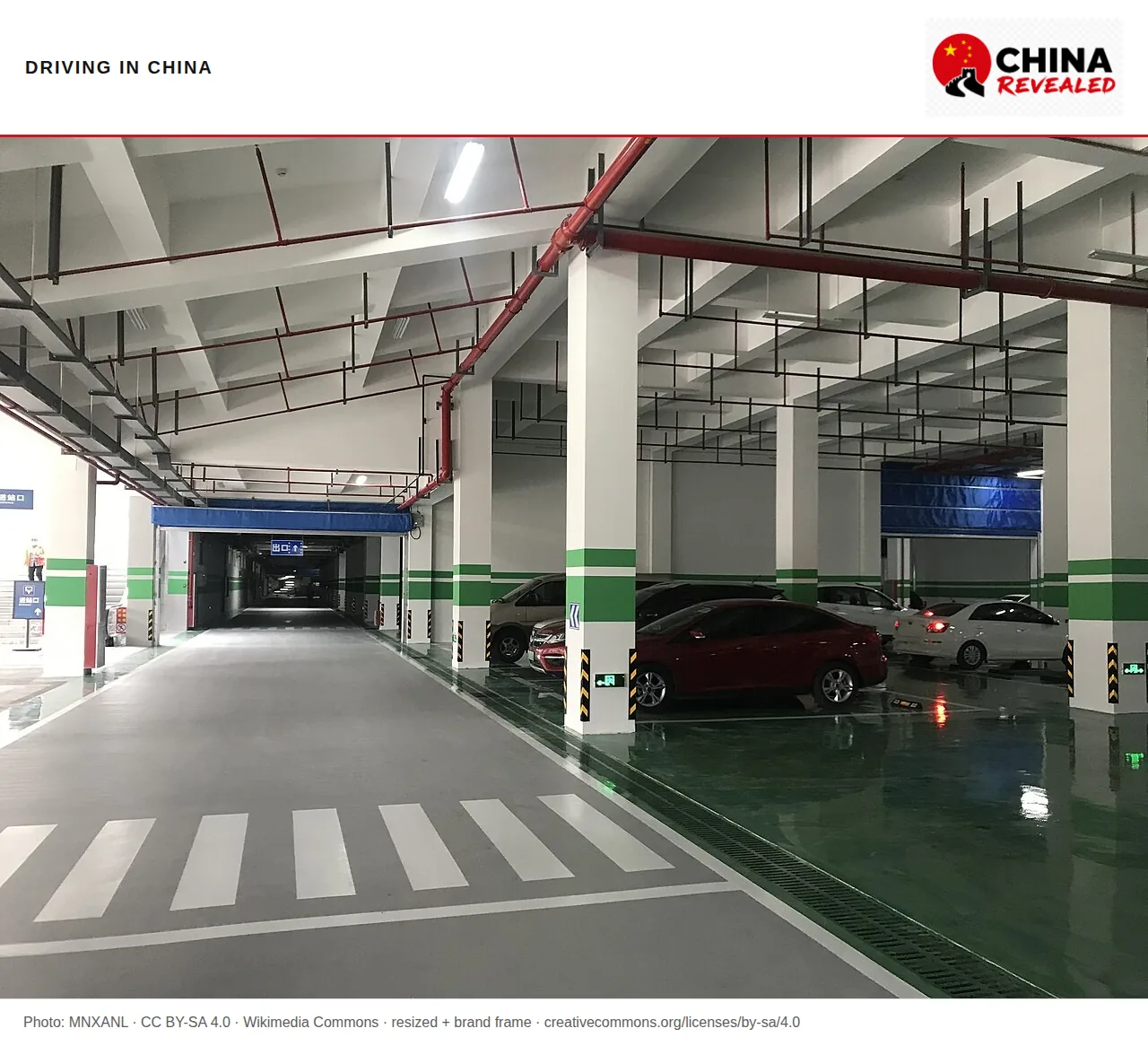
Use the return branch’s exact entrance and leave a buffer before your flight or train. Allow time for fuel or charging, parking access, inspection and any transfer from the branch to the terminal. A return point at an airport is not automatically beside your airline’s check-in desk.
Photograph or video the car again, including the mileage and fuel/battery level. Hand over the keys and any charging card, parking access device or required equipment. For a staffed return, obtain the return record. For an approved self-service return, complete every instruction in the app and check that the return is recorded, not merely that you have parked and walked away.
Review the settlement: rental time, required and optional services, fuel/battery adjustment, one-way charges and any already posted tolls. Ask when delayed ETC or other use charges will appear. Save the final statement, return time and branch confirmation.
Then check the security releases separately. eHi’s public FAQ distinguishes its vehicle-deposit policy from a traffic-violation hold and gives a no-violation release period of up to 30 days for that hold. CAR’s foreign-customer guide describes a different example. Your order’s amount, conditions and card issuer determine the actual result; ask for the expected release date before returning rather than applying one platform’s number to every rental.
A preauthorisation release may not appear as a new refund transaction: it can simply restore available credit. If an actual charge was taken, track the refund separately. Keep evidence until the rental charges and security arrangements are resolved, and raise any discrepancy through the verified order or official company channel.
Frequently asked questions
Can I drive with just an International Driving Permit?
Not under the ordinary mainland-China visitor process. You need a Chinese driving licence or the applicable Chinese temporary permit. The IDP does not replace the required approval or the original overseas licence.
Can I get the permit on the day I land?
Possibly, if a functioning issuing point is open, your materials are accepted and the procedure is completed. Shanghai publishes onsite completion; Beijing publishes a three-working-day limit after acceptance, while some airport arrangements can be faster. Plan an arrival transfer without driving if timing is tight, especially at night, on weekends or public holidays.
Do I need a Chinese phone number?
It depends on the issuing and rental channel. Some permit or branch procedures request local contact details; an app can require SMS verification. Check your own number with the actual service. A data-only eSIM provides internet, not an SMS number, and an English webpage does not guarantee an overseas number can complete every step.
Can I use an overseas credit card?
Only rely on it after the branch confirms the actual card network, issuing country, renter and required preauthorisation. Paying the rental cost and satisfying the security requirement are different operations. Bring your own confirmed physical card or the alternative the company has explicitly accepted.
Which company would you start with?
CAR / Shenzhou and eHi. Compare staffed branches and full quotes, and use eHi’s English self-drive enquiry route if it helps with your document check. Wukong’s published international-user restriction makes it unsuitable as an unconfirmed default for this reader.
Is an electric rental always cheaper?
No. Rental model, dates, protection, charging, parking and return-battery charges all matter. Choose an EV when you have a working charging/payment method and a route with confirmed charging, not simply because its starting rental rate is low.
Can I drive to another province or return in another city?
Confirm both the permit’s use for the itinerary and the rental contract. Cross-province driving and returning to a different city are different questions. The one-way fee, available return branches, authorised driving area and protection must match your actual plan.
What if the permit or branch approval does not come through?
Do not drive while waiting. Use trains, ride-hailing or a properly arranged car with a driver, and rent later only if it still improves the trip. Ask about document-rejection cancellation terms before paying so that the backup is a manageable change, not an expensive surprise.
References
For the issuing steps, keep the official Shanghai English permit guide, Shanghai service checklist and Beijing temporary-permit guide accessible. For a rental, use the selected company’s official order and contract as the source of its current fees and terms.
About China Revealed
China Revealed is an independent English-language travel guide dedicated to China.
We bring together China travel guides, destination information, local insights and practical travel resources in one place.
Our travel database covers China's provinces, cities, famous attractions, hidden gems, local cuisine, transportation, accommodation, visa requirements, digital payments, mobile connectivity and the other practical details travelers need to explore China.
We focus on depth, careful research and accuracy. Our guides combine official sources, detailed destination data, local knowledge and regularly updated information to give reliable, practical travel advice.
Whether you're visiting China for the first time or exploring beyond the popular destinations, China Revealed is an all-in-one resource for discovering the real China.
China Revealed — Your practical guide to China.
Some links on China Revealed, such as Trip.com booking links, are affiliate links. If you book through them, we may earn a commission at no extra cost to you. This does not change what we recommend.