


Get to know Xianyang
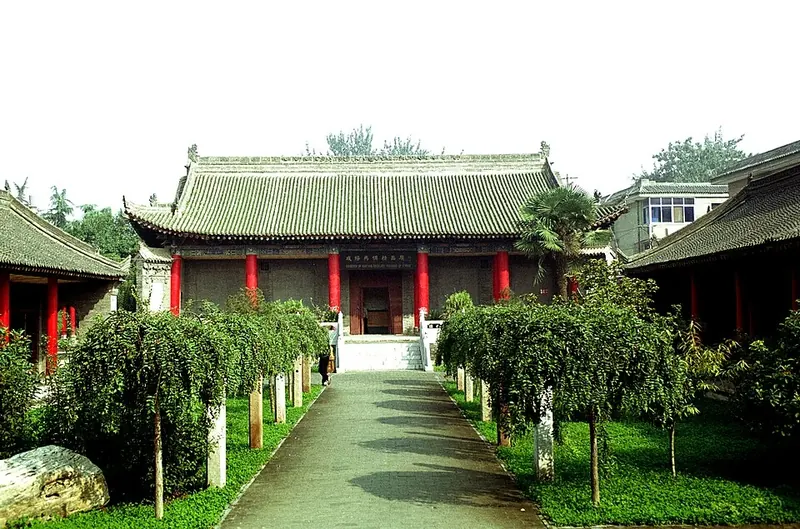
Photo adjustments
Full frame retained; proportionally resized and converted to WebP. No retouching or changes to the photographed subject. Card displays may crop the view.
- Administrative area
- Prefecture-level city · 地级市
- Part of
- Shaanxi
- Chinese name
- 咸阳市
- Local areas
- 14 local areas
Area & population
- Area in the source
- 10,213.00 km²
- Population · 2010
- 5,096,001
- Administrative seat
- Qindu District
Source: cited geographic source, as of the dates shown.
Xianyang is the seat of the Xi'an Xianyang International Airport, the main airport serving Xi'an and the largest airport in Northwest China, and one of the 40 busiest airports in the world.
Transport
China National Highway 312 Xi'an Xianyang International Airport Xianyang West railway station Xi'an Metro Line 1
Culture and tourism
Xianyang was the capital of the Qin dynasty, the first unified feudal empire in Chinese history, and it also served as a key imperial region for over ten other dynasties including the Han and Tang. It was the first stop on the world-renowned ancient Silk Road. This long history has left the city with an abundance of cultural relics and historic sites. Numerous ancient ruins and tombs are widely distributed across the city, with a particularly high concentration. Representative ancient buildings include the Tai Pagoda in Xunyi, the Kaiyuan Pagoda in Binzhou, the Chongwen Pagoda in Jingyang, and the Chenghuang Temple in Sanyuan. The city's significant stone carvings include the grottoes of Binzhou's Giant Buddha Temple.
According to official statistics, Xianyang has 5,313 registered cultural heritage sites, including 1,037 ancient ruins, 1,135 ancient tombs, and 247 ancient architectural structures.
Explore Xianyang
Core places to explore, with English and Chinese names.
Qianling Mausoleum 乾陵
Maoling 茂陵
Zhaoling 昭陵
Xi'an Xianyang Airport 西安咸阳国际机场
Sanyuan City God Temple 三原城隍庙
Maoling Museum 茂陵博物馆
Big Buddha Temple Grottoes 大佛寺石窟
Malan Revolutionary Site 马栏革命旧址
Anwu Youth Training Class Memorial Hall 安吴青训班纪念馆
Zhengguo Canal 郑国渠
Han Yangling Museum 汉阳陵博物院
Shaanxi History Museum Qin-Han Branch 陕西历史博物馆秦汉馆
Zhaoling Museum 昭陵博物馆
Yuanjia Village 袁家村
Xianyang Museum 咸阳博物院
Qindu District 秦都区
Yangling District 杨陵区
Weicheng District 渭城区
Sanyuan County 三原县
Jingyang County 泾阳县
Qian County 乾县
Liquan County 礼泉县
Yongshou County 永寿县
Changwu County 长武县
Xunyi County 旬邑县
Chunhua County 淳化县
Wugong County 武功县
Xingping 兴平市
Binzhou 彬州市
Places to explore around Xianyang
 The spirit way leading toward the main mound of Qianling Mausoleum, Qian County, Shaanxi; 31 August 2013.
Qianling Mausoleum乾陵
Qianling uses the natural mass of Mount Liang as the burial setting for Tang emperor Gaozong and Wu Zetian. Its main underground tomb remains sealed, while the above-ground approach preserves an exceptional sequence of stone…
Read the place guide →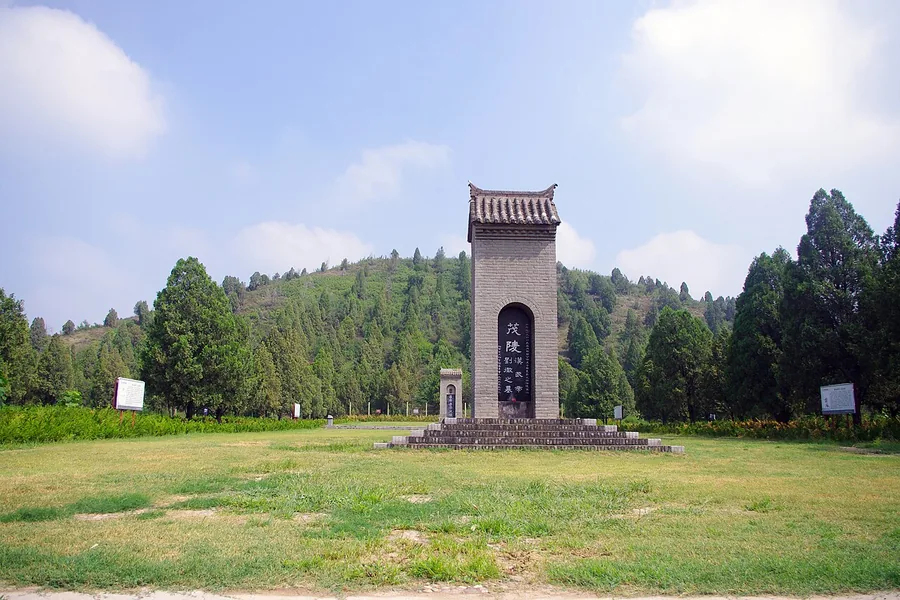 The Maoling burial mound behind its name-bearing marker, August 2014.
Maoling茂陵
Maoling is the massive rammed-earth burial mound of Han emperor Wu, set among the tombs of people from his court near Xingping. Its broad, sloping form is the main landscape feature; the emperor’s chamber is not an underground…
Read the place guide →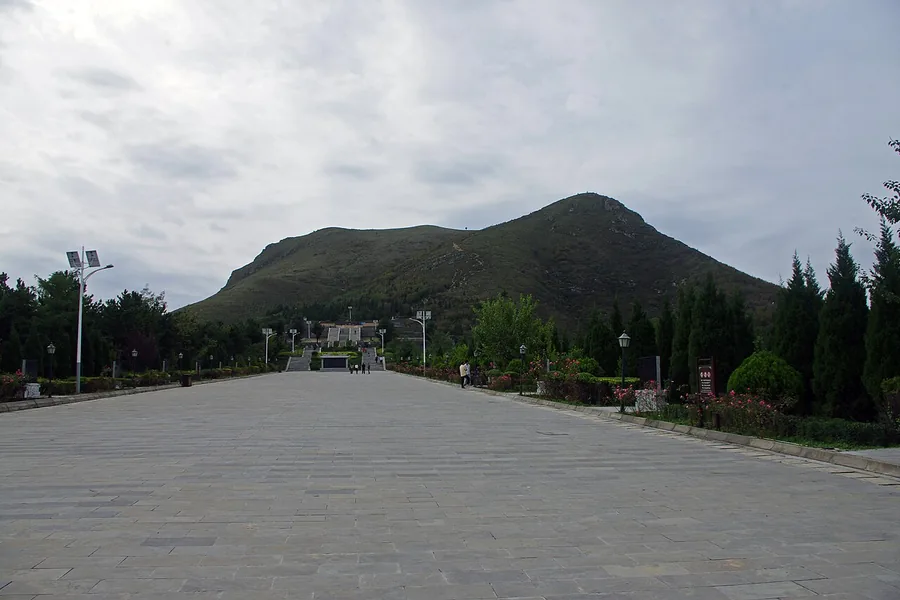 The mountain and visitor approach at Tang emperor Taizong’s Zhaoling, Shaanxi. Photographed on 4 October 2014.
Zhaoling昭陵
Zhaoling is the burial landscape of Tang emperor Taizong around Jiuzong Mountain. The emperor’s mountain tomb and numerous attendant burials are spread over a large area, so the museum at Li Ji’s tomb is a useful first stop. Its…
Read the place guide →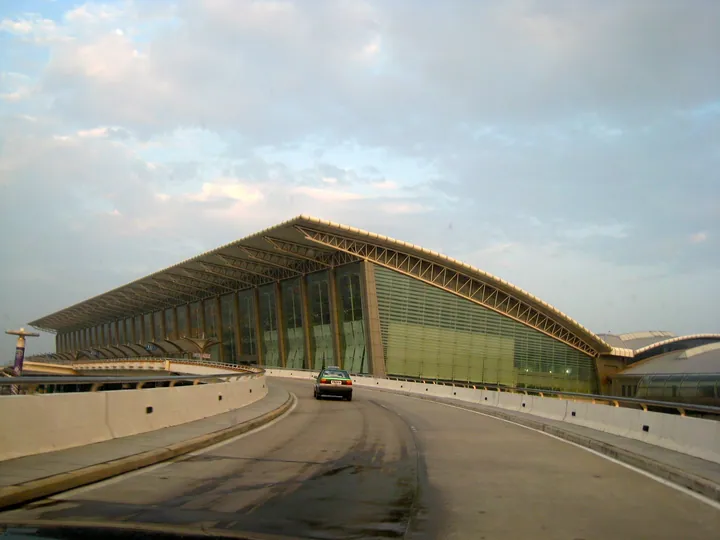 The wing-shaped terminal building of Xi'an Xianyang International Airport · 西安咸阳国际机场航站楼外观 Source-recorded photograph date: 24 July 2007 (according to Exif data).
Xi'an Xianyang Airport西安咸阳国际机场
Xi’an Xianyang International Airport has an expanded terminal layout following the opening of Terminal 5 in February 2025. Terminals 2, 3 and 5 serve different flights, making the terminal on the current booking the first detail…
Read the place guide → The main hall of the City God Temple in Sanyuan County · 三原城隍庙正殿,三原县 Source-recorded photograph date: Taken on 29 April 2006.
Sanyuan City God Temple三原城隍庙
Ming City God temple in Sanyuan, Shaanxi, begun in 1375: carved archways, an opera stage, bell and drum towers and Ten Kings of Hell paintings.
Read the place guide →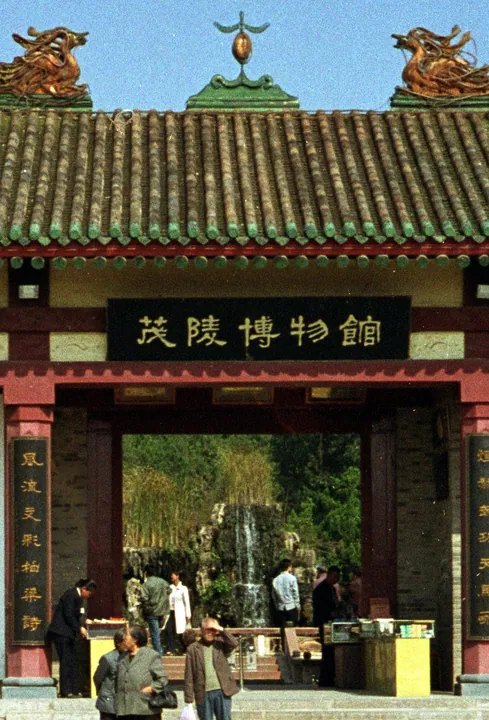 The entrance gate of the Maoling Museum, Xingping, Xianyang · 咸阳兴平茂陵博物馆大门 Source-recorded photograph date: 2005-10.
Maoling Museum茂陵博物馆
The Maoling Museum (茂陵博物馆) stands in Nanwei Town in Xingping, Xianyang, Shaanxi, east of the Maoling mausoleum of Emperor Wu of Han and inside the tomb precinct of the general Huo Qubing. It is a Western Han period museum built around Maoling, Huo Qubing's tomb and the large group of stone sculptures there.
Read the place guide → Big Buddha Temple Grottoes · 大佛寺石窟
Big Buddha Temple Grottoes大佛寺石窟
Tang cave temple of 628 on the Jing River west of Binzhou: a 20 m Amitabha, four cave groups and a Ming tower; part of the Silk Roads World Heritage site.
Read the place guide → Malan Revolutionary Site · 马栏革命旧址
Malan Revolutionary Site马栏革命旧址
The Malan revolutionary site (马栏革命旧址) is in Malan village, Malan town, Xunyi County, Xianyang, Shaanxi. It is a group of related sites rather than a single building, and its component parts include the former offices of the Guanzhong sub-district party, government and military organs and of the CPC Shaanxi Provincial Committee working committee, Xi Zhongxun's former residence, the Malan seven-arch stone bridge, an exhibition room for the sub-district's production campaign, a memorial hall, a memorial square, a monument and a martyrs' cemetery.
Read the place guide →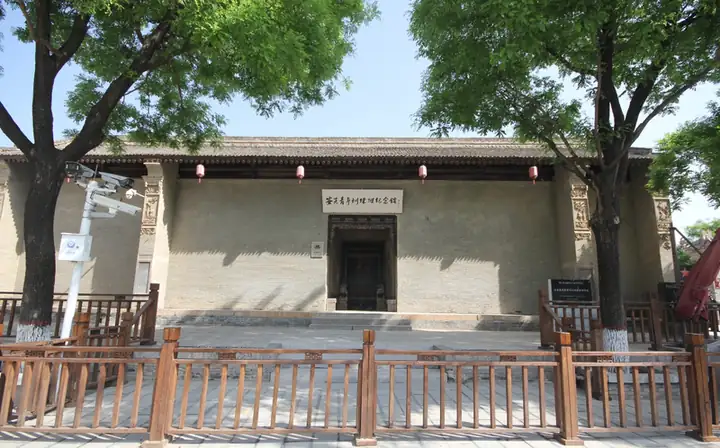 Anwu Youth Training Class Memorial Hall · 安吴青训班纪念馆
Anwu Youth Training Class Memorial Hall安吴青训班纪念馆
The Anwu Youth Training Class Memorial Hall (安吴青训班纪念馆) stands in the Wu family's East Court at Anwu village, Anwu town, Jingyang County, Xianyang, Shaanxi. It occupies a three-courtyard quadrangle inside a mid-Qing merchant compound, and it records the wartime training class that the Communist Party ran there from early 1938 until April 1940.
Read the place guide → Zhengguo Canal · 郑国渠
Zhengguo Canal郑国渠
Qin irrigation canal of 246 BC at the Jing River gorge in Jingyang, with eleven intakes of later dynasties and sixteen water-works steles.
Read the place guide →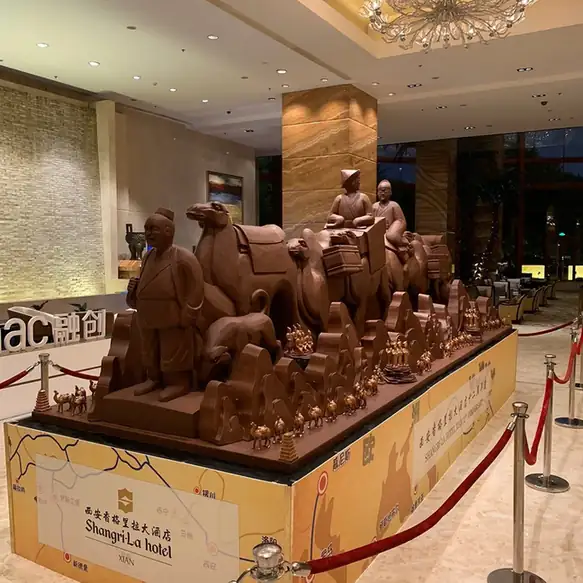 Han Yangling Museum · 汉阳陵博物院
Han Yangling Museum汉阳陵博物院
The Han Yangling Museum (汉景帝阳陵博物院) was founded on Hanyangling, the nationally protected mausoleum of Emperor Jing of Han and Empress Wang, and opened in 1999. The provincial cultural heritage administration places it on the bank of the Wei River in the northern outskirts of Xi'an, while the catalogue assigns the site to Weicheng District in Xianyang; the two are recorded here as they stand.
Read the place guide →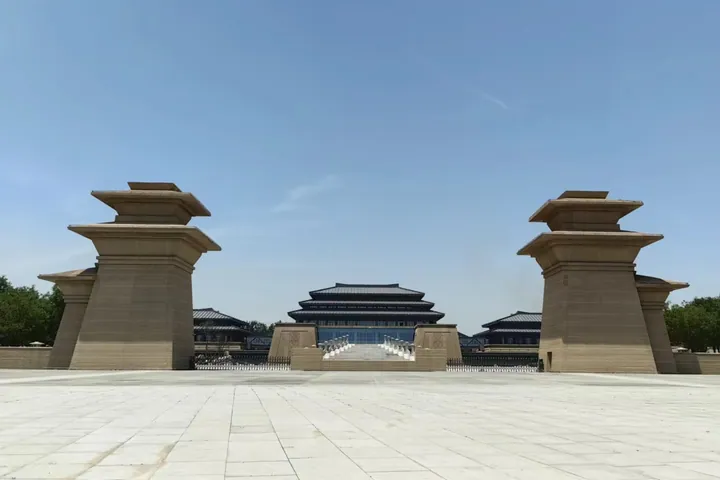 The south gate of the Qin-Han branch of the Shaanxi History Museum, Weicheng District, Xianyang, before its official opening · 陕西历史博物馆秦汉馆南门(开放前),咸阳市渭城区 Source-recorded photograph date: 2023-06-10.
Shaanxi History Museum Qin-Han Branch陕西历史博物馆秦汉馆
Shaanxi History Museum branch in Xianyang devoted to Qin and Han civilization, in seven Big Dipper-plan buildings designed by Zhang Jinqiu.
Read the place guide →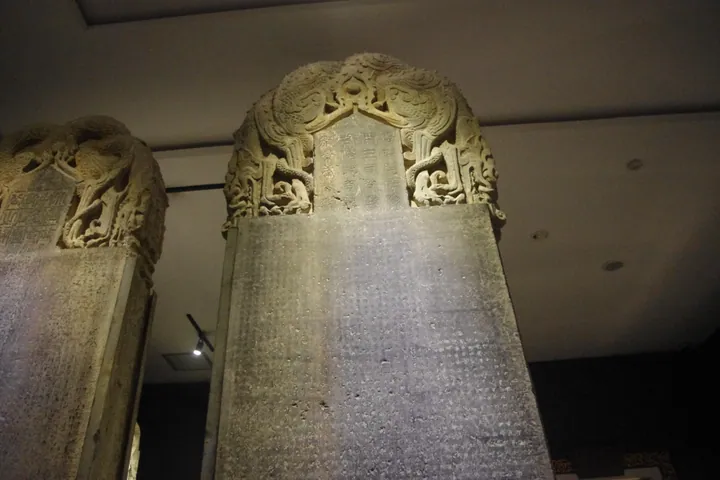 The Li Jing stele, a carved stone monument on display at Zhaoling Museum, Liquan County, Xianyang · 咸阳市礼泉县昭陵博物馆内展出的李靖碑 Source-recorded photograph date: Taken on 4 October 2014 13:39:50.
Zhaoling Museum昭陵博物馆
Site museum for Tang emperor Taizong's Zhaoling in Liquan County, with steles and epitaphs from its satellite tombs, murals and Tang figurines.
Read the place guide → AI illustration · AI 示意图(仅供参考,非该地点实拍)
Yuanjia Village袁家村
Yuanjiacun (袁家村) is a village in Yanxia town, Liquan County, Xianyang, Shaanxi, in the north of the county below the Jiuzong Mountains where the Tang imperial mausoleum Zhaoling stands. It is a national 4A-grade tourist scenic area whose tourism is themed on Guanzhong folk culture, and with 62 households and 286 people on 660 mu of land the National Development and Reform Commission's case study calls it the smallest village in the county.
Read the place guide →A hall of the Xianyang Museum (Xian Yang Bo Wu Yuan), Qindu District, Xianyang · 咸阳市秦都区咸阳博物院展厅建筑 Source-recorded photograph date: 2005-10.Xianyang Museum咸阳博物院
Qin and Han relics in Xianyang's Ming Confucian Temple: Western Han painted figures, Qin palace bricks, Han jades and a ferry-site branch.
Read the place guide →Local life & food
Xianyang local specialties
咸阳市特色美食 · 11 specialties to discover
 Huitong Noodles 汇通面AI illustration · AI 示意图(仅供参考,非实拍)
Huitong Noodles (汇通面) are hand-rolled noodles from Xianyang (咸阳), served with generous toppings and little broth. Their chewy texture and sharp, sour flavour distinguish the bowl described by Shaanxi Daily.
Read the dish guide → Qianxian thick flatbread 乾县锅盔AI illustration · AI 示意图
The crust is substantial, with a dense, layered interior and a clean wheat flavor. It is firmer and drier than a fluffy steamed bun.
Source ↗Read the dish guide →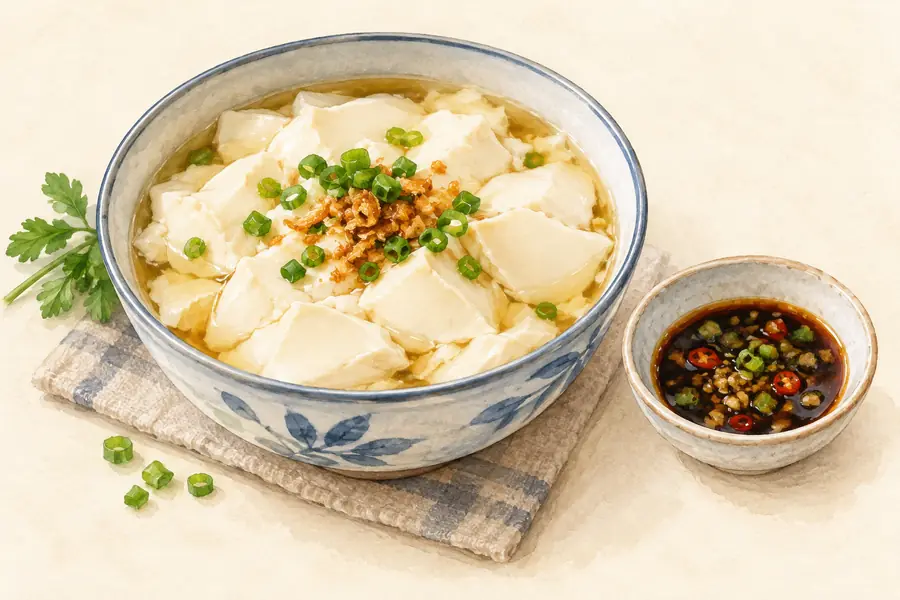 Qian County Tofu Pudding 乾县豆腐脑AI illustration · AI 示意图(仅供参考,非实拍)
Qian County Tofu Pudding (乾县豆腐脑) is a white, soft bean curd served with salt, vinegar, garlic juice and chilli in Qian County (乾县). Vendors scoop it from earthenware jars with a small copper spatula, then season each bowl.
Read the dish guide →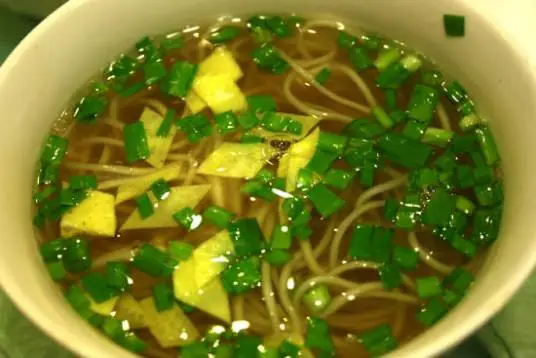 Qian County Hand-Drawn Dried Noodles 乾县挂面
Qian County Hand-Drawn Dried Noodles (乾县挂面) are fine strands made from refined flour and salt water.
Read the dish guide →Photo adjustments
EXIF orientation normalized; resized without changing aspect ratio; converted to WebP. No subject edits.
Binzhou Imperial Noodles 彬州御面AI illustration · AI 示意图(仅供参考,非实拍)
Binzhou Imperial Noodles (彬州御面) is a wheat-flour speciality of Binzhou (彬州), made by washing dough, settling the starch liquid and cooking it before steaming.
Read the dish guide →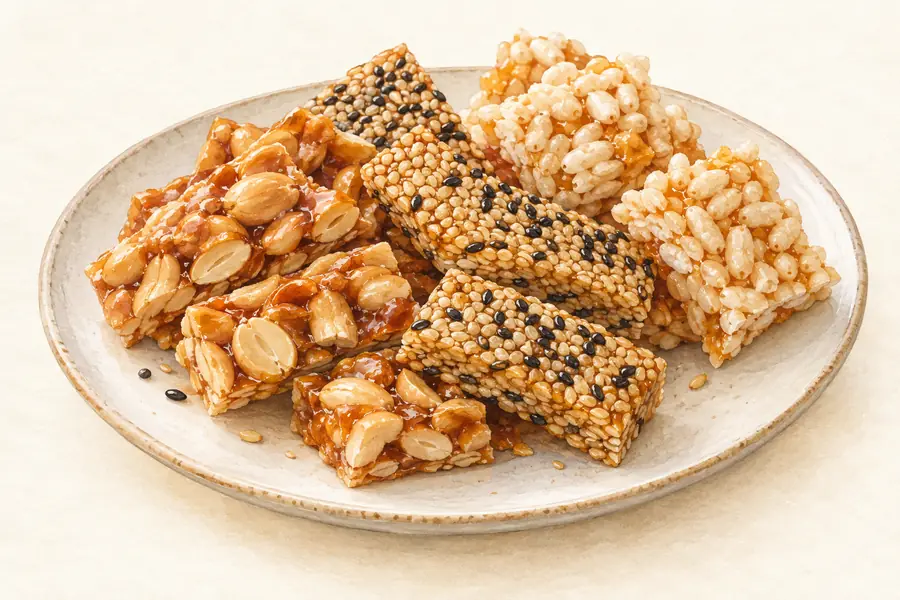 Sanyuan Puffed Sesame Rice Candy 三原蓼花糖AI illustration · AI 示意图(仅供参考,非实拍)
Sanyuan Puffed Sesame Rice Candy (三原蓼花糖) is a glutinous-rice sweet with a golden surface covered in sesame and a fine, mesh-like interior. White sugar and maltose syrup join the rice and sesame in its preparation.
Read the dish guide →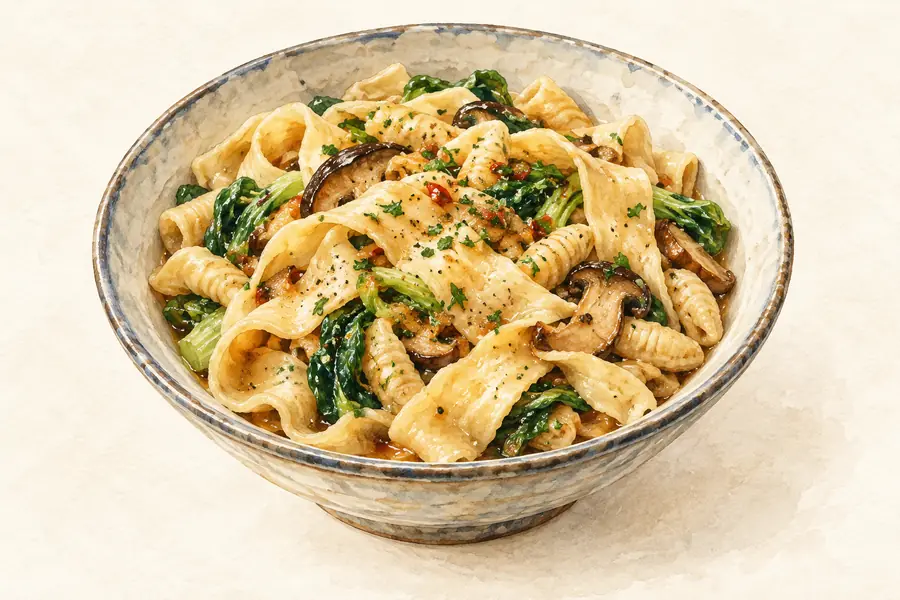 Sanyuan Coiled Noodles 三原疙瘩面AI illustration · AI 示意图(仅供参考,非实拍)
Sanyuan Coiled Noodles (三原疙瘩面) come from Sanyuan County (三原县) in Xianyang (咸阳), on the central Guanzhong Plain (关中平原) of Shaanxi.
Read the dish guide →Liquan Griddled Noodles 礼泉烙面AI illustration · AI 示意图(仅供参考,非实拍)
Liquan Griddled Noodles (礼泉烙面) is a Liquan (礼泉) speciality served by pouring seasoned meat-and-bone broth over griddled noodle strips. Garlic shoots or chives and diamond-shaped pieces of thin omelette finish the bowl.
Read the dish guide →All dish names · 全部菜名 (11)
- Huitong Noodles · 汇通面
- Qianxian thick flatbread · 乾县锅盔
- Qian County Tofu Pudding · 乾县豆腐脑
- Qian County Hand-Drawn Dried Noodles · 乾县挂面
- Binzhou Imperial Noodles · 彬州御面
- Sanyuan Puffed Sesame Rice Candy · 三原蓼花糖
- Sanyuan Coiled Noodles · 三原疙瘩面
- Liquan Griddled Noodles · 礼泉烙面
- Yongshou Angongqiao Giant Fried Dough Twist · 永寿安宫桥大麻花
- Xunyi Decorated Steamed Buns · 旬邑花子馍
- Changwu Blood Strip Soup · 长武血条汤
More dishes from across Shaanxi are in the Shaanxi food guide.
Counties & districts in Xianyang
14 areas belong directly to Xianyang.
14 areas
Qindu District 秦都区
Qindu District (simplified Chinese: 秦都区; traditional Chinese: 秦都區; pinyin: Qíndū Qū), is a district of the city of Xianyang, Shaanxi province, China.
Explore the area →DistrictYangling District 杨陵区
Yangling District (simplified Chinese: 杨陵区; traditional Chinese: 楊陵區; pinyin: Yánglíng Qū) is a district of the city of Xianyang, Shaanxi province, People's Republic of China, located on the plains of Wei…
Explore the area →DistrictWeicheng District 渭城区
Weicheng District (simplified Chinese: 渭城区; traditional Chinese: 渭城區; pinyin: Wèichéng Qū) is a district of Xianyang, Shaanxi, China.
Explore the area →CountySanyuan County 三原县
Sanyuan is a county in the central part of Shaanxi province, China. It is the easternmost county-level division of Xianyang City.
Explore the area →Show fewer areas
Jingyang County 泾阳县
Jingyang County (simplified Chinese: 泾阳县; traditional Chinese: 涇陽縣; pinyin: Jīngyáng Xiàn) is a county under the administration of the prefecture-level city of Xianyang, in the central part of Shaanxi…
Explore the area →CountyQian County 乾县
Qian County (乾县; Qián Xiàn) or Qianxian is a county under the administration of the prefecture-level city of Xianyang, in the central part of Shaanxi province, China.
Explore the area →CountyLiquan County 礼泉县
Liquan County (simplified Chinese: 礼泉县; traditional Chinese: 禮泉縣; pinyin: Lǐquán Xiàn) is a county under the administration of the prefecture-level city of Xianyang, in the central part of Shaanxi province…
Explore the area →CountyYongshou County 永寿县
Yongshou County (simplified Chinese: 永寿县; traditional Chinese: 永壽縣; pinyin: Yǒngshòu Xiàn) is a county under the administration of the prefecture-level city of Xianyang, in the central part of Shaanxi…
Explore the area →CountyChangwu County 长武县
Changwu County (simplified Chinese: 长武县; traditional Chinese: 長武縣; pinyin: Chángwǔ Xiàn) is a county in the central part of Shaanxi province, China, bordering Gansu province to the north, west, and southwest.
Explore the area →CountyXunyi County 旬邑县
Xunyi is a county in the central part of Shaanxi province, China, bordering Gansu province to the north and northwest. It is the northernmost county-level division of Xianyang City.
Explore the area →CountyChunhua County 淳化县
Chunhua County is a county under the administration of the prefecture-level city of Xianyang, in the central part of Shaanxi province, China.
Explore the area →CountyWugong County 武功县
Wugong County is a county under the administration of the prefecture-level city of Xianyang in the central part of Shaanxi Province, China.
Explore the area →County-level cityXingping 兴平市
Xingping (simplified Chinese: 兴平; traditional Chinese: 興平; pinyin: Xīngpíng) is a city located in the center part of Shaanxi province, China.
Explore the area →County-level cityBinzhou 彬州市
Binzhou, formerly known as Bin County or Binxian (simplified Chinese: 彬县; traditional Chinese: 彬縣; pinyin: Bīn Xiàn), is a county-level city of Xianyang, Shaanxi, China, bordering Gansu province in two…
Explore the area →No areas match this name.
Plan your visit
Getting there
Search for 咸阳市 in a map app to find stations and your accommodation.
Where to stay →Build your route
Qianling Mausoleum and Maoling are about 40 km apart in a straight line. The linked place guides have entrance and visit details.
Continue with Shaanxi →More in Shaanxi
Sources & geographic information
Administrative names and parent areas: Official geographic directory · Reference date 2026-09-06.
Background text adapted from Xianyang — Wikipedia contributors, under CC BY-SA 4.0. Text has been shortened and reorganized; source revision 1369481840.
Photo: Qianling Mausoleum · 猫猫的日记本 · CC BY-SA 3.0. Proportionally resized and converted to WebP without cropping, retouching or changing the photographed subject.

Photo: Maoling · Acstar · CC BY-SA 4.0. Proportionally resized and converted to WebP without cropping, retouching or changing the photographed subject.

Photo: Zhaoling · Acstar · CC BY-SA 4.0. Proportionally resized and converted to WebP without cropping, retouching or changing the photographed subject.

Photo: Xi'an Xianyang Airport · AcidBomber at English Wikipedia · CC BY 3.0. Full frame retained; proportionally resized and converted to WebP. No retouching or changes to the photographed subject. Card displays may crop the view.

Photo: Sanyuan City God Temple · dayu490301 · CC BY 3.0. Full frame retained; proportionally resized and converted to WebP. No retouching or changes to the photographed subject. Card displays may crop the view.

Photo: Maoling Museum · Gisling · CC BY-SA 3.0. Full frame retained; proportionally resized and converted to WebP. No retouching or changes to the photographed subject. Card displays may crop the view.

Photo: Big Buddha Temple Grottoes · Tokiwa Daijo & Sekino Tai · Public domain. EXIF orientation normalized; resized without changing aspect ratio; converted to WebP. No subject edits.

Photo: Malan Revolutionary Site · Source photographer · License not provided. EXIF orientation normalized; resized without changing aspect ratio; converted to WebP. No subject edits.
Photo: Anwu Youth Training Class Memorial Hall · Source photographer · License not provided. EXIF orientation normalized; resized without changing aspect ratio; converted to WebP. No subject edits.
Photo: Zhengguo Canal · Source photographer · License not provided. EXIF orientation normalized; resized without changing aspect ratio; converted to WebP. No subject edits.
Photo: Han Yangling Museum · Source photographer · License not provided. EXIF orientation normalized; resized without changing aspect ratio; converted to WebP. No subject edits.
Photo: Shaanxi History Museum Qin-Han Branch · Baomi · CC BY-SA 4.0. Full frame retained; proportionally resized and converted to WebP. No retouching or changes to the photographed subject. Card displays may crop the view.

Photo: Zhaoling Museum · Acstar · CC BY-SA 4.0. Full frame retained; proportionally resized and converted to WebP. No retouching or changes to the photographed subject. Card displays may crop the view.

Photo: Xianyang Museum · Gisling · CC BY-SA 3.0. Full frame retained; proportionally resized and converted to WebP. No retouching or changes to the photographed subject. Card displays may crop the view.

Map data © OpenStreetMap contributors. Pins mark approximate centres, not entrances or boundaries.