
North · Destination guide
Shanxi 山西
Shanxi is a province of elevated terrain, river valleys and basin towns between the Taihang Mountains and the Yellow River. Its strongest journeys follow the differences between Buddhist cave sculpture, timber temples, merchant settlements and living pilgrimage landscapes. Datong in the north, Taiyuan and Jinzhong in the centre, and Yuncheng farther south offer distinct starting points. Choose the history or architecture you most want to understand, then give it time. A sequence of carefully explored sites is more revealing than a rapid circuit of famous names.
Shanxi at a glance
- Population
- 34,240,100Year-end resident population, entire provincial-level administrative area · 2025Source ↗
- Income per person
- 33,923Mean annual disposable income per person, all residents · 2025 · CNYSource ↗
- Languages & dialects
- Mandarin; Jin (晋语) across much of the province, with Central Plains Mandarin in parts of the south.Regional dialect distribution is encyclopedia-based; not a claim that every resident uses the same language.Source ↗
- Geography
- Eastern Loess Plateau between the Taihang Mountains and the middle Yellow River; mountain ranges alternate with basins.Source ↗
- Elevation
- Most of the province lies above 1,000 m, with lower inhabited basins and higher mountain ridges.Source ↗
- Main gateway
- TaiyuanProvince
Map & places
Explore Shanxi
Browse places and sight guides by category, or choose a city below the map to see its location and boundary.
Browse 111 places; 61 have map coordinates. Some listings cover overlapping areas.
Colour-coded categories. Pins are approximate; confirm entrances and routes in Amap or Apple Maps before setting off. District boundaries: © OpenStreetMap contributors (ODbL), simplified, for travel reference only.
Cities, counties & districts in Shanxi
Select a city name to show its boundaries on the map above; its details remain available separately.
Top sights in Shanxi
- 1Trip.Best #1
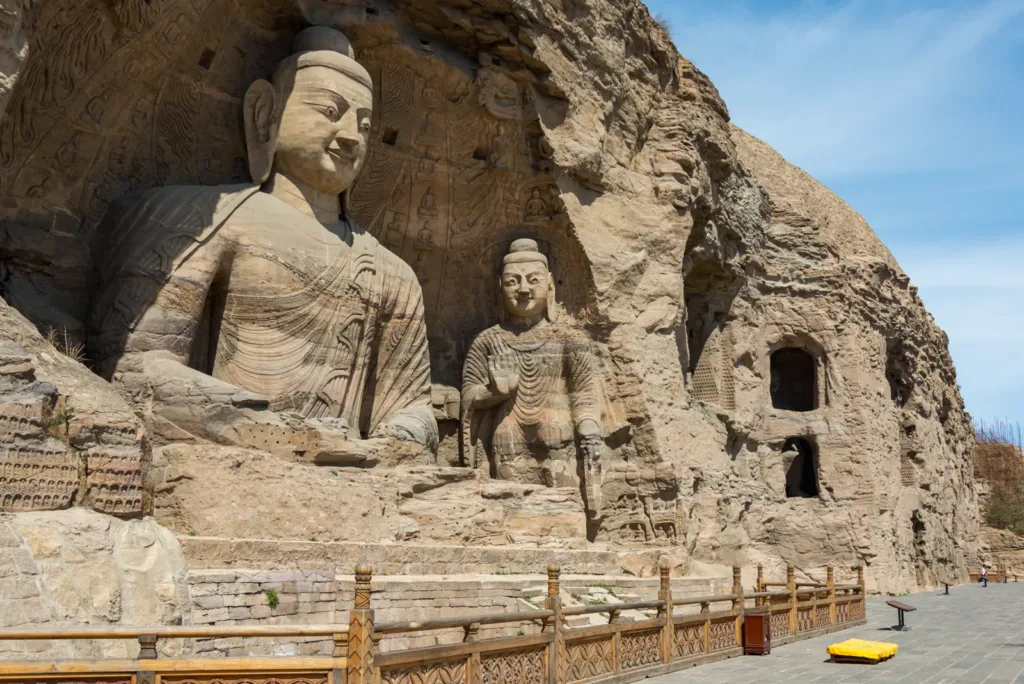
Yungang Grottoes云冈石窟
Yungang Grottoes is a west-of-Datong Buddhist cave complex cut into the southern face of Wuzhou Mountain in the Northern Wei period. Its early imperial caves, music-filled reliefs and later transformation of South and Central Asian Buddhist forms into a distinctly Chinese visual language make it one of China’s clearest places to see art, power and Silk Road exchange in the same cliff.
- 2Trip.Best #2
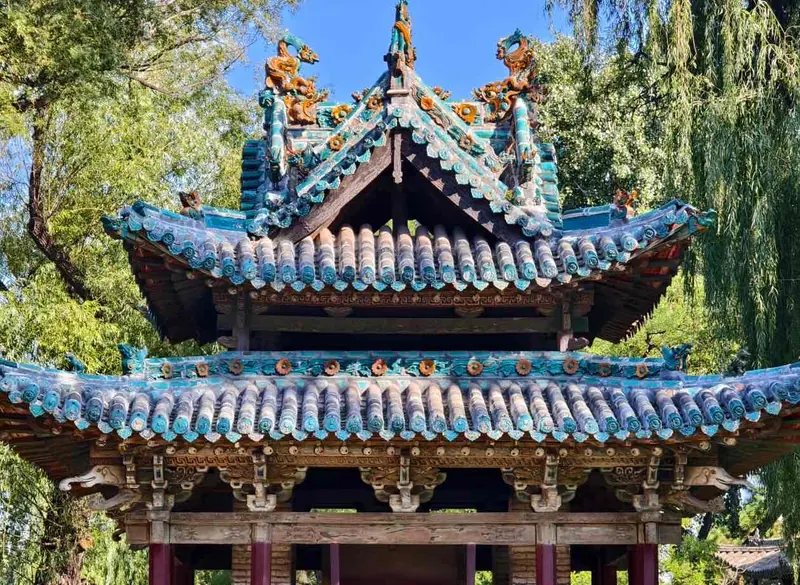
Jinci晋祠
Jinci brings spring water, garden scenery and early timber architecture together at the foot of Xuanweng Mountain. Its Hall of the Holy Mother is especially rewarding for the coiled wooden dragons outside and the individually…
- 3Trip.Best #3
Pagoda of Fogong Temple应县木塔
The wooden pagoda at Fogong Temple rises from a stone platform in Yingxian, its layered eaves supported by a dense system of timber brackets. Built in the Liao period, it is best understood by looking carefully at how the…
- 4Trip.Best #4
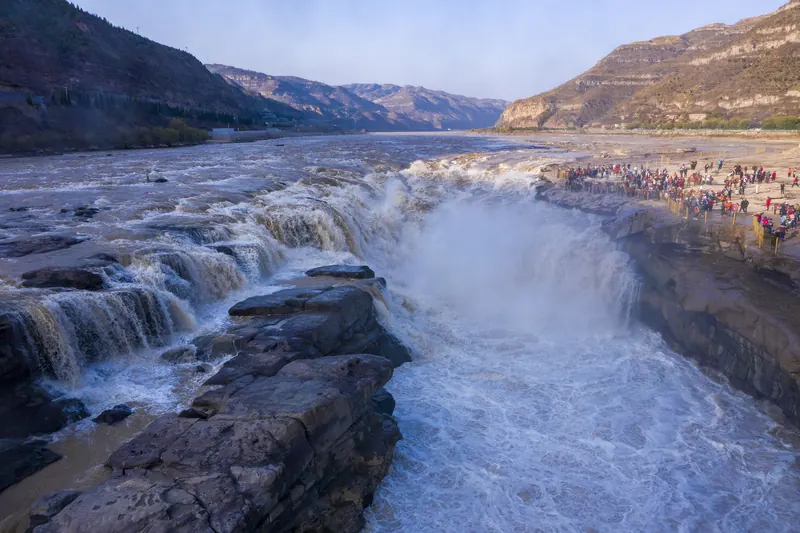
Hukou Waterfall on the Shanxi Side黄河壶口瀑布(山西侧)
The Shanxi side of Hukou Waterfall occupies the Yellow River's eastern bank in Jixian, facing the narrow rock gorge where the broad river contracts into a turbulent fall.
- 5Trip.Best #5
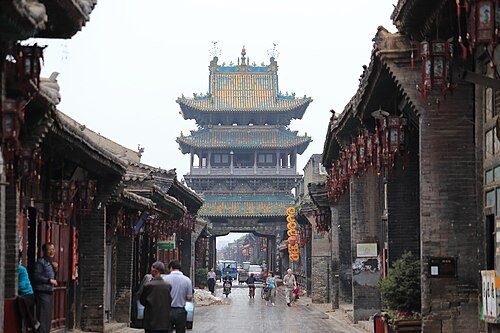
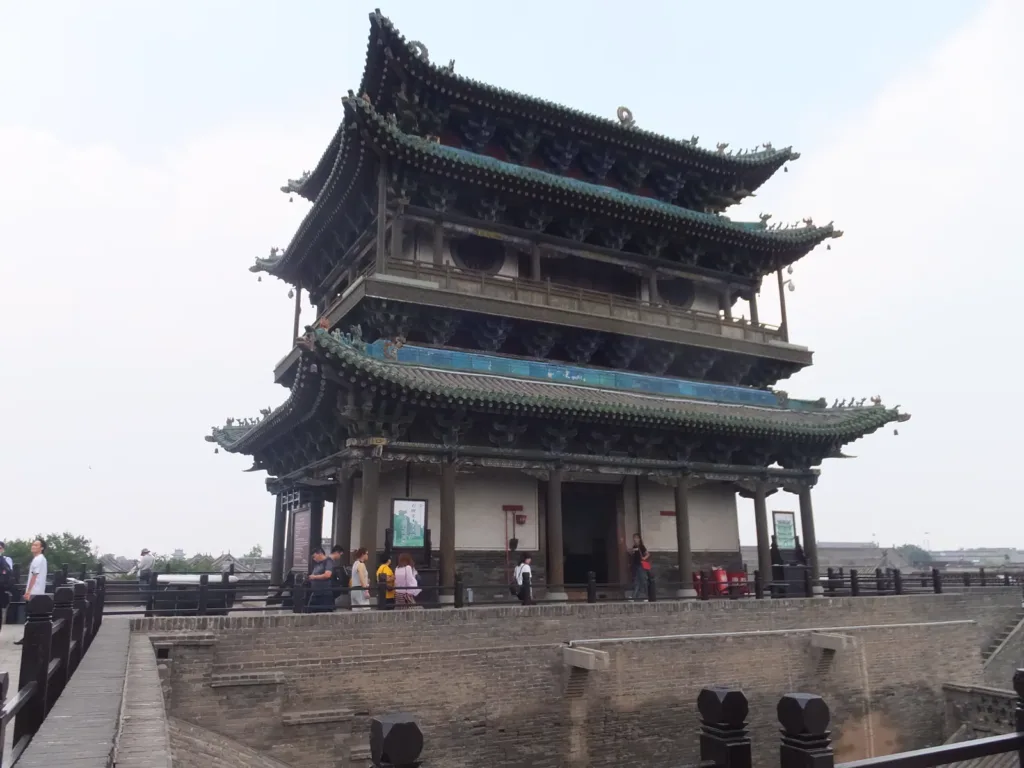
Pingyao Ancient City平遥古城
Pingyao Ancient City is a walled historic county town whose lanes, courtyard houses, former exchange houses and government compounds make a Shanxi merchant city legible at walking pace. Its preserved urban fabric links everyday street life with the banking networks that made Pingyao a major financial centre in the 19th and early 20th centuries.
- 6Trip.Best #6
Xuankong Temple悬空寺
The Hanging Temple uses beams inserted into the cliff to support a narrow chain of rooms and galleries above the valley.
- 7Trip.Best #7
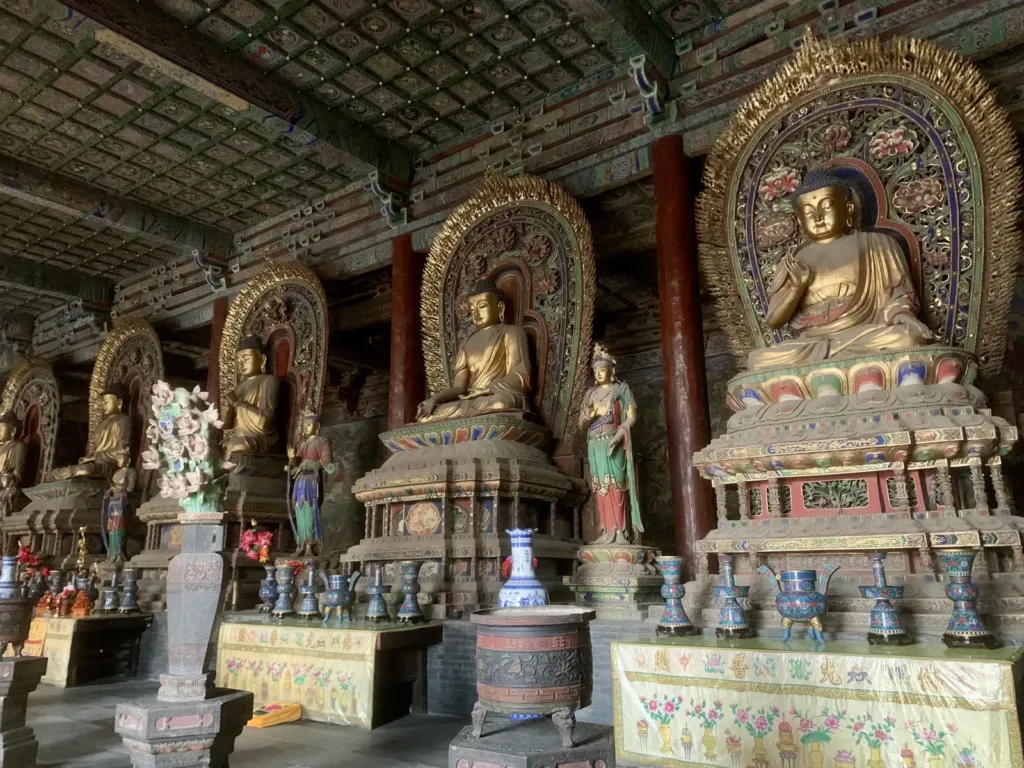
Huayan Temple华严寺
Huayan Temple is a Buddhist complex in Datong’s old city, where an east-facing Liao-period scripture hall and a Jin-period reconstruction of the Daxiongbao Hall preserve two different ways of making sacred space. Compare the intimate Bojia Jiaozang Hall, with its Liao sculpture and small timber scripture cabinets, with the broad Daxiongbao Hall and its monumental roof.
- 8Trip.Best #8
Little Western Paradise小西天
Xiaoxitian, also called Qianfo An, is a Buddhist temple on the western side of Xi County. Its best-known feature is the dense suspended sculpture in the main Buddha hall. Figures, miniature buildings and decorative forms rise around and above the principal statues, turning the interior into a layered religious setting.
- 9Trip.Best #9
Shanxi Museum山西博物院
Shanxi Museum is a useful starting point for understanding why the province's tombs, temples and merchant houses contain such different kinds of art. The Jin Soul displays connect archaeology with later religious and commercial…
- 10Trip.Best #10
Xinzhou Ancient City忻州古城
Xinzhou Ancient City (忻州古城) is the historic Xiurong old-city quarter in Xinfu District, whose restored streets now combine heritage buildings with northern Shanxi food, crafts and county-themed courtyards.





Shanxi travel guides
In-depth articles and itineraries for planning your time in Shanxi.
SOON
Itinerary
3 days in Shanxi: a first-timer's itinerary
How to split your days between the essential sights, neighbourhood walks and a relaxed evening, with transport tips between each stop.
Coming soonSOON
Food
Where to eat in Shanxi
Local dishes worth seeking out, how to order and what to expect.
Coming soonSOON
Transport
Getting around Shanxi by metro and taxi
Cards, apps and station tips for moving between sights.
Coming soonSOON
Day trip
Day trips from Shanxi
Plan the outward and return journeys and visiting time before mapping out your day.
Coming soonSOON
Neighbourhoods
Neighbourhood walks in Shanxi
Discover everyday Shanxi on a slow walk.
Coming soonSOON
Seasons
Choosing a season for Shanxi
See how visiting changes from spring to winter.
Coming soonLocal dishes
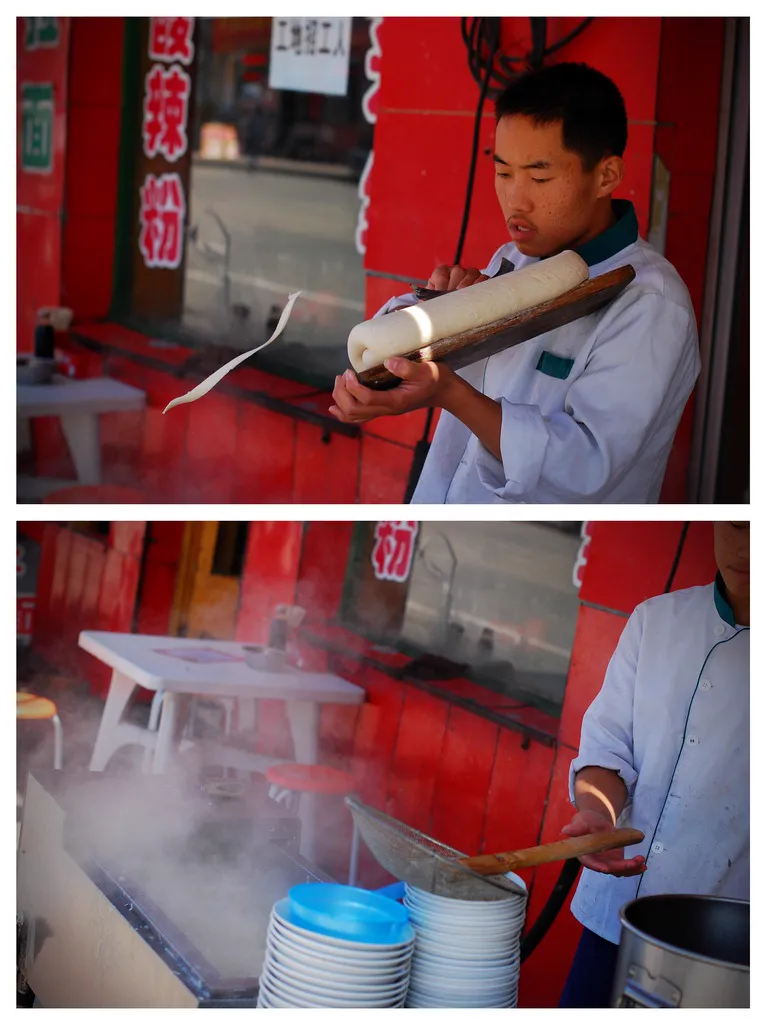
Knife-shaved noodles刀削面
Knife-shaved noodles (刀削面, dāoxiāomiàn) are a Shanxi wheat-noodle style also listed in Datong’s local dining guide. Their defining feature is the making: a firm block of dough is shaved straight into boiling water, leaving irregular edges that hold broth. Datong has a documented local “Datong knife-shaved noodles” production standard, but the dish is a wider Shanxi tradition rather than a Datong-only recipe.

Tijian noodles剔尖
Their irregular thickness creates both tender edges and a more substantial center. The surface holds a modest amount of sauce without becoming uniformly smooth.
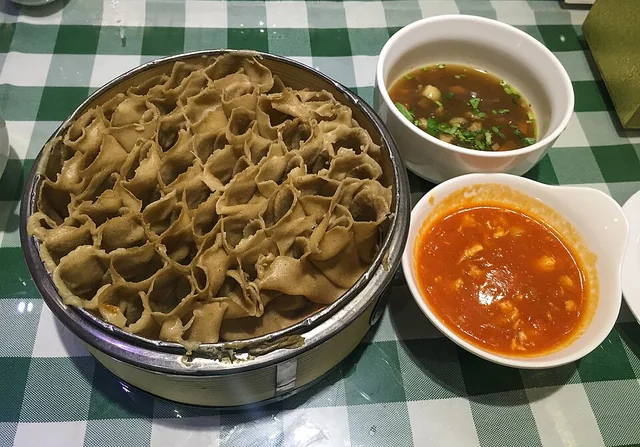
Oat-dough kaolaolao莜面栲栳栳
The rolls are soft but substantial, with a nutty grain flavor and enough structure to hold a dip. Their taste depends heavily on the accompanying sauce.

Guoyourou过油肉
The meat stays tender under a glossy coating, contrasting with crisp vegetables or wood-ear fungus. The flavor is savory with a light tang.
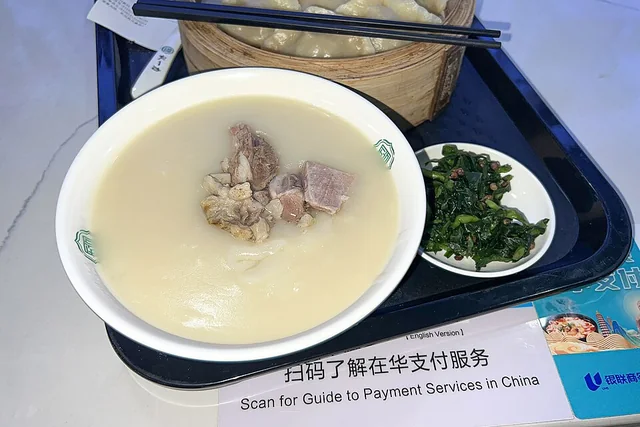
Tounao头脑
It is mellow, rich and softly textured rather than fiery. Aromatics and accompanying pickled chives can contribute a stronger flavor than the pale appearance suggests.
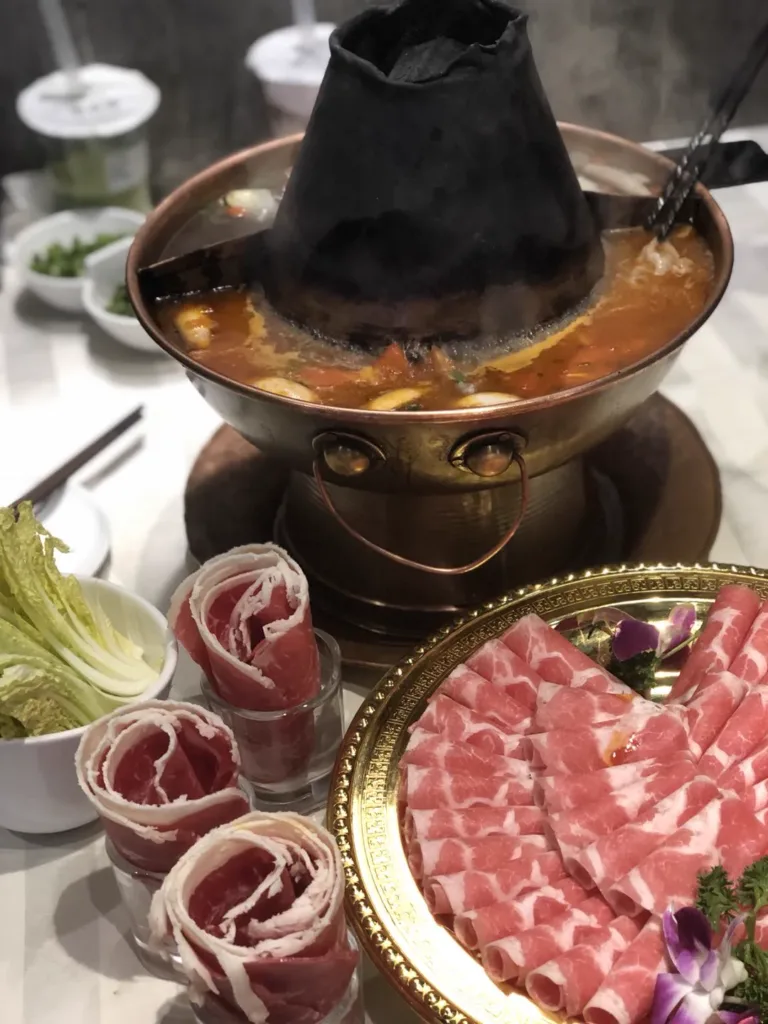
Datong copper hotpot大同铜火锅
Datong copper hotpot (大同铜火锅) is a shared Datong dish built around a traditional copper vessel, often served as a stacked shijincai assorted hotpot (什锦火锅). Meat, vegetables, dried ingredients and noodles share one broth, while the hand-worked, tin-lined pot is part of the experience—not just cookware.
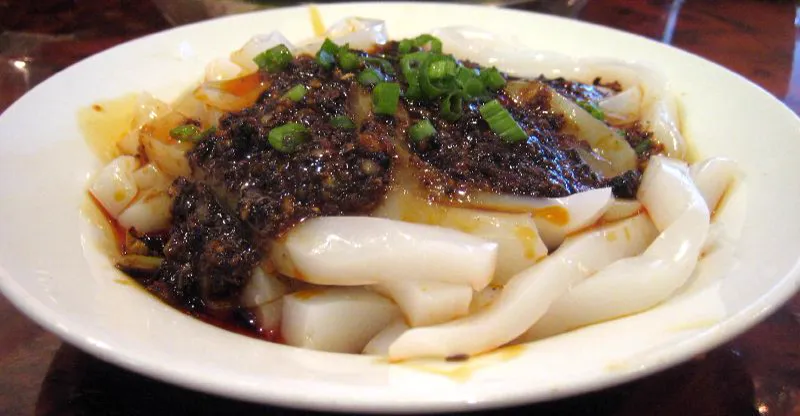
Hunyuan liangfen浑源凉粉
Hunyuan liangfen is a cold potato-starch jelly from Hunyuan County in Datong, served with Shanxi vinegar, chili oil, lotus beans and dried tofu. Its appeal is the contrast between a cool, springy base and sharp, crunchy toppings, and the bowl is a practical way to taste Hunyuan’s everyday food culture.
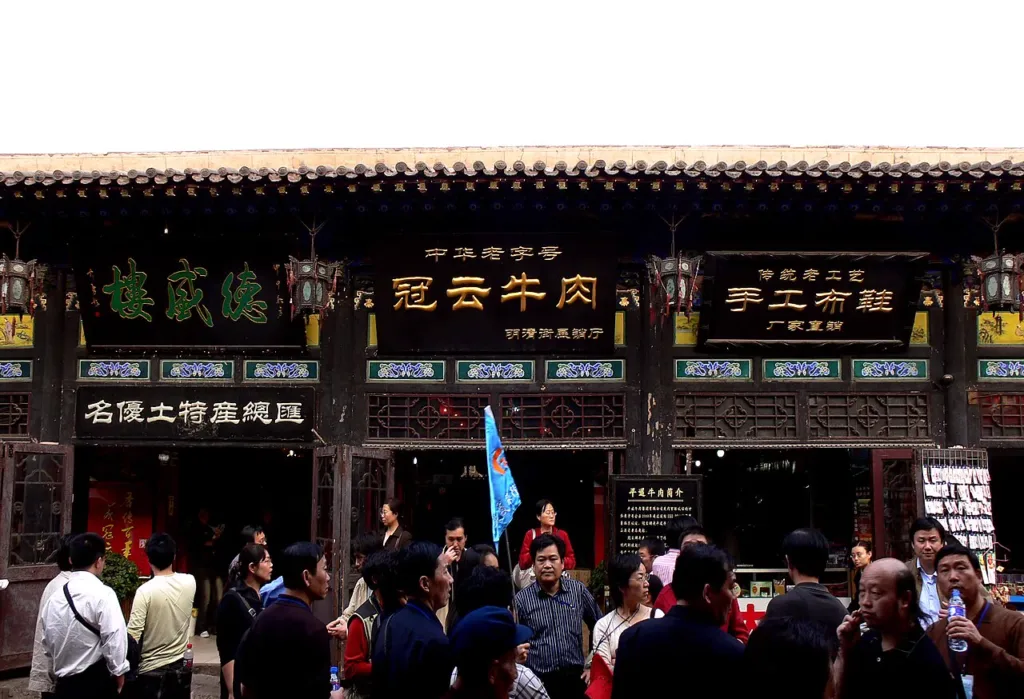
Pingyao cured beef平遥牛肉
Pingyao cured beef is a local beef product made by curing and simmering beef, then cooling it for neat slices. Its distinctive identity comes from Pingyao’s traditional processing culture and a documented geographical link to the county, so it is best approached as both a cold dish and a practical takeaway rather than one fixed restaurant recipe.
Arrival, stays & getting around
Arrive, stay & get around Shanxi
Check the precise airport or station name on the ticket before arranging the final transfer to your hotel.
Your arrival gateway
Taiyuan 太原
This Shanxi entry uses Taiyuan as its selected gateway city. It does not describe transport coverage across the entire region.
Airports
Taiyuan Wusu International Airport
太原武宿国际机场
Airport gateway southeast of central Taiyuan, serving the provincial capital and onward Shanxi journeys.
Railway stations
Taiyuan South Railway Station
太原南站
Principal high-speed rail gateway; use the full name 太原南 when booking.
Taiyuan Railway Station
太原站
The older central rail gateway, distinct from Taiyuan South.
Metro & city transport
Taiyuan Metro
太原地铁
Line 1 links Taiyuan Railway Station, Taiyuan South and Wusu Airport; the system also includes Line 2.
More about getting around
Rail is useful between the main city bases, with road transfers needed for scattered temples and mountain areas. Distinguish Pingyao's railway stations before booking. A car with a driver can connect rural sights efficiently; agree on named stops and the return destination in advance.
Transport reference review: 2026-09-06. Consult the operator for current services and timetables.
Accommodation
Stay in Shanxi
Split nights between Datong and Pingyao rather than returning to Taiyuan after every excursion. A courtyard guesthouse inside Pingyao's walls gives access to quieter morning streets; check heating and luggage access. For Wutai, choose accommodation by the temple area you intend to explore.
Find hotels on Trip.com ↗Change your destination, dates and guests on Trip.com.
Weather
Taiyuan weather
Loading the current-hour forecast…
Winters are cold and often dry, especially around Datong and at altitude. Summers are warmer in the basins, with seasonal rain. Wutai needs extra layers even when city weather is comfortable; exposed temple approaches and long stone stairways amplify weather differences.
Seasons & when to go
Check the city forecast ↗Bookings & travel
Make your travel plans a reality
Stays
Find hotels in Shanxi on Trip.com
Change your destination, dates and guests on Trip.com.
Find hotels on Trip.comWhy I recommend Trip.comFlights
Search for flights on Trip.com
Change your destination, dates and passengers on Trip.com.
Search flights on Trip.comWhy I recommend Trip.comTrains
Search for trains on Trip.com
Change your stations, travel date and passengers on Trip.com.
Search trains on Trip.comWhy I recommend Trip.comCars
Browse car rentals on Trip.com
Change your pick-up location and rental dates on Trip.com.
Open Trip.comWhy I recommend Trip.comActivities
Explore activities on Trip.com
Change your destination, dates and participants on Trip.com.
Explore activities on Trip.comWhy I recommend Trip.comFood
Explore local food guides
Browse local dishes, breakfast ideas, snacks and regional cooking.
Explore food guidesWhat to eat in ShanxiWritten by China Revealed · Editorially updated 2026-09-07
Maps & transport note
Transport suggestions on this site may be inaccurate or out of date. Confirm your exact destination, visitor entrance, current route and return connection before setting off.
For travel in mainland China, we recommend Amap (高德地图) or Apple Maps (苹果地图) for checking local directions. Both support English. Keep the Chinese place name and full address handy, and compare the result with the venue or transport operator’s latest information.
Do not rely on Google Maps or another overseas map as your only route check for mainland China. Map coverage and features vary, and no app can guarantee an error-free route.
Amap’s English interface depends on the app version and store region. Apple Maps follows your device or app language settings; some place labels may remain in Chinese. Apple states that its map service in China uses AutoNavi (Amap). Features differ in Hong Kong, Macao and Taiwan.
Information checked 2026-09-07.Photo credits (12)
- Ancient City of Pingyao · ShanxiPhoto: Zhangzhugang · CC BY-SA 3.0
- Jinci (晋祠)Photo: Trip.com
- Pagoda of Fogong Temple (应县木塔)Photo: Trip.com
- Hukou Waterfall on the Shanxi Side (黄河壶口瀑布(山西侧))Photo: Trip.com
- Xuankong Temple (悬空寺)Photo: Trip.com
- Little Western Paradise (小西天)Photo: Trip.com
- Shanxi Museum (山西博物院)Photo: Trip.com
- Xinzhou Ancient City (忻州古城)Photo: Trip.com
- Tijian noodles (剔尖)Photo: N509FZ · CC BY-SA 4.0
- Oat-dough kaolaolao (莜面栲栳栳)Photo: N509FZ · CC BY-SA 4.0
- Guoyourou (过油肉)Photo: Liuxingy · CC BY-SA 4.0
- Tounao (头脑)Photo: N509FZ · CC BY-SA 4.0
Sources & useful links (70)
- UNESCO: Ancient City of Ping Yao
- UNESCO: Yungang Grottoes
- UNESCO: Mount Wutai
- CNR: Shanxi provincial cuisine selection
- Shanxi government: eleven-city cultural tourism routes
- Shanxi government: Jinci educational visit
- Shanxi — population background
- Shanxi — income background
- Shanxi — languages background
- Shanxi — geography background
- Shanxi — Taiyuan map reference
- Shanxi — Datong map reference
- Shanxi — Pingyao Ancient City map reference
- Shanxi — Yungang Grottoes map reference
- Shanxi — Shuanglin Temple map reference
- Shanxi — Mount Wutai: Taihuai map reference
- Shanxi — Jinci map reference
- Shanxi — Hanging Temple map reference
- Shanxi — Pagoda of Fogong Temple map reference
- Shanxi — Wang Family Compound map reference
- Shanxi — Qiao Family Compound map reference
- Shanxi — Hukou Waterfall map reference
- Shanxi — Yongle Palace map reference
- Shanxi attraction ranking source
- Shanxi specialty reference — www.sxgp.gov.cn
- Shanxi specialty reference — xccys.moa.gov.cn
- Shanxi specialty reference — www.jcgov.gov.cn
- Shanxi specialty reference — jtysj.yq.gov.cn
- Lvliang Daily: cooking with shrimp paste in Fenyang
- Encyclopedia of China: paopao yougao craft in southern Shanxi
- Datong Government: flower-shaped shaomai guide
- Shanxi cultural tourism: Pingyao wantuo
- 太行山八泉峡 — place reference
- 原平莜面鱼鱼 — local food reference
- 昔阳压饼 — local food reference
- 荣河蒸菜 — local food reference
- Local food reference: 土豆焖鲍鱼
- Local food reference: 猫耳朵
- Local food reference: 油炸糕
- Yunzhou district government: Datong volcanic cones and landforms
- Datong municipal government: volcanic landscape visitor introduction
- Datong municipal government: museum galleries and historical themes
- UNESCO World Heritage Centre: Mount Wutai cultural landscape
- Lüliang Government: Lijiashan’s hillside dwellings and Qikou setting
- Jincheng Government: Qikou streets, historic buildings and Black Dragon Temple
- Changzhi municipal government: Baquan Gorge landforms and water corridor
- Changzhi municipal government: boat, walking and ridge perspectives at Baquan Gorge
- Changzhi heritage feature: Dayunyuan’s Five Dynasties paintings
- Changzhi architectural guide: Amitabha Hall and early timber construction
- CRI Shanxi: conservation work and inscriptions establishing the hall’s Five Dynasties date
- Changzhi Government: Longmen Temple and six periods of architecture
- Changzhi municipal government: Tongtian Gorge and its named landscape areas
- Changzhi Government: Chongqing Temple, dated buildings and sculpture
- Changzhi Government: the eighteen arhats and temple arrangement
- Jincheng municipal government: Wangmangling and Xiyagou landscape
- Jincheng municipal government: construction history of the Xiyagou cliff road
- Jincheng Government: Kaihua Temple and the Guo Fa mural workshop
- Jincheng Government: Gaoping Tiefo Temple’s twenty-four Ming deities
- Jincheng Government: heritage visits and protection at Tiefo Temple
- Jin State Museum: permanent exhibitions and site overview
- Jin State Museum: historical objects and the state of Jin
- Jin State Museum: presentation and conservation of the burial site
- Shanxi Institute of Electronic Science and Technology: Xiaoxitian’s courts and suspended sculpture
- Yuncheng Government: Feiyun Tower and Dongyue Temple
- Yuncheng municipal government: Houtu Temple and Qiufeng Tower
- Yuncheng municipal government: Xinjiang Longxing Temple, stele and pagoda
- Yuncheng Government: Pujin Ferry, Tang ironwork and site conservation
- Yuncheng Government: Ruicheng heritage and Guangrenwang Temple’s location
- Yuncheng Daily: Guangrenwang Temple and the Longquan water inscription
- China News Service: the Tang timber hall at Guangrenwang Temple