


Get to know Huangshan

Photo adjustments
Full frame retained; resized proportionally to a maximum dimension of 960 pixels and converted to WebP quality 88. No crop, retouch, generated elements, or subject alteration. Final website rendition: full frame retained, proportionally resized to at most 720 pixels and converted to WebP. No additional retouching or subject alteration. Card displays may crop the view.
- Administrative area
- Prefecture-level city · 地级市
- Part of
- Anhui
- Chinese name
- 黄山市
- Local areas
- 7 local areas
Area & population
- Area in the source
- 9,807.40 km²
Source: cited geographic source, as of the dates shown.
Setting and landscape
The prefecture belongs to the southern Anhui mountains, described as 'eight parts mountain, one part water, one part field'. The Huangshan range runs across She (歙县), Xiuning (休宁) and Yi (黟县) counties and Huangshan District (黄山区). The Xin'an, the main source of the Qiantang (钱塘江), rises in Xiuning and flows past Tunxi (屯溪) and She into Zhejiang. Mount Huangshan became a UNESCO World Heritage Site in 1990 for its scenery and as a habitat for rare species, and is known for oddly shaped granite peaks, Huangshan pines, hot springs and the sea of clouds seen from its summits.
History
The mountain was first called Yishan (黟山); the Tang emperor Xuanzong (唐玄宗) renamed it after the legend that the Yellow Emperor (黄帝) made elixirs there. Shezhou (歙州) became Huizhou in 1121, after the Song crushed the rebellion of Fang La (方腊), and when Anhui was created in 1667 its name joined the first characters of Anqing (安庆) and Huizhou. Huizhou merchants (徽商) reached the height of their power under the Ming and Qing.
What to see
Xidi (西递) and Hongcun (宏村) in Yi County are World Heritage villages, and Tunxi Old Street (屯溪老街) was among the first streets named national historic and cultural streets. Qiyun Mountain (齐云山) in Xiuning, one of China's four sacred Taoist mountains, is a Danxia landform of nine peaks with more than 570 surviving inscriptions. She County, at the southern foot of Mount Huangshan, is known for memorial archways, ancestral halls and old houses, among them the Xu Guo stone archway (许国石坊) and the Tangyue archway group (棠樾牌坊群).
Food and local products
Huizhou cooking grew up in Huizhou prefecture from the Southern Song and spread with its merchants. For stinky mandarin fish (臭鳜鱼), fresh fish are brined in a wooden tub under stones for six or seven days, then fried and braised with red chillies and scallions; daobanxiang (刀板香), salt-cured pork steamed on a wooden board that soaks up the fat, is cooked with spring bamboo shoots from Wenzheng Mountain (问政山). Huangshan Maofeng (黄山毛峰), a green tea named for its downy, peak-shaped buds, was developed by Xie Zheng'an (谢正安), who opened his tea business in 1875. It and Keemun black tea (祁门红茶), created in Qimen (祁门) in 1876, entered the national intangible heritage list in 2008; the Huizhou three carvings (徽州三雕) in wood, brick and stone were listed in 2006.
Sources for this guide
道教圣地——齐云山_安徽省人民政府 · Anhui Provincial People's Government
历史文化名城——歙县_安徽省人民政府 · Anhui Provincial People's Government
徽州三雕 - 中国非物质文化遗产网·中国非物质文化遗产数字博物馆 · China Intangible Cultural Heritage Network (ihchina.cn)
绿茶制作技艺(黄山毛峰) - 中国非物质文化遗产网·中国非物质文化遗产数字博物馆 · China Intangible Cultural Heritage Network (ihchina.cn)
红茶制作技艺(祁门红茶制作技艺) - 中国非物质文化遗产网·中国非物质文化遗产数字博物馆 · China Intangible Cultural Heritage Network (ihchina.cn)
黄山市 - 维基百科,自由的百科全书 · Wikipedia (Chinese) · CC BY-SA 4.0
Huangshan - Wikipedia · Wikipedia (English) · CC BY-SA 4.0
“徽”派美味 岂止臭鳜鱼--旅游--人民网 · People's Daily Online (report by Guangzhou Daily)
美食带你游安徽 | 徽菜经典——刀板香_中安在线 · Anhui News (中安在线)
Original English written from the listed sources and checked sentence by sentence against quoted extracts by a separate reviewer. Updated 2026-09-30.
Explore Huangshan
Core places to explore, with English and Chinese names.
Tunxi, Huangshan city 黄山市屯溪区
Tangkou 汤口
Mount Huangshan 黄山
Hongcun 宏村
Xidi 西递
Tangyue Memorial Archways 棠樾牌坊群
Chengkan 呈坎
She County, Anhui 歙县
Tiandu Peak · Yuping visitor-area reference 天都峰·玉屏片区示意点
Qiankou 潜口民宅
Mount Qiyun 齐云山
Ancient Huizhou Cultural Tourism Area 古徽州文化旅游区
Tangmo Ancient Village 唐模古村
Mulihong Village 木梨硔
Tunxi Old Street 屯溪老街
Liyang Old Street 黎阳老街
Tangmo Village 唐模
Huizhou Ancient City 徽州古城
Yuliang Dam 渔梁坝
Xin'an River Landscape Gallery 新安江山水画廊
Yangchan Tulou Village 阳产土楼
Guniujiang Guanyintang Scenic Area 牯牛降祁门观音堂片区
Nanping Old Village 南屏古村
Lucun Village 卢村
Tachuan Village 塔川
Bishan Village 碧山村
Tunxi District 屯溪区
Huangshan District 黄山区
Huizhou District 徽州区
She County 歙县
Xiuning County 休宁县
Yi County 黟县
Qimen County 祁门县
Places to explore around Huangshan
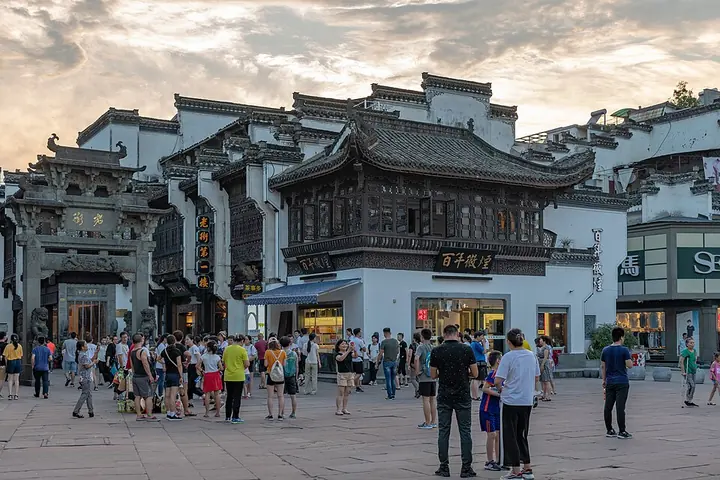 Historic street buildings in Tunxi, Huangshan city · 黄山市屯溪 Photograph date recorded by the source: 28 July 2018, 18:35.
Tunxi, Huangshan city黄山市屯溪区
Tunxi is the urban base of Huangshan City, with a different rhythm from the mountain resort around Tangkou. Tunxi Old Street preserves a linear commercial streetscape of Huizhou-style shopfronts, while Liyang across the river…
Read the place guide →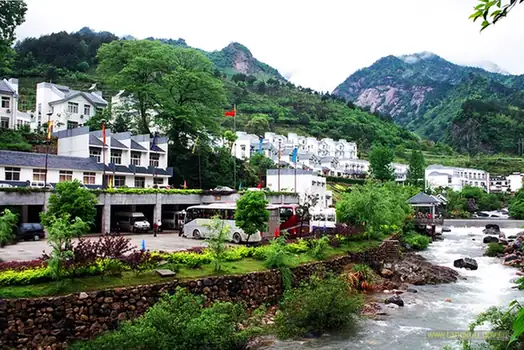 Tangkou · 汤口
Tangkou汤口
Tangkou is the practical base below Huangshan’s southern entrance, where mountain roads, lodging and shuttle connections meet. The town serves the Yuping and Yungu approaches, which lead to different walking routes among the…
Read the place guide →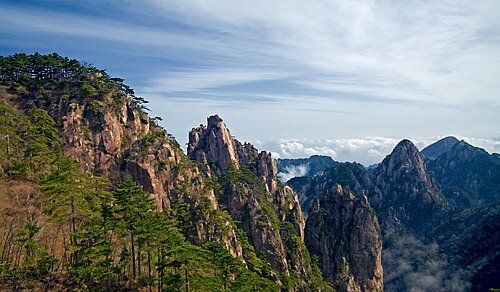 Mt. Huangshan · 黄山
Mount Huangshan黄山
Huangshan’s granite ridges and pines form a landscape made familiar by Chinese painting. Around Yuping, Welcoming-Guest Pine gives the rock-and-tree relationship a particular focus; Bright Summit opens a broader view across the…
Read the place guide →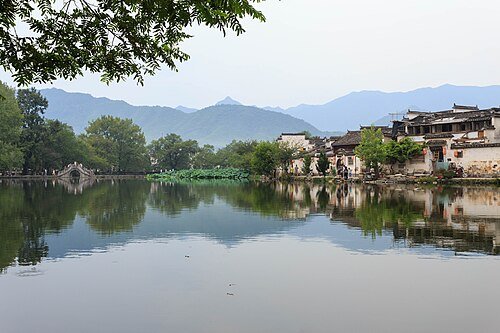 Hongcun Ancient Village · 宏村
Hongcun宏村
Hongcun’s water system threads between whitewashed houses and links the central Moon Pond with South Lake. These two pools give the village its most recognisable open spaces, but the smaller channels beside the lanes are equally…
Read the place guide → Xidi Ancient Village · 西递
Xidi西递
Xidi’s stone lanes wind among whitewashed merchant houses, with carved entrances and enclosed courtyards marking the transition from public street to private home. Three streams run through the settlement and converge near…
Read the place guide →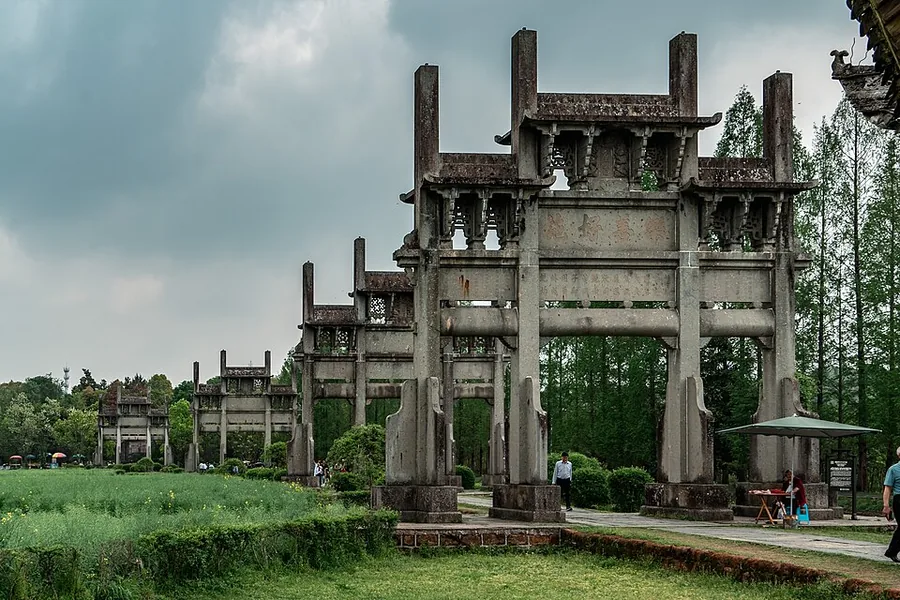 Tangyue Memorial Archways, Shexian, Anhui.
Tangyue Memorial Archways棠樾牌坊群
Tangyue’s memorial archways stand in Tangyue village, Zhengcun town, She County. Seven Ming- and Qing-period arches commemorate members of the Bao family and the moral virtues celebrated by the imperial state.
Read the place guide →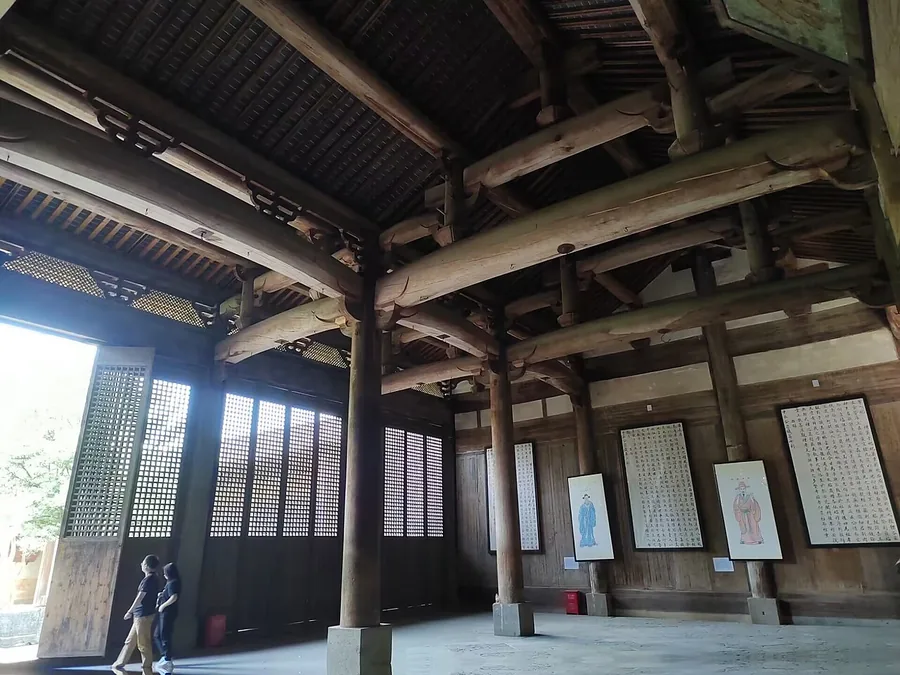 The timber interior of Luo Dongshu Ancestral Hall in Chengkan, Huangshan, Anhui; 16 May 2023.
Chengkan呈坎
Chengkan’s village lanes lead between houses and communal buildings of the Luo clan. The Luo Dongshu ancestral hall is the main architectural focus: its courtyards lead to Baolun Pavilion, where painted timber framing gives the…
Read the place guide → Xu Guo's stone memorial arch in She County's historic centre, September 2023.
She County, Anhui歙县
She County’s historic core was the seat of Huizhou, and its monuments show the wealth of officials and merchants from the region. Xu Guo’s stone memorial arch anchors the old centre, while Doushan Street leads past high-walled…
Read the place guide → The steep stone stairway towards Tiandu Peak in Huangshan.
Tiandu Peak · Yuping visitor-area reference天都峰·玉屏片区示意点
Tiandu Peak rises sharply above Huangshan’s southern mountain routes, with narrow rock passages and the exposed Carp’s Backbone ridge distinguishing it from the broader summit viewpoints. The approach is a demanding stair climb…
Read the place guide → The entrance to Qiankou Minzhai's Ming Garden, November 2016.
Qiankou潜口民宅
Qiankou’s historic residences form a collection of Huizhou buildings in Qiankou village. From the 1980s, threatened Ming-period structures from surrounding settlements were dismantled and reconstructed here.
Read the place guide →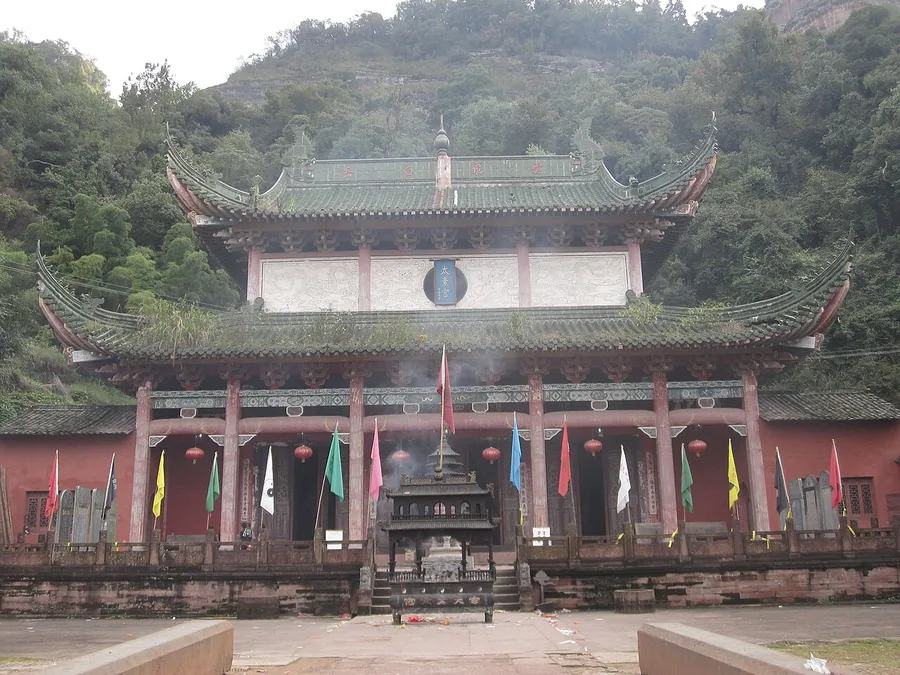 A Daoist temple building on Mount Qiyun, Anhui. Photographed on 20 November 2010.
Mount Qiyun齐云山
Qiyun combines a mountain landscape with Daoist buildings and an unusually rich collection of rock inscriptions. Yuehua Street gathers religious and domestic buildings against the slopes, while Yuxu Palace sits below Zixiao…
Read the place guide → AI illustration · AI 示意图(仅供参考,非该地点实拍)
Ancient Huizhou Cultural Tourism Area古徽州文化旅游区
Ancient Huizhou Cultural Tourism Area groups five destinations around Huangshan: Huizhou Ancient City, Tangyue archways and Bao Family Garden, Tangmo, Qiankou residences and Chengkan.
Read the place guide → Tangmo Ancient Village · 唐模古村
Tangmo Ancient Village唐模古村
Tangmo is a Huizhou village in Qiankou Town whose water street and landscaped village entrance distinguish it from nearby historic settlements. Streams, bridges and traditional buildings form the main walking experience.
Read the place guide → Terraced fields and the mountainside village of Mulihong, Xiuning County · 休宁县木梨硔梯田与山村全景 Source-recorded photograph date: Taken on 10 November 2013.
Mulihong Village木梨硔
Ridge-top Huizhou-style hamlet in Xiuning reached by 800 stone steps, known to photographers for its cloud seas and night skies.
Read the place guide → The stone paifang gate marking the entrance to Tunxi Old Street, Tunxi District, Huangshan City. · 黄山市屯溪区屯溪老街石牌坊入口。 Source-recorded photograph date: 2005.
Tunxi Old Street屯溪老街
A 1,272-metre Huizhou-style shopping street in central Tunxi, Huangshan, with Song-era origins, old tea and ink shops, and listed historic buildings.
Read the place guide →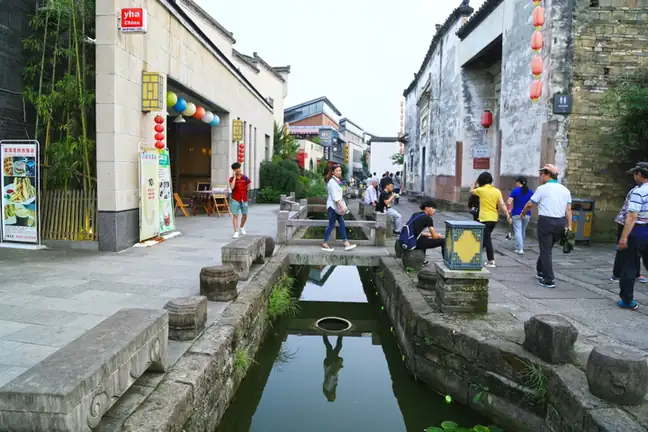 Liyang Old Street · 黎阳老街
Liyang Old Street黎阳老街
Liyang Old Street in Tunxi became the Liyang in Lane tourism quarter through a redevelopment that combines surviving Huizhou houses with new architecture and landscaped waterways.
Read the place guide → The paifang archway marking the entrance to Tangmo Village, Huizhou District, Huangshan · 黄山市徽州区唐模村"唐模"牌坊入口 Source-recorded photograph date: Taken on 4 April 2015.
Tangmo Village唐模
Tangmo in Huangshan's Huizhou District combines a village water landscape with pavilions, memorial archways and older Huizhou residences.
Read the place guide →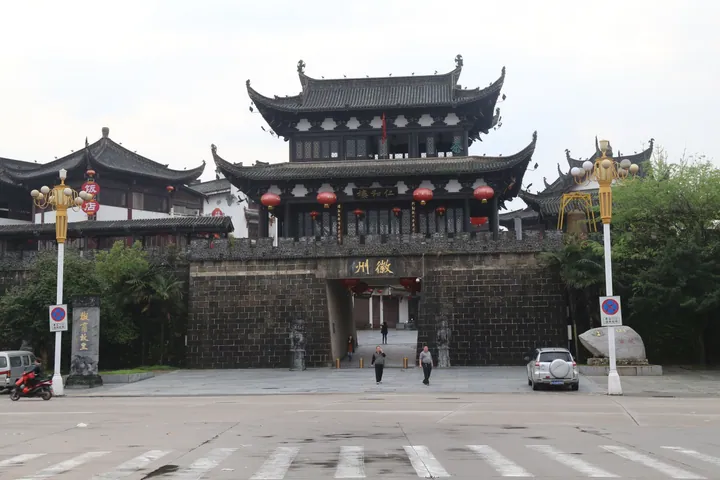 The main gate of Huizhou Ancient City, She County, Huangshan, with the '徽州' inscription over the arch · 黄山市歙县徽州古城正门城楼,门额书"徽州" Source-recorded photograph date: Taken on 5 April 2015.
Huizhou Ancient City徽州古城
Huizhou Ancient City in She County preserves the streets and gateways of a former regional administrative centre, with Xu Guo's elaborate stone archway among its most distinctive monuments.
Read the place guide → The stone weir of Yuliang Dam spanning the Lianjiang river south of Shexian's old town · 歙县渔梁坝,横跨练江的古代石坝 Source-recorded photograph date: 2010-11-27.
Yuliang Dam渔梁坝
Ming-rebuilt stone weir on the Lian River south of She County town, the wharf where Huizhou merchants set out, beside cobbled Yuliang Street.
Read the place guide →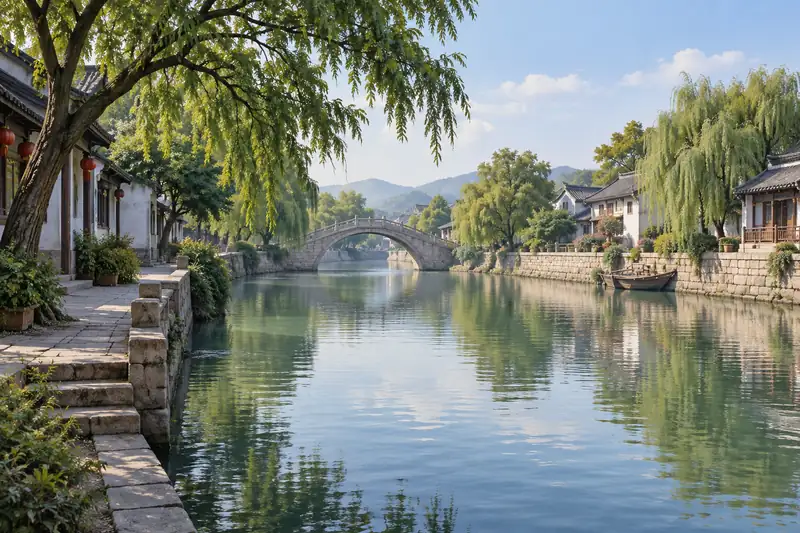 AI illustration · AI 示意图(仅供参考,非该地点实拍)
Xin'an River Landscape Gallery新安江山水画廊
The Xin'an River Landscape Gallery in She County pairs riverside Huizhou villages with hills used for forestry, tea and fruit growing.
Read the place guide → Misty morning view over the earthen houses of Yangchan Village, She County, Huangshan · 黄山市歙县阳产村土楼晨雾景色 Source-recorded photograph date: 2017-09-08.
Yangchan Tulou Village阳产土楼
A Zheng-clan hill village in She County, Huangshan, with about 360 red-earth houses built from the late Ming onward and harvest-time crop-drying.
Read the place guide →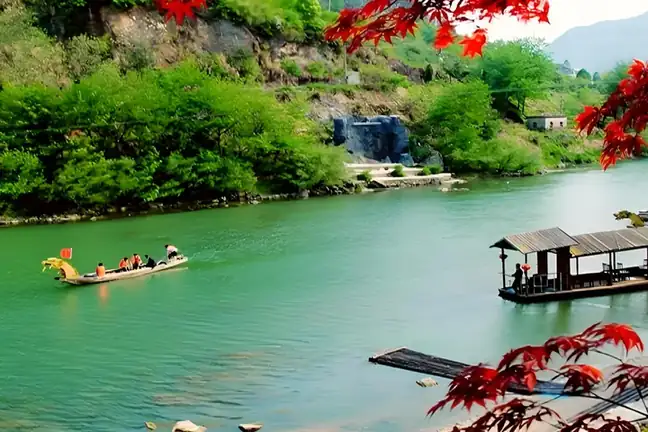 Guniujiang Guanyintang Scenic Area · 牯牛降祁门观音堂片区
Guniujiang Guanyintang Scenic Area牯牛降祁门观音堂片区
Guanyintang was the discovery locality of Ainsliaea guniuensis, identified after nearly four years of botanical investigation.
Read the place guide →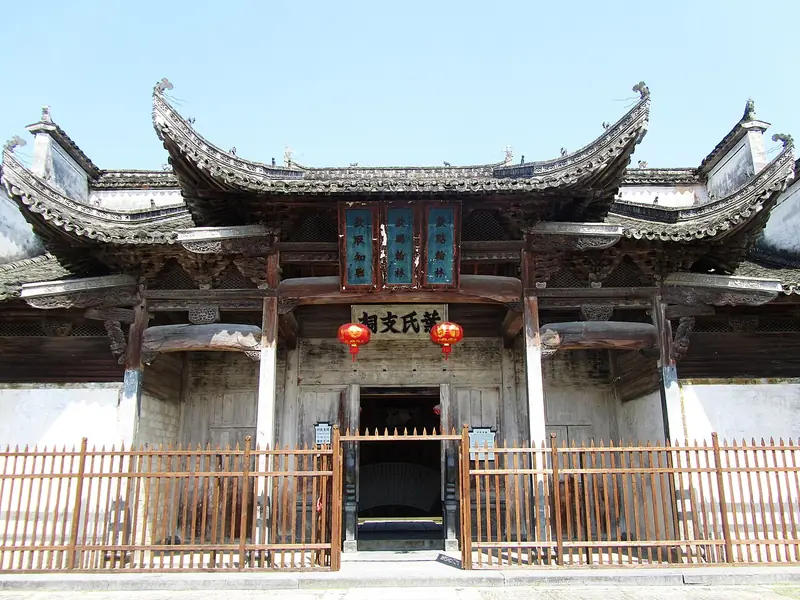 Nanping Old Village (南屏古村), Yi County. Photograph: "The Memorial Temple for the Family of Ye in Nanping 2013-04".
Nanping Old Village南屏古村
Nanping in Yi County is a Huizhou village whose central row of Ye lineage ancestral halls anchors a network of residential lanes.
Read the place guide → The ornately carved second gate of Zhicheng Hall in Lu Village (Lucun Village), Yi County · 黟县卢村志诚堂二门 Source-recorded photograph date: 2014-11-16 15:02:24.
Lucun Village卢村
Lucun, also known as Zhishan, is a village in Yi County whose Zhicheng Hall preserves an elaborate ensemble of Huizhou wood, brick and stone carving.
Read the place guide → Autumn foliage in the fields below Tachuan village, Yi County, a noted maple-viewing spot · 黟县塔川村赏秋,田野与红叶 Source-recorded photograph date: Taken on 9 November 2013.
Tachuan Village塔川
Tachuan is a village in Yi County where Chinese tallow trees, farm fields and Huizhou houses form a landscape that changes colour in autumn.
Read the place guide → AI illustration · AI 示意图(仅供参考,非该地点实拍)
Bishan Village碧山村
Wang-clan village near Yi County town with Ming and Qing houses, a provincially listed ancestral hall and a bookshop in a Qing-dynasty hall.
Read the place guide →Local life & food
Huangshan local specialties
黄山市特色美食 · 12 specialties to discover
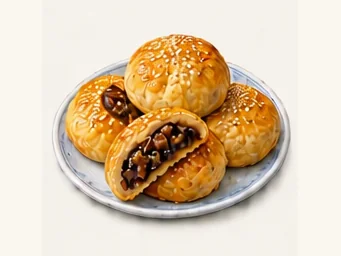 Huangshan crisp mini pastries 黄山烧饼AI illustration · AI 示意图
Thin shells crumble easily, with a salty, fragrant filling and a dry toasted finish.
Source ↗Read the dish guide → Qimen Zhonghe soup 祁门中和汤AI dish illustration / AI 菜品示意图
Expect a gentle, savoury soup with soft tofu and more resilient chopped additions. It is less heavy than a deep-fried course.
Source ↗Read the dish guide →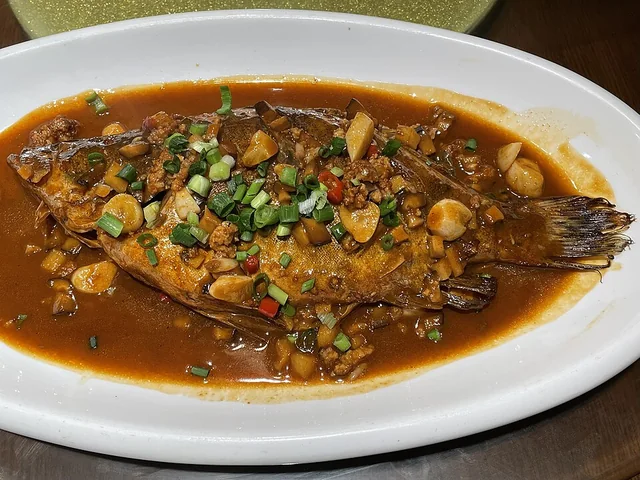 Huizhou fermented mandarin fish 徽州臭鳜鱼
Its smell is pronounced, while the cooked flesh remains tender and savory. The fermented character differs from simply adding a sour sauce.
Source ↗Read the dish guide →
Photo adjustments
EXIF orientation applied where present; resized proportionally to at most 640 px on the long edge and encoded as WebP. No crop, retouching, recoloring or subject changes.
 Huizhou hairy tofu 徽州毛豆腐
The inside becomes soft and creamy, with a pronounced fermented aroma; browned surfaces and chili or other sauce add contrast.
Source ↗Read the dish guide →
Photo adjustments
EXIF orientation applied where present; resized proportionally to at most 640 px on the long edge and encoded as WebP. No crop, retouching, recoloring or subject changes.
 Huizhou Layered One-Pot 徽州一品锅AI illustration · AI 示意图(仅供参考,非实拍)
Huizhou Layered One-Pot (徽州一品锅) is a banquet dish of the old Huizhou (徽州) region in southern Anhui, in which many ingredients are stacked in layers and stewed together in a single large iron pot.
Read the dish guide → Huizhou steamed cured pork 徽州刀板香AI illustration · AI 示意图
The slices are intensely savory, with a firm lean section and melting fat. A small amount can flavor a large mouthful of rice.
Source ↗Read the dish guide →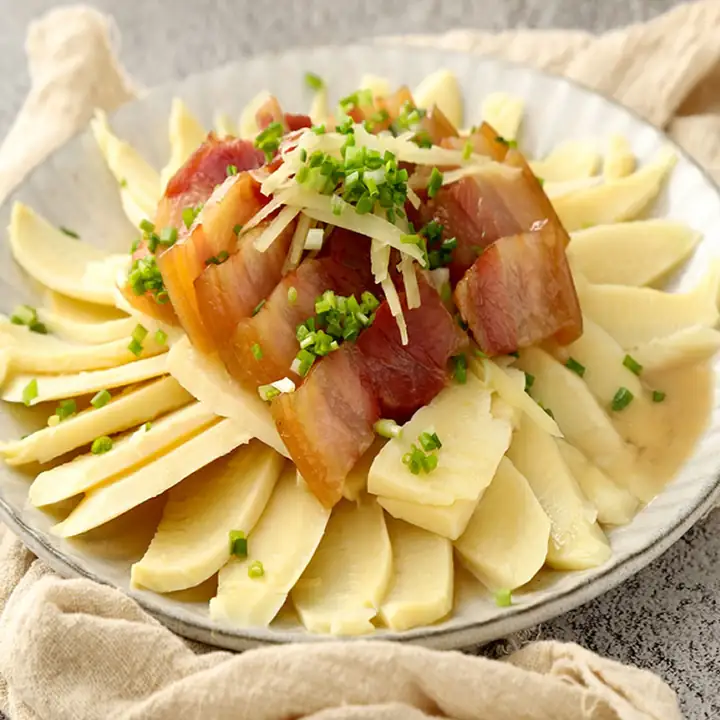 Wenzheng Mountain Bamboo Shoots 问政山笋
Wenzheng Mountain Bamboo Shoots (问政山笋) are the bamboo shoots dug on Wenzheng Mountain (问政山), on the outskirts of the county town of Shexian (歙县) in Huangshan, Anhui.
Read the dish guide →Photo adjustments
EXIF orientation normalized; resized without changing aspect ratio; converted to WebP. No subject edits.
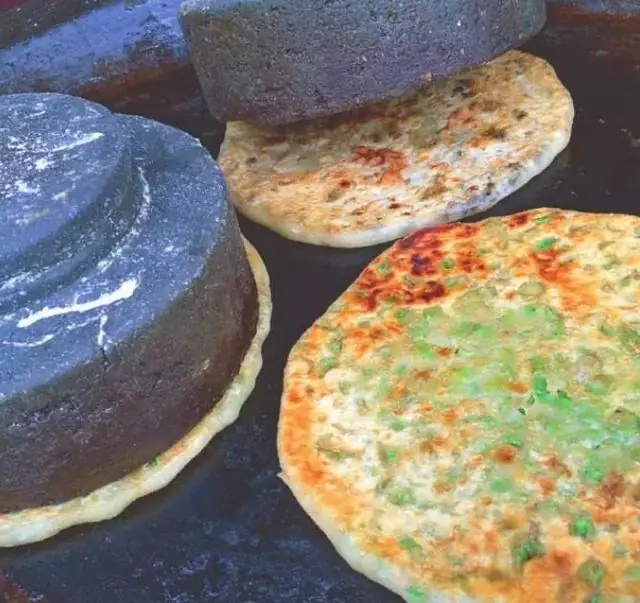 Stone-Pressed Wheat Cake 石头馃
Stone-Pressed Wheat Cake (石头馃) is a flat, filled wheat-dough cake, a traditional snack of Huizhou (徽州) in Anhui. It takes its name from the stone laid on top of it while it cooks.
Read the dish guide →Photo adjustments
EXIF orientation normalized; resized without changing aspect ratio; converted to WebP. No subject edits.
All dish names · 全部菜名 (12)
- Huangshan crisp mini pastries · 黄山烧饼
- Qimen Zhonghe soup · 祁门中和汤
- Huizhou fermented mandarin fish · 徽州臭鳜鱼
- Huizhou hairy tofu · 徽州毛豆腐
- Huizhou Layered One-Pot · 徽州一品锅
- Huizhou steamed cured pork · 徽州刀板香
- Wenzheng Mountain Bamboo Shoots · 问政山笋
- Stone-Pressed Wheat Cake · 石头馃
- Huizhou Laba Preserved Tofu · 徽州腊八豆腐
- Kudzu Starch Balls · 葛粉圆子
- Huizhou Ham Stewed with Soft-Shell Turtle · 徽州火腿炖甲鱼
- Tunxi Drunken Crab · 屯溪醉蟹
More dishes from across Anhui are in the Anhui food guide.
Counties & districts in Huangshan
7 areas belong directly to Huangshan.
7 areas
Tunxi District 屯溪区
Tunxi District is the central district and the administrative seat of Huangshan City, Anhui Province, eastern China.
Explore the area →DistrictHuangshan District 黄山区
Huangshan District (simplified Chinese: 黄山区; traditional Chinese: 黃山區; pinyin: Huángshān Qū) is a district of Huangshan City, Anhui province, China.
Explore the area →DistrictHuizhou District 徽州区
Huizhou District (simplified Chinese: 徽州区; traditional Chinese: 徽州區; pinyin: Huīzhōu Qū) is a district of Huangshan City, Anhui province, China.
Explore the area →CountyShe County 歙县
She County (simplified Chinese: 歙县; traditional Chinese: 歙縣; pinyin: Shè Xiàn), or Shexian, is a county in the southeast of Anhui Province, China, bordering Zhejiang Province to the east.
Explore the area →Show fewer areas
Xiuning County 休宁县
Xiuning County (simplified Chinese: 休宁县; traditional Chinese: 休寧縣; pinyin: Xiūníng Xiàn) is a county in the south of Anhui Province, China, under the jurisdiction of the prefecture-level city of Huangshan…
Explore the area →CountyYi County 黟县
Yi County or Yixian (simplified Chinese: 黟县; traditional Chinese: 黟縣; pinyin: Yī Xiàn) is a county in the southeast of Anhui Province, China, under the jurisdiction of Huangshan City.
Explore the area →CountyQimen County 祁门县
Qimen County (simplified Chinese: 祁门县; traditional Chinese: 祁門縣; pinyin: Qímén Xiàn; alternately romanized as Keemun) is a county in the southeast of Anhui Province, China, bordering Jiangxi Province to the…
Explore the area →No areas match this name.
Plan your visit
Getting there
Search for 黄山市 in a map app to find stations and your accommodation.
Where to stay →Build your route
Tunxi, Huangshan city and Tangkou are about 45 km apart in a straight line. The linked place guides have entrance and visit details.
Continue with Anhui →More in Anhui
Sources & geographic information
Administrative names and parent areas: Official geographic directory · Reference date 2026-09-06.
Some facts checked against 黄山市 — Wikipedia contributors, CC BY-SA 4.0.
Some facts checked against Huangshan — Wikipedia contributors, CC BY-SA 4.0.
Photo: Tunxi, Huangshan city · xiquinhosilva · CC BY 2.0. Full frame retained; proportionally resized and converted to WebP. No retouching or changes to the photographed subject. Card displays may crop the view.
.jpg)
Photo: Tangkou · Source photographer · License not provided. EXIF orientation normalized; resized without changing aspect ratio; converted to WebP. No subject edits.
Photo: Mount Huangshan · Chi King · CC BY 2.0. Wikimedia thumbnail; fitted to the ranking-card frame.

Photo: Hongcun · Zhangzhugang · CC BY-SA 4.0. Wikimedia thumbnail; fitted to the ranking-card frame.

Photo: Xidi · EditQ · CC BY-SA 4.0. Wikimedia thumbnail; fitted to the ranking-card frame.

Photo: Tangyue Memorial Archways · 王淞 · CC BY-SA 4.0. Proportionally resized and converted to WebP without cropping, retouching or changing the photographed subject.

Photo: Chengkan · TIY · CC BY-SA 4.0. Proportionally resized and converted to WebP without cropping, retouching or changing the photographed subject.

Photo: She County, Anhui · Yumeto · CC BY-SA 4.0. Proportionally resized and converted to WebP without cropping, retouching or changing the photographed subject.

Photo: Tiandu Peak · Yuping visitor-area reference · Jakemete at English Wikipedia · Public domain. Wikimedia thumbnail; fitted to the ranking-card frame.

Photo: Qiankou · Zhangzhugang · CC BY-SA 4.0. Proportionally resized and converted to WebP without cropping, retouching or changing the photographed subject.

Photo: Mount Qiyun · Julienfuchs · CC BY-SA 3.0. Proportionally resized and converted to WebP without cropping, retouching or changing the photographed subject.

Photo: Tangmo Ancient Village · Source photographer · License not provided. EXIF orientation normalized; resized without changing aspect ratio; converted to WebP. No subject edits.
Photo: Mulihong Village · fish4fish · CC BY-SA 3.0. Full frame retained; proportionally resized and converted to WebP. No retouching or changes to the photographed subject. Card displays may crop the view.

Photo: Tunxi Old Street · Gisling · CC BY 2.5. Full frame retained; proportionally resized and converted to WebP. No retouching or changes to the photographed subject. Card displays may crop the view.

Photo: Liyang Old Street · Source photographer · License not provided. EXIF orientation normalized; resized without changing aspect ratio; converted to WebP. No subject edits.
Photo: Tangmo Village · 江上清风1961 · CC BY 3.0. Full frame retained; proportionally resized and converted to WebP. No retouching or changes to the photographed subject. Card displays may crop the view.

Photo: Huizhou Ancient City · 江上清风1961 · CC BY 3.0. Full frame retained; proportionally resized and converted to WebP. No retouching or changes to the photographed subject. Card displays may crop the view.
.jpg)
Photo: Yuliang Dam · Doctoroftcm · CC BY-SA 3.0. Full frame retained; proportionally resized and converted to WebP. No retouching or changes to the photographed subject. Card displays may crop the view.

Photo: Yangchan Tulou Village · Deweicoffee · CC BY-SA 4.0. Full frame retained; proportionally resized and converted to WebP. No retouching or changes to the photographed subject. Card displays may crop the view.

Photo: Guniujiang Guanyintang Scenic Area · Source photographer · License not provided. EXIF orientation normalized; resized without changing aspect ratio; converted to WebP. No subject edits.
Photo: Nanping Old Village · (Cat's diary) 猫猫的日记本 · CC BY-SA 3.0. Full frame retained; EXIF orientation normalized, proportionally resized to at most 800 pixels and converted to WebP. No generated pixels or subject changes. Cards may crop the display.

Photo: Lucun Village · 猫猫的日记本 · CC BY-SA 4.0. Full frame retained; proportionally resized and converted to WebP. No retouching or changes to the photographed subject. Card displays may crop the view.

Photo: Tachuan Village · fish4fish · CC BY-SA 3.0. Full frame retained; proportionally resized and converted to WebP. No retouching or changes to the photographed subject. Card displays may crop the view.

Map data © OpenStreetMap contributors. Pins mark approximate centres, not entrances or boundaries.