

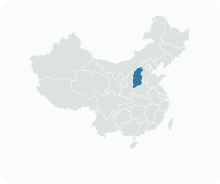
About Shanxi
Shanxi at a glance
- Population
- 34,240,100Year-end resident population, entire provincial-level administrative area · 2025Source ↗
- Income per person
- 33,923Mean annual disposable income per person, all residents · 2025 · CNYSource ↗
- Languages & dialects
- Mandarin; Jin (晋语) across much of the province, with Central Plains Mandarin in parts of the south.Regional dialect distribution is encyclopedia-based; not a claim that every resident uses the same language.Source ↗
- Geography
- Eastern Loess Plateau between the Taihang Mountains and the middle Yellow River; mountain ranges alternate with basins.Source ↗
- Elevation
- Most of the province lies above 1,000 m, with lower inhabited basins and higher mountain ridges.Source ↗
- Main gateway
- TaiyuanProvince
Discover Shanxi
Match the heritage to your interests
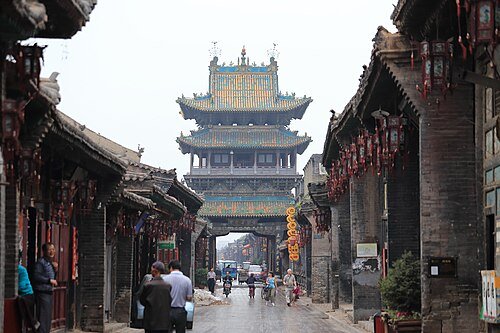
Yungang near Datong is a major encounter with Buddhist cave sculpture. Pingyao presents a different subject through a walled commercial town and its financial institutions, while nearby temples reward attention to painted sculpture and construction details. Jinci near Taiyuan adds another architectural chapter. Explanatory material helps connect these places to their functions and periods. Allow enough time to look closely at a courtyard, hall or group of figures rather than moving straight to the next photograph.
Separate the mountain and southern extensions
Wutai is a living Buddhist mountain landscape, with a different atmosphere and colder conditions than the main city corridor. It deserves a plan shaped by the temple areas you intend to visit. Yingxian and the northern passes can extend a Datong-focused route, while Yuncheng's Guandi and Daoist heritage forms a separate southern itinerary. Choose one extension deliberately; combining every direction can turn an architectural journey into a series of long transfers with little time on site.
Use meals and town stays to vary the pace
Shanxi's flour traditions offer variety between major visits: knife-shaved noodles, short tijian noodles and rolled oat-dough kaolaolao differ in both technique and texture. A shared Datong copper hotpot changes the shape of dinner again. Staying in more than one regional base reduces repeated returns to Taiyuan. In Pingyao, consider access and heating when choosing a courtyard guesthouse, and distinguish the railway stations before booking your arrival or onward journey.
Explore Shanxi
Core places to explore, with English and Chinese names.
Taiyuan 太原
Jinci 晋祠
Shanxi Museum 山西博物院
Tianlongshan Grottoes 天龙山石窟
Twin Pagoda Temple 双塔寺
Mengshan Giant Buddha 蒙山大佛
Chunyang Palace 纯阳宫
Datong 大同
Yungang Grottoes 云冈石窟
Hanging Temple 悬空寺
Mount Heng (Shanxi) 恒山
Huayan Temple 华严寺
Shanhua Temple 善化寺
Nine-Dragon Wall (Datong) 九龙壁
Pagoda of Fogong Temple 应县木塔
Chongfu Temple 崇福寺
Mount Wutai: Taihuai 五台山台怀镇
Foguang Temple 佛光寺
Nanchan Temple 南禅寺
Yanmen Pass 雁门关
Mount Luya 芦芽山
Pingyao Ancient City 平遥古城
Shuanglin Temple 双林寺
Zhenguo Temple 镇国寺
Wang Family Compound 王家大院
Qiao Family Compound 乔家大院
Mount Mian 绵山
Yuci Old City 榆次老城
Hukou Waterfalls 壶口瀑布
Guangsheng Temple 广胜寺
Hongdong Dahuaishu Ancestor Memorial Garden 洪洞大槐树
Yongle Palace 永乐宫
Guan Di Temple (Haizhou) 解州关帝庙
Stork Tower 鹳雀楼
Pujiu Temple 普救寺
Xiechi Lake 运城盐湖
House of the Huangcheng Chancellor 皇城相府
Qinglian Temple 青莲寺
Faxing Temple 法兴寺
Xuanzhong Temple 玄中寺
Niangzi Pass 娘子关
Huangya Cave Cultural Tourism Area 黄崖洞文化旅游区
Chang Family Compound 常家庄园
Jinzhong City Museum 晋中市博物馆
Jiexiu City God Temple 介休城隍庙
Zhangbi Castle 张壁古堡
Qu Family Compound 渠家大院
Cao Family Compound 曹家大院三多堂
Yushe Fossil Museum 榆社县化石博物馆
Tiefo Temple (also called Dayun Temple) 临汾铁佛寺
Qianfo Temple, Hongdong 洪洞千佛寺
Linfen Drum Tower 临汾鼓楼
Linfen Museum 临汾博物馆
Yao Temple 尧庙
Yunqiu Mountain 云丘山
Dingcun village 丁村
Baquan Gorge 太行山八泉峡
China Coal Museum 中国煤炭博物馆
Datong Volcanic Field 大同火山群
Datong Ancient City Wall 大同古城墙
Datong Museum 大同市博物馆
Jueshan Temple 觉山寺
Mount Wutai 五台山
Bianjing Tower 边靖楼
Laoniuwan Yellow River Bend 老牛湾
Wannian Ice Cave 万年冰洞
Xinzhou Ancient City 忻州古城
Lijiashan Village 李家山村
Qikou Old Town 碛口古镇
Mount Guashan 卦山
North Wudang Mountain 北武当山
Fenjiu Culture Scenic Area 汾酒文化景区
Jiexiu Houtu Temple 后土庙
Matian Eighth Route Army Headquarters Memorial Hall 麻田八路军总部纪念馆
Dazhai Village 大寨
Hougou Old Village 后沟古村
Shigao Mountain 石膏山
Zhaoyu Ancient City 昭馀古城
Mount Cangshan 藏山
Baquan Gorge 太行山大峡谷八泉峡
Dayunyuan Temple 大云院
Tiantai An 天台庵
Longmen Temple in Pingshun 龙门寺
Tongtian Gorge 通天峡
Jindeng Temple 金灯寺
Eighth Route Army Taihang Memorial Hall 八路军太行纪念馆
Chongqing Temple in Changzi 崇庆寺
Huangyadong Scenic Area 黄崖洞
Mount Lishan Shunwangping 历山舜王坪
Liu Family Residences 柳氏民居
Haihui Academy 海会书院
Guoyu Ancient City 郭峪古城
Wangmangling 王莽岭
Kaihua Temple in Gaoping 开化寺
Tiefo Temple in Gaoping 铁佛寺
Yangtoushan Grottoes 羊头山石窟
Hukou Waterfall on the Shanxi Side 黄河壶口瀑布(山西侧)
Jin State Museum 晋国博物馆
Hongtong Great Pagoda Tree Ancestral Memorial Garden 洪洞大槐树寻根祭祖园
Dingcun Folk Houses and Dingcun Site Museum 丁村民居与丁村遗址博物馆
Xiaoxitian Temple in Xi County 小西天
Feiyun Tower 飞云楼
Houtu Temple 后土祠
Lishan Forest Scenic Area 历山森林景区
Jiyi Temple 稷益庙
Jiangzhou Prefectural Office 绛州署
Longxing Temple in Xinjiang County 龙兴寺
Pujin Ferry Archaeological Site 蒲津渡遗址
Jishan Qinglong Temple 青龙寺
Jiwang Temple 稷王庙
Guangrenwang Temple 广仁王庙
Jinci Temple Museum 晋祠博物馆
Pagoda of Fogong Temple 应县木塔
The Hukou Waterfall Scenic Area 山西黄河壶口瀑布旅游区
Shanxi local specialties
山西特色美食 · 128 specialties to discover
 Knife-shaved noodles 刀削面
The center stays springy while the edges become tender, creating more contrast than an evenly rolled noodle. Broth or sauce clings to the irregular surfaces.
Source ↗Read the dish guide →Photo adjustments
EXIF orientation applied where present; resized proportionally to at most 640 px on the long edge and encoded as WebP. No crop, retouching, recoloring or subject changes.
 Tijian noodles 剔尖
Their irregular thickness creates both tender edges and a more substantial center. The surface holds a modest amount of sauce without becoming uniformly smooth.
Source ↗Read the dish guide →Photo adjustments
EXIF orientation applied where present; resized proportionally to at most 640 px on the long edge and encoded as WebP. No crop, retouching, recoloring or subject changes.
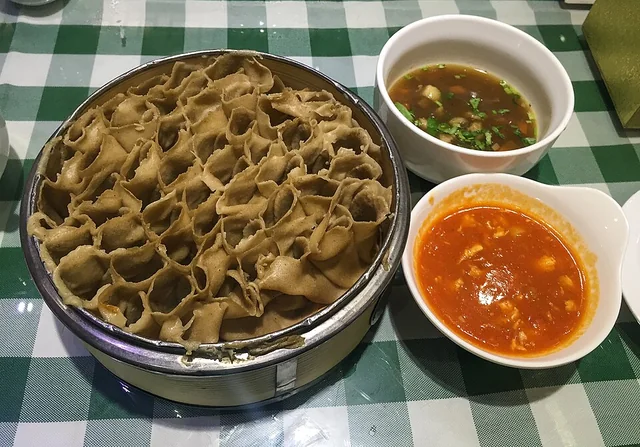 Oat-dough kaolaolao 莜面栲栳栳
The rolls are soft but substantial, with a nutty grain flavor and enough structure to hold a dip. Their taste depends heavily on the accompanying sauce.
Source ↗Read the dish guide →Photo adjustments
EXIF orientation applied where present; resized proportionally to at most 640 px on the long edge and encoded as WebP. No crop, retouching, recoloring or subject changes.
 Guoyourou 过油肉
The meat stays tender under a glossy coating, contrasting with crisp vegetables or wood-ear fungus. The flavor is savory with a light tang.
Source ↗Read the dish guide →Photo adjustments
EXIF orientation applied where present; resized proportionally to at most 640 px on the long edge and encoded as WebP. No crop, retouching, recoloring or subject changes.
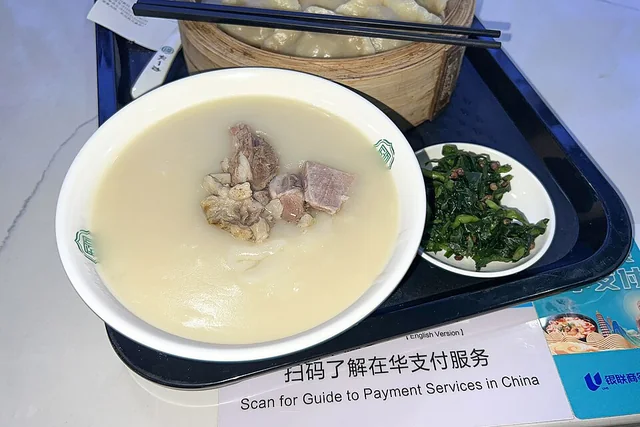 Tounao 头脑
It is mellow, rich and softly textured rather than fiery. Aromatics and accompanying pickled chives can contribute a stronger flavor than the pale appearance suggests.
Source ↗Read the dish guide →Photo adjustments
EXIF orientation applied where present; resized proportionally to at most 640 px on the long edge and encoded as WebP. No crop, retouching, recoloring or subject changes.
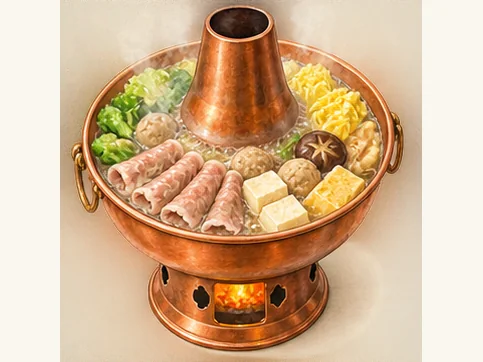 Datong copper hotpot 大同铜火锅AI dish illustration · AI 菜品示意图
Tender ingredients and absorbent components gradually exchange flavors in the broth. It is more about a varied warming meal than a single strongly spiced sauce.
Source ↗Read the dish guide → Hunyuan liangfen 浑源凉粉AI dish illustration · AI 菜品示意图
The jelly is cool, slippery and resilient; acidity and chili provide most of the intensity, while crunchy additions change each bite.
Source ↗Read the dish guide → Pingyao cured beef 平遥牛肉AI illustration · AI 示意图
Slices are firm enough to hold together but should yield easily when chewed. A clean, concentrated beef flavor and saltiness lead the taste.
Source ↗Read the dish guide →All dish names · 全部菜名 (128)
- Knife-shaved noodles · 刀削面
- Tijian noodles · 剔尖
- Oat-dough kaolaolao · 莜面栲栳栳
- Guoyourou · 过油肉
- Tounao · 头脑
- Datong copper hotpot · 大同铜火锅
- Hunyuan liangfen · 浑源凉粉
- Pingyao cured beef · 平遥牛肉
- Taigu sweet cakes · 太谷饼
- Wenxi sesame sweets · 闻喜煮饼
- Shangdang donkey meat · 上党驴肉
- Shanxi mixed stew · 大烩菜
- Sweet-and-sour meatballs · 糖醋丸子
- Tofu with shrimp paste · 虾酱豆腐
- Wutai mushrooms with scallions · 葱烧台蘑
- Knife-cut strip noodles · 刀拨面
- Pressed bean-flour noodles · 豆面抿尖
- Puffed fried cakes · 泡泡油糕
- Flower-shaped steamed dumplings · 百花烧麦
- Dingxiang steamed pork-and-potato cake · 定襄蒸肉
- Youyu salt-simmered lamb · 右玉盐煎羊肉
- Hequ fermented millet porridge · 河曲酸粥
- Yuncheng pebble-baked bread · 运城石子饼
- Huguan lamb soup · 壶关羊汤
- Shanxi wantuo grain jelly · 山西碗托
- Shanxi batter-coated vegetables · 蘸片子
- Yuanping oat-dough fish noodles · 原平莜面鱼鱼
- Xiyang pressed crisp cakes · 昔阳压饼
- Ronghe steamed vegetables · 荣河蒸菜
- Braised Abalone with Potatoes · 土豆焖鲍鱼
- Shanxi Assorted Hotpot · 山西什锦火锅
- Shanxi Sweet-and-Sour Fish · 山西糖醋鱼
- Fish-Shaped Oat Noodles with Tomato · 西红柿烩莜面鱼鱼
- Lamb Simmered with Astragalus Root · 黄芪煨羊肉
- Sea Cucumber Stewed with Millet · 小米炖辽参
- Beef with Hollow Steamed Buns · 牛肉窝窝头
- Steamed Millet with Red Jujubes · 红枣蒸黄米
- Steamed Pork Belly with Lotus Leaf Pancakes · 酱梅肉荷叶饼
- Taiyuan Sheep Offal Soup · 太原羊杂割
- Laoshuku Glutinous Rice Balls · 老鼠窟元宵
- Guanchang Street Snack · 灌肠
- Cat's Ear Noodles · 猫耳朵
- Taiyuan Noodles with Savoury Gravy · 太原打卤面
- Buckwheat Guanchang Snack · 荞面灌肠
- Shaomei Steamed Dumplings · 稍梅
- Datong Braised Rabbit Heads · 大同兔头
- Datong Sheep Offal Bowl · 大同羊杂
- Steamed Yellow Millet Cake · 黄糕
- Datong Fried Millet Cakes · 油炸糕
- Datong Braised Pork Belly Strips · 大同扒肉条
- Guangling Dried Tofu · 广灵豆腐干
- Lingqiu Tartary Buckwheat Jelly · 灵丘苦荞凉粉
- Pingding Oil-Blanched Pork Stir-Fry · 平定过油肉
- Piaominqu Pressed Noodles · 漂抿曲
- Steamed Jujube Cake · 枣介糕
- Yangquan Pressed Crisp Corn Cakes · 阳泉压饼
- Hudu Porridge · 糊嘟
- Pingding Stir-Fried Meat with Dried Cucumber · 平定黄瓜干炒肉
- Yuxian Spiced Braised Potatoes · 盂县卤土豆
- Xihui Pot-Cooked Millet · 西回小米焖饭
- Changzhi Cured Donkey Meat · 长治腊驴肉
- Lucheng Hand-Stretched Flatbread · 潞城甩饼
- Wuxiang Jujube Millet Cake · 武乡枣糕
- Xiangyuan Hand-Pulled Noodles · 襄垣拉面
- Zhangzi Stir-Fried Pancake Strips · 长子炒饼
- Qinxian Baked Ganmo Bread · 沁县干馍
- Shangdang Cured Donkey Meat · 上党腊驴肉
- Lucheng Flaky Baked Bread · 潞城酥火烧
- Jincheng Ten-Bowl Banquet · 晋城十大碗
- Gaoping Roasted Tofu · 高平烧豆腐
- Stir-Fried Starch Jelly · 炒凉粉
- Jincheng Braised Scallions · 晋城烧大葱
- Bagong Scallions with Pork · 巴公烧大葱
- Yangcheng Caul-Wrapped Liver Rolls · 阳城烧肝
- Lingchuan Lamb Baked Bread · 陵川羊肉火烧
- Qinshui Pressed Noodles · 沁水饸饹
- Gaoping Ten-Bowl Banquet · 高平十大碗
- Fried Batter Corners · 油糊角
- Yingxian Cold Starch Jelly · 应县凉粉
- Youyu Lamb · 右玉羊肉
- Shuozhou Fried Millet Cakes · 朔州油糕
- Huairen Sheep Offal Bowl · 怀仁羊杂
- Shanyin Fried Dough Snacks · 山阴油果子
- Pinglu Hongshan Buckwheat Noodles · 平鲁红山荞面
- Yingxian Diliu Corn Jelly · 应县滴溜
- Yuci Buckwheat and Pig Blood Slices · 榆次灌肠
- Jiexiu Filled Candy · 介休贯馅糖
- Qixian Guanchang Snack · 祁县灌肠
- Shouyang Dried Tofu · 寿阳豆腐干
- Lingshi Gulei Dish · 灵石骨累
- Zuoquan Fried Noodles · 左权炒面
- Xiezhou Lamb Soup with Crumbled Bread · 解州羊肉泡馍
- Jishan Fried Dough Twists · 稷山麻花
- Beixiang Lamb Hubo · 北相羊肉胡卜
- Ruicheng Puffed Fried Cakes · 芮城泡泡油糕
- Yongji Beef Dumplings · 永济牛肉饺子
- Linyi Sauce-Pickled Yugua · 临猗酱玉瓜
- Wanrong Starch Jelly Noodles · 万荣凉粉饸饹
- Hejin Sesame Candy · 河津芝麻糖
- Xinjiang County Egg Xuanzi · 新绛鸡蛋旋子
- Shenchi Mooncakes · 神池月饼
- Baode Wantuo Starch Jelly · 保德碗托
- Yuanping Oven-Baked Pocket Bread · 原平锅魁
- Xinzhou Tile-Shaped Sweet Crisps · 忻州瓦酥
- Wuzhai Pork and Vegetable Stew · 五寨黑肉烩菜
- Ningwu Naked-Oat Noodles · 宁武莜面
- Fanshi Dimpled Flatbread · 繁峙疤饼
- Pianguan Sheep Offal Bowl · 偏关羊杂
- Linfen Beef Meatball Noodles · 临汾牛肉丸子面
- Hongtong Mutton Soup · 洪洞羊汤
- Quwo Mutton Soup · 曲沃羊汤
- Huozhou Pressed Noodles · 霍州饸饹面
- Yicheng Stir-Fried Noodles · 翼城生炒面
- Xixian Buckwheat Starch Jelly · 隰县碗托
- Xiangning Sugar-Filled Fried Cakes · 乡宁油糕
- Xiangfen Sour Mung Bean Porridge · 襄汾油粉饭
- Puxian Black Pork · 蒲县黑猪肉
- Fushan Shaomai Dumplings · 浮山烧麦
- Liulin Wantuan Bowl-Set Jelly · 柳林碗团
- Liulin Sesame Flatbread · 柳林芝麻饼
- Linxian Big-Pot Stew · 临县大烩菜
- Xiaoyi Baked Flatbread · 孝义火烧
- Jiaocheng Steamed Grain with Jujubes · 交城骏枣蒸饭
- Fenyang Pebble-Baked Flatbread · 汾阳石头饼
- Xingxian Goat Offal Soup · 兴县羊杂碎
- Lanxian Naked-Oat Noodles · 岚县莜面
- Fangshan Helengzi Potato Dish · 方山合楞子
- Zhongyang Cypress-Fed Goat Meat · 中阳柏籽羊肉
Top sights in Shanxi
 TOP1大同市
Yungang's sandstone cliff preserves a long sequence of Northern Wei Buddhist chambers, from monumental Buddhas to densely worked narrative surfaces. The early Tanyao caves, numbered 16–20, provide the strongest sense of the…
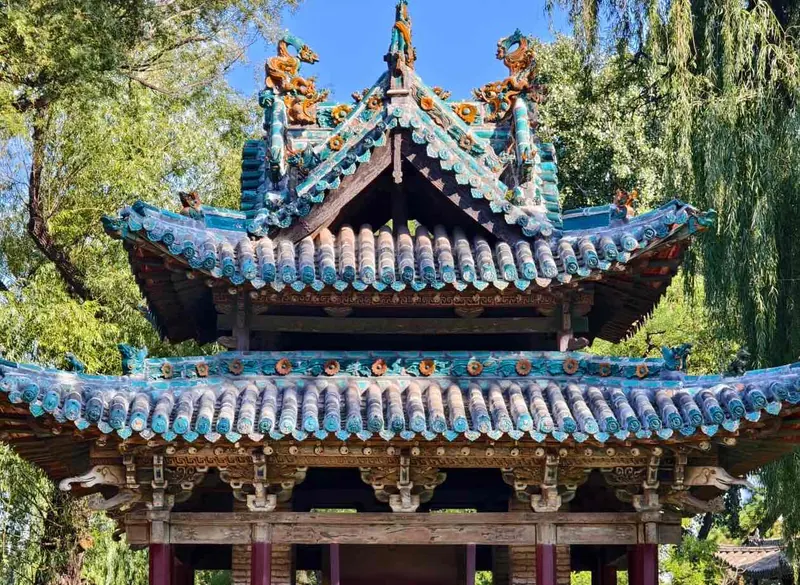 TOP2晋源区
Jinci Temple Museum晋祠博物馆
Show on map TOP3朔州市
The wooden pagoda at Fogong Temple rises from a stone platform in Yingxian, its layered eaves supported by a dense system of timber brackets. Built in the Liao period, it is best understood by looking carefully at how the…
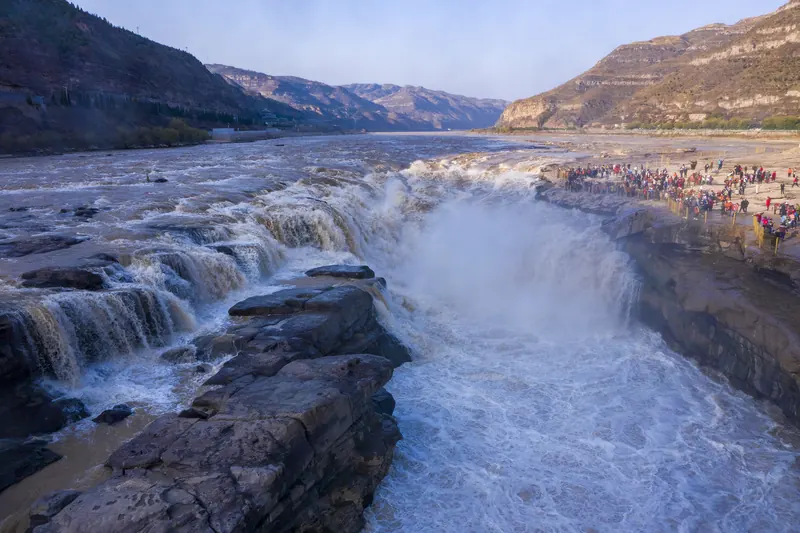 TOP4吉县
The Hukou Waterfall Scenic Area山西黄河壶口瀑布旅游区
Show on map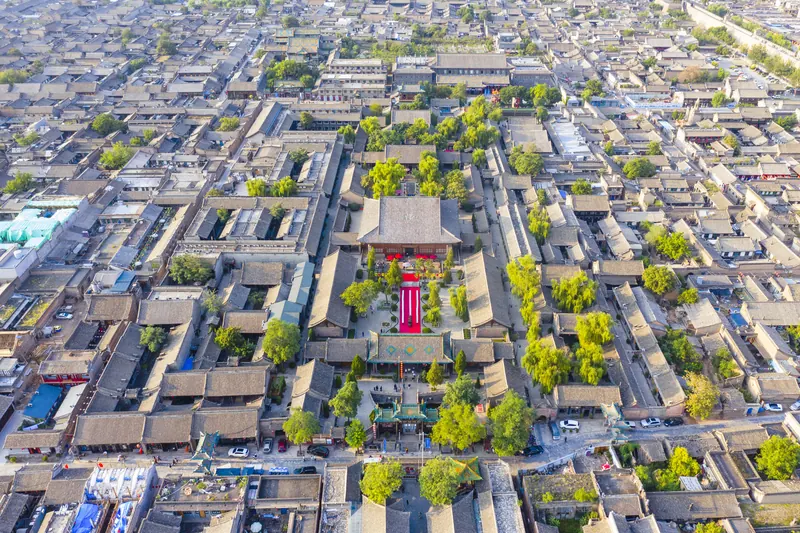 TOP5晋中市
Pingyao's walled centre preserves a merchant city whose courtyard houses, shops and financial institutions grew around long-distance trade. The city walls establish its compact outline, while South Street and the Rishengchang…
 TOP6大同市
The Hanging Temple uses beams inserted into the cliff to support a narrow chain of rooms and galleries above the valley.
 TOP7大同市
Huayan Temple is particularly rewarding for the contrast between its two great historic halls. The Jin-period Daxiongbao Hall creates a broad ceremonial interior beneath a large roof, while the earlier Bojia Jiaozang Hall…
 TOP8隰县
Xiaoxitian, also called Qianfo An, is a Buddhist temple on the western side of Xi County. Its best-known feature is the dense suspended sculpture in the main Buddha hall. Figures, miniature buildings and decorative forms rise around and above the principal statues, turning the interior into a layered religious setting.
 TOP9太原市
Shanxi Museum is a useful starting point for understanding why the province's tombs, temples and merchant houses contain such different kinds of art. The Jin Soul displays connect archaeology with later religious and commercial…
 TOP10忻府区
Xinzhou Ancient City (忻州古城) is the historic Xiurong old-city quarter in Xinfu District, whose restored streets now combine heritage buildings with northern Shanxi food, crafts and county-themed courtyards.
 Show on map

.jpg)
.jpg)

.jpg)
Change your destination on Trip.com.
Ranking source & photo credits
The first ten entries of Trip.Best Best Things to Do. Rankings reflect platform recommendations, not counts of international visitors. Read on 20 September 2026; platform pages may use cached snapshots.
- Yungang Grottoes: Source: Trip.com · Resized and WebP compressed; fitted to the ranking card.
- Jinci Temple Museum: Source: Trip.com · Resized and WebP compressed; fitted to the ranking card.
- Pagoda of Fogong Temple: Source: Trip.com · Resized and WebP compressed; fitted to the ranking card.
- The Hukou Waterfall Scenic Area: Source: Trip.com · Resized and WebP compressed; fitted to the ranking card.
- Pingyao Ancient City: Source: Trip.com · Resized and WebP compressed; fitted to the ranking card.
- Xuankong Temple: Source: Trip.com · Resized and WebP compressed; fitted to the ranking card.
- Huayan Temple: Source: Trip.com · Resized and WebP compressed; fitted to the ranking card.
- Little Western Paradise: Source: Trip.com · Resized and WebP compressed; fitted to the ranking card.
- Shanxi Museum: Source: Trip.com · Resized and WebP compressed; fitted to the ranking card.
- Xinzhou Ancient City: Source: Trip.com · Resized and WebP compressed; fitted to the ranking card.
Cities, counties & districts in Shanxi
11 areas belong directly to Shanxi.
11 areas
Taiyuan太原市
Taiyuan (Taiyuan Jin: [tʰai˦˥ ye˩˩]) is the capital of Shanxi, China. It is the political, economic, cultural, and international exchange center of the province, containing an industrial base focusing on…
10 local areas →Prefecture-level cityDatong大同市
Datong is a prefecture-level city in northern Shanxi Province in the People's Republic of China. It is located in the Datong Basin at an elevation of 1,040 metres (3,410 ft) and borders Inner Mongolia to the…
10 local areas →Prefecture-level cityYangquan阳泉市
Yangquan (simplified Chinese: 阳泉; traditional Chinese: 陽泉; pinyin: Yángquán [jǎŋtɕʰyǎn]) is a prefecture-level city in the east of Shanxi province, China, bordering Hebei province to the east.
5 local areas →Prefecture-level cityChangzhi长治市
Changzhi is a prefecture-level city in the southeast of Shanxi Province, China, bordering the provinces of Hebei and Henan to the northeast and east, respectively.
12 local areas →Show fewer areas
Jincheng晋城市
Jincheng is a prefecture-level city situated in the southeast of Shanxi province, China. It shares its border with Henan province to the south and southeast.
6 local areas →Prefecture-level cityShuozhou朔州市
Shuozhou is a prefecture-level city in northern Shanxi province, China, bordering Inner Mongolia to the northwest. It is situated along the upper reaches of the Fen River.
6 local areas →Prefecture-level cityJinzhong晋中市
Jinzhong, formerly Yuci, is a prefecture-level city in east central Shanxi province of the People's Republic of China, bordering Hebei province to the east.
11 local areas →Prefecture-level cityYuncheng运城市
Yuncheng (simplified Chinese: 运城; traditional Chinese: 運城) is the southernmost prefecture-level city in Shanxi province, People's Republic of China.
13 local areas →Prefecture-level cityXinzhou忻州市
Xinzhou, ancient name Xiurong (秀荣), is a prefecture-level city occupying the north-central section of Shanxi Province in the People's Republic of China, bordering Hebei to the east, Shaanxi to the west, and…
14 local areas →Prefecture-level cityLinfen临汾市
Linfen (simplified Chinese: 临汾; traditional Chinese: 臨汾; pinyin: Lín Fén) is a prefecture-level city in the southwest of Shanxi province, China, bordering Shaanxi province to the west.
17 local areas →Prefecture-level cityLüliang吕梁市
Lüliang (simplified Chinese: 吕梁; traditional Chinese: 呂梁; pinyin: Lǚliáng), also spelled as Lvliang or Lyuliang, is a prefecture-level city in western Shanxi province, People's Republic of China.
13 local areas →No areas match this name.
Arrive, stay & get around Shanxi
交通枢纽、住宿与天气
Taiyuan太原
This Shanxi entry uses Taiyuan as its selected gateway city. It does not describe transport coverage across the entire region.
Airports
Taiyuan Wusu International AirportTYN
太原武宿国际机场
Airport gateway southeast of central Taiyuan, serving the provincial capital and onward Shanxi journeys.
Railway stations
Taiyuan South Railway Station
太原南站
Principal high-speed rail gateway; use the full name 太原南 when booking.
Taiyuan Railway Station
太原站
The older central rail gateway, distinct from Taiyuan South.
Metro & city transport
Taiyuan Metro Network 太原轨道交通线路图
Line 1 links Taiyuan Railway Station, Taiyuan South and Wusu Airport; the system also includes Line 2.
- 1Find your stations确认起点与终点站
- 2Check interchanges查看换乘线路与站点
- 3Follow exit signs到站后按站内标识出站
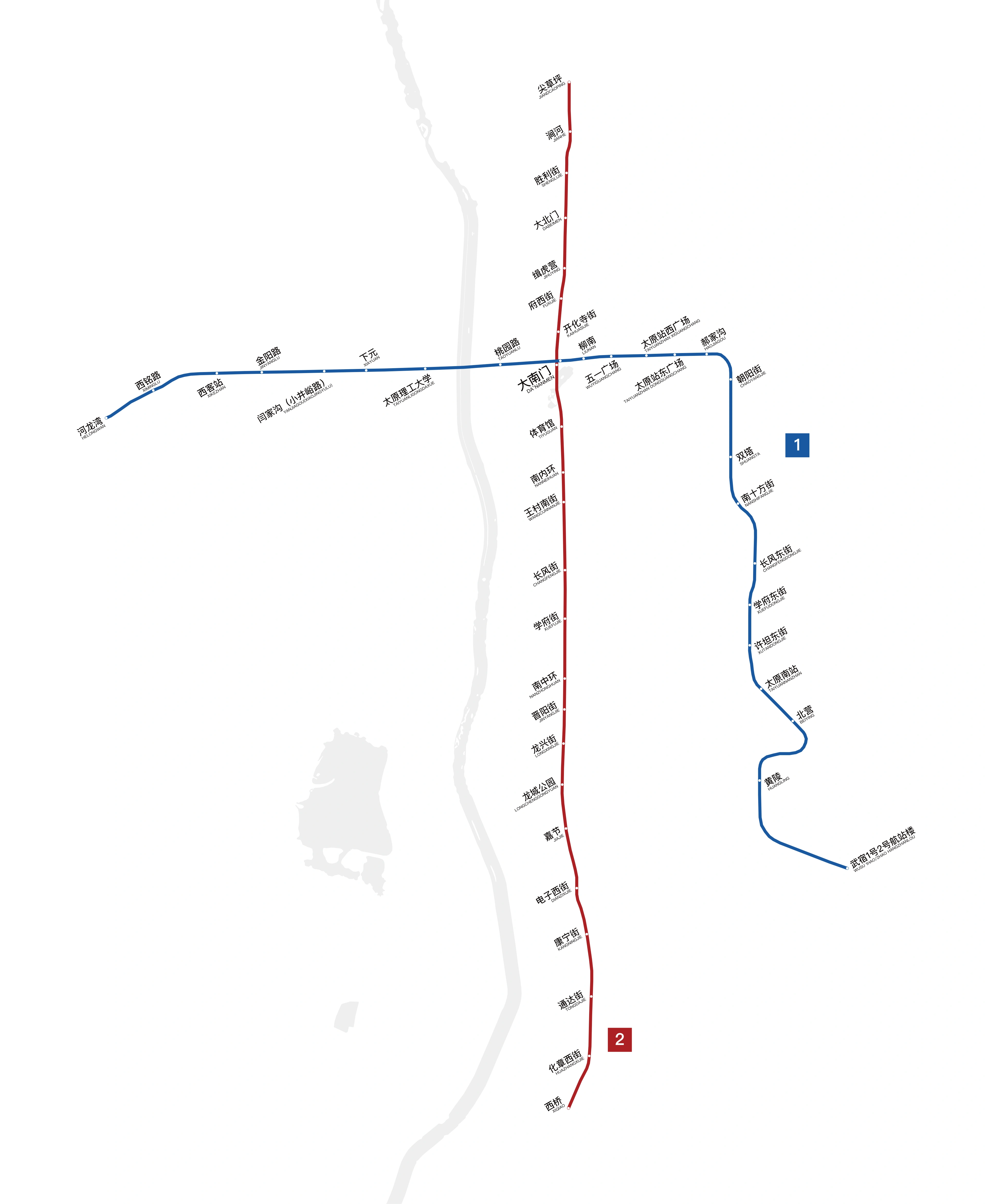 Explore the full network查看站名、线路与换乘Enlarge map点击放大线路图
Check the legend for closed, reserved or future sections. 停运、预留与规划区间,请按图例辨识。
Map edition: 2025-11-28 · Diagram reviewed 2026-09-06
Map: Kmchang28 · CC BY-SA 4.0
Map coverage & sources 图示范围与来源说明
Operating Lines 1 and 2 including Line 1 to Wusu T1/T2. Source map revised 2025-11-28. Airport T3 extensions and planned lines are not treated as open; no live operational-status overlay.
White background and WebP conversion; no route edits.
Transport reference review: 2026-09-06. Consult the operator for current services and timetables.
More about getting around
Rail is useful between the main city bases, with road transfers needed for scattered temples and mountain areas. Distinguish Pingyao's railway stations before booking. A car with a driver can connect rural sights efficiently; agree on named stops and the return destination in advance.
Stay in Shanxi
Split nights between Datong and Pingyao rather than returning to Taiyuan after every excursion. A courtyard guesthouse inside Pingyao's walls gives access to quieter morning streets; check heating and luggage access. For Wutai, choose accommodation by the temple area you intend to explore.
Find hotels on Trip.com →Change your destination, dates and guests on Trip.com.
Taiyuan weather
The current-hour forecast loads when this section is visible. It uses MET Norway model data for the named city, not station observations.
Seasons & when to go
Winters are cold and often dry, especially around Datong and at altitude. Summers are warmer in the basins, with seasonal rain. Wutai needs extra layers even when city weather is comfortable; exposed temple approaches and long stone stairways amplify weather differences.
Local life & communication
Look for differences between Buddhist cave art, timber construction, merchant finance, pilgrimage landscapes and local flour techniques; each region offers a different combination.
Pingyao's former banking houses show how merchants organised trade, while Yungang reflects exchanges in Buddhist art across Asia. Wutai remains a place of worship. Observe photography notices inside temples, give rituals space, and look beyond monumental statues to painted clay figures and timber details.
Language & communication
Mandarin works for travel, although local speech can sound quite different, including Jin varieties across much of Shanxi. Written names are especially useful for rural temples. Save both the Chinese characters and the nearest town when arranging a driver or checking a route.
Useful local tips
- Choose a few buildings to understand in detail; guides or explanatory material can transform a temple visit.
- Check the exact county and entrance of each rural site before planning the road segment.
- Ask how a noodle is shaped and served; the same broad English word hides quite different local dishes.
- Temple interiors, sculpture and murals may have different photography rules; follow the instructions at each room.
Sources & useful links
- UNESCO: Ancient City of Ping Yao
- UNESCO: Yungang Grottoes
- UNESCO: Mount Wutai
- CNR: Shanxi provincial cuisine selection
- Shanxi government: eleven-city cultural tourism routes
- Shanxi government: Jinci educational visit
- Shanxi — population background
- Shanxi — income background
- Shanxi — languages background
- Shanxi — geography background
- Shanxi — Taiyuan map reference
- Shanxi — Datong map reference
- Shanxi — Pingyao Ancient City map reference
- Shanxi — Yungang Grottoes map reference
- Shanxi — Shuanglin Temple map reference
- Shanxi — Mount Wutai: Taihuai map reference
- Shanxi — Jinci map reference
- Shanxi — Hanging Temple map reference
- Shanxi — Pagoda of Fogong Temple map reference
- Shanxi — Wang Family Compound map reference
- Shanxi — Qiao Family Compound map reference
- Shanxi — Hukou Waterfall map reference
- Shanxi — Yongle Palace map reference
- Shanxi attraction ranking source
- Shanxi specialty reference — www.sxgp.gov.cn
- Shanxi specialty reference — xccys.moa.gov.cn
- Shanxi specialty reference — www.jcgov.gov.cn
- Shanxi specialty reference — jtysj.yq.gov.cn
- Lvliang Daily: cooking with shrimp paste in Fenyang
- Encyclopedia of China: paopao yougao craft in southern Shanxi
- Datong Government: flower-shaped shaomai guide
- Shanxi cultural tourism: Pingyao wantuo
- 太行山八泉峡 — place reference
- 原平莜面鱼鱼 — local food reference
- 昔阳压饼 — local food reference
- 荣河蒸菜 — local food reference
- Local food reference: 土豆焖鲍鱼
- Local food reference: 猫耳朵
- Local food reference: 油炸糕
- Yunzhou district government: Datong volcanic cones and landforms
- Datong municipal government: volcanic landscape visitor introduction
- Datong municipal government: museum galleries and historical themes
- UNESCO World Heritage Centre: Mount Wutai cultural landscape
- Lüliang Government: Lijiashan’s hillside dwellings and Qikou setting
- Jincheng Government: Qikou streets, historic buildings and Black Dragon Temple
- Changzhi municipal government: Baquan Gorge landforms and water corridor
- Changzhi municipal government: boat, walking and ridge perspectives at Baquan Gorge
- Changzhi heritage feature: Dayunyuan’s Five Dynasties paintings
- Changzhi architectural guide: Amitabha Hall and early timber construction
- CRI Shanxi: conservation work and inscriptions establishing the hall’s Five Dynasties date
- Changzhi Government: Longmen Temple and six periods of architecture
- Changzhi municipal government: Tongtian Gorge and its named landscape areas
- Changzhi Government: Chongqing Temple, dated buildings and sculpture
- Changzhi Government: the eighteen arhats and temple arrangement
- Jincheng municipal government: Wangmangling and Xiyagou landscape
- Jincheng municipal government: construction history of the Xiyagou cliff road
- Jincheng Government: Kaihua Temple and the Guo Fa mural workshop
- Jincheng Government: Gaoping Tiefo Temple’s twenty-four Ming deities
- Jincheng Government: heritage visits and protection at Tiefo Temple
- Jin State Museum: permanent exhibitions and site overview
- Jin State Museum: historical objects and the state of Jin
- Jin State Museum: presentation and conservation of the burial site
- Shanxi Institute of Electronic Science and Technology: Xiaoxitian’s courts and suspended sculpture
- Yuncheng Government: Feiyun Tower and Dongyue Temple
- Yuncheng municipal government: Houtu Temple and Qiufeng Tower
- Yuncheng municipal government: Xinjiang Longxing Temple, stele and pagoda
- Yuncheng Government: Pujin Ferry, Tang ironwork and site conservation
- Yuncheng Government: Ruicheng heritage and Guangrenwang Temple’s location
- Yuncheng Daily: Guangrenwang Temple and the Longquan water inscription
- China News Service: the Tang timber hall at Guangrenwang Temple