


About Chongqing
Chongqing at a glance
- Population
- 31,872,600Year-end resident population, entire provincial-level administrative area · 2025Source ↗
- Income per person
- 41,580Mean annual disposable income per person, all residents · 2025 · CNYSource ↗
- Languages & dialects
- Mandarin and Chongqing/Sichuan regional speech, mainly Southwestern Mandarin (西南官话).Source ↗
- Geography
- Upper Yangtze municipality; central hills at the Yangtze–Jialing confluence, with extensive mountain and valley districts farther east.Source ↗
- Elevation
- The central peninsula is roughly 168–400 m above sea level; outlying mountains are higher.Central-city range, not the whole municipality's minimum and maximum.Source ↗
- Main gateway
- ChongqingDirect-administered municipality

Discover Chongqing
Explore the layered city as a lived landscape
A bowl of xiaomian makes a useful start before walking a manageable part of Yuzhong. Jiefangbei introduces metropolitan shopping, while Shibati presents renewed stepped streets and Hongyadong supplies a conspicuous evening landmark. Across the Yangtze, Longmenhao offers another relationship between riverside streets and the towers opposite. Leave room for climbs and changes of level. Shops, residential entrances and stairways explain the city more fully than treating its topography only as a photographic illusion.
Choose rock carvings, karst or a gorge journey
Dazu's carvings invite slow looking and historical interpretation. Wulong offers a very different landscape of natural bridges, caves and dramatic terrain. Farther east, Wushan belongs to a gorge-focused river journey with its own base and transfer requirements. These destinations should not be compressed into a casual afternoon beyond downtown. Choose the outer-municipality chapter that adds the most to your interests, and identify the actual scenic entrance or boat route before arranging accommodation.
Make meals and transfers part of the experience
Hotpot is a shared urban occasion that benefits from time at the table, while Wanzhou and Wushan grilled-fish traditions give the wider river geography a culinary dimension. A few connected neighbourhoods plus one regional extension can provide variety without constant movement. Urban rail is useful, but the final walk may involve stairs and gradients that a flat map conceals. Check the precise railway station, street level and return connection rather than judging a journey by distance alone.
Explore Chongqing
Core places to explore, with English and Chinese names.
Hongyadong 洪崖洞
Jiefangbei 解放碑
Chaotianmen 朝天门
Raffles City Chongqing 重庆来福士
Three Gorges Museum 重庆中国三峡博物馆
Great Hall of the People (Chongqing) 重庆人民大礼堂
Liziba Station 李子坝站
Shibati 十八梯
Ciyun Temple 慈云寺
Ciqikou 磁器口
Zhazidong 渣滓洞
Chongqing Zoo 重庆动物园
Chongqing Natural History Museum 重庆自然博物馆
Longxing Ancient Town 龙兴古镇
Fengsheng Ancient Town 丰盛古镇
Changshou Lake 长寿湖
Zhongshan Ancient Town 中山古镇
Fishing Town Fortress 钓鱼城
Dazu Rock Carvings 大足石刻
Wanling Ancient Town 万灵古镇
Baiheliang Underwater Museum 白鹤梁水下博物馆
816 Nuclear Plant 816地下核工程
Wulong Three Natural Bridges 武隆天生三桥
Furong Cave 芙蓉洞
Fengdu Ghost City 丰都鬼城
Shibaozhai 石宝寨
Wanzhou Waterfall 万州大瀑布
Shuanggui Hall 双桂堂
Baidicheng 白帝城
Qutang Gorge 瞿塘峡
Xiaozhai Tiankeng 小寨天坑
Wu Gorge 巫峡
Daba Mountains · Huanganba Alpine Pasture 大巴山·黄安坝高山牧场
Zhuoshui Ancient Town 濯水古镇
Chongqing centre 重庆
Jiangbei International Airport 重庆江北国际机场
Dazu Baodingshan carvings 大足宝顶山石刻
Wushan County, Chongqing 巫山
Wulong Karst 武隆喀斯特
Eling Park 鹅岭公园
Chongqing Grand Theatre 重庆大剧院
Nanshan 南山
Danzishi Old Street 弹子石老街
Huangjueya Ancient Street 黄桷垭老街
Geleshan 歌乐山
Jinyun Mountain 缙云山
Simian Mountain 四面山
Jinfo Mountain 金佛山
Anju Ancient Town 安居古城
Xiuhu Park 秀湖公园
Fairy Mountain 仙女山
Zhang Fei Temple 张飞庙
Hongchiba 红池坝
Taohuayuan 酉阳桃花源
Ayi River 阿依河
Hong'an Border Town 洪安边城
Ronghui Hot Springs 融汇温泉
Tea Mountain Bamboo Sea · Niwu Viewpoint 茶山竹海·霓雾观景台
Dongxi Ancient Town 东溪古镇
Tongnan Giant Buddha Temple · Yuhuang Hall 潼南大佛寺·玉皇殿
Hanfeng Lake · Wenfeng Pagoda 汉丰湖·文峰塔
Huangshui Forest Park · Dafengbao 黄水国家森林公园·大风堡
Kaizhifeng Tourist Area 恺之峰旅游区
Chongqing Industrial Museum 重庆工业博物馆
Jiangbeizui Riverside Park 江北嘴江滩公园
Laitan Ancient Town 涞滩古镇
Kaizhou District Museum 开州区博物馆
Mini Three Gorges 小小三峡
Heishan Valley 黑山谷
Shenlong Gorge 神龙峡
Yunyang Longgang 云阳龙缸
Wuling Mountain Great Rift Valley 武陵山大裂谷
Wushan Lesser Three Gorges 巫山小三峡
Puhua Underground River 蒲花暗河
Beicang Creative District 北仓文创街区
Jiangbeizui Riverfront 江北嘴江岸
Chongqing Garden Expo Park 重庆园博园
Hong'en Temple Forest Park 鸿恩寺森林公园
Fengdu Ghost City Mingshan Scenic Area 名山景区
Xueyu Cave 雪玉洞
Chongqing Jianchuan Museum Cluster 建川博物馆聚落
Huangjueping Graffiti Art Street 黄桷坪涂鸦艺术街
North Hot Spring 北温泉
Tongjing Hot Spring 统景温泉
Jingangbei Old Village 金刚碑古村
Nanshan Yikeshu Viewing Platform 南山一棵树观景台
Longmenhao Old Street and Xiahaoli 龙门浩老街与下浩里
Chongqing Nanshan Botanical Garden 南山植物园
Chongqing Museum of War of Resistance Sites 重庆抗战遗址博物馆
Shanwangping Karst Forest 山王坪喀斯特森林
Kanggu Valley 亢谷
Summit of the Three Gorges 三峡之巅
Baidicheng-Qutang Gorge 白帝城·瞿塘峡
Goddess Peak and Goddess Stream 神女峰与神女溪
Ningchang Ancient Town 宁厂古镇
South Hot Spring 南温泉
Wujiang River Gallery Pengshui Section 乌江画廊彭水段
Chiyou Jiuli City 蚩尤九黎城
Baili Bamboo Sea 百里竹海
Three Natural Bridges 天生三桥
Longshui Gorge Fissure 龙水峡地缝
Furong River 芙蓉江
Songgai Ancient Town 松溉古镇
Chashan Bamboo Sea 茶山竹海
Geleshan Martyrs Cemetery and Hongyan Historic Sites 歌乐山烈士陵园与红岩旧址群
Ciqikou Ancient Town 磁器口古镇
Luo Zhongli Art Museum 罗中立美术馆
Chong Qing 1949 Yan Yi 重庆1949演艺
816 Gong Cheng 816工程
Wulingshan National Forest Park 武陵山国家森林公园
Mountain City Trails 山城步道
Hongyadong and Two Rivers Night View 洪崖洞与两江夜景
Huguang Guild Hall 湖广会馆
Yangtze River Cableway 长江索道
Shibati Traditional Style District 十八梯传统风貌区
Liziba Train-Through-Building Viewpoint 李子坝轨道穿楼观景点
Baixiangju Residential Complex 白象居
Liberation Monument and Bayi Street 解放碑与八一街
Eling No. 2 Factory Creative Quarter 鹅岭二厂文创街区
Tongnan Great Buddha Temple 潼南大佛寺
Chongkan Rapeseed Flower Fields 崇龛油菜花海
Xituo Ancient Town 西沱古镇
Huangshui and Dafengbao Forest Area 黄水与大风堡
Hong'an Ancient Town 洪安古镇
Dragon Scale Stone Sea 龙鳞石海
Antao Town and Anfu Pottery 安陶小镇与安富陶艺
Gongtan Ancient Town 龚滩古镇
Longtan Ancient Town 龙潭古镇
Zhuoshui Ancient Town and Puhua Underground River 濯水古镇与蒲花暗河
Xiaonanhai Lake 小南海
Hongya Cave 洪崖洞民俗风貌区
Jiefangbei Pedestrian Street 解放碑步行街
Baidicheng-Qutang Gorge 白帝城·瞿塘峡
EYE IN THE CLOUDS 重庆云端之眼观景台
Chongqing Two Rivers Cruise 重庆两江游
Chongqing local specialties
重庆特色美食 · 230 specialties to discover
 Chongqing xiaomian 重庆小面
The noodles carry a layered spicy, numbing and savory dressing, with crunchy or pickled additions providing contrast. Broth changes intensity but does not automatically make a bowl mild.
Source ↗Read the dish guide →Photo adjustments
EXIF orientation applied where present; resized proportionally to at most 640 px on the long edge and encoded as WebP. No crop, retouching, recoloring or subject changes.
 Chongqing hotpot 重庆火锅
The experience combines chili heat, peppercorn tingle and rich aromatics, with texture determined by each ingredient and its cooking time.
Source ↗Read the dish guide →Photo adjustments
EXIF orientation applied where present; resized proportionally to at most 640 px on the long edge and encoded as WebP. No crop, retouching, recoloring or subject changes.
 Wanzhou roasted fish 万州烤鱼AI dish illustration · AI 菜品示意图
Roasting adds browned flavor while the sauce gradually softens the fish and seasons the vegetables. Spice and sourness vary with the chosen style.
Source ↗Read the dish guide → Gele Mountain spicy chicken 歌乐山辣子鸡
The chicken has dry, crisp edges and concentrated savory flavor, surrounded by a smoky, spicy and numbing aroma. Small bones require attention.
Source ↗Read the dish guide →Photo adjustments
EXIF orientation applied where present; resized proportionally to at most 640 px on the long edge and encoded as WebP. No crop, retouching, recoloring or subject changes.
 Wushan grilled fish 巫山烤鱼AI dish illustration · AI 菜品示意图
The browned surface meets moist flesh and a sauce-soaked vegetable base, combining roast aroma with a simmered finish.
Source ↗Read the dish guide → Wushan leaf jelly 巫山翡翠凉粉AI dish illustration · AI 菜品示意图
The jelly is cool, smooth and softly yielding, with the sauce providing much of its salt, acidity or heat.
Source ↗Read the dish guide →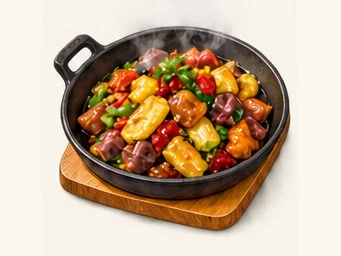 Qianjiang chicken giblets 黔江鸡杂AI illustration · AI 示意图
Different giblets give crisp, springy and tender bites, while pickles create a sharp sour note beneath the chili heat.
Source ↗Read the dish guide → Maoxuewang blood-curd stew 毛血旺AI illustration · AI 示意图
Soft blood curd contrasts with springy tripe and crisp vegetables, while chili oil and Sichuan pepper create a strong, lingering finish.
Source ↗Read the dish guide →All dish names · 全部菜名 (230)
- Chongqing xiaomian · 重庆小面
- Chongqing hotpot · 重庆火锅
- Wanzhou roasted fish · 万州烤鱼
- Gele Mountain spicy chicken · 歌乐山辣子鸡
- Wushan grilled fish · 巫山烤鱼
- Wushan leaf jelly · 巫山翡翠凉粉
- Qianjiang chicken giblets · 黔江鸡杂
- Maoxuewang blood-curd stew · 毛血旺
- Dengying thin beef slices · 灯影牛肉
- Rongchang braised goose · 荣昌卤鹅
- Tongnan Taian fish · 潼南太安鱼
- Dianjiang stone-ground tofu pudding · 垫江石磨豆花
- Liziba Liangshan chicken · 李子坝梁山鸡
- Yubei chili-broth fish · 渝北水煮鱼
- Fuling oil-toasted sweet rice wine · 涪陵油醪糟
- Yangjiao spiced dried tofu · 羊角豆干
- Qijiang rice noodles · 綦江米粉
- Soft-fried Hechuan walnut rice-cake slices · 软炸合川桃片
- Chongqing hot-and-sour noodles · 重庆酸辣粉
- Grilled sweet-potato sheets · 烤苕皮
- Iced tangyuan dessert · 冰汤圆
- Tieshanping peppercorn chicken · 铁山坪花椒鸡
- Jiucun roasted pork brain · 九村烤脑花
- Liangping Zhang-style duck · 梁平张鸭子
- Chongqing small sweet rice dumplings · 山城小汤圆
- Chongqing noodles with peas & minced pork · 豌杂面
- Zhe'ergen herb salad · 凉拌折耳根
- Sichuan brined pickled vegetables · 四川泡菜
- Sichuan mixed-spice broad beans · 怪味胡豆
- Chengkou smoked cured pork · 城口老腊肉
- Nanchuan square-bamboo shoots · 南川方竹笋
- Fuling preserved mustard stem · 涪陵榨菜
- Hechuan walnut rice-cake slices · 合川桃片
- Boiled Fish in Chilli Oil · 水煮鱼
- Soft Bean Curd · 豆花
- Chongqing Twice-Cooked Pork · 重庆回锅肉
- Chongqing Grilled Fish · 重庆烤鱼
- Rice-Meal Steamed Pork · 粉蒸肉
- Fish with Pickled Mustard Greens · 酸菜鱼
- Chilli Chicken with Sichuan Pepper · 辣子鸡
- Spring-Water Chicken · 泉水鸡
- Ciqikou Fried Dough Twists · 磁器口麻花
- Chen's Fried Dough Twists · 陈麻花
- Soft Tofu with Rice · 豆花饭
- Shaobai Steamed Pork Belly · 烧白
- Charcoal-Grilled Fish in Sauce · 烤鱼
- Chuanchuan Skewer Hotpot · 串串香
- Shrimp-Shaped Rice Jelly Dessert · 凉虾
- Bingfen jelly with brown-sugar syrup · 冰粉
- Lard-Fried Sweet Fermented Rice · 油醪糟
- Sour-Spicy Chicken Giblets · 鸡杂
- Wanzhou Small Basket-Steamed Dishes · 万州格格
- Wanzhou Minced Meat Sauce Noodles · 万州杂酱面
- Wanzhou Basket-Steamed Mutton · 万州羊肉格格
- Wanzhou Basket-Steamed Pork Intestines · 万州肥肠格格
- Wanzhou Grilled Pork Brain · 万州烤脑花
- Wanzhou Zhajiang Noodles · 万州炸酱面
- Fuling Stir-Fried Pork with Preserved Mustard · 涪陵榨菜炒肉
- Rouge Red Radish · 胭脂萝卜
- Fuling Soft Tofu with Rice · 涪陵豆花饭
- Shredded Pork and Preserved Mustard Noodles · 榨菜肉丝面
- Fuling Red-Heart Radish Stewed with Cured Pork · 涪陵红心萝卜炖腊肉
- Qianjiang Mung Bean Noodles · 黔江绿豆粉
- Qianjiang Dried Beef Slices · 黔江牛肉脯
- Tujia Shefan Festival Rice · 土家社饭
- Jar-Fermented Sour Pork · 酸酢肉
- Stir-Fried Cured Pork with Fermented Chilli Meal · 渣海椒炒腊肉
- Fairy Tofu Green Leaf Jelly · 神豆腐
- Jiangjin Fish with Pickled Mustard Greens · 江津酸菜鱼
- Jiangjin Puffed Rice Candy · 江津米花糖
- Chicken Stir-Fried with Fresh Chillies · 尖椒鸡
- Jiangjin Crispy Pork Slices in Sauce · 江津肉片
- Sesame Stick Candy · 芝麻杆
- Jiangjin Pork Braised in Baijiu · 江津老白干烧肉
- Hechuan Crispy Pork Slices · 合川肉片
- Hechuan Mutton Rice Noodles · 合川羊肉粉
- Hechuan Soft Tofu · 合川豆花
- Hechuan Rice Noodles · 合川米粉
- Hechuan Black Soybean Tofu · 合川黑豆腐
- Yongchuan Twice-Cooked Pork with Black Beans · 永川豆豉回锅肉
- Yongchuan Osmanthus Cake · 永川桂花糕
- Yongchuan Pine-Flower Century Eggs · 永川松花皮蛋
- Fish with Fermented Black Beans · 豆豉鱼
- Yongchuan Tea-Scented Chicken · 永川茶香鸡
- Xinghu Baby Fish · 星湖鱼
- Nanchuan Pork Braised with Square Bamboo Shoots · 南川方竹笋烧肉
- Jinfo Mountain Herbal Mutton Stew · 金佛山药羊肉
- Nanchuan Savoury Oil Tea · 南川油茶
- Chicken Stewed with Square Bamboo Shoots · 方竹笋炖鸡
- Nanchuan Ash-Lye Rice Cakes · 南川灰粑
- Jinfo Mountain Cured Pork · 金佛山腊肉
- Qijiang Beidu Hot-Oil Fish · 綦江北渡鱼
- Ganshui Stir-Fried Cured Pork with Dried Radish · 赶水萝卜干炒腊肉
- Anwen Mountain Goat Dishes · 安稳羊肉
- Mugua Chilli Peppers · 木瓜海椒
- Ganshui Caodou Radish Stewed with Meat · 赶水草蔸萝卜炖肉
- Youting Braised Crucian Carp · 邮亭鲫鱼
- Dazu Steamed Pork Belly with Preserved Greens · 大足冬菜扣肉
- Dingjiapo Potatoes · 丁家坡洋芋
- Dazu Minced Pork Sauce Noodles · 大足杂酱面
- Longshui Lake Whole Fish Banquet · 龙水湖全鱼宴
- Dazu Lotus Leaf Glutinous Rice Cakes · 大足荷叶糍粑
- Rongchang Yellow Pea Jelly · 荣昌黄凉粉
- Quilt-Sheet Wide Noodles · 铺盖面
- Piglet-Shaped Sticky Rice Buns · 猪儿粑
- Rongchang Mutton Soup · 荣昌羊肉汤
- Panlong Mutton Soup · 盘龙羊肉汤
- Bishan Laifeng Spicy Fish · 璧山来凤鱼
- Bishan Rabbit Dishes · 璧山兔
- Bishan Soft Tofu with Rice · 璧山豆花饭
- Laifeng Fish with Pickled Mustard Greens · 来凤酸菜鱼
- Bishan Rice Noodles · 璧山米粉
- Dingjia Rabbit · 丁家兔
- Tongnan Cold Starch Jelly · 潼南凉粉
- Chen's Cold Starch Jelly · 陈凉粉
- Shuangjiang Chen's Cold Starch Jelly · 双江陈凉粉
- Tongnan Rapeseed Blossom Banquet · 潼南菜花宴
- Tongnan Radish Rolls · 潼南萝卜卷
- Tongliang Pickled-Chilli Chicken Feet · 铜梁泡椒凤爪
- Tongliang Kudzu Root Powder · 铜梁葛粉
- Anju Hanlin Sesame Nut Crisp · 安居翰林酥
- Orchid-Root Fried Rice Snacks · 兰花根
- Tongliang Lamb Rice Noodles · 铜梁羊肉粉
- Taiping Salt and Pepper Peanuts · 太平椒盐花生
- Liangping Duck Stewed with Pomelo Tea · 梁平柚茶炖鸭
- Yuanyi Pressed Dried Tofu · 袁驿豆干
- Liangping Bamboo Shoot Chicken · 梁平竹笋鸡
- Liangping Sweet Tea · 梁平甜茶
- Shade-Dried Rice Porridge · 阴米稀饭
- Wulong Mutton by the Bowl · 武隆碗碗羊肉
- Wulong Sweet Potato Starch Noodles · 武隆苕粉
- Yangjiao Aged Vinegar · 羊角老醋
- Jiangkou Sour-Soup Fish · 江口鱼
- Wujiang River Fish · 乌江鱼
- High-Mountain Cured Pork · 高山腊肉
- Fengdu Numbing-Spicy Chicken Pieces · 丰都麻辣鸡块
- Ghost City Numbing-Spicy Chicken · 鬼城麻辣鸡
- Fengdu Charred Chilli Noodles · 丰都糊辣壳小面
- Fengdu Wontons · 丰都抄手
- Xianjia Fermented Bean Curd · 仙家豆腐乳
- Fengdu Pickled Mustard Stem · 丰都榨菜
- Stone-Ground Soft Tofu · 石磨豆花
- Dianjiang Sauce-Pickled Melon · 垫江酱瓜
- Dianjiang Beef · 垫江牛肉
- Dianjiang Peony Cake · 垫江牡丹饼
- Dianjiang Rice Noodles · 垫江米粉
- Zhongzhou Fermented Bean Curd · 忠州豆腐乳
- Xiangshan Honey Cakes · 香山蜜饼
- Zhongxian Chicken Giblets · 忠县鸡杂
- Zhongzhou Fish with Fermented Bean Curd · 忠州腐乳鱼
- Zhongxian Citrus Banquet · 忠县柑橘宴
- Shibao Rice-Meal Steamed Tofu · 石宝蒸豆腐
- Yunyang Paper-Thin Walnut Rice Cake · 云阳桃片糕
- Yunyang Goat Trotters · 云阳羊脚脚
- Yunyang Baomian Wontons · 云阳包面
- Yunyang Noodles · 云阳面条
- Yun'an Lamb Offal Soup · 云安羊杂
- Yunyang Leaf-Wrapped Sticky Rice Buns · 云阳叶儿粑
- Fengjie Clay-Pot Chicken · 奉节盬子鸡
- Fengjie Hand-Torn Noodles · 奉节搭搭面
- Fengjie Smoked Cured Pork · 奉节腊肉
- Tinglai Pickled Vegetables · 汀来泡菜
- Fengjie Small Basket-Steamed Dishes · 奉节格格
- Fengjie Navel Orange Banquet · 奉节脐橙宴
- Wushan Smoked Cured Pork · 巫山腊肉
- Wushan Goddess Chicken · 巫山神女鸡
- Wushan Baomian Wontons · 巫山包面
- Dachang Xuezao Sugared Rice Puffs · 大昌雪枣
- Wuxi Charcoal-Grilled River Fish · 巫溪烤鱼
- Wuxi Mountain Potatoes · 巫溪洋芋
- Wuxi Smoked Cured Pork · 巫溪腊肉
- Wuxi Daning River Chicken · 巫溪大宁河鸡
- Wuxi Potato Cakes · 巫溪洋芋粑粑
- Wuxi Fermented Bean Curd · 巫溪豆腐乳
- Shizhu Water Shield Soup · 石柱莼菜汤
- Tujia Hanging Pot · 土家吊锅
- Shizhu Smoked Cured Pork · 石柱腊肉
- Tujia Zajiu Sipping Wine · 土家咂酒
- Mung Bean Noodles · 绿豆面
- Tujia Pounded Rice Cakes · 土家糍粑
- Xiushan Rice Tofu · 秀山米豆腐
- Deep-Fried Rice Batter Cakes · 油粑粑
- Shefan Festival Rice · 社饭
- Jar-Fermented Sour Fish · 腌酸鱼
- Xiushan Smoked Cured Pork · 秀山腊肉
- Miao Sour Soup · 苗家酸汤
- Youyang Oil Tea Soup · 酉阳油茶汤
- Gongtan Mung Bean Noodles · 龚滩绿豆粉
- Tujia Smoked Cured Pork · 土家腊肉
- Youyang Mawang Duck · 酉阳麻旺鸭
- Rice Tofu · 米豆腐
- Pengshui Crystal Sweet Potato Noodles · 彭水晶丝苕粉
- Pengshui Buckwheat Noodles with Soft Tofu · 彭水荞面豆花
- Yushan Flaky Pastry Cakes · 郁山擀酥饼
- Dujuanzi Rolls · 嘟卷子
- Buckwheat Cakes · 荞粑
- Doujuanzi Rolls · 都卷子
- Mountain City Sweet Rice Dumplings · 山城汤圆
- Old-Style Spicy Hotpot · 老火锅
- Tiaodeng Hotpot · 跳磴火锅
- Dadukou Skewer Hotpot · 大渡口串串
- Jiangbei Old-Style Hotpot · 江北老火锅
- Grilled Pork Brain · 烤脑花
- Jiulongpo Green Peppercorn Chicken · 九龙坡花椒鸡
- Nanshan Spring-Water Chicken · 南山泉水鸡
- Nanshan Fresh Chilli Chicken · 南山鲜椒鸡
- Beibei Soft Tofu · 北碚豆花
- Beiquan Wet-Milled Soft Tofu · 北泉水磨豆花
- Smoked Cured Pork · 腊肉
- Jinyun Mountain Spring-Water Chicken · 缙云山泉水鸡
- Mudong Soft Tofu · 木洞豆花
- Mudong Crispy Fried Duck · 木洞油酥鸭
- Mudong Candied Date Cake · 木洞蜜枣糕
- Changshou Rice Noodles · 长寿米粉
- Changshou Thin Sesame Crisps · 长寿薄脆
- Changshou Smoked Blood Tofu · 长寿血豆腐
- Pork Intestine Rice · 肥肠饭
- Changshou Lake Whole Fish Banquet · 长寿湖全鱼宴
- Braised Pork with Pomelo Peel · 柚子皮烧肉
- Kaizhou Ice-Thin Mooncakes · 开州冰薄月饼
- Kaizhou Basket-Steamed Mutton · 开州羊肉格格
- Kaizhou Sichuan Pepper Beef · 开州椒麻牛肉
- Big Mixed Steamed Platter · 大混蒸
- Kaizhou Pressed Dried Tofu · 开州豆干
- Linjiang Cured Sausage · 临江香肠
- Chengkou Smoked Cured Pork Ribs · 城口腊排骨
- Chengkou Potato Cakes · 城口洋芋粑
- Chengkou Small Basket-Steamed Dishes · 城口格格
- Chengkou Cured Pork Stewed with Potatoes · 城口土豆炖腊肉
- Chengkou Smoked Cured Sausage · 城口腊香肠
Top sights in Chongqing
 TOP1渝中区
Hongya Cave洪崖洞民俗风貌区
Show on map TOP2武隆
The Three Natural Bridges form a sequence of large limestone arches within Wulong’s karst landscape. Named Tianlong, Qinglong and Heilong, the bridges span spaces cut into the rock by water and collapse. Their different shapes…
 TOP3渝中区
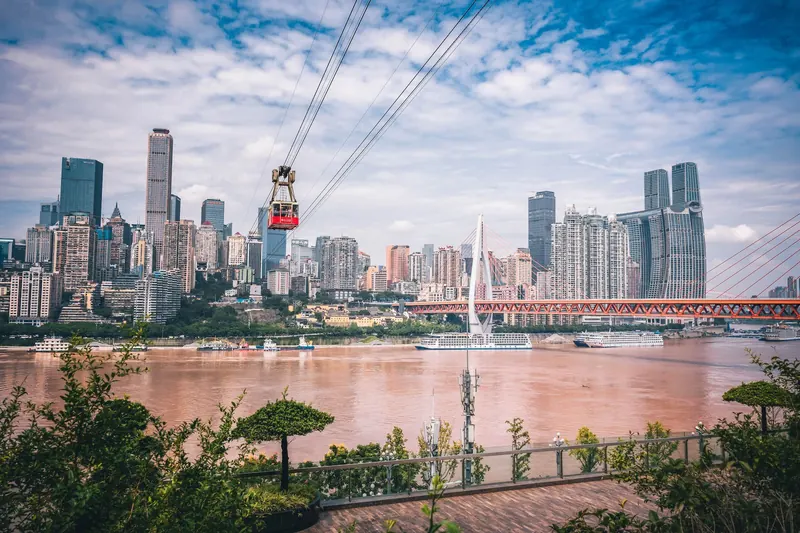
The Yangtze River Cableway is an aerial cable-cabin crossing of the Yangtze at Chongqing, recorded at 151 Xinhua Road in Yuzhong District. It opened in 1987 and the municipal government's own page describes it as the first aerial crossing built over the river.
 TOP4九龙坡
Chongqing Zoo occupies a substantial green site in Yangjiaping, with separate habitats for giant pandas, red pandas and larger mammals. The panda areas are a natural starting point, but a second section makes the visit more…
 TOP5渝中区
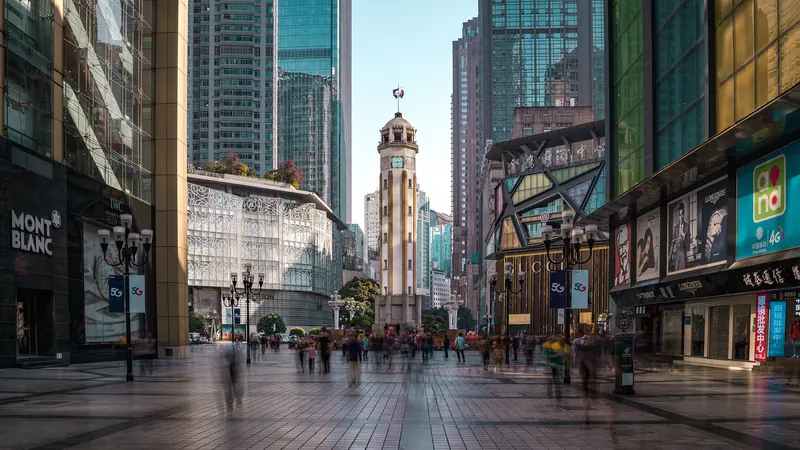
Jiefangbei Pedestrian Street解放碑步行街
Show on map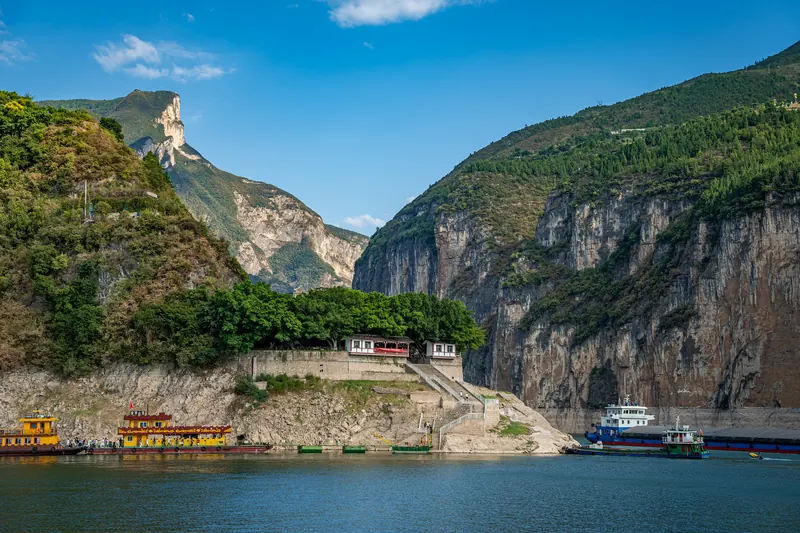 TOP6奉节县
Baidicheng-Qutang Gorge is a scenic area on Baidi Mountain, on the north bank of the Yangtze at the mouth of Qutang Gorge, Fengjie County, Chongqing. It combines the hilltop site of the ancient city of Baidicheng with the 8-kilometre gorge below, and was rated a national AAAAA-grade scenic area in 2022.
 TOP7渝中区
EYE IN THE CLOUDS重庆云端之眼观景台
Show on map TOP8渝中区
Chongqing Two Rivers Cruise重庆两江游
Show on map TOP9沙坪坝区
Ciqikou Ancient Town (磁器口古镇) is a historic towns & villages entry in Shapingba District, Chongqing. Its listed highlights include urban streets.
 TOP10大足
The Dazu Rock Carvings are a group of separate hillside sites, where Buddhist, Daoist and Confucian imagery appears alongside scenes of ordinary life. At Baodingshan, a long sequence of reliefs follows a curved valley; Beishan…
 Show on map


.jpg)
Change your destination on Trip.com.
Ranking source & photo credits
The first ten entries of Trip.Best Best Things to Do. Rankings reflect platform recommendations, not counts of international visitors. Read on 20 September 2026; platform pages may use cached snapshots.
- Hongya Cave: Source: Trip.com · Resized and WebP compressed; fitted to the ranking card.
- Wulong Three Natural Bridges: Source: Trip.com · Resized and WebP compressed; fitted to the ranking card.
- Yangtze River Cableway: Source: Trip.com · Resized and WebP compressed; fitted to the ranking card.
- Chongqing Zoo: Source: Trip.com · Resized and WebP compressed; fitted to the ranking card.
- Jiefangbei Pedestrian Street: Source: Trip.com · Resized and WebP compressed; fitted to the ranking card.
- Baidicheng-Qutang Gorge: Source: Trip.com · Resized and WebP compressed; fitted to the ranking card.
- EYE IN THE CLOUDS: Source: Trip.com · Resized and WebP compressed; fitted to the ranking card.
- Chongqing Two Rivers Cruise: Source: Trip.com · Resized and WebP compressed; fitted to the ranking card.
- Ciqikou Town: Source: Trip.com · Resized and WebP compressed; fitted to the ranking card.
- Dazu Rock Carvings: Source: Trip.com · Resized and WebP compressed; fitted to the ranking card.
Cities, counties & districts in Chongqing
37 areas belong directly to Chongqing.
37 areas
Wanzhou District万州区
Wanzhou District is Chongqing's second most populated urban core area on the upper reaches of the Three Gorges of the Yangtze River in China.
Explore the area →DistrictFuling District涪陵区
Fuling District is a district in central Chongqing, China. It is the second-largest district in Chongqing. Former U.S.
Explore the area →DistrictYuzhong District渝中区
Yuzhong District (渝中区) is the central district and heart of Chongqing municipality. It is the capital of the municipality and is also the political, economical, and entertainment center of the city of…
Explore the area →DistrictDadukou District大渡口区
Dadukou District is a district of Chongqing municipality in China. Dadukou is an industrialised district where the Chongqing Iron & Steel Company Limited ("Chong Gang" or 重钢) is based.
Explore the area →Show fewer areas
Shapingba District沙坪坝区
Shapingba is a district of Chongqing, People's Republic of China, formerly known as Shaci District (沙磁区; Shācí qū) during the Sino-Japanese War.
Explore the area →DistrictJiulongpo District九龙坡区
Jiulongpo is a district forming part of the western part of the Chongqing urban core (重庆主城区). It covers an area of 432 km², with a resident population of 1.54 million and an urbanization rate of 94%.
Explore the area →DistrictNan'an District南岸区
Nan'an District is one of the six central districts of Chongqing municipality, China. It covers an area of 262.43 km², with 44 km² covered with forests and woods.
Explore the area →DistrictBeibei District北碚区
Beibei is a district in northern Chongqing. Following the 2025 administrative reorganization, the district government reports an area of 1,093.2 square kilometres, with six subdistricts and eleven towns.
Explore the area →DistrictQijiang District綦江区
Qijiang District is a district of Chongqing, China, bordering Guizhou province to the south. The district has an area of 2,748 km² and a population of 1,213,770 (de facto resident population 825,500 as of…
Explore the area →DistrictDazu District大足区
Dazu District is a district of Chongqing, China, bordering Sichuan province to the northwest. It is where the famous Dazu Rock Carvings, a UNESCO World Heritage Site, is located.
Explore the area →DistrictBanan District巴南区
Banan District, formerly Ba County, is a district of Chongqing municipality.
Explore the area →DistrictQianjiang District黔江区
Qianjiang District is a district in the southeastern part of Chongqing, China, bordering Hubei province to the east and northeast.
Explore the area →DistrictChangshou District长寿区
Changshou is a district in Chongqing, China, located by the Yangtze river, with a history spanning several thousand years. Changshou is 80 km (50 mi) from the Yuzhong District of downtown Chongqing.
Explore the area →DistrictJiangjin District江津区
Jiangjin District, one of the districts in the southwest of Chongqing, China, lies along the upper reaches of Yangtze River, and has a history extending back more than 1500 years.
Explore the area →DistrictHechuan District合川区
Hechuan is a district in the northern part of Chongqing Municipality, People's Republic of China. Located at the meeting point of the Jialing, Fu and Qu rivers, it has a history of 1,500 years.
Explore the area →DistrictYongchuan District永川区
Yongchuan is a district of Chongqing, China, located by the north side of upper reach of Yangtze River, with a history of 1200 years.
Explore the area →DistrictNanchuan District南川区
Nanchuan is a district and former county of Chongqing, China, bordering Guizhou province to the south.
Explore the area →DistrictBishan District璧山区
Bishan is one of the districts of Chongqing, China, with a history of over 2000 years. Bishan is 23 kilometers (14 mi) west of Chenjiaping in downtown Chongqing.
Explore the area →DistrictTongliang District铜梁区
Tongliang District is a district of Chongqing Municipality, China.
Explore the area →DistrictTongnan District潼南区
Tongnan District is a district of Chongqing Municipality, China, bordering Sichuan province to the north and west.
Explore the area →DistrictRongchang District荣昌区
Rongchang District is a district of Chongqing Municipality, China, bordering Sichuan province to the west.
Explore the area →DistrictKaizhou District开州区
Kaizhou District, formerly known as Kai County, Kaixian or Kaihsien is a district under the jurisdiction of Chongqing Municipality, in southwestern China, bordering Sichuan province to the west.
Explore the area →DistrictLiangping District梁平区
Liangping District, formerly Liangping County and Liangshan County, is a district in the north of Chongqing Municipality, People's Republic of China.
Explore the area →DistrictWulong District武隆区
Wulong District is a district of Chongqing Municipality, China, bordering Guizhou province to the south.
Explore the area →DistrictLiangjiang New Area两江新区
Liangjiang New Area is a district of Chongqing established through the 2025 administrative reorganization. The district government’s June 2026 profile gives its area as approximately 1,360 square kilometres…
Explore the area →CountyChengkou County城口县
Chengkou County is a county in Chongqing municipality, China, and is the northernmost county-level division of Chongqing, bordering the provinces of Shaanxi and Sichuan to the north and west, respectively.
Explore the area →CountyFengdu County丰都县
Fengdu County is a county located in Chongqing Municipality, People's Republic of China. The county was established as Fengdu County (豐都縣) during the Sui dynasty.
Explore the area →CountyDianjiang County垫江县
Dianjiang County (simplified Chinese: 垫江县; traditional Chinese: 墊江縣; pinyin: Diànjiāng Xiàn) is a county in the northeast of Chongqing Municipality, China, bordering Sichuan province to the northwest.
Explore the area →CountyZhongxian忠县
Zhong County or Zhongxian (simplified Chinese: 忠县; traditional Chinese: 忠縣; pinyin: Zhōng Xiàn) is a county of Chongqing Municipality, China.
Explore the area →CountyYunyang County云阳县
Yunyang County (simplified Chinese: 云阳县; traditional Chinese: 雲陽縣; pinyin: Yúnyáng Xiàn) is a county in the northeast of Chongqing Municipality, China, bordering Hubei province to the south.
Explore the area →CountyFengjie County奉节县
Fengjie County (simplified Chinese: 奉节县; traditional Chinese: 奉節縣; pinyin: Fèngjié Xiàn) is a county of Chongqing Municipality, China.
Explore the area →CountyWushan County巫山县
Wushan County is a county located in Chongqing municipality. It occupies roughly 2,958 km² (1,142 mi²) and has a population of about 600,000.
Explore the area →CountyWuxi County巫溪县
Wuxi County is a county of Chongqing Municipality, People's Republic of China, bordering Shaanxi to the north and Hubei to the northeast and east.
Explore the area →Autonomous countyShizhu Tujia Autonomous County石柱土家族自治县
Shizhu Tujia Autonomous County, or Shizhu County for short, is located in southeastern Chongqing, China. It is south of the Yangtze River, and borders the Chongqing divisions of Pengshui County to the south…
Explore the area →Autonomous countyXiushan Tujia and Miao Autonomous County秀山土家族苗族自治县
Xiushan Tujia and Miao Autonomous County, or Xiushan County for short, is located in the southeast of Chongqing Municipality, China. It is the municipality's southernmost county-level division.
Explore the area →Autonomous countyYouyang Tujia and Miao Autonomous County酉阳土家族苗族自治县
Youyang Tujia and Miao Autonomous County, or Youyang County for short (simplified Chinese: 酉阳土家族苗族自治县; traditional Chinese: 酉陽土家族苗族自治縣; pinyin: YǒuYáng Tǔjiāzú Miáozú Zìzhìxiàn) is located in southeastern…
Explore the area →Autonomous countyPengshui Miao and Tujia Autonomous County彭水苗族土家族自治县
Pengshui Miao and Tujia Autonomous County (simplified Chinese: 彭水苗族土家族自治县; traditional Chinese: 彭水苗族土家族自治縣; pinyin: Péngshuǐ Miáozú Tǔjiāzú Zìzhìxiàn) is an autonomous county for the Miao and Tujia people…
Explore the area →No areas match this name.
Arrive, stay & get around Chongqing
交通枢纽、住宿与天气
Chongqing重庆
Transport gateways for Chongqing; check the named terminal or station on the ticket.
Airports
Chongqing Jiangbei International AirportCKG
重庆江北国际机场
Airport northeast of central Chongqing; allow for the city’s large distances and choose the correct terminal.
Railway stations
Chongqing North Railway Station
重庆北站
Major rail gateway north of the river; match the ticket and station-square access information.
Chongqing West Railway Station
重庆西站
A separate western rail hub, requiring different local connections from Chongqing North.
Metro & city transport
Chongqing Metro Network 重庆轨道交通线路图
The network includes metro and monorail services across steep terrain. Plan the exact station exit as well as the rail line.
- 1Find your stations确认起点与终点站
- 2Check interchanges查看换乘线路与站点
- 3Follow exit signs到站后按站内标识出站
 Explore the full network查看站名、线路与换乘Enlarge map点击放大线路图
Check the legend for closed, reserved or future sections. 停运、预留与规划区间,请按图例辨识。
Map edition: 2026-09-06 · Diagram reviewed 2026-09-06
Map: China Revealed; data © OpenStreetMap contributors · CC BY-SA 4.0 diagram; ODbL 1.0 source database
Map coverage & sources 图示范围与来源说明
All 13 operating metro, monorail and suburban rail lines: 1–6, 9, 10, 18, Loop, Guobo, Jiangtiao, Bitong; Line 3 airport branch and Line 6 East segment shown separately. Original station-connection diagram, not to geographic scale. Includes Line 4 west extension to Shimahelijiao opened 2026-02-10; unopened Shunshuisi Park omitted. Includes Line 6 East segment to Chongqing East opened 2025-06-27. Bitong and Jiangtiao suburban lines included. Bishan SkyShuttle outside scope. Under-construction Lines 7, 15, 17, 24, 27 and Line 18 north extension omitted. Diagram shows station connectivity; same-name station interchange can require exit/re-entry. Consult operator for fare gates and express stopping patterns.
Independent schematic layout and labels generated from OSM station order, names and coordinates. No operator diagram copied.
Coaches, ferries & onward travel
Sigongli Transport Hub
四公里交通枢纽站
A major coach hub on the south side of the river for regional road travel; verify the current destination and departure when booking.
Transport reference review: 2026-09-06. Consult the operator for current services and timetables.
More about getting around
Jiangbei airport and major railway stations connect with the urban rail network. Check your station carefully before departure. Rail works well across town, but the final walk may involve stairs and sharp gradients; arrange a separate onward transfer for Dazu or Wulong.
Stay in Chongqing
Jiefangbei is a practical first base for central sights and evening river walks. Compare the hotel's actual street entrance with its map pin before booking, especially with luggage or limited mobility. Wulong merits its own overnight base when you want several landscape stops.
Find hotels on Trip.com →Change your destination, dates and guests on Trip.com.
Chongqing weather
The current-hour forecast loads when this section is visible. It uses MET Norway model data for the named city, not station observations.
Seasons & when to go
Expect humid summers, with heat that makes steep walks demanding, and cooler winters that can feel damp. Spring and autumn generally suit walking better. Pack a light rain layer and choose flexible viewpoints: haze or low cloud can soften the river panorama.
Local life & communication
Chongqing feels physical and social: climbing steps, crossing water, mixing a bowl of noodles and gathering around a hotpot. The dense central city has a different scale from Dazu, Wulong or Wushan. Its old-style visitor streets should be described honestly as restored or reconstructed where appropriate.
Shared hotpot and small bowls of xiaomian anchor the city's food culture; discuss chilli and numbing pepper separately when ordering. For historical depth, visit Dazu, where Buddhist, Daoist and Confucian ideas appear alongside remarkably observant images of everyday life.
Language & communication
Mandarin works for most travel arrangements, alongside the distinctive Chongqing variety of Southwestern Mandarin. Save Chinese names for your hotel and the exact attraction entrance. At meals, a translated request for little chilli is more useful than simply asking for mild food.
Useful local tips
- Check the street level and entrance of a meeting point, not just its map pin.
- Group outings by riverbank; crossing back and forth can consume much of a short stay.
- Plan Dazu, Wulong and Wushan as distinct journeys, not three stops near the downtown skyline.
- Restored visitor districts are enjoyable, but should not be presented as completely untouched old neighborhoods.
Sources & useful links
- China National Tourist Office: Chongqing
- iChongqing: Xiaomian
- iChongqing: 18 Steps
- Bridging News: Chongqing visitor neighborhoods
- UNESCO: Dazu Rock Carvings
- UNESCO: South China Karst
- iChongqing: Wushan landscapes and food
- Bridging News: 360 Bowls of Chongqing Flavors
- Chongqing — population background
- Chongqing — languages background
- Chongqing — geography background
- Chongqing — Chongqing centre map reference
- Chongqing — Jiangbei International Airport map reference
- Chongqing — Hongyadong map reference
- Chongqing — Ciqikou map reference
- Chongqing — Dazu Baodingshan carvings map reference
- Chongqing — Wulong Three Natural Bridges map reference
- Chongqing — Three Gorges Museum map reference
- Chongqing — Great Hall of the People (Chongqing) map reference
- Chongqing — Wushan County, Chongqing map reference
- Chongqing — Fengdu Ghost City map reference
- Chongqing — Baidicheng map reference
- Chongqing — Shibaozhai map reference
- Chongqing — Wulong Karst map reference
- Chongqing — Furong Cave map reference
- Chongqing attraction ranking source
- Chongqing specialty reference — whlyw.cq.gov.cn
- Chongqing specialty reference — www.cqrb.cn
- Chongqing specialty reference — www.cq.gov.cn
- Chongqing specialty reference — ghzrzyj.cq.gov.cn
- Chongqing specialty reference — www.cq.gov.cn
- Chongqing specialty reference — www.cq.gov.cn
- Chongqing specialty reference — www.cq.gov.cn
- Tongchuan district government: Dengying beef
- Dazhou government: Dengying beef tradition and production
- Ministry of Commerce time-honored brands museum: Hechuan taopian ingredients
- Today Hechuan: local snacks and soft-fried taopian
- Chongqing government: local visitor food guide
- Jiulongpo tourism: Chongqing noodle varieties
- Guizhou CPPCC: fish mint and local food culture
- Shidian government: Yunnan fish-mint salad
- Liangjiang: spring fish-mint dishes
- National standards platform: Sichuan paocai
- Shapingba government: guaiwei broad-bean tradition
- 黑山谷 — place reference
- 神龙峡 — place reference
- 云阳龙缸 — place reference
- 武陵山大裂谷 — place reference
- 巫山小三峡 — place reference
- 城口老腊肉 — local food reference
- 南川方竹笋 — local food reference
- 涪陵榨菜 — local food reference
- 合川桃片 — local food reference
- 蒲花暗河 — place reference
- Local food reference: 水煮鱼
- Local food reference: 凉虾
- Local food reference: 冰粉
- Local food reference: 腊肉