


About Anhui
Anhui at a glance
- Population
- 60,820,000Year-end resident population, entire provincial-level administrative area · 2025Source ↗
- Income per person
- 38,755Mean annual disposable income per person, all residents · 2025 · CNYSource ↗
- Languages & dialects
- Mandarin; local varieties include Central Plains Mandarin, Jianghuai Mandarin, Hui (徽语) and Wu (吴语).Broad regional categories summarized from an encyclopedia; numerous migrant dialect enclaves also exist.Source ↗
- Geography
- Huai River plains, central Jianghuai hills, Yangtze lowlands, western Dabie Mountains and southern mountain country.Source ↗
- Elevation
- Low river plains contrast with southern mountain peaks above 1,800 m.Mountain figure describes high peaks, not the average elevation of Anhui.Source ↗
- Main gateway
- HefeiProvince
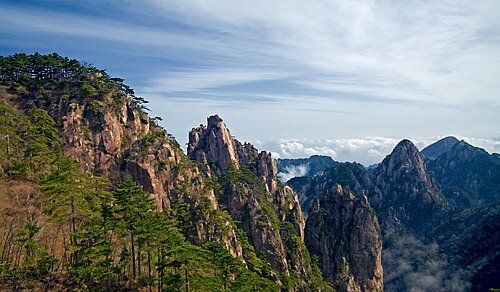
Discover Anhui
Separate Huangshan's mountain, town and villages
Huangshan's granite scenery calls for a dedicated outdoor plan, while Hongcun and Xidi invite a slower look at water systems, courtyards and village life. Tunxi provides an urban base and old commercial streets. A hotel in Tunxi, an inn in a village and accommodation on or near the mountain support different itineraries. Confirm which place an address actually refers to, then decide the order of the experiences instead of treating them as one compact attraction.
Look beyond the southern Huizhou image
Jiuhuashan is a living Buddhist mountain landscape, distinct from a scenery-focused Huangshan visit. Farther north, Huainan and Shouxian combine local food, an old city and the Bagongshan area. Wuhu introduces another river-city setting, while Taihe belongs to a separate northern food geography. Choose the extension that matches your interests. Historic Huizhou's white walls and dark roofs should not become a visual shorthand for all of Anhui's cities, plains and mountain communities.
Let transport and meals support the chosen chapter
Fermented mandarin fish and hairy tofu give a southern meal particular aromas and textures. Huainan beef soup, Wuhu shrimp-roe noodles and Taihe broad noodles point to other regional traditions. Allow time to understand a specialty where it belongs. For the southern circuit, Huangshan North station is only one stage of the journey: town, villages and mountain entrances require different onward transfers. Check those connections before choosing the hotel or planning a departure after an outdoor day.
Explore Anhui
Core places to explore, with English and Chinese names.
Hefei 合肥
Chaohu Lake 巢湖
Anhui Museum 安徽博物院
Lord Bao Park 包公园
Sanhe, Feixi County 三河古镇
Tunxi, Huangshan city 黄山市屯溪区
Tangkou 汤口
Mount Huangshan 黄山
Hongcun 宏村
Xidi 西递
Tangyue Memorial Archways 棠樾牌坊群
Chengkan 呈坎
She County, Anhui 歙县
Tiandu Peak · Yuping visitor-area reference 天都峰·玉屏片区示意点
Qiankou 潜口民宅
Mount Qiyun 齐云山
Mount Jiuhua 九华山
Tianzhu Mountain 天柱山
Yingjiang Temple 迎江寺
Tongcheng Confucian Temple 桐城文庙
Tiantangzhai 天堂寨
Jingting Mountain 敬亭山
Taohuatan 桃花潭
Zheshan 赭山
Caishiji 采石矶
Mount Langya 琅琊山
Zuiweng Pavilion 醉翁亭
Ming Imperial Tombs (Fengyang) 明皇陵
Shou County 寿县
Shou County City Wall 寿县古城墙
Shuangdun site 双墩遗址
Huaxilou 花戏楼
Huaibei City Museum 淮北市博物馆
Tianjing Lake 天井湖
Balihe Scenic Area 八里河风景区
Huangcangyu National Forest Park 皇藏峪国家森林公园
Xiaoyaojin Park 逍遥津公园
Three Kingdoms Ruins Park 三国新城遗址公园
Dashu mountain 大蜀山
Zi Peng mountain 紫蓬山
Anhui Hall of Fame 安徽名人馆
Anhui Art Museum 安徽省美术馆
Memorial Museum of the Yangtze River Crossing Campaign 渡江战役纪念馆
Wuhu Guangji Temple 芜湖广济寺
Wuhu Mirror Lake 芜湖镜湖
Wuhu Fantawild Adventure 芜湖方特欢乐世界
Maren Qifeng 马仁奇峰
Liuzi Canal Wharf Site 柳孜运河码头遗址
Linhuan City Site 临涣古城遗址
Suixi Old Street Ancient Building Complex 濉溪老街
Phoenix Mountain Scenic Area 铜陵凤凰山
Copper Culture Park 铜陵铜文化园
Datong Ancient Town 大通古镇
Ma'anshan Museum 马鞍山市博物馆
Lingjiatan Site 凌家滩遗址
Ancient Huizhou Cultural Tourism Area 古徽州文化旅游区
Wanfo Lake 万佛湖
Jixi Longchuan Scenic Area 绩溪龙川景区
Tangmo Ancient Village 唐模古村
Wuhu Fantawild Dreamland 芜湖方特梦幻王国
Wuhu Fantawild Oriental Heritage 芜湖方特东方神画
Wuhu Fantawild Water Park 芜湖方特水上乐园
Chaohu Lake Shoreline 巢湖滨湖岸线
Laoshan Island 姥山岛
Yinping Mountain 银屏山
Changlinhe Ancient Town 长临河古镇
Yashan Flower Sea Stone Forest 丫山花海石林
Wuhu Ancient City 芜湖古城
Mount Zheshan and Guangji Temple 赭山与广济寺
Wuhu Fantawild Theme Park Area 芜湖方特旅游区
Jiuzi Ancient Town 鸠兹古镇
Mount Tushan 涂山
Zhanggong Mountain Park 张公山公园
Longzi Lake 龙子湖
Bagong Mountain 八公山
Anhui Chu Culture Museum 安徽楚文化博物馆
Shouxian Ancient City 寿县古城
Lingjiatan Site Museum 凌家滩遗址博物馆
Baochan Mountain Huayang Cave 褒禅山华阳洞
Li Bai Culture Garden 李白文化园
Linhuan Ancient Town 临涣古镇
Liuzi Canal Archaeological Site 柳孜运河遗址
Xiangshan Park 相山公园
Tongling Fenghuang Mountain 凤凰山
Mount Fushan 浮山
Tongling Museum 铜陵博物馆
Huating Lake 花亭湖
Xiaogu Mountain 小孤山
Tianxia Gorge 天峡
Mingtang Mountain 明堂山
Six-Foot Lane 六尺巷
Shangu Liuquan Cliff Inscriptions 山谷流泉摩崖石刻
Yingjiang Temple and Zhenfeng Pagoda 迎江寺与振风塔
Mulihong Village 木梨硔
Tunxi Old Street 屯溪老街
Liyang Old Street 黎阳老街
Tangmo Village 唐模
Huizhou Ancient City 徽州古城
Yuliang Dam 渔梁坝
Xin'an River Landscape Gallery 新安江山水画廊
Yangchan Tulou Village 阳产土楼
Guniujiang Guanyintang Scenic Area 牯牛降祁门观音堂片区
Nanping Old Village 南屏古村
Lucun Village 卢村
Tachuan Village 塔川
Bishan Village 碧山村
Wu Jingzi Memorial Hall 吴敬梓纪念馆
Ming Zhongdu Imperial City Ruins 明中都皇故城遗址
Xiaogang Village 小岗村
Guan Zhong Old Street 管仲老街
Yingzhou West Lake 颍州西湖
Gaixia Archaeological Site 垓下遗址
Lingbi Stone Culture Park 灵璧奇石文化园
Huangcangyu Valley 皇藏峪
Wanfo Mountain 万佛山
Dushan Revolutionary Sites 独山革命旧址群
Yanzihe Grand Canyon 燕子河大峡谷
Jinzhai County Revolutionary Museum 金寨县革命博物馆
Baimajian Peak 白马尖
Foziling Reservoir 佛子岭水库
Tongluozhai Scenic Area 铜锣寨
Tianjing Palace 天静宫
Bozhou Museum 亳州博物馆
Cao Cao Troop Tunnels 曹操运兵道
Shengjin Lake Birdwatching Area 升金湖开放观鸟区
Guniujiang Longmen Scenic Area 牯牛降龙门景区
Qiupu River 秋浦河
Penglai Fairy Cave 蓬莱仙洞
Jiuhua Tianchi Scenic Area 九华天池
Xinghuacun Cultural Scenic Area 杏花村文化旅游区
Chujiatan River Bend 储家滩
Xialin Jiutian Silver Waterfall 夏霖九天银瀑
Taiji Cave 太极洞
Jiangcun Village 江村
China Xuan Paper Culture Park 中国宣纸文化园
Zhaji Old Village 查济古村
Yunling New Fourth Army Headquarters Site 云岭新四军军部旧址
Huihang Ancient Trail 徽杭古道
Longchuan Village 龙川
Shangzhuang Village 上庄村
Zhangshan Grand Canyon 鄣山大峡谷
Mount Huangshan Scenic Area 黄山风景区
Hongcun Village 宏村景区
Mount Jiuhua 九华山
Mount Qiyun 齐云山
Guniujiang Nature Reserve 石台牯牛降景区
Anhui local specialties
安徽特色美食 · 151 specialties to discover
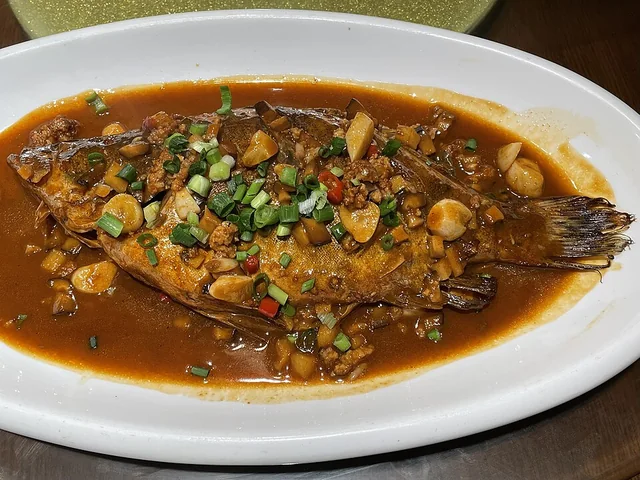 Huizhou fermented mandarin fish 徽州臭鳜鱼
Its smell is pronounced, while the cooked flesh remains tender and savory. The fermented character differs from simply adding a sour sauce.
Source ↗Read the dish guide →Photo adjustments
EXIF orientation applied where present; resized proportionally to at most 640 px on the long edge and encoded as WebP. No crop, retouching, recoloring or subject changes.
 Huizhou hairy tofu 徽州毛豆腐
The inside becomes soft and creamy, with a pronounced fermented aroma; browned surfaces and chili or other sauce add contrast.
Source ↗Read the dish guide →Photo adjustments
EXIF orientation applied where present; resized proportionally to at most 640 px on the long edge and encoded as WebP. No crop, retouching, recoloring or subject changes.
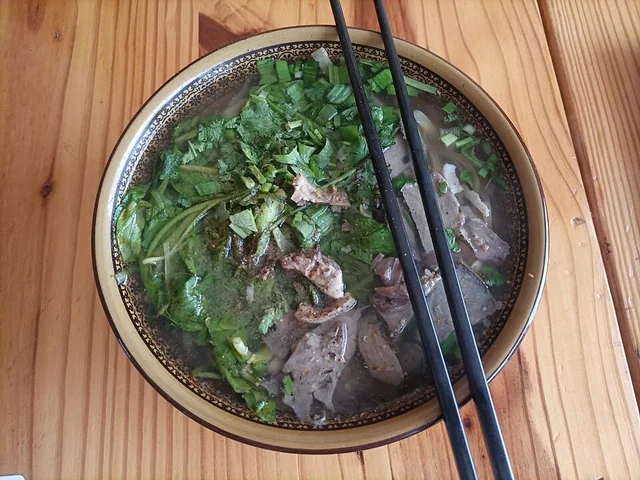 Huainan beef soup 淮南牛肉汤
The broth is deeply savory, with soft beef and contrasting chewy or absorbent additions. Chili changes the balance considerably.
Source ↗Read the dish guide →Photo adjustments
EXIF orientation applied where present; resized proportionally to at most 640 px on the long edge and encoded as WebP. No crop, retouching, recoloring or subject changes.
 Wuhu shrimp-roe noodles 芜湖虾籽面AI dish illustration · AI 菜品示意图
The bowl is savory and fragrant, with small roe particles contributing a delicate grainy note against the noodles. It is a seafood-seasoned noodle meal rather than necessarily a bowl piled with whole shrimp.
Source ↗Read the dish guide → Taihe broad noodles 太和板面
The noodles have a firm, substantial chew, while the broth brings spice and meatiness. Chili intensity depends on the shop and the bowl ordered.
Source ↗Read the dish guide → Hu Shi's one-pot dish 胡适一品锅
The upper layers stay distinct while lower ingredients absorb a rich, savory broth. The pleasure comes from comparing those textures within one serving.
Source ↗Read the dish guide →Photo adjustments
EXIF orientation applied where present; resized proportionally to at most 640 px on the long edge and encoded as WebP. No crop, retouching, recoloring or subject changes.
 Sanhe rice-flour dumplings 三河米饺AI illustration · AI 示意图
The wrapper has a crisp shell with a softer, slightly chewy inner layer. Hot filling and frying oil make a newly cooked dumpling richer than a steamed one.
Source ↗Read the dish guide → Feixi chicken soup 肥西老母鸡汤AI illustration · AI 示意图
The liquid is savory and rounded, with tender but sometimes firmer-textured hen meat and a light layer of chicken fat.
Source ↗Read the dish guide →All dish names · 全部菜名 (151)
- Huizhou fermented mandarin fish · 徽州臭鳜鱼
- Huizhou hairy tofu · 徽州毛豆腐
- Huainan beef soup · 淮南牛肉汤
- Wuhu shrimp-roe noodles · 芜湖虾籽面
- Taihe broad noodles · 太和板面
- Hu Shi's one-pot dish · 胡适一品锅
- Sanhe rice-flour dumplings · 三河米饺
- Feixi chicken soup · 肥西老母鸡汤
- Wushan seasoned goose · 吴山贡鹅
- Linhuan fermented-tofu pork · 临涣培乳肉
- Bozhou beef-filled flatbread · 亳州牛肉馍
- Cao Cao chicken · 曹操鸡
- Fuliji braised chicken · 符离集烧鸡
- Bengbu pork-filled sesame bun · 烧饼夹里脊
- Fuyang thick mixed noodles · 阜阳格拉条
- Fuyang pillow-shaped steamed bread · 枕头馍
- Shouxian layered sweet pastry · 寿县大救驾
- Leiguan pressed duck · 雷官板鸭
- Langya crisp sesame candy · 琅琊酥糖
- Jinzhai hanging-pot stew · 金寨吊锅
- Wuwei smoked pressed duck · 无为板鸭
- Jixi filled griddle cakes · 绩溪挞馃
- Huangshan crisp mini pastries · 黄山烧饼
- Huizhou steamed cured pork · 徽州刀板香
- Wuhu sweet fermented-rice dumpling soup · 芜湖酒酿元宵
- Anqing chicken broth with toasted rice · 安庆鸡汤泡炒米
- Qimen Zhonghe soup · 祁门中和汤
- Anhui herb rice cakes · 安徽蒿子粑
- Heliu small bean pancakes · 河溜小豆饼
- Bagong Mountain Tofu · 八公山豆腐
- Old Mussel Embracing Pearls · 老蚌怀珠
- Honey-Glazed Sweet Potato · 蜜汁红芋
- Charcoal-Cured Small Fish · 火烘鱼
- Li Hongzhang Mixed Braise · 李鸿章杂烩
- Sichuan Pepper Salt Chicken · 椒盐米鸡
- Huoshan Air-Dried Mutton · 霍山风干羊
- Bawang Bieji Turtle and Chicken Pot · 霸王别姬
- Luzhou Roast Duck · 庐州烤鸭
- Xiatang Sesame Flatbread · 下塘烧饼
- Luzhou Soup Dumplings · 庐州小笼包
- Freshwater Loach with Noodles · 泥鳅挂面
- Lord Bao Fish · 包公鱼
- Gengfuxing Flaky Flatbread · 耿福兴酥烧饼
- Soup-Filled Steamed Dumplings · 小笼汤包
- Red-Skin Duck · 红皮鸭子
- Wuhu Yangtze Knifefish · 芜湖刀鱼
- Red Bean Sweet Rice Wine Drink · 赤豆酒酿
- Kidney-Shaped Vegetable Fritters · 腰子饼
- Yijiang Mutton · 弋江羊肉
- Fanchang Digang Fragrant Greens · 繁昌荻港香菜
- Hugou Baked Flatbread · 湖沟烧饼
- Tuohu Lake Crab · 沱湖螃蟹
- Huaiyuan Pomegranate Chicken · 怀远石榴鸡
- Bengbu Maxia Street Crayfish · 蚌埠蚂虾街龙虾
- Guzhen Laorenqiao Beef · 固镇老任桥牛肉
- Tofu Pudding with Savoury Oil Tea · 豆腐脑配油茶
- Wuhe Tuohu Lake Fish Head · 五河沱湖鱼头
- Huainan Tofu Banquet · 淮南豆腐宴
- Shangyao Fried Dough Twists · 上窑馓子
- Shouxian Brine-Braised Goose · 寿县咸水鹅
- Fengtai Tofu · 凤台豆腐
- Jiaogang Lake Red-Yolk Salted Duck Eggs · 焦岗湖红心鸭蛋
- Dangtu Braised Pork Belly Noodles · 当涂大肉面
- Caishiji Pressed Tofu · 采石矶茶干
- Hanshan Salt-Cured Bream · 含山封扁鱼
- Wujiang Bawang Pastry · 乌江霸王酥
- Ma'anshan Stuffed Pocket Duck · 马鞍山口袋鸭
- Dangtu Pork Intestine Rice Noodles · 当涂肥肠米线
- Hexian Lamb Noodles · 和县羊肉面
- Linhuan Barrel-Oven Flatbread · 临涣烧饼
- Linhuan Tea-Stem Tea · 临涣棒棒茶
- Huaibei Lamb Soup · 淮北羊肉汤
- Nanping Crunchy Pork Tripe · 南坪响肚
- Tashan Pomegranate Chicken · 塔山石榴鸡
- Suixi Sauce-Cured Stuffed Melon · 濉溪酱包瓜
- Cold Wheat Noodle Sheets · 面皮
- Tongling White Ginger Braised Pork · 铜陵白姜烧肉
- Datong Pressed Tofu · 大通茶干
- Shun'an Black Sesame Crisp · 顺安酥糖
- Tongling Fengdan Braised Chicken · 铜陵凤丹烧鸡
- River Fish Head · 江鲜鱼头
- Tongling Ginger-Braised Duck · 铜陵生姜焖鸭
- Jiangmao Dumplings · 江毛水饺
- Pork Belly Braised with Sweet Potato Starch Balls · 山粉圆子烧肉
- Huaining Tribute Rice Cake · 怀宁贡糕
- Tongcheng Steamed Rice Cake · 桐城丰糕
- Huyumei Broad Bean Paste with Side Dishes · 胡玉美蚕豆酱配菜
- Qianshan Doumu Pottery Red-Braised Pork · 潜山痘姆古陶红烧肉
- Taihu Steamed Pork with Rice Meal · 太湖粉蒸肉
- Yuexi Cured Meats · 岳西腊味
- Huizhou Layered One-Pot · 徽州一品锅
- Wenzheng Mountain Bamboo Shoots · 问政山笋
- Stone-Pressed Wheat Cake · 石头馃
- Huizhou Laba Preserved Tofu · 徽州腊八豆腐
- Kudzu Starch Balls · 葛粉圆子
- Huizhou Ham Stewed with Soft-Shell Turtle · 徽州火腿炖甲鱼
- Tunxi Drunken Crab · 屯溪醉蟹
- Guanba Braised Beef · 管坝牛肉
- Qinlan Spiced Braised Goose · 秦栏卤鹅
- Fengyang Stuffed Tofu · 凤阳酿豆腐
- Dingyuan Qiaowei Meat · 定远桥尾
- Quanjiao Machang Mutton Noodles · 全椒马厂羊肉面
- Tianchang Ganlu Cake · 天长甘露饼
- Chuzhou Potstickers · 滁州锅贴
- Mingguang Mung Bean Cake · 明光绿豆糕
- Fuyang Rolled Flatbread · 阜阳卷馍
- Taihe Toon Shoots Tossed with Tofu · 太和贡椿拌豆腐
- Linquan Steamed Chicken · 临泉蒸鸡
- Jieshou Five-Spice Beef · 界首五香牛肉
- Yingshang Balihe Fish Banquet · 颍上八里河鱼宴
- Starch-Coated Simmered Chicken · 粉鸡
- Sa Soup · 撒汤
- Xiaoxian Mutton Soup · 萧县羊肉汤
- Pork Stewed with Dangshan Pears · 砀山酥梨炖肉
- Suzhou Sa Soup · 宿州sa汤
- Langan Braised Beef · 栏杆牛肉
- Lingbi Iron-Pot Chicken with Flatbread · 灵璧地锅鸡
- Sixian Dalukou Sweet Potato Noodles · 泗县大路口山芋粉丝
- Savoury Breakfast Oil Tea · 油茶
- Lu'an Guapian Tea-Scented Chicken · 六安瓜片茶香鸡
- Tiantangzhai Hanging-Pot Stew · 天堂寨吊锅
- Shucheng Xiaolanhua Tea-Scented Shrimp · 舒城小兰花茶香虾
- Yeji Mutton · 叶集羊肉
- Huoqiu Braised Goose Pieces · 霍邱鹅块
- Jinzhai Red Cured Tofu · 金寨红豆腐
- Mugwort Cakes · 蒿子粑粑
- Beef-Filled Flatbread · 牛肉馍
- Guoyang Dry-Tossed Noodles · 涡阳干扣面
- Mengcheng Peppery Sa Soup · 蒙城撒汤
- Lixin Tribute Bread · 利辛贡馍
- Bozhou Thick Baked Flatbread · 亳州锅盔
- Yimen Smoked Beef · 义门熏牛肉
- Herbal Medicinal Chicken · 药膳鸡
- Chicken Stewed with Starch Sheets · 粉皮炖鸡
- Mount Jiuhua Vegetarian Cuisine · 九华山素斋
- Guichi Pan-Fried Stuffed Cakes · 贵池小粑
- Shitai Layered One-Pot · 石台一品锅
- Dongzhi Maiyu Small Fish · 东至麦鱼
- Qiupu Mandarin Fish with Egg Custard · 秋浦花鳜
- Qingyang Lingyang Pressed Tofu · 青阳陵阳豆腐干
- Shitai Qidu Fermented Tofu · 石台七都臭豆腐
- Cured Pork Braised with Bamboo Shoots · 腊味炖笋
- Xuancheng Potstickers · 宣城锅贴
- Shuiyang Three Treasures Pot · 水阳三宝
- Shuiyang Duck-Foot Parcels · 水阳鸭脚包
- Shuiyang Duck Wings · 水阳鸭翅
- Ningguo Stuffed Griddle Cakes · 宁国粑粑
- Jixi Layered One-Pot · 绩溪一品锅
- Jingxian Dried Qin Fish · 泾县琴鱼干
- Jingde Chicken Stewed with Lingzhi Mushroom · 旌德灵芝炖鸡
- Langxi Houcun Candied Jujube Cake · 郎溪侯村蜜枣糕
Top sights in Anhui
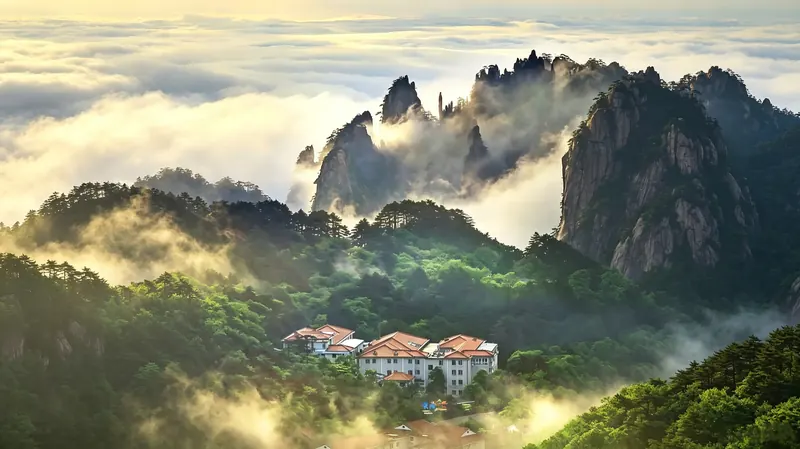 TOP1黄山区
Mount Huangshan Scenic Area黄山风景区
Show on map TOP2黄山市
Hongcun Village宏村景区
Show on map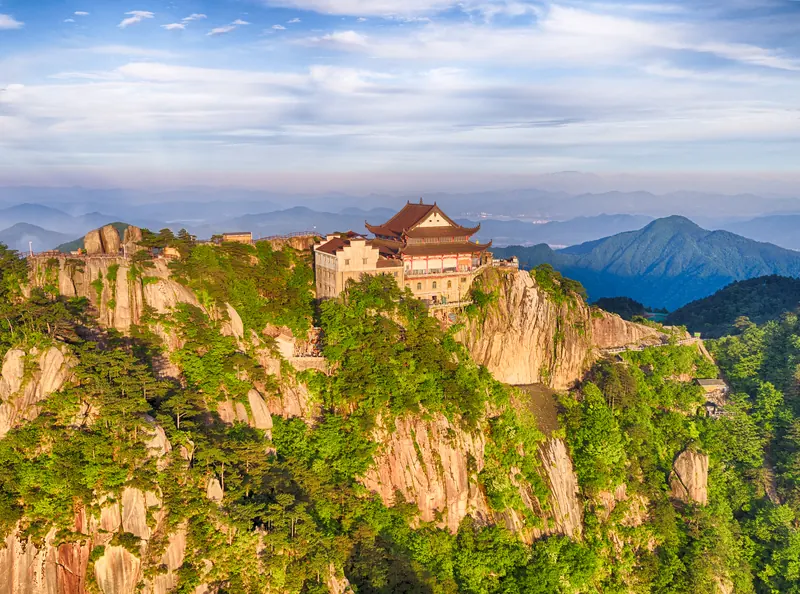 TOP3青阳县
Jiuhua’s Buddhist landscape is centred on devotion to Dizang, with temples set among forested granite hills. Around Jiuhua Street, Huacheng Temple faces a crescent-shaped release pond and open square, while the lanes connect…
 TOP4歙县
Huizhou Ancient City in She County preserves the streets and gateways of a former regional administrative centre, with Xu Guo's elaborate stone archway among its most distinctive monuments.
 TOP5黄山市
Chengkan’s village lanes lead between houses and communal buildings of the Luo clan. The Luo Dongshu ancestral hall is the main architectural focus: its courtyards lead to Baolun Pavilion, where painted timber framing gives the…
 TOP6合肥市
Sanhe developed where the Fengle, Hangbu and Xiaonan rivers meet, and its old streets still reveal that water-borne trading layout.
 TOP7黄山市
Xidi’s stone lanes wind among whitewashed merchant houses, with carved entrances and enclosed courtyards marking the transition from public street to private home. Three streams run through the settlement and converge near…
 TOP8休宁县
Qiyun combines a mountain landscape with Daoist buildings and an unusually rich collection of rock inscriptions. Yuehua Street gathers religious and domestic buildings against the slopes, while Yuxu Palace sits below Zixiao…
 TOP9石台县
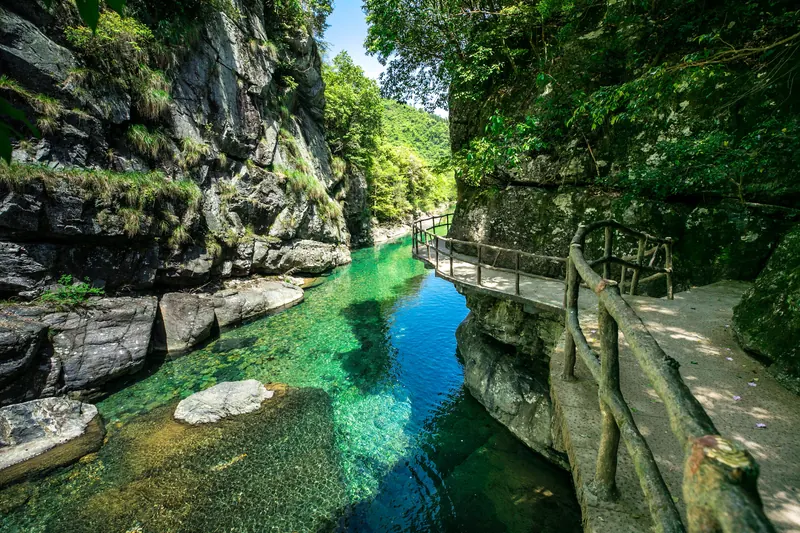
Guniujiang Nature Reserve石台牯牛降景区
Show on map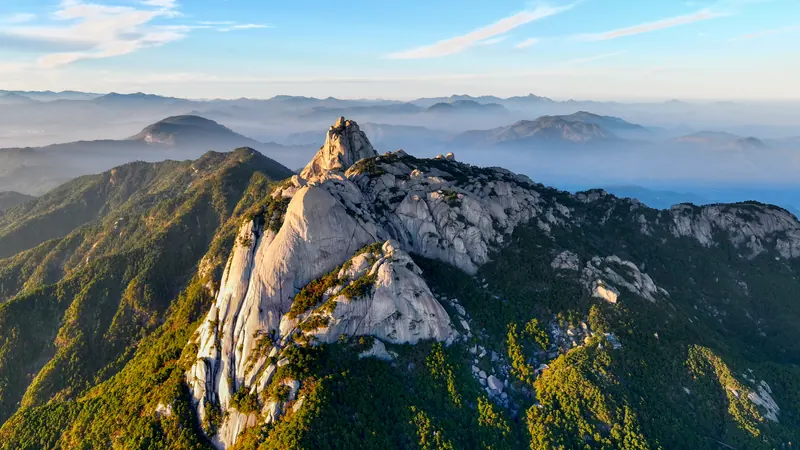 TOP10安庆市
Tianzhu’s main peak rises like a stone pillar above granite ridges, boulder passages and forest.
 Show on map


.jpg)
Change your destination on Trip.com.
Ranking source & photo credits
The first ten entries of Trip.Best Best Things to Do. Rankings reflect platform recommendations, not counts of international visitors. Read on 20 September 2026; platform pages may use cached snapshots.
- Mount Huangshan Scenic Area: Source: Trip.com · Resized and WebP compressed; fitted to the ranking card.
- Hongcun Village: Source: Trip.com · Resized and WebP compressed; fitted to the ranking card.
- Mount Jiuhua: Source: Trip.com · Resized and WebP compressed; fitted to the ranking card.
- Huizhou Ancient City: Source: Trip.com · Resized and WebP compressed; fitted to the ranking card.
- Chengkan: Source: Trip.com · Resized and WebP compressed; fitted to the ranking card.
- Sanhe Ancient Town: Source: Trip.com · Resized and WebP compressed; fitted to the ranking card.
- Xidi: Source: Trip.com · Resized and WebP compressed; fitted to the ranking card.
- Mount Qiyun: Source: Trip.com · Resized and WebP compressed; fitted to the ranking card.
- Guniujiang Nature Reserve: Source: Trip.com · Resized and WebP compressed; fitted to the ranking card.
- Tianzhu Shan: Source: Trip.com · Resized and WebP compressed; fitted to the ranking card.
Cities, counties & districts in Anhui
16 areas belong directly to Anhui.
16 areas
Hefei合肥市
Hefei is the capital of Anhui province, China. A prefecture-level city, it is the political, economic, and cultural center of Anhui. Its population was 9,369,881 as of the 2020 census.
9 local areas →Prefecture-level cityWuhu芜湖市
Wuhu (simplified Chinese: 芜湖; traditional Chinese: 蕪湖; pinyin: Wúhú; lit. 'Weedy Lake') is a prefecture-level city in southeastern Anhui province, China.
7 local areas →Prefecture-level cityBengbu蚌埠市
Bengbu is a city in northern Anhui Province, China. Its population was 3,296,408 registered residents at the 2020 census.
7 local areas →Prefecture-level cityHuainan淮南市
Huainan is a prefecture-level city with 3,033,528 inhabitants as of the 2020 census in north-central Anhui province, China. It is named for the Han-era Principality of Huainan.
7 local areas →Show fewer areas
Ma'anshan马鞍山市
Ma'anshan (simplified Chinese: 马鞍山; traditional Chinese: 馬鞍山; pinyin: Mǎ ān Shān), also colloquially written as Maanshan, is a prefecture-level city in the eastern part of Anhui province in Eastern China.
6 local areas →Prefecture-level cityHuaibei淮北市
Huaibei is a prefecture-level city in northern Anhui Province, China. It borders Suzhou (Anhui) to the east, Bengbu to the south, Bozhou to the west, and the provinces of Henan to the northwest and Jiangsu to…
4 local areas →Prefecture-level cityTongling铜陵市
Tongling (simplified Chinese: 铜陵; traditional Chinese: 銅陵; pinyin: Tónglíng; Wade–Giles: T'ung-ling; lit. 'Copper Hillock') is a prefecture-level city in southern Anhui province of China.
4 local areas →Prefecture-level cityAnqing安庆市
Anqing (simplified Chinese: 安庆; traditional Chinese: 安慶; pinyin: Ānqìng, also Yicheng, Nganking and formerly Hwaining, now the name of Huaining County) is a prefecture-level city in the southwest of Anhui…
10 local areas →Prefecture-level cityHuangshan黄山市
Huangshan (simplified Chinese: 黄山; traditional Chinese: 黃山; pinyin: Huángshān) is a prefecture-level city in southern Anhui Province, People's Republic of China.
7 local areas →Prefecture-level cityChuzhou滁州市
Chuzhou is a prefecture-level city in eastern Anhui Province, China. It borders the provincial capital of Hefei to the south and southwest, Huainan to the west, Bengbu to the northwest, and the province of…
8 local areas →Prefecture-level cityFuyang阜阳市
Fuyang (simplified Chinese: 阜阳; traditional Chinese: 阜陽; pinyin:, previously romanized as Fowyang) is a prefecture-level city in northwestern Anhui province, China.
8 local areas →Prefecture-level citySuzhou宿州市
Suzhou is a prefecture-level city in northern Anhui, China. The city straddles the Tuohe and Xinbian rivers, which fork at its western end.
5 local areas →Prefecture-level cityLu'an六安市
Lu'an is a prefecture-level city in western Anhui province, People's Republic of China, bordering Henan to the northwest and Hubei to the southwest.
7 local areas →Prefecture-level cityBozhou亳州市
Bozhou is a prefecture-level city in northwestern Anhui province, China. It borders Huaibei to the northeast, Bengbu to the southeast, Huainan to the south, Fuyang to the southwest, and Henan to the north.
4 local areas →Prefecture-level cityChizhou池州市
Chizhou is a prefecture-level city in the south of Anhui province, China. It borders Anqing to the northwest, Tongling and Wuhu to the northeast, Xuancheng to the east, Huangshan to the southeast, and the…
4 local areas →Prefecture-level cityXuancheng宣城市
Xuancheng is a city in the southeast of Anhui province. Archeological digs suggest that the city has been settled for over 4,000 years, and has been under formal administration since the Qin dynasty.
7 local areas →No areas match this name.
Arrive, stay & get around Anhui
交通枢纽、住宿与天气
Hefei合肥
This Anhui entry uses Hefei as its selected gateway city. It does not describe transport coverage across the entire region.
Airports
Hefei Xinqiao International AirportHFE
合肥新桥国际机场
Airport northwest of Hefei; verify the currently operating airport connection rather than relying on a construction map.
Railway stations
Hefei South Railway Station
合肥南站
The main high-speed rail interchange, beside the city’s southern coach hub.
Hefei Railway Station
合肥站
Older northeast-central railway gateway, separate from Hefei South.
Metro & city transport
Hefei Metro Network 合肥轨道交通线路图
City rail routes connect the main railway gateways and urban districts. Check the official operating network before choosing an airport transfer.
- 1Find your stations确认起点与终点站
- 2Check interchanges查看换乘线路与站点
- 3Follow exit signs到站后按站内标识出站
 Explore the full network查看站名、线路与换乘Enlarge map点击放大线路图
Check the legend for closed, reserved or future sections. 停运、预留与规划区间,请按图例辨识。
Map edition: 2026-09-06 · Diagram reviewed 2026-09-06
Map: Original schematic prepared for China Revealed; underlying data © OpenStreetMap contributors · CC BY-SA 4.0 (drawing); ODbL 1.0 (underlying OSM-derived data)
Map coverage & sources 图示范围与来源说明
Eight operating lines, 195 unique stations. New Line 6 (26 December 2025) and Line 7 (1 July 2026) included. Reserved stops Line 3 馆驿, Line 4 紫云湖, Line 6 市博物馆, and Line 7 义城/合肥四中 excluded; the existing Line 5 义城 station remains shown. Future S1 excluded. Adjacency/interchanges shown; station positions and distances are simplified, and lines are straight schematic connections rather than actual railway geometry. OSM source snapshots 31 May/27 July 2026; latest line names and active-station lists manually reconciled with published facts.
Original SVG drawing from OSM-derived station data. Includes lossless 4400×4600 WebP fallback and structured reusable data. Final Chinese station names and inactive-station exclusion reconciled with published route facts.
Coaches, ferries & onward travel
Hefei Passenger Transport Center (South Coach Station)
合肥客运中心站(汽车南站)
Beside Hefei South Railway Station; government guidance lists Jiuhua Mountain among its intercity directions.
Transport reference review: 2026-09-06. Consult the operator for current services and timetables.
More about getting around
Hefei is the provincial capital, while Huangshan North station is useful for the southern heritage circuit. Mountain access usually involves a road transfer toward Tangkou and the park's transport arrangements. Confirm whether your ticket and hotel refer to town, foothills or the mountain itself.
Stay in Anhui
Tunxi suits arrival logistics and access to several villages. Tangkou puts you near the southern mountain approach; a summit hotel changes the walking plan and luggage needs. A Hongcun or Xidi guesthouse favors early village walks. Confirm heating, stairs and bathroom arrangements in older houses.
Find hotels on Trip.com →Change your destination, dates and guests on Trip.com.
Hefei weather
The current-hour forecast loads when this section is visible. It uses MET Norway model data for the named city, not station observations.
Seasons & when to go
Lowland summers are hot and humid, with substantial seasonal rain. Huangshan is cooler, wetter and more changeable than the towns below, and winter ice can alter access. Pack rain protection and warm layers; a clear forecast for Tunxi does not guarantee summit visibility.
Local life & communication
Anhui's contrasts follow geography: southern Huizhou's merchant architecture and preserved flavors differ from the hearty staples of the Huai River region and the cities along the Yangtze.
Huizhou's merchant wealth appears in ancestral halls, timber carving and carefully organized village homes. Notice how lanes, ponds and drainage work together at Hongcun. Tea and regional cooking add another layer; preserved ingredients and assertive fermented flavors may be unfamiliar but are worth exploring.
Language & communication
Mandarin is useful at transport hubs and established attractions; local Huizhou speech differs substantially from it. English help is less predictable in small villages. Keep the Chinese name of your accommodation, its village and a contact number ready for the final transfer.
Useful local tips
- Huangshan city, Huangshan scenic area and Huangshan North railway station are different locations; check each transfer explicitly.
- A mountain day and a village day need different lodging and walking plans. Before a late transfer, check the intended attraction's final entry and last return service rather than relying on a travel diary.
- Use the temple or scenic area's current official notices for route access; a heritage listing does not specify today's open paths.
- Order fermented fish and tofu in small shared portions first if these flavors are unfamiliar.
Sources & useful links
- Ministry of Culture and Tourism: Anhui signature foods
- Huangshan Government: Food travel routes
- Huainan Government: Beef soup
- UNESCO: Mount Huangshan
- UNESCO: Xidi and Hongcun
- Huangshan Government: Historic streets
- Jiuhuashan Scenic Area Administrative Committee
- Shouxian Government: Attractions
- Anhui — population background
- Anhui — languages background
- Anhui — geography background
- Anhui — Hefei map reference
- Anhui — Tunxi, Huangshan city map reference
- Anhui — Tangkou map reference
- Anhui — Mount Huangshan map reference
- Anhui — Hongcun map reference
- Anhui — Xidi map reference
- Anhui — Mount Jiuhua map reference
- Anhui — Tianzhu Mountain map reference
- Anhui — Tangyue Memorial Archways map reference
- Anhui — Chengkan map reference
- Anhui — She County, Anhui map reference
- Anhui — Shou County map reference
- Anhui — Chaohu Lake map reference
- Anhui attraction ranking source
- Anhui specialty reference — www.shucheng.gov.cn
- Anhui specialty reference — www.mct.gov.cn
- Anhui News: Wuhu specialty foods
- Anhui News: Anqing chicken soup with toasted rice
- 古徽州文化旅游区 — place reference
- 万佛湖 — place reference
- 绩溪龙川景区 — place reference
- 唐模古村 — place reference
- 祁门中和汤 — local food reference
- 河溜小豆饼 — local food reference
- 芜湖方特梦幻王国 — place reference
- 芜湖方特东方神画 — place reference
- 芜湖方特水上乐园 — place reference
- Local food reference: 八公山豆腐
- Local food reference: 采石矶茶干